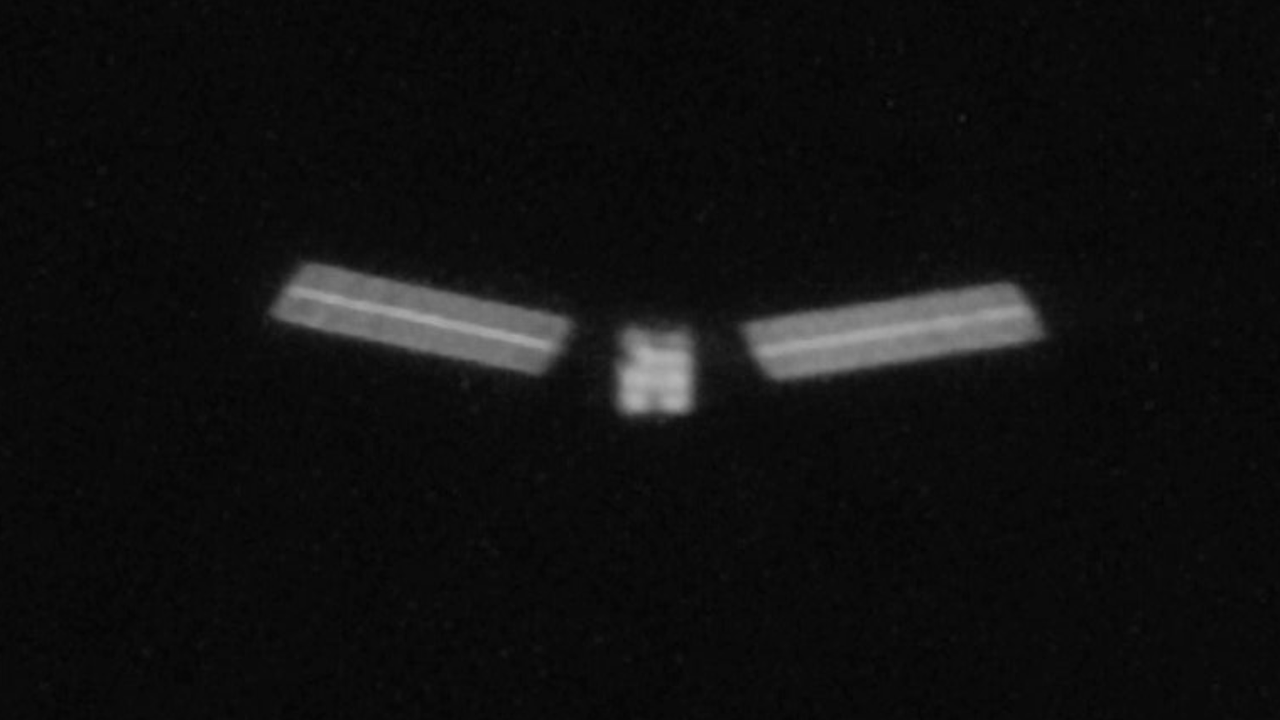
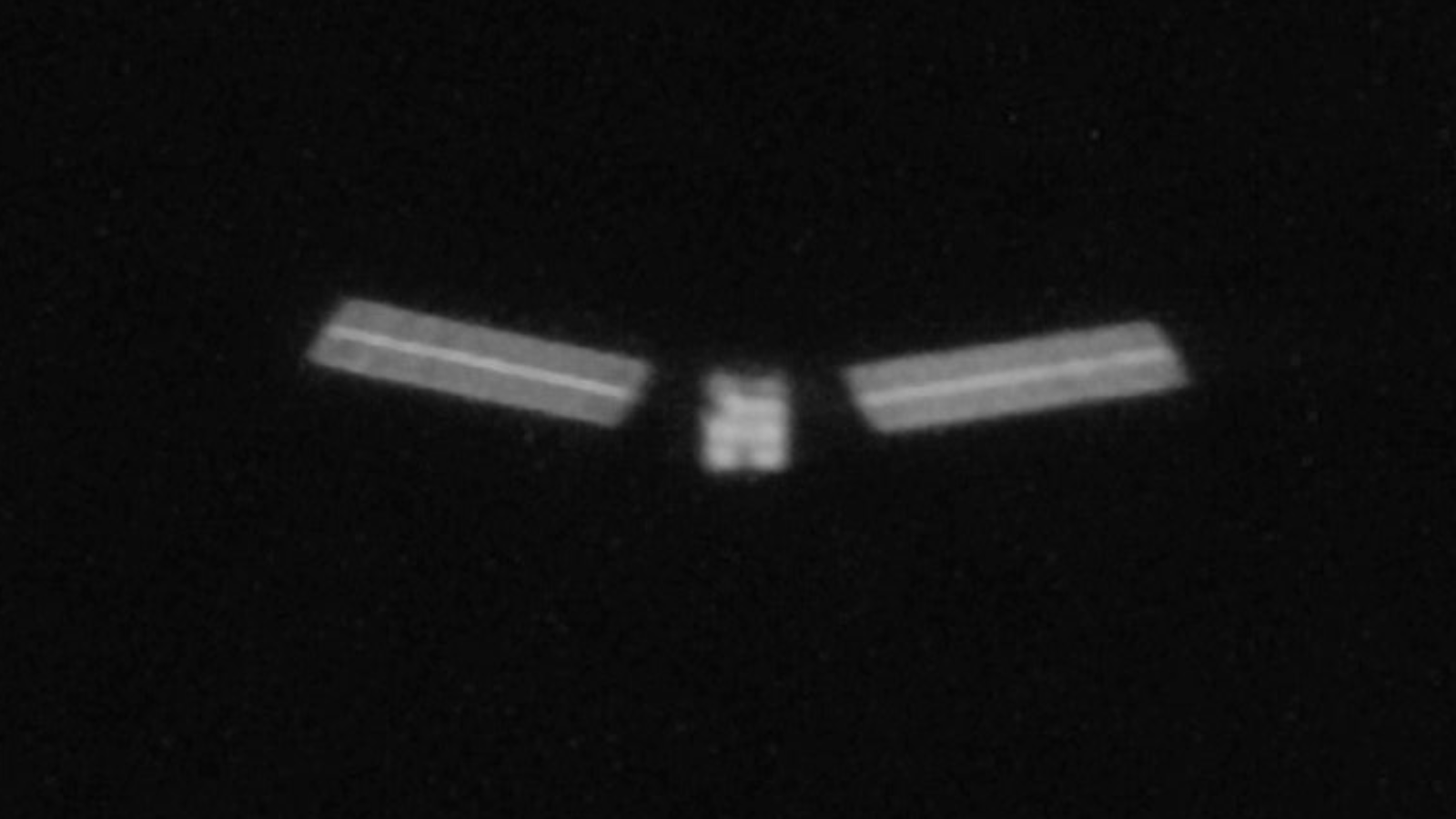
 Starlink 34343 which experienced a "fragmentation event" on March 29, 2026 (Image credit: HEO) Share this article 0 Join the conversation Follow us Add us as a preferred source on Google Newsletter Get the Space.com Newsletter
 Breaking space news, the latest updates on rocket launches, skywatching events and more!
Contact me with news and offers from other Future brands Receive email from us on behalf of our trusted partners or sponsors By submitting your information you agree to the Terms & Conditions and Privacy Policy and are aged 16 or over.You are now subscribed
Your newsletter sign-up was successful
Want to add more newsletters?
An account already exists for this email address, please log in. Subscribe to our newsletterBreaking up is never easy. That's definitely the case for this SpaceX Starlink spacecraft, which underwent a "fragmentation event" on March 29, 2026. Today's image shows the spacecraft prior to it breaking apart.
What is it?
SpaceX described the fragmentation event on its Starlink X feed, writing: "On Sunday, March 29, Starlink satellite 34343 experienced an anomaly on-orbit, resulting in loss of communications with the satellite at ~560 km above Earth. Latest analysis shows the event poses no new risk to the @Space_Station, its crew, or to the upcoming launch of NASA’s Artemis II mission. We will continue to monitor the satellite along with any trackable debris and coordinate with @NASA and the @USSpaceForce. "The event also posed no new risk to this morning’s Transporter-16 mission, which was designed to avoid Starlink with payload deploys well above or well below the constellation. The SpaceX and Starlink teams are actively working to determine [the] root cause and will rapidly implement any necessary corrective actions."
Why is it amazing?
Today's image of Starlink satellite 34343 was captured by HEO on February 14, 2026. HEO is now working toward imaging the current state of the SpaceX unit after its fragmentation.
Article continues below Get the Space.com NewsletterContact me with news and offers from other Future brandsReceive email from us on behalf of our trusted partners or sponsors Robert LeaSenior Writer
Robert Lea is a science journalist in the U.K. whose articles have been published in Physics World, New Scientist, Astronomy Magazine, All About Space, Newsweek and ZME Science. He also writes about science communication for Elsevier and the European Journal of Physics. Rob holds a bachelor of science degree in physics and astronomy from the U.K.’s Open University. Follow him on Twitter @sciencef1rst.
View MoreYou must confirm your public display name before commenting
Please logout and then login again, you will then be prompted to enter your display name.
Logout MORE FROM SPACE... 1NASA set to launch Artemis 2 moon mission today, the 1st crewed lunar flight since 1972
- 2This star-forming galaxy is blowing out powerful winds topping 2 million mph
- 3Yes, NASA's launching Artemis 2 astronauts to the moon on April Fools' Day. It's not a joke.
- 4Comet MAPS faces a make-or-break moment as it dives toward the sun on April 4 — could it shine in the daytime sky?
- 5How to use your Unistellar smart telescope to track the Artemis 2 rocket light curve in the name of science