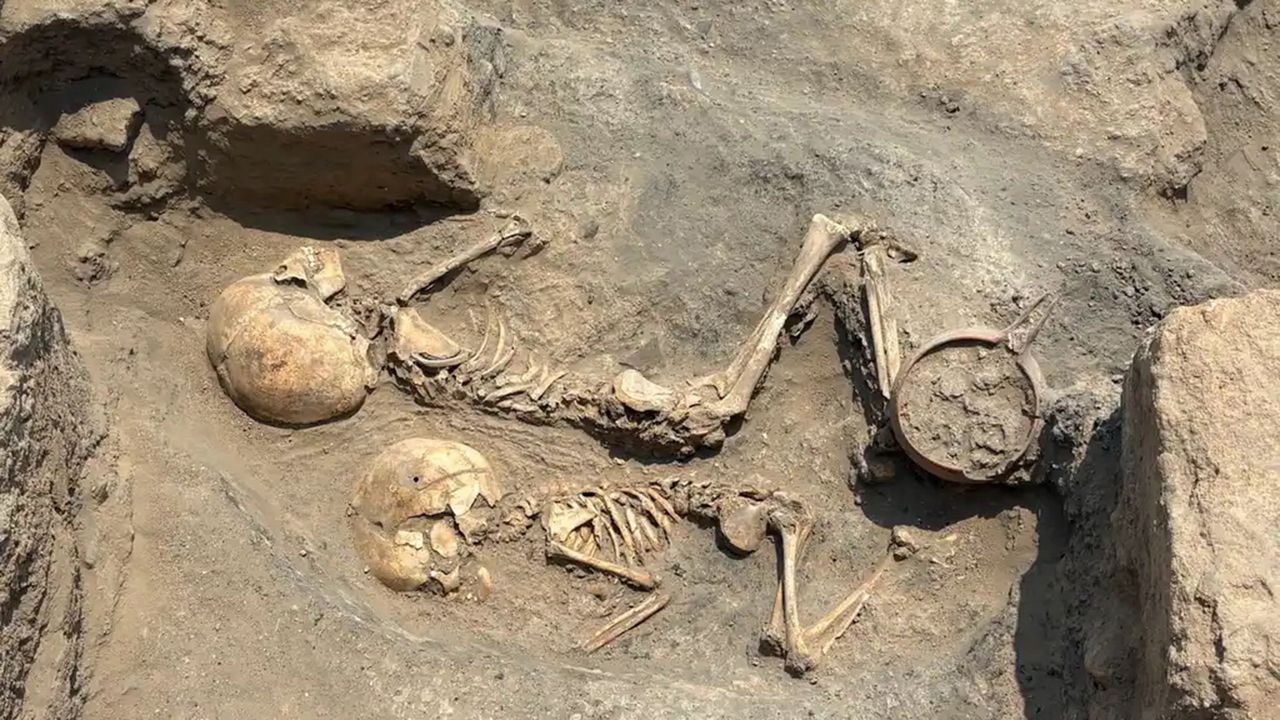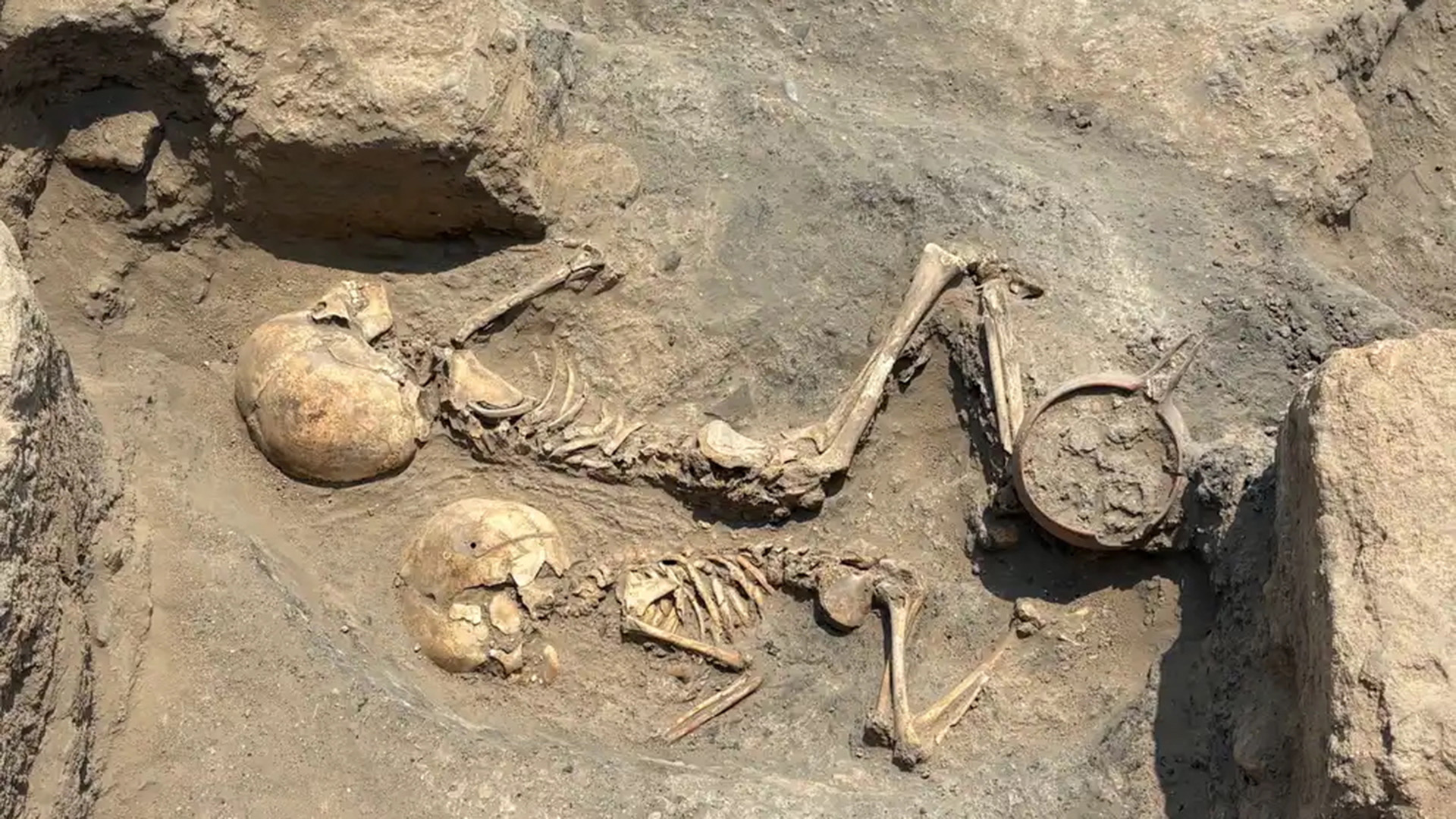
The researchers found the skeleton of the 5-year-old child in a single grave alongside the skeleton of a younger child. (Image credit: Italian Archaeological Mission in Uzbekistan)
Share this article Join the conversation
Follow us Add us as a preferred source on Google Newsletter Subscribe to our newsletter
The 4,000-year-old skull of a Bronze Age child buried in what's now Uzbekistan bears scars from a cranial surgery known as trepanation. It is the oldest documented evidence of surgery in Central Asia and one of the oldest examples of surgery in all of Asia, the researchers report.
The skeleton of the child, who died at about age 5, was unearthed in April. The body had been buried in a single grave alongside the body of a child who died at about 3 years old, researchers said in a translated statement.
The 5-year-old's skull has "clear signs of cranial trepanation" involving stone or bone tools, according to the statement. Trepanation was commonly performed in ancient times, perhaps in attempts to treat maladies like epilepsy, migraines or behavioral problems. But the researchers noted that the "frontier between medicine and ritual" would have been far less defined at that time than it is now.
A research team from Italy and Uzbekistan made the discovery in the Northern Bactria region, near the border with Afghanistan.
Ancient Oxus
The excavations focused on the site of the prehistoric settlement of Djarkutan, and the researchers dated the grave to the late third millennium B.C. At that time, Djarkutan was an urban center of the Oxus civilization, an Early Bronze Age culture that dominated Central Asia from about 2500 to 1500 B.C. The ongoing project to investigate the site and other aspects of the Oxus civilization began in 2024.
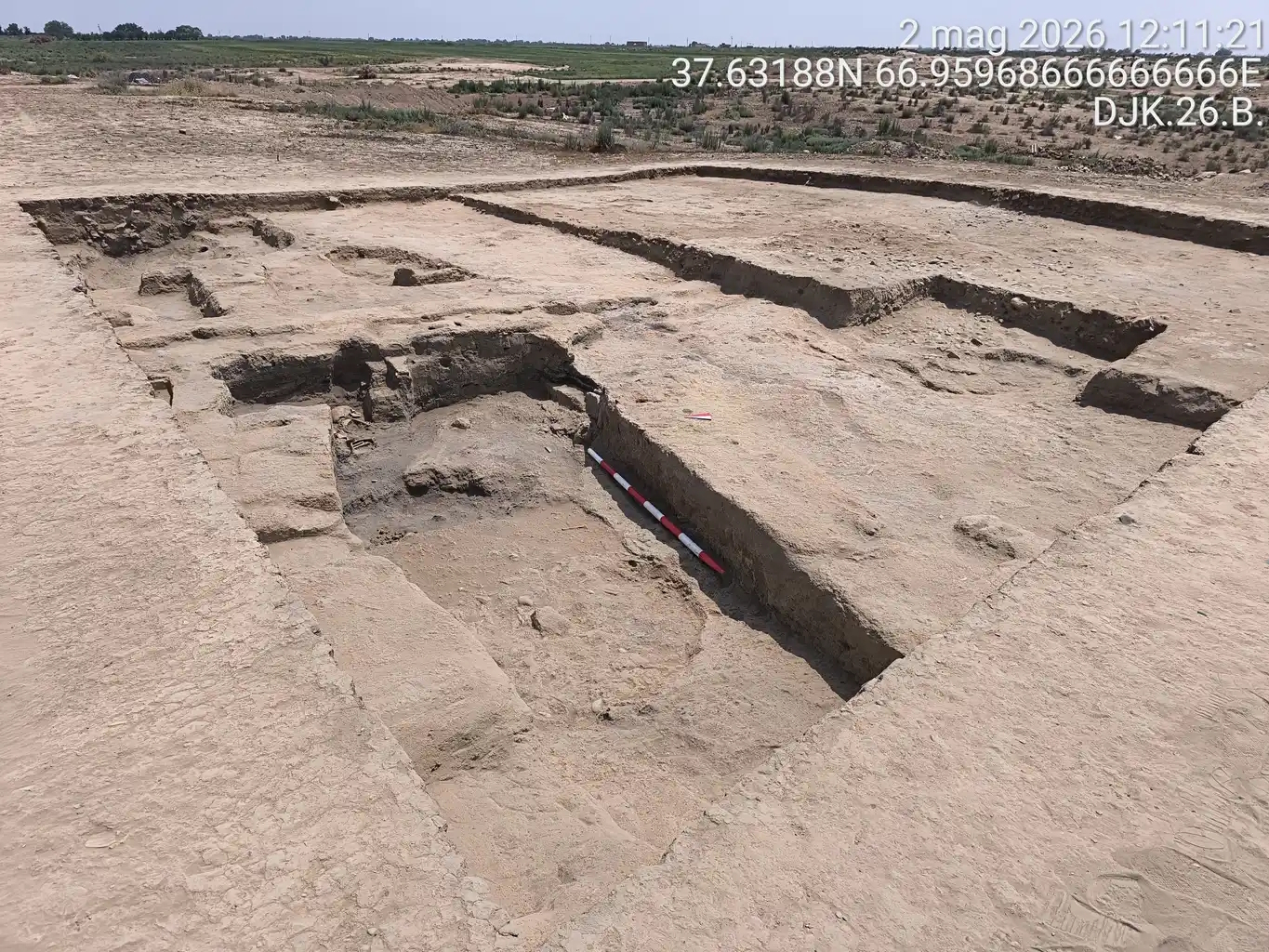
The grave was discovered during excavations at the Djarkutan archaeological site in the south of Uzbekistan, near the border with Afghanistan.
(Image credit: Italian Archaeological Mission in Uzbekistan)
Archaeologists sometimes call the Oxus civilization the Bactria-Margiana Archaeological Complex, or BMAC. It was centered along rivers and in oases in the region, and it is renowned for its advanced agricultural economy and rich material culture. The demise of the Oxus civilization is thought to have been triggered by climatic changes that caused important rivers to dry up.
While evidence of ancient trepanations is relatively common in some places, the fact that this surgery was performed on a young child is perplexing, the researchers said.
Sign up for the Live Science daily newsletter now
Get the world’s most fascinating discoveries delivered straight to your inbox.
Contact me with news and offers from other Future brandsReceive email from us on behalf of our trusted partners or sponsorsRelated stories
"Djarkutan continues to surprise us," Enrico Ascalone, an archaeologist at the University of Salento who led the excavation, said in the statement. "A cranial trepanation on a child, four thousand years ago, in Central Asia: until yesterday it was unthinkable. Today it is in our data."
Yet the discovery also leaves mysteries. "Which group of 'specialists' within the town could have practiced such an intervention? What anatomical and surgical knowledge did such an operation presuppose? And why a five-year-old?" the team wrote in the statement. They hope to answer those questions in further investigations in the coming months.
Tom MetcalfeLive Science Contributor
Tom Metcalfe is a freelance journalist and regular Live Science contributor who is based in London in the United Kingdom. Tom writes mainly about science, space, archaeology, the Earth and the oceans. He has also written for the BBC, NBC News, National Geographic, Scientific American, Air & Space, and many others.
View More
You must confirm your public display name before commenting
Please logout and then login again, you will then be prompted to enter your display name.
Logout