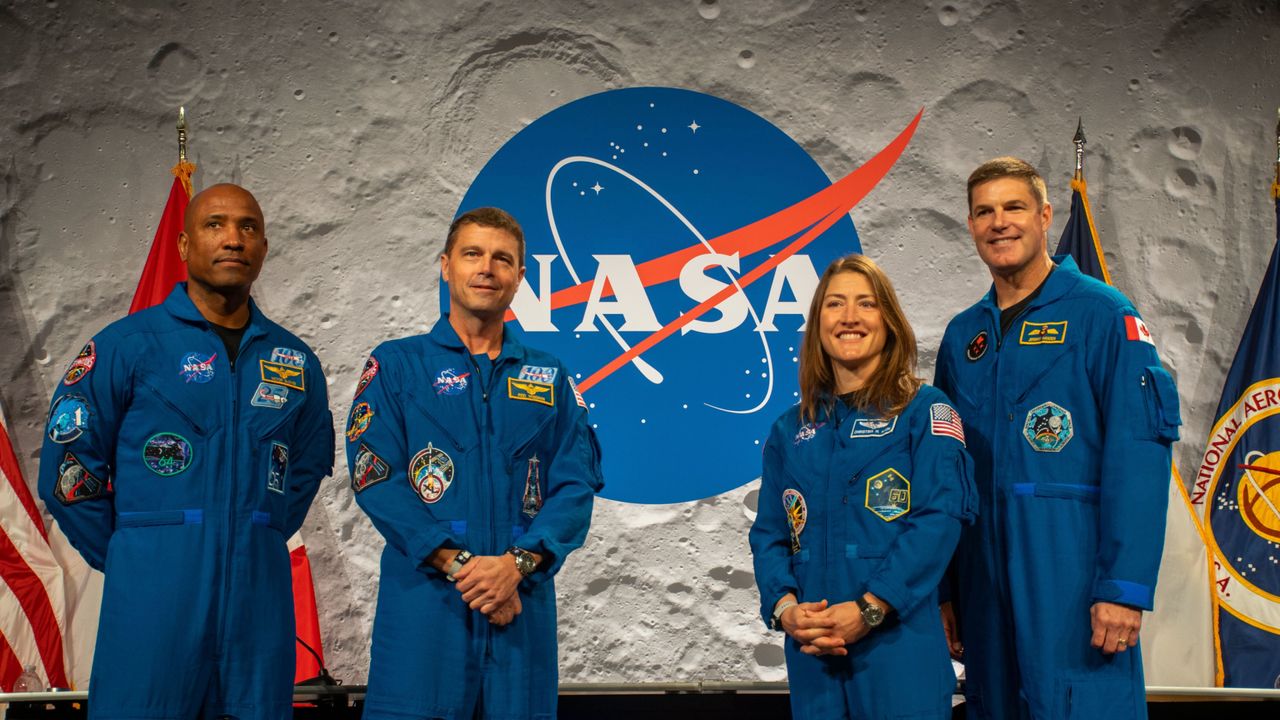
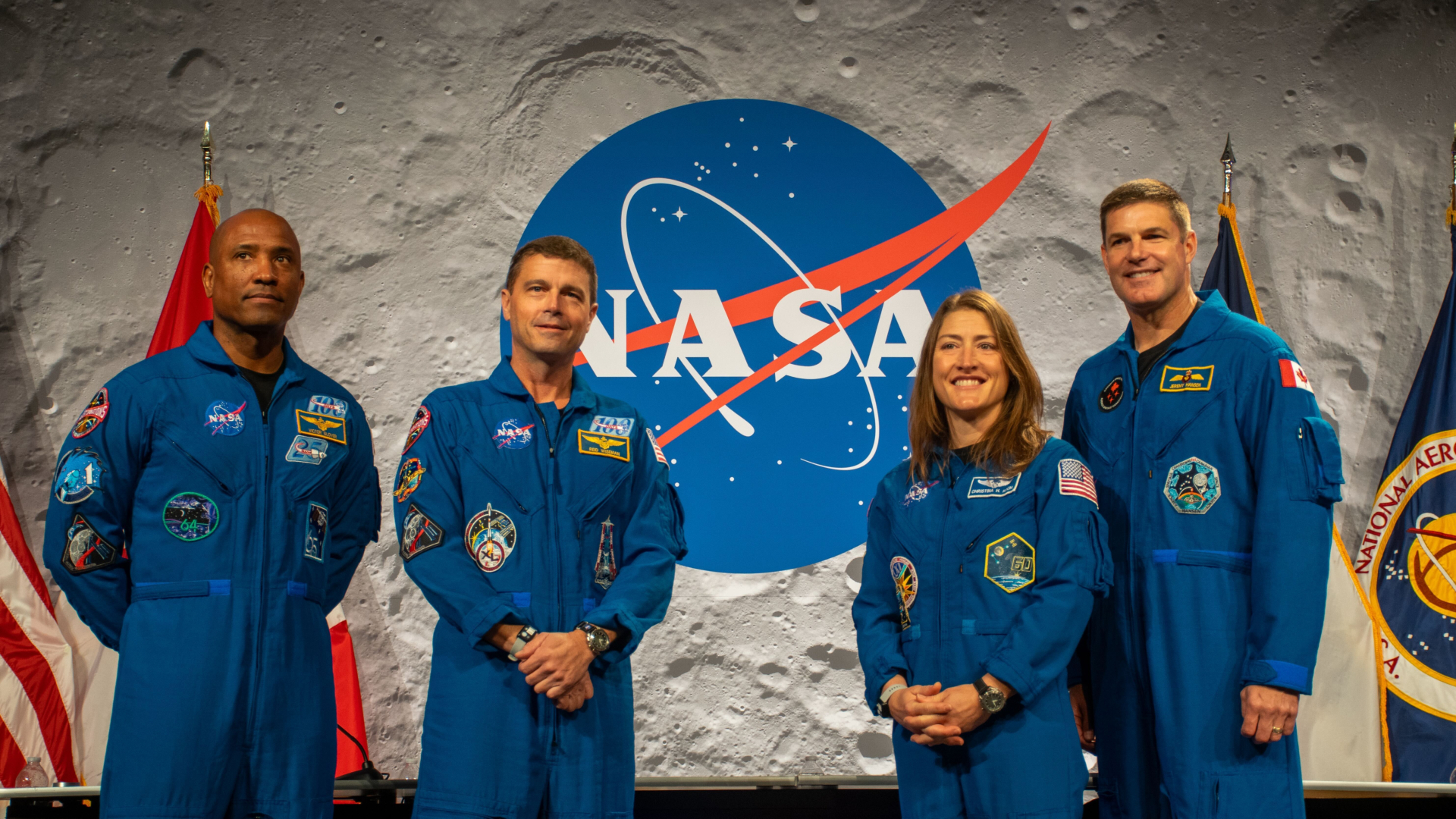
 The Artemis 2 astronauts. From left: NASA's Victor Glover, Reid Wiseman and Christina Koch, and Canadian astronaut Jeremy Hansen. (Image credit: Space.com / Josh Dinner) Share this article 0 Join the conversation Follow us Add us as a preferred source on Google Newsletter Get the Space.com Newsletter
 Breaking space news, the latest updates on rocket launches, skywatching events and more!
Contact me with news and offers from other Future brands Receive email from us on behalf of our trusted partners or sponsors By submitting your information you agree to the Terms & Conditions and Privacy Policy and are aged 16 or over.You are now subscribed
Your newsletter sign-up was successful
Want to add more newsletters?
An account already exists for this email address, please log in. Subscribe to our newsletterLuckily for the Artemis 2 astronauts, space-toilet technology has advanced a bit in the past half century.
The Artemis 2 mission, which is currently targeting an April 1 liftoff, will send four people on a 10-day trip around the moon in NASA's Orion capsule. It will be the first crewed flight to lunar realms since the Apollo 17 mission back in December 1972.
The Apollo astronauts did their business in the open, peeing into a roll-on cuff and pooping into plastic bags in the presence of their crewmates. But the Artemis 2 spaceflyers — NASA's Reid Wiseman, Victor Glover and Christina Koch and Canadian astronaut Jeremy Hansen — will have access to a bona fide bathroom.
Article continues below"We're pretty fortunate as a crew to have a toilet with a door on this tiny spacecraft," Hansen said in a video explainer about Orion's bathroom that was posted on YouTube last October.
It's "the one place that we can go during the mission where we can actually feel like we're alone for a moment," he added.
Vlog 18: The lunar loo – or going to the bathroom during a mission to the Moon - YouTube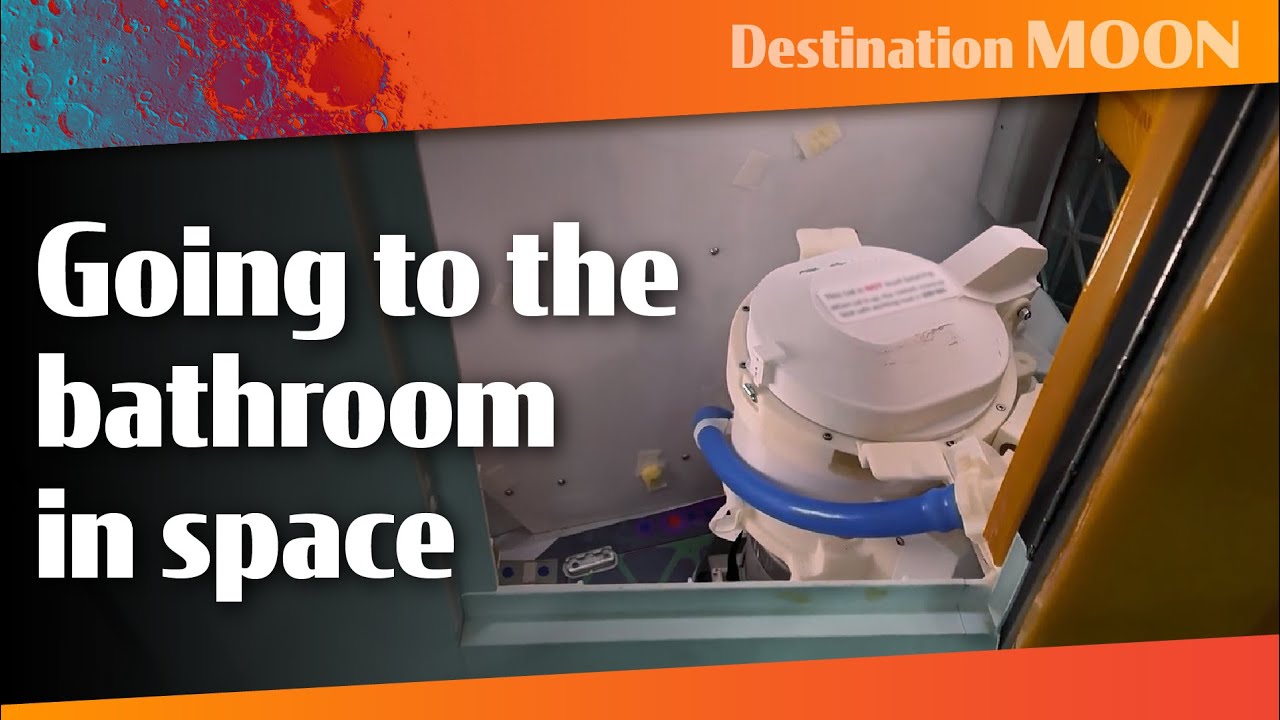 Watch On
 This sanctuary is not very spacious; it's about the size of a lavatory on a small passenger jet, according to Lockheed Martin, which built Orion for NASA. But even that amount of room is impressive, given that the capsule has just 330 cubic feet (9.34 cubic meters) of habitable volume — roughly the same as two minivans — and it has to accommodate four people for a week and a half. (The Apollo crew module was even smaller at 210 cubic feet, or 5.95 cubic m, but only three astronauts flew aboard it at a time.)
The door to Orion's lavatory is on the capsule's floor. This orientation may seem odd on Earth, but it won't appear so in the microgravity environment of space.
Get the Space.com NewsletterContact me with news and offers from other Future brandsReceive email from us on behalf of our trusted partners or sponsors"You would float over to it, open up this hinging door and float on in," Hansen said.
The bathroom — or "hygiene bay," as NASA calls it — also features privacy curtains, which Artemis 2 astronauts may or may not use during the mission.
"If there's more space needed, they can leave the door open and put up a privacy curtain," Debbie Korth, deputy Orion Program manager at NASA's Johnson Space Center in Houston, told reporters during a press conference in September 2025.
Once they're inside the hygiene bay, the Artemis 2 astronauts will have more to work with than just some bags and a condom-like cuff. (The Apollo astronauts were all men, remember, so designers didn't have to come up with waste-disposal solutions that worked for both sexes.) Indeed, Orion's toilet is very similar to the one that astronauts use on the U.S. segment of the International Space Station (ISS) — a device known as the Universal Waste Management System (UWMS).
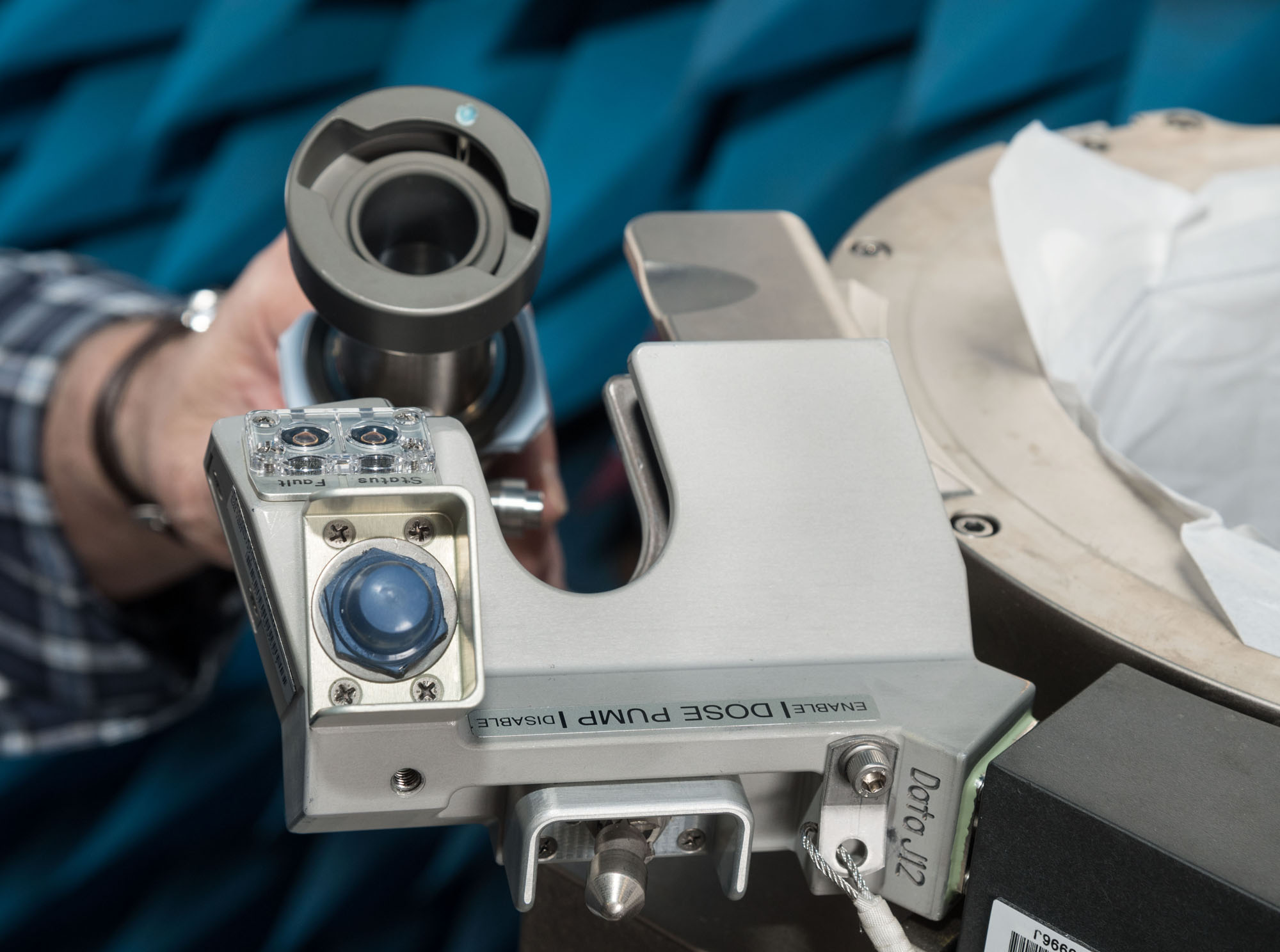
The UWMS features a seat atop a canister, with a long, flexible urine hose attached. Each Artemis 2 astronaut will have his or her own funnel for that hose, to keep things as sanitary as possible. Urine will go down the hose, with air flow doing the shepherding work rather than gravity.
The UWMS on the ISS recycles urine, turning it into water that crewmembers can use. But Artemis 2 is a short mission, so its toilet doesn't need to do that; rather, the astronauts' urine will be vented into space several times per day.
The story is a bit different for solid waste.
"The feces get sucked down into the bottom, into a bag. You close that off, and you squish it down into the bottom, into the canister," Hansen said in the video. "During the mission, we'll have to change out that solid waste canister a few times, and all of that comes back to Earth with us."
Artemis 2 will be the spaceflight debut for the Orion hygiene bay: The equipment did not fly on Artemis 1, which successfully sent an uncrewed Orion to lunar orbit and back in late 2022. NASA has thought about what the astronauts can do if the equipment doesn't work as planned, and the solution is a blast from the past — basically, going back to Apollo-era toilet tech.
"We're actually flying contingency equipment — you know, urine collection bags — and they can still use the toilet for other functions, even without it functioning, to be able to dump the urine overboard," Korth said.
 Mike WallSpaceflight and Tech Editor
Michael Wall is the Spaceflight and Tech Editor for Space.com and joined the team in 2010. He primarily covers human and robotic spaceflight, military space, and exoplanets, but has been known to dabble in the space art beat. His book about the search for alien life, "Out There," was published on Nov. 13, 2018. Before becoming a science writer, Michael worked as a herpetologist and wildlife biologist. He has a Ph.D. in evolutionary biology from the University of Sydney, Australia, a bachelor's degree from the University of Arizona, and a graduate certificate in science writing from the University of California, Santa Cruz. To find out what his latest project is, you can follow Michael on Twitter.
View MoreYou must confirm your public display name before commenting
Please logout and then login again, you will then be prompted to enter your display name.
Logout MORE FROM SPACE...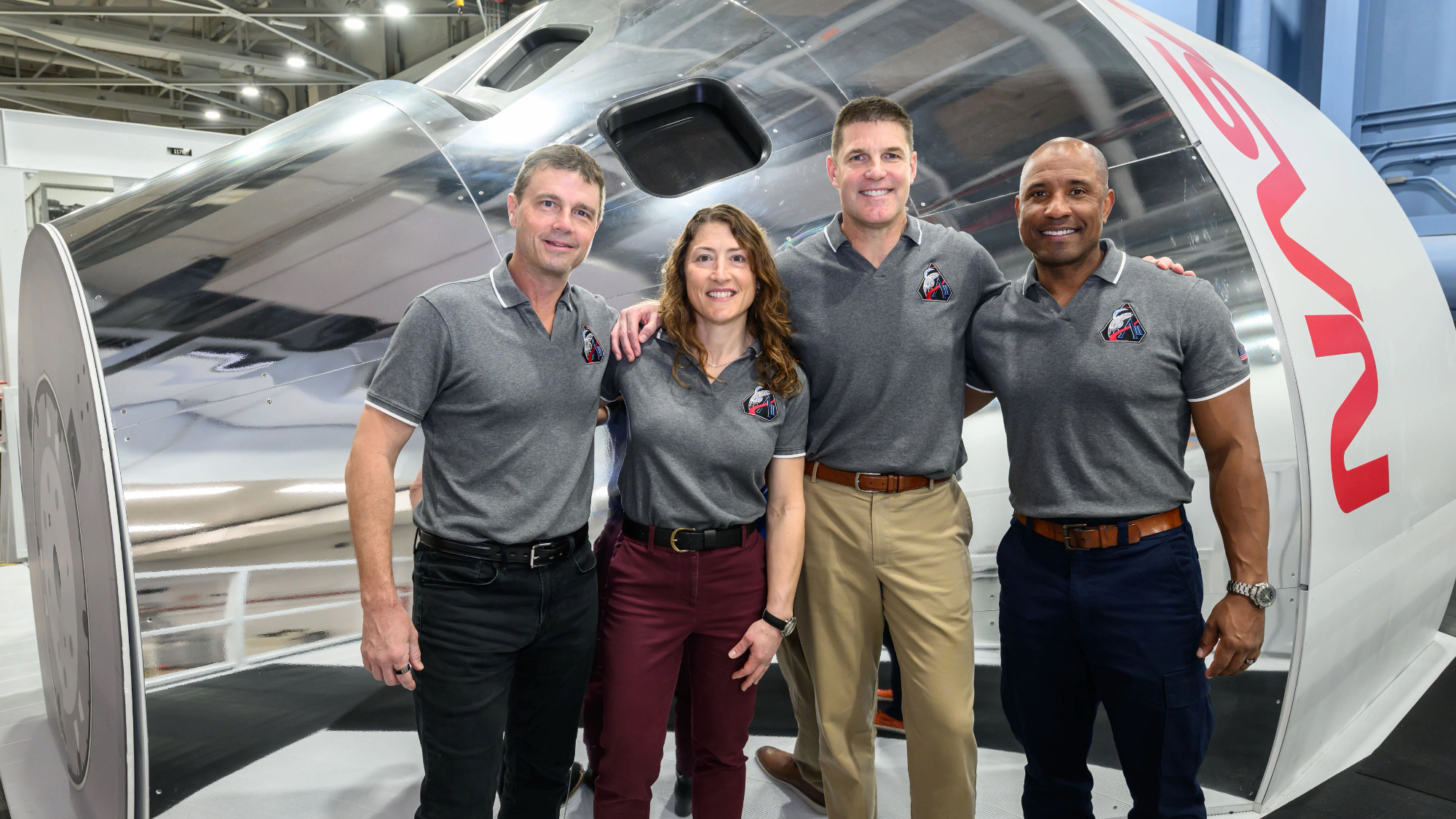 1'We're all on this journey together:' Who are the Artemis 2 astronauts launching to the moon?
- 2Making Canadian history: Artemis 2 astronaut Jeremy Hansen is ready for his epic moon mission
- 3'It's all I think about': Artemis 2 commander Reid Wiseman is zeroed in on historic moon mission
- 4'We work for them, too': Artemis 2 moon mission is for everyone, NASA astronaut Victor Glover says (video)
- 5'An incredible privilege and responsibility': Artemis 2's Christina Koch is ready to become the 1st woman to fly around the moon