Breaking space news, the latest updates on rocket launches, skywatching events and more!
Contact me with news and offers from other Future brands Receive email from us on behalf of our trusted partners or sponsors By submitting your information you agree to the Terms & Conditions and Privacy Policy and are aged 16 or over.You are now subscribed
Your newsletter sign-up was successful
Want to add more newsletters?
An account already exists for this email address, please log in. Subscribe to our newsletter Watch live: NASA's Nancy Grace Roman Space Telescope is a game changer and fully assembled - YouTube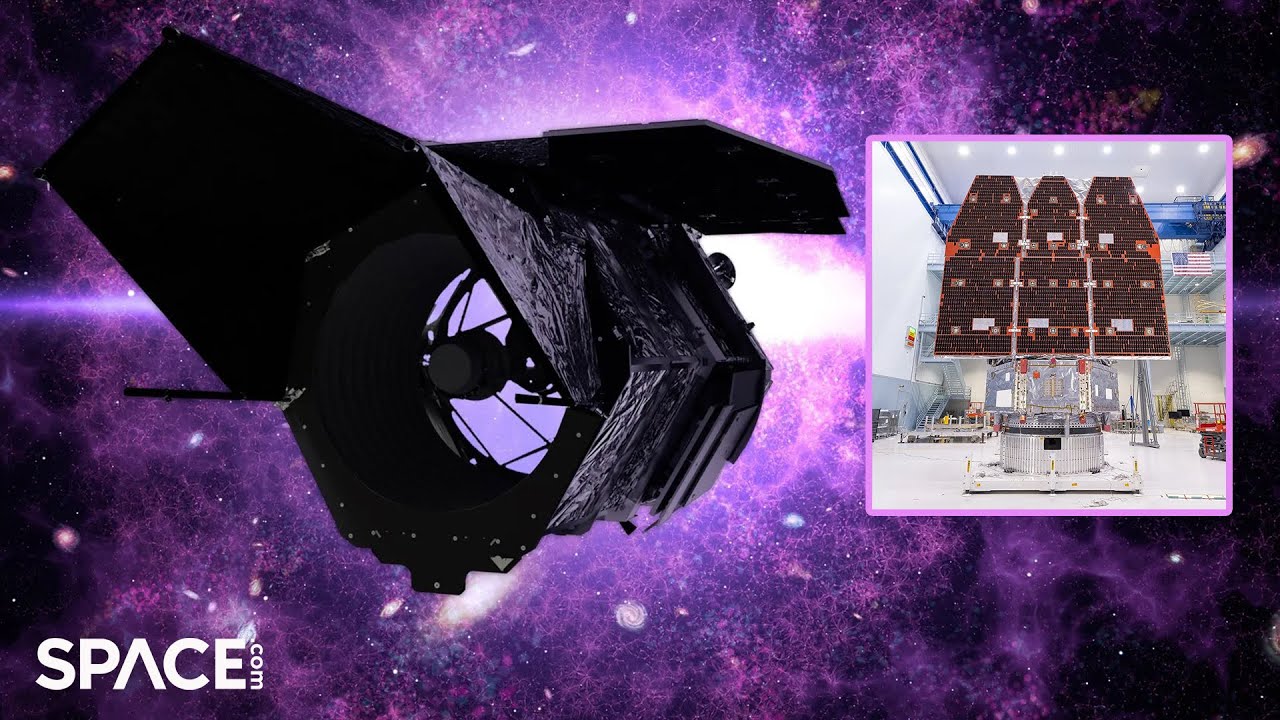 Watch On
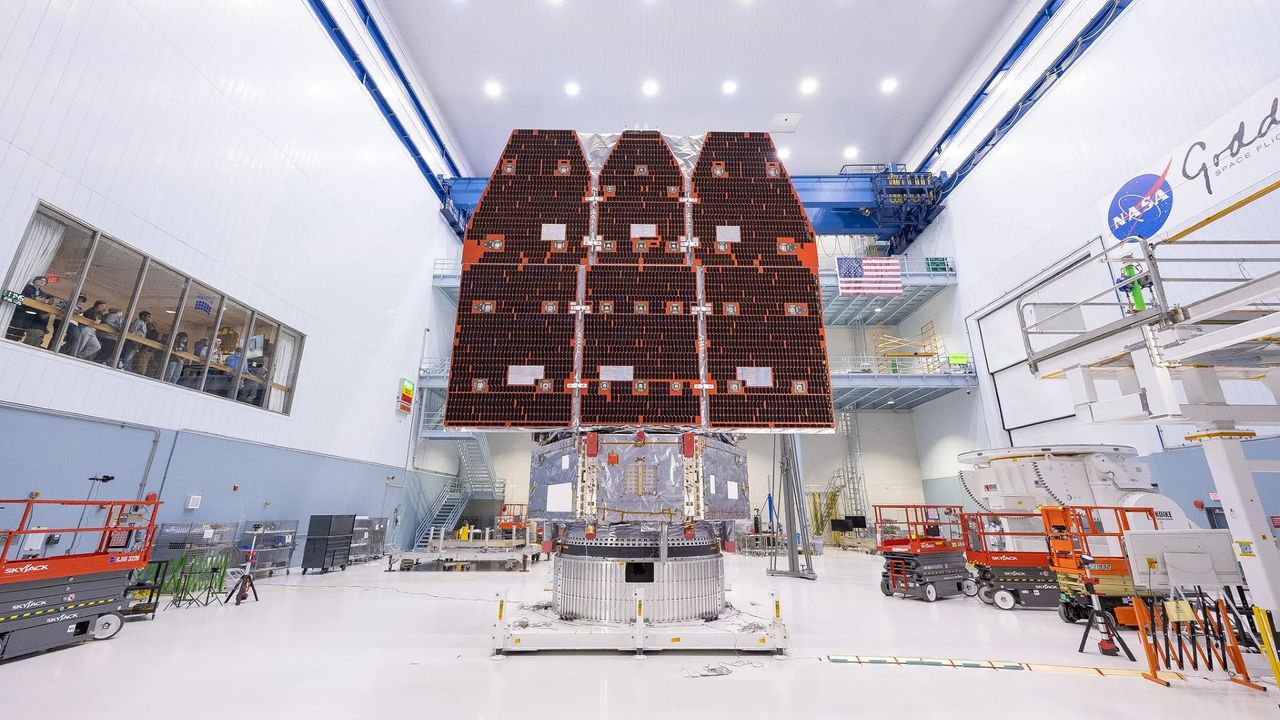
 NASA's newest space telescope is ready for its moment on stage — and soon, in space.
News conference and launch
According to NASA, briefing participants, who will discuss the telescope's progress and science plans, include:
- NASA Administrator Jared Isaacman
- Nicky Fox, associate administrator, science mission directorate
- Jamie Dunn, Roman telescope project manager
- Julie McEnery, Roman telescope senior project scientist.
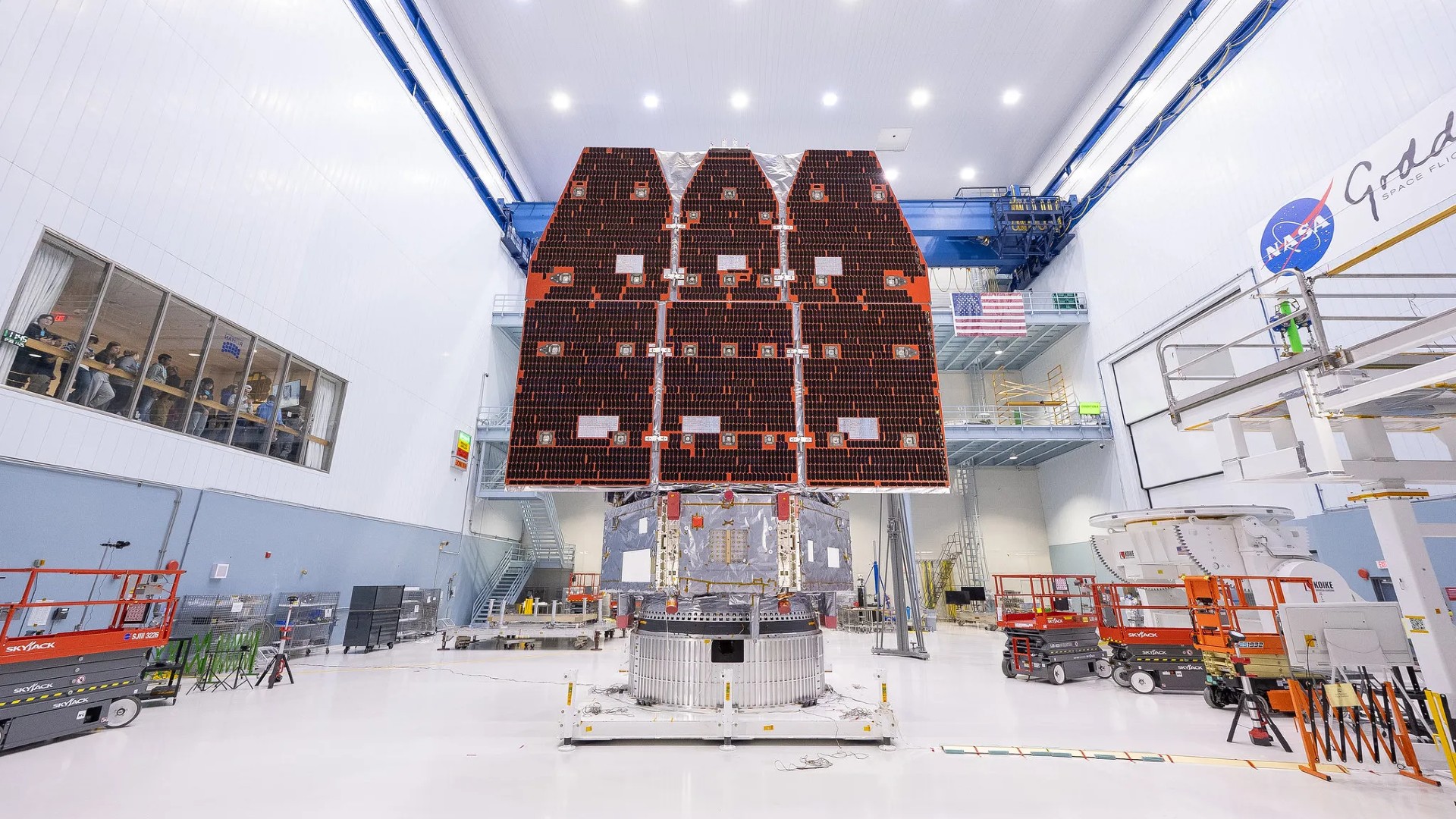
The news conference will take place at NASA's Goddard Spaceflight Center in Greenbelt, Maryland, where Roman was built.
Roman is almost finished its prelaunch testing at Goddard ahead of its last big journey on Earth — a shipment to NASA's Kennedy Space Center in Florida, where the telescope will launch aboard SpaceX Falcon Heavy between autumn 2026 and May 2027.
What is Roman?
Roman, estimated to cost more than $4 billion, is a big survey telescope designed to show astronomers more about how the universe formed and evolved.
Get the Space.com NewsletterContact me with news and offers from other Future brandsReceive email from us on behalf of our trusted partners or sponsorsRoman has a telescope mirror similar in size to the famed Hubble Space Telescope, at 8 feet or 2.4 meters. But the key difference is scope: Hubble narrows in on fine details, while Roman aims to survey the sky with a field of view 100 times larger than Hubble's.
Looking at large-scale structure of galaxies and stars is part of Roman's work, as it seeks to answer questions about how the universe formed, evolved and expanded with investigations concerning dark matter and dark energy.
Searching for exoplanets
Roman will also do a "Galactic Bulge Time-Domain Survey" to look at the central bulge of stars of the Milky Way galaxy. Investigators will mostly be looking for exoplanets, using a technique called gravitational lensing.
Very simply put, bent starlight from distant galaxies can allow objects passing in front of massive objects to be temporarily magnified and visible, thanks to how general relativity and space-time works.
This will allow Roman to hunt down exoplanets through flickers, or distortions, in starlight as planets pass in front of stars — assuming the distortions aren't due to starquakes, or some other stellar phenomena.
 Elizabeth HowellContributing Writer
Elizabeth Howell (she/her), Ph.D., was a staff writer in the spaceflight channel between 2022 and 2024 specializing in Canadian space news. She was contributing writer for Space.com for 10 years from 2012 to 2024. Elizabeth's reporting includes multiple exclusives with the White House, leading world coverage about a lost-and-found space tomato on the International Space Station, witnessing five human spaceflight launches on two continents, flying parabolic, working inside a spacesuit, and participating in a simulated Mars mission. Her latest book, "Why Am I Taller?" (ECW Press, 2022) is co-written with astronaut Dave Williams.
View MoreYou must confirm your public display name before commenting
Please logout and then login again, you will then be prompted to enter your display name.
Logout MORE FROM SPACE... 1Don't miss the Lyrid meteor shower 2026 peak tonight! Viewing times, location and tips
 - 2NASA's Curiosity rover finds building blocks of life on Mars. Scientists aren't sure how they got there
- 3NASA shuts down Voyager 1 instrument to keep probe exploring interstellar space
- 4600 rocket landings! SpaceX notches another milestone during Sunday Starlink launch (video)
- 5Scientists found a 'bathtub ring' on Mars. Could it be evidence of an ancient Red Planet ocean?