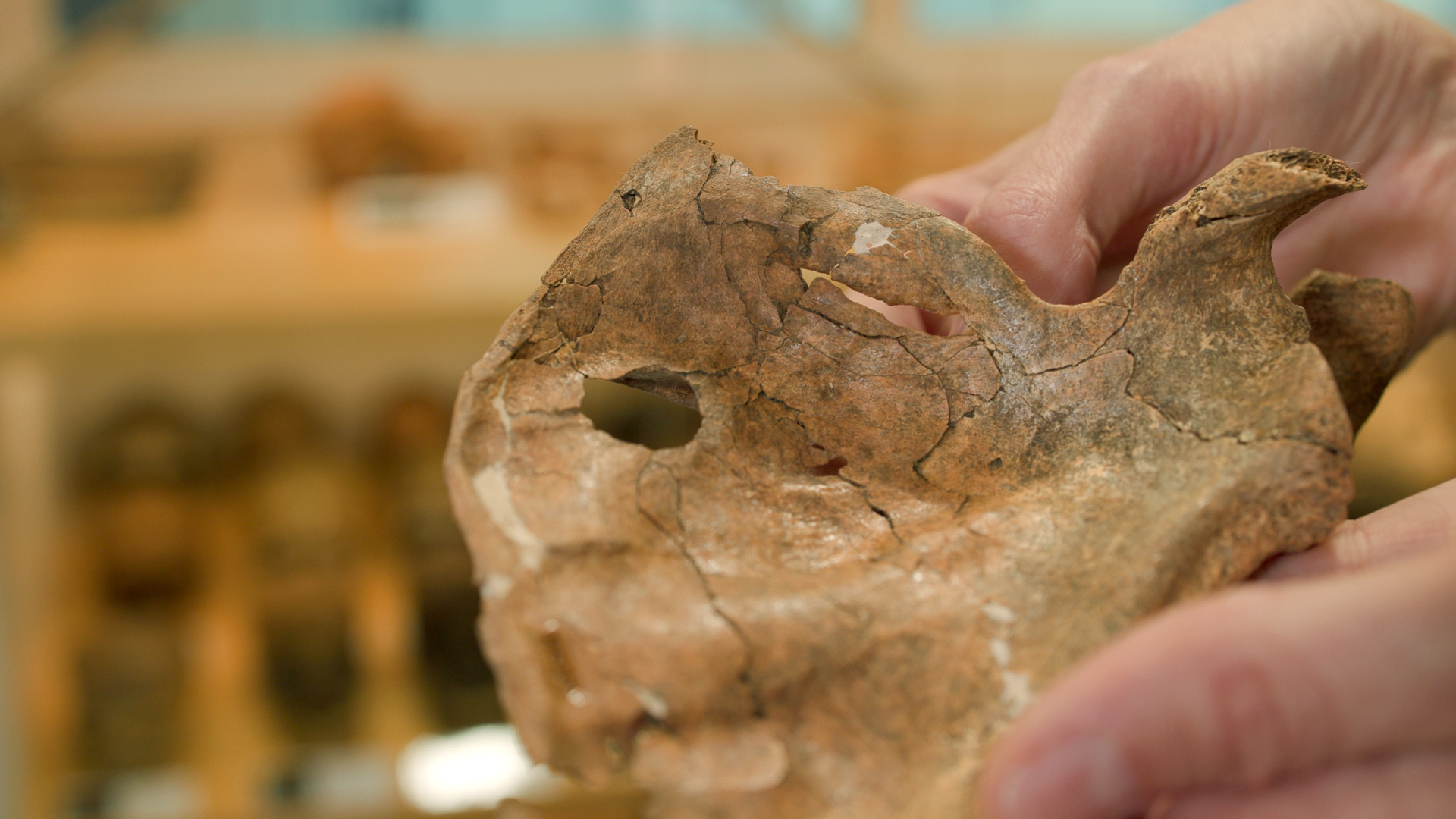
A Neanderthal who was buried 75,000 years ago in Shanidar Cave in Iraq died from a wooden spear straight through the chest, archaeologists have revealed.
While it's impossible to know exactly what happened, the violence may have been a targeted hit.
"The position of the wound and the force required to push it right through the Neanderthal's body bear the hallmarks of an intended kill shot directed towards the heart," study first author Emma Pomeroy, a paleoanthropologist at the University of Cambridge, said in a statement.
In a study published Thursday (Oct. 15) in the journal Scientific Reports, Pomeroy and co-authors analyzed the bones of Shanidar A, a Neanderthal who died violently at about age 45 and was then buried in Shanidar Cave.
The archaeological site at Shanidar is famous for its evidence of purposeful burial, which experts once thought was only done by modern humans. Although the Neanderthal "flower burial" at Shanidar has since been debunked, the cave holds other evidence of repeated Neanderthal burials, which shows that these extinct humans placed specific meaning on that location, the authors wrote in the study.
The skeleton of Shanidar A was incomplete when it was discovered in 2019, consisting of a mostly complete right hand, three ribs, six teeth and a left scapula or shoulder blade, which meant they could not figure out the sex of the Neanderthal.
Near the edge of the shoulder blade, archaeologists noticed a round hole about 0.6 inches (1.5 centimeters) in diameter and a round piece of bone that had been punched out of the shoulder blade. The researchers ruled out post-mortem damage to the bone, including animal gnawing and insect burrowing.
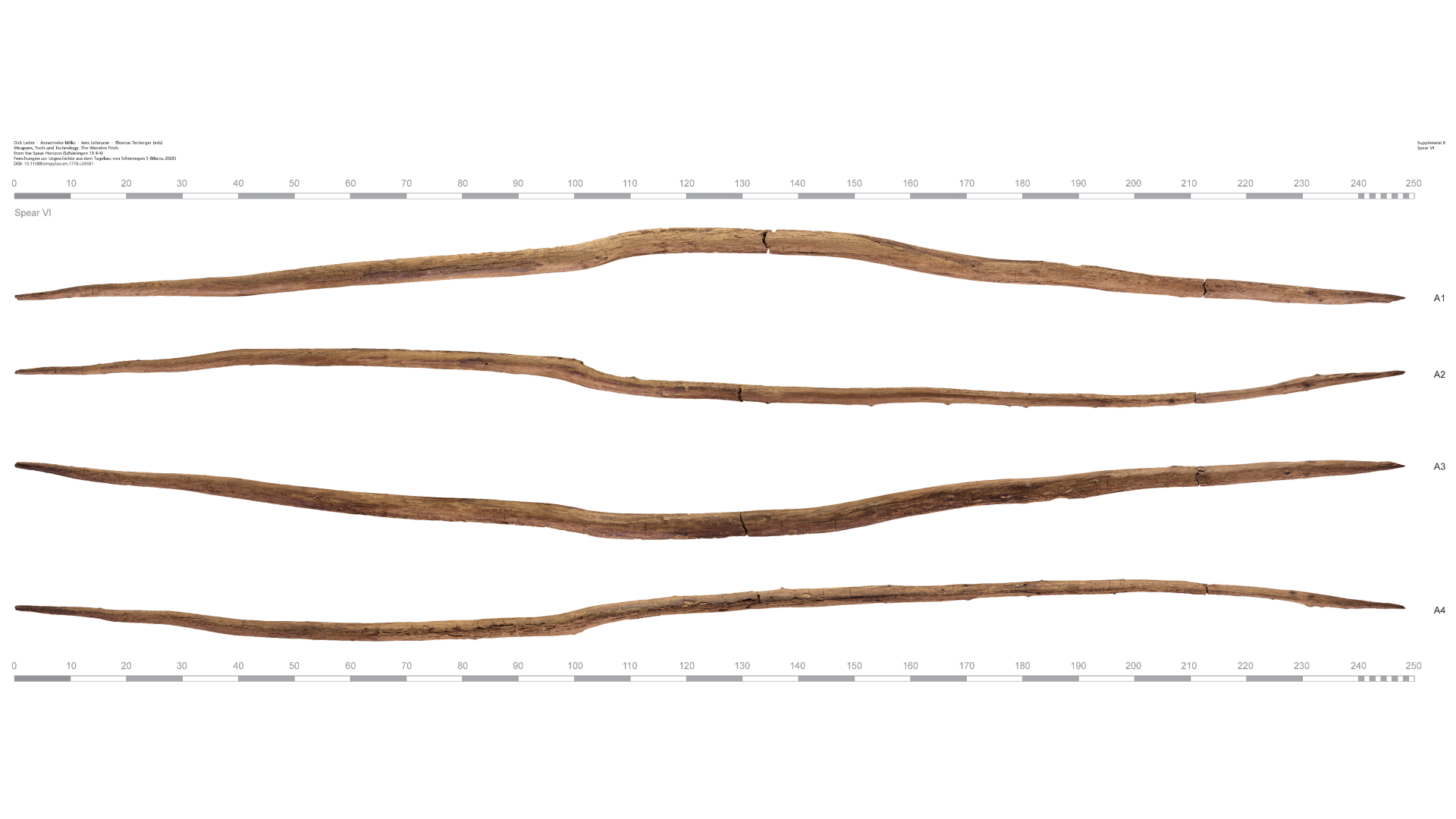
"The perforation is best explained as resulting from perimortem [around the time of death] penetrating trauma, such as that caused by a projectile or a thrusting implement such as a spear," the researchers wrote in the study. Specifically, the Neanderthal was killed by a spear that entered their chest from the front at a high velocity and pierced their shoulder blade.
The shape of the wound in the shoulder blade appears to match experimental evidence of injuries made by wooden spears rather than stone-tipped weapons, the researchers wrote in the study. Neanderthals would have used wooden spears for both thrusting and throwing. But it is unclear if this individual died because of a violent interaction with another Neanderthal or by accident, such as a hunting incident.
"All we can ever know about the end of this Neanderthal's life is that it was violent, and came at the end of a wooden spear," study co-author Graeme Barker, an archaeologist at the University of Cambridge, said in the statement.
"Care and support from other Neanderthals"
Even though this Neanderthal had an untimely demise, evidence on the teeth suggested that the individual was cared for during life.
The six teeth from Shanidar A were heavily worn-down in an unusual manner, the researchers wrote. One of them — a front tooth with a large quantity of tartar on it — had been split in half during the Neanderthal's life, and the individual continued to use the damaged tooth for a considerable amount of time. The collection of teeth suggests the Neanderthal sustained a major trauma to the face that fractured the lower front tooth and may have caused additional injuries to the jaw.
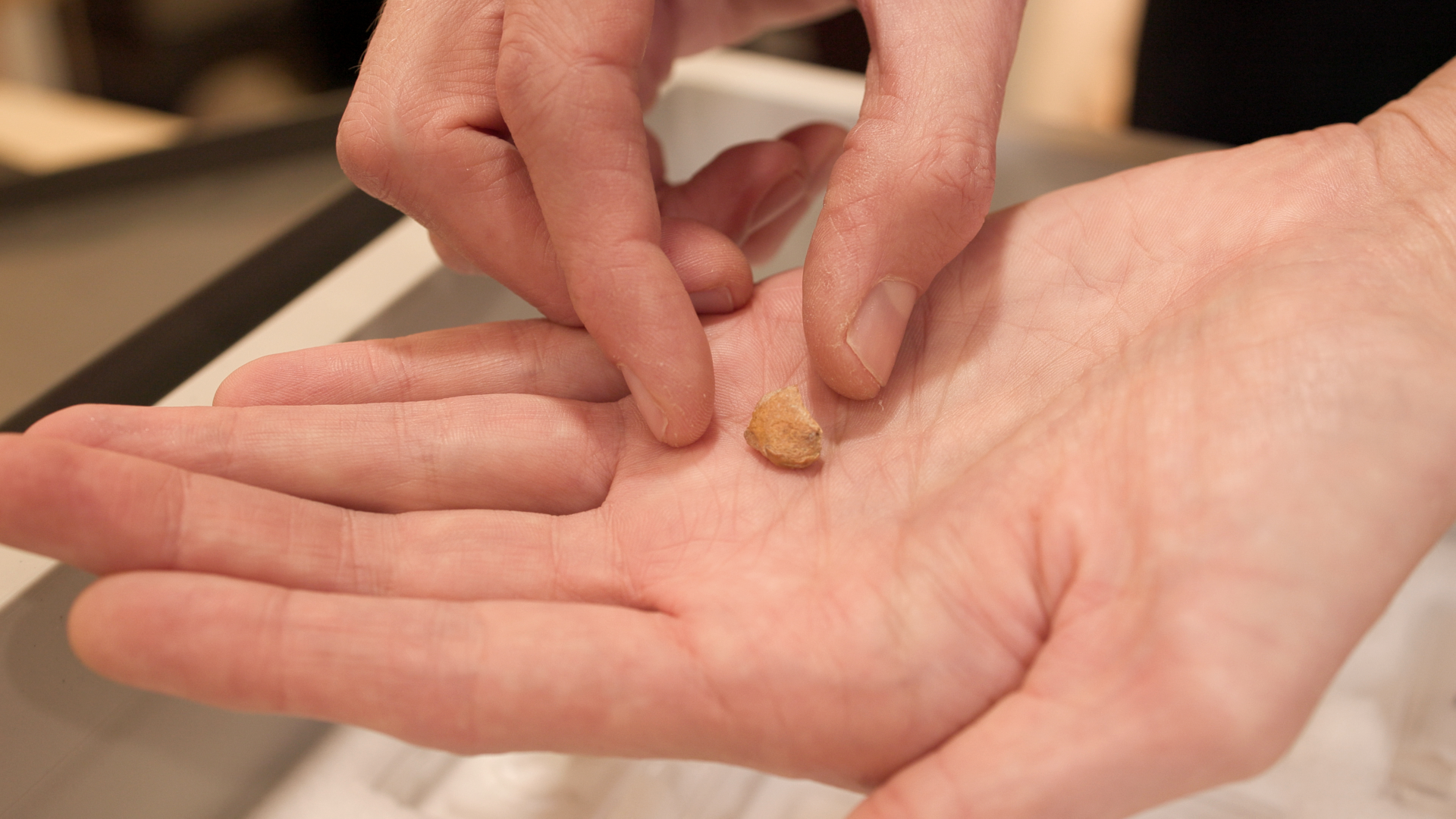
"There’s no doubt that Shanidar A would have had difficulty communicating and been in absolute agony for a long period of time," Pomeroy said in the statement. "Surviving a blow that splits a tooth in this fashion, then continuing to live and eat for a period of at least a year and maybe more, would have required care and support from other Neanderthals."
Rebecca Wragg Sykes, an archaeologist and author of "Kindred: Neanderthal Life, Love, Death and Art" (Bloomsbury, 2020) who was not involved in the study, told Live Science in an email that the apparently fatal chest injury is an important addition to our understanding of Neanderthals. While it is plausible the Neanderthal was stabbed by a wooden spear, Wragg Sykes said, "it would be interesting to also compare whether a wild goat horn, the most intensely hunted species at Shanidar, might have been responsible."
RELATED STORIES- 100,000 years ago, one of the earliest Homo sapiens outside Africa was stabbed in the face, analysis finds
- Some of the last surviving Neanderthals were remarkably diverse — suggesting inbreeding didn't doom them
- Neanderthals may have trekked through the Saudi Arabian desert 55,000 years ago, farther south than experts thought possible
Shanidar A is not the first mortally wounded Neanderthal to be found at the site. In 2009, researchers analyzed the skeleton of Shanidar 3, an older adult male who died 50,000 years ago, and found a deep slice in one of his ribs. The researchers suggested that the Neanderthal may have been killed by a stone-tipped spear possibly thrown by a modern human. Although modern humans first reached Europe around 54,000 years ago, experts aren't sure exactly how they interacted with Neanderthals.
Pomeroy told Live Science in an email that the discovery at Shanidar of two stabbed Neanderthals 25,000 years apart is interesting but possibly just a coincidence.
"We know from the archaeology that Neanderthals were repeatedly coming back to Shanidar and using it for short periods at a time, both around 75,000 years ago and around 45-50,000 years ago, as well as leaving their dead there," Pomeroy said.
The traumatic injuries, purposeful burial and indirect evidence of wooden spears all show that 75,000 years ago, Neanderthal life — and death — were complex, the researchers wrote in the study.
How much do you know about our closest relatives? Find out with our Neanderthal quiz.