A noxious gas found seeping through cracks on Mars hints that there may be magma flowing beneath the Red Planet's surface — and perhaps even an environment similar to habitable ones on Earth, a new study suggests.
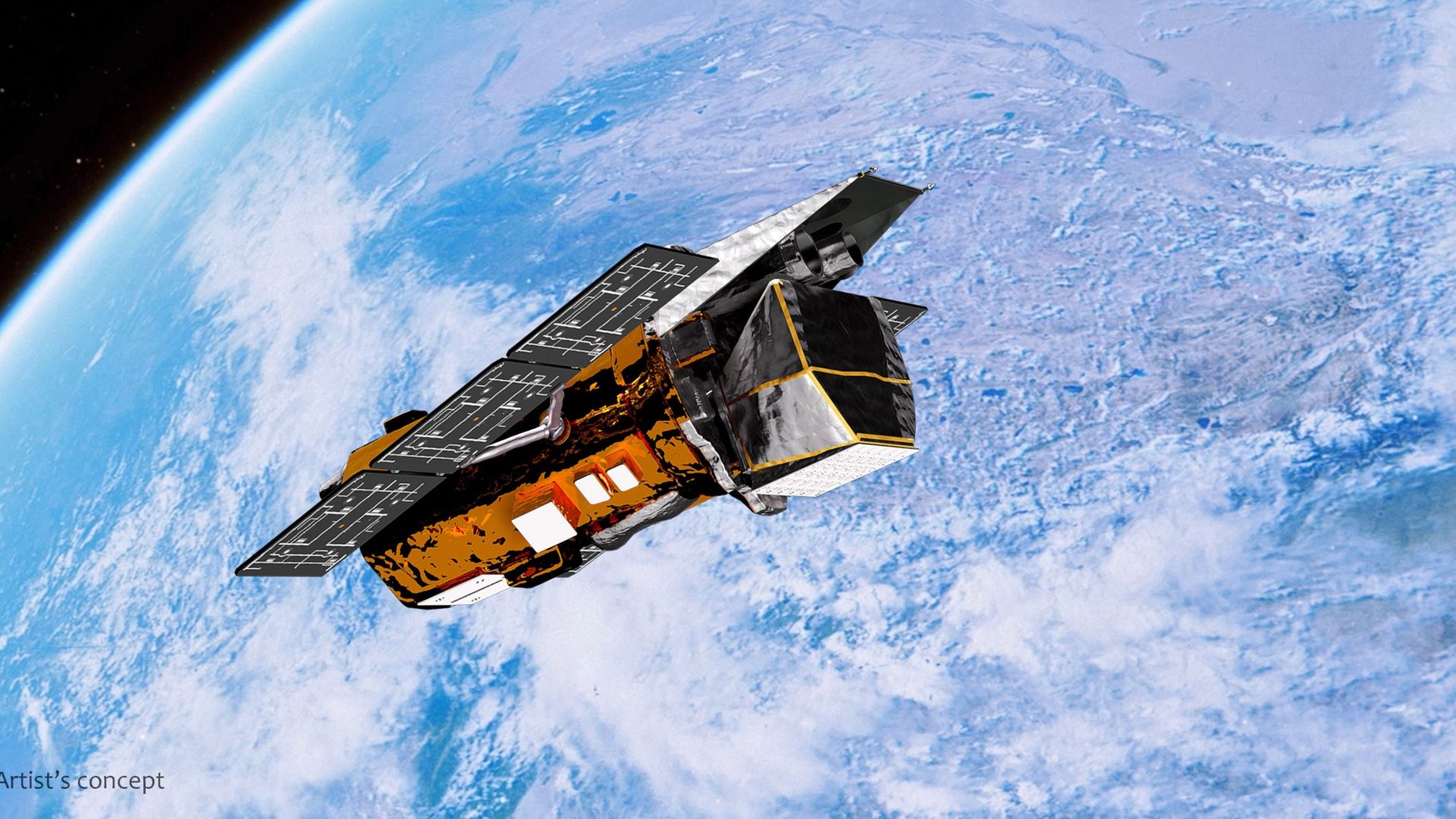
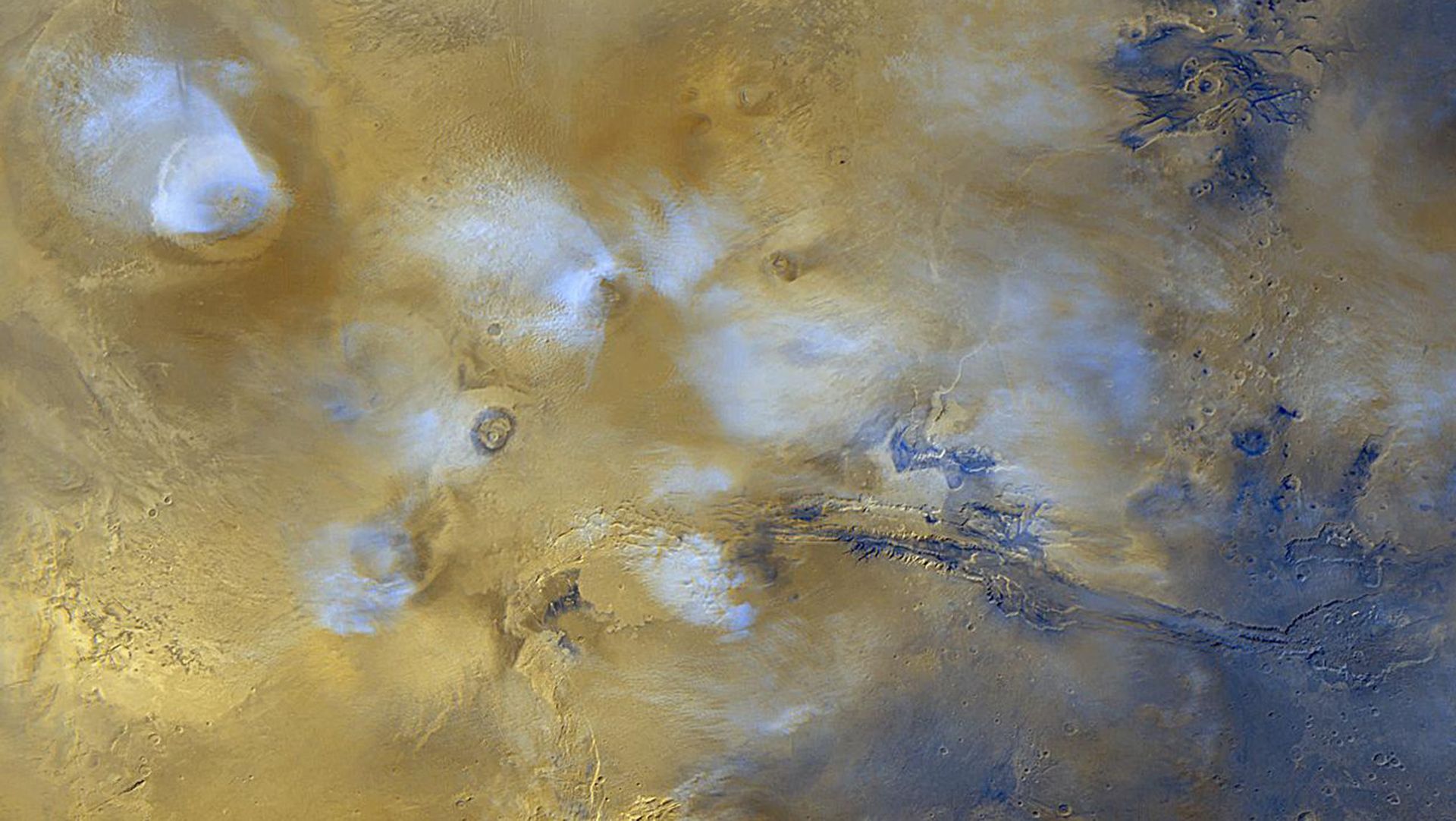
Europe's ExoMars Trace Gas Orbiter (TGO) spacecraft spotted a possible signal of hydrogen chloride gas leaking from rifts in the region of Alba Mons, the largest volcano on Mars in terms of surface area. (Mars' famous Olympus Mons is the largest volcano in terms of height.) Scientists interpret this gas as emissions from hot magma below the regolith of Mars.
Although more research is required to confirm the emissions, the team suggested that Alba Mons may host an environment similar to hydrothermal vents on Earth, where life once likely arose and continues to thrive today.
The study, published in the journal Science Advances Wednesday (Nov. 4), is not the first to suggest that magma may be flowing on Mars; NASA's InSight lander interpreted its presence through seismic observations and modeling earlier this year. But the new findings are the strongest evidence yet of gases being released by dormant volcanoes on Mars, first study author Alexander Trokhimovskiy, at Russia's Space Research Institute, told Live Science.
"Our study offers a complementary and potentially independent line of evidence [of Martian magma]: Atmospheric observations that reveal a possible signature of gas release from a subsurface magmatic system," Trokhimovskiy wrote in an email.
Europe smelt it — but what dealt it?
TGO first detected hydrogen chloride gas in Mars' atmosphere in 2021, but scientists were hesitant to link it to volcanic activity. The gas appeared to be seasonal, its distribution was not localized at a possible volcanic region, and other signs of volcanic gases, like sulfur, were not present, study co-author Kevin Olson, a visiting researcher at the University of Oxford who studies Mars gases, told Live Science in a separate email.
A photo of Mars with the Tharsis region centered. (Image credit: NASA/JPL/Malin Space Science Systems)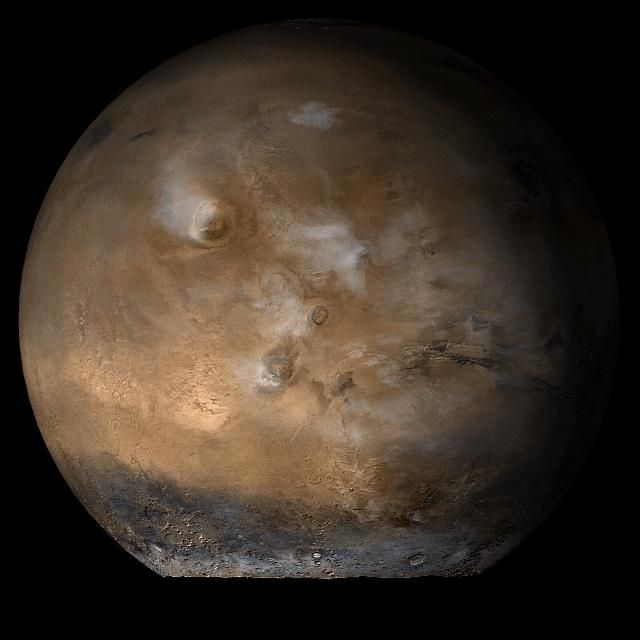
Further work, however, suggested that the gas wasn't just popping up in the warmer spring and summer in Mars' southern hemisphere; it also appeared in the winter in the northern hemisphere, he noted.
"I managed to catch two observations from the start of northern winter in the first Mars year of our mission, and a single observation the next year," Olson said, adding that a year on Mars is closer to two years on Earth due to the planet's wider orbit. "These out-of-season measurements were close to one another in location and time in both years, which was rather surprising. We then set about creating a campaign of special, targeted measurements at this time and place."
That campaign lasted two Mars years — roughly four Earth years — and increased the likelihood that scientists are seeing "an injection" of hydrogen chloride into the atmosphere from volcano-adjacent vents, Olson said.
The scientists confirmed the unseasonal observations in the northern hemisphere, finding a "distinct and pronounced signal" that then diminishes and falls below the spacecraft's detection threshold. "This inconsistency is more suggestive of a puff of gas entering the atmosphere than of regular atmospheric chemistry," he said. "While the link remains a hypothesis, we have now seen this gas appear locally, and nowhere else, over four Mars years of observations."
Related stories- Gargantuan volcano on Mars found hidden 'in plain sight,' and it could hold potential signs of life
- An anomaly in Mars' mantle could trigger volcanoes to erupt — and may be causing the whole planet to spin faster
- Grand Canyon-size 'scar' on Mars revealed like never before in striking new satellite photos
Daniel Mège, also a co-author of the paper and a professor who studies planetary geology at the Polish Academy of Sciences, identified the fissures where the gas may be emerging. He said the complementary evidence from InSight (on the ground) and TGO (circling above) helps give the study weight: InSight spotted activity in the crust, while TGO detected the emissions in the atmosphere.
Although magma activity is not in itself a sign of life, Mège noted that Earth's first life-forms came from sites like hydrothermal zones, which have a similar confluence of materials and energy as the potential vents on Mars. But conditions would need to be favorable in that area for at least millions of years to allow life to form, he cautioned.
"If these requirements are met at local scale, at the scale of the seepage structures, then living organisms might wait for us to discover them," he told Live Science in an email. "But maintaining stable conditions over such a long period at a very local scale is not obvious."
What do you know about the Red Planet? Test your knowledge with our Mars quiz!