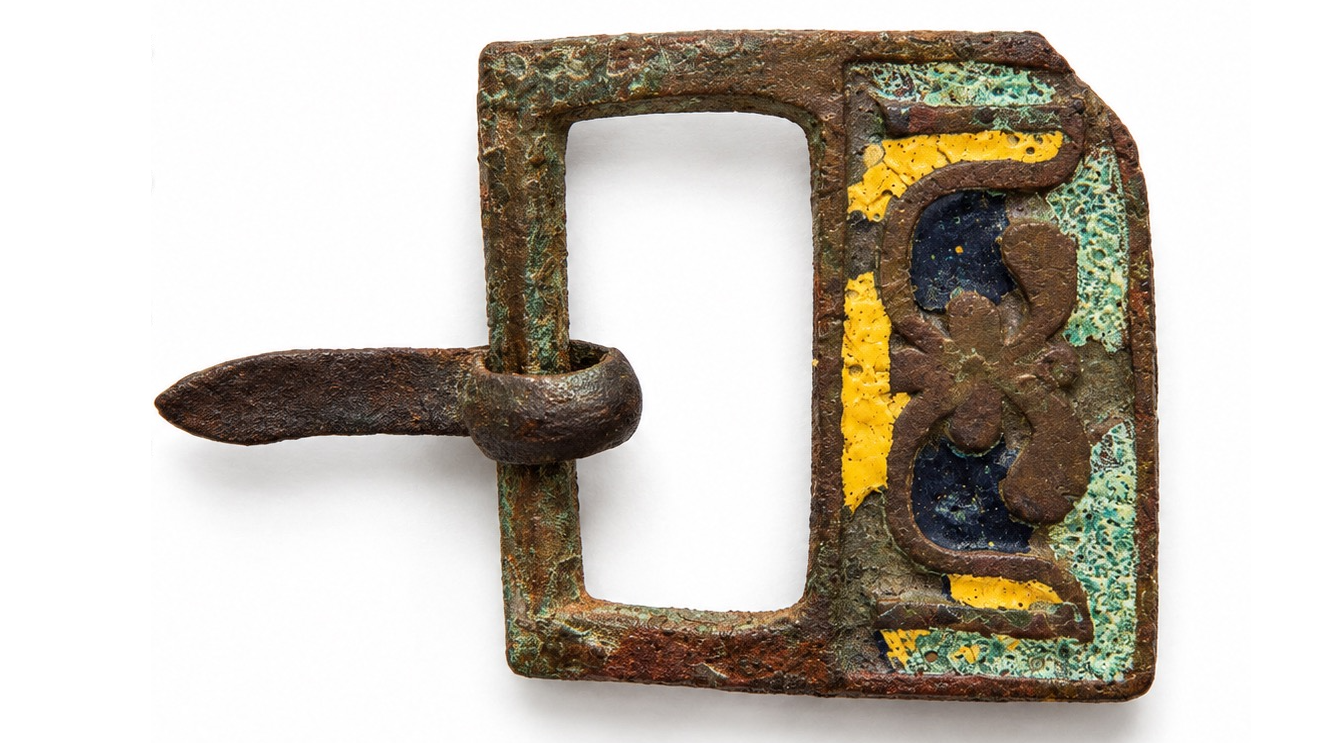
Archaeologists in Ukraine have found a colorful belt buckle that may have been worn by a nomadic equestrian warrior 1,800 years ago on the fringes of the Roman Empire.
The belt buckle was unearthed by local residents in the Tsetsyn Forest in southeastern Ukraine and given to Antonii Moisei, a professor at Bukovinian State Medical University, according to a translated statement. The roughly square metal buckle, which is about 0.8 inches (2.1 centimeters) on each side, has teal, blue and yellow enamel decorations.
The style of the decoration and the metal construction place the creation of the buckle in the second to third centuries A.D., when this part of Ukraine was in the ancient province of Roman Dacia, according to Moisei.
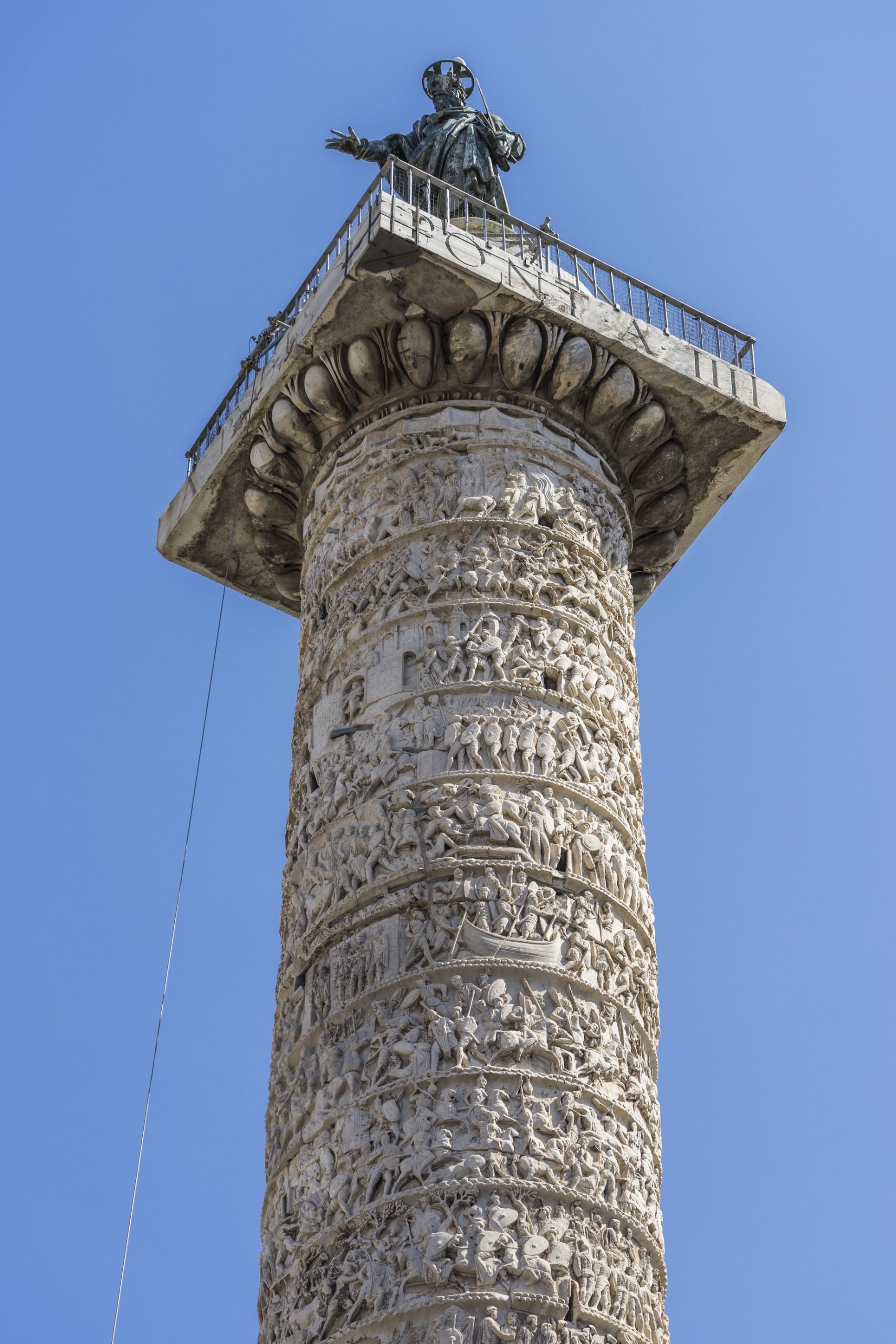
Under Emperor Trajan, Rome fought the Dacian Wars (A.D. 101-102 and 105-106) against the denizens of the Dacian kingdom and its leader, Decebalus. Roman legions destroyed Dacia and annexed it as a new province. Trajan celebrated his victory in Rome, complete with a famous column that depicts details of the Dacian Wars.
In addition to the buckle, Moisei collected a decorative belt fitting and three small, round metal objects that probably belonged to the same belt. Moisei created a reconstruction of what the belt might have looked like before it was lost in the forest nearly two millennia ago.
RELATED STORIES- 5,300-year-old kidney stone the size of a grape found in Bronze Age man's burial near Black Sea
- Archaeologists discover decapitated head the Romans used as a warning to the Celts
- Decapitated man buried near fort in Roman-era Scotland gets a new virtual face
But it's unclear who lost the belt. One of Moisei's theories is that the belt belonged to a horse-riding Sarmatian warrior originally from the Black Sea region. The Sarmatians were a group of tribes that lived outside the borders of the Roman Empire, in what are now central Ukraine, southern Russia and the Balkans. While some Sarmatian warriors fought against the incursion of the Roman Empire, others fought with Rome as mercenaries.
The metal belt fragments are part of a Roman provincial craft tradition, according to the statement, and they may have been obtained through trade or as a trophy of war. But Moisei is still studying the artifacts to confirm whether they were Sarmatian. Either way, the military belt provides new evidence of Roman military contact on the outskirts of the empire, and future work could help experts understand how the Romans interacted with the local Dacians during wartime.
From Augustus to Nero, see how much you know about ancient Rome's famous leaders with our Roman emperor quiz!