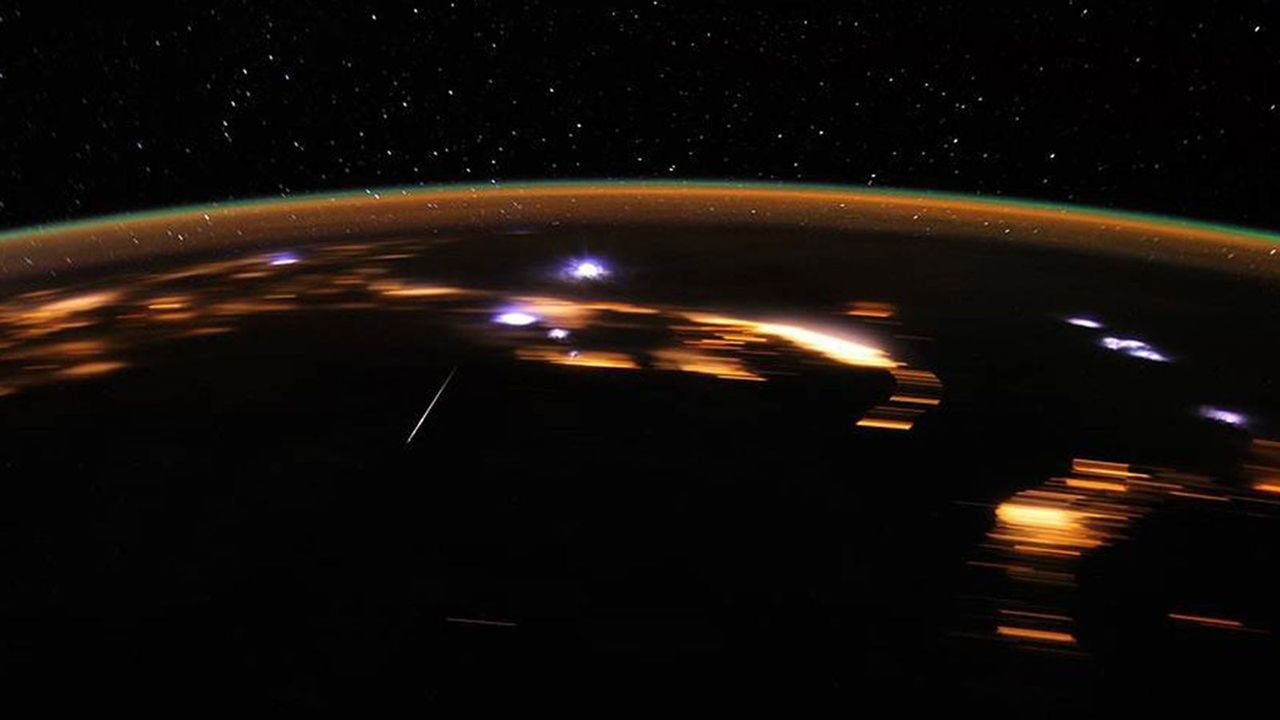
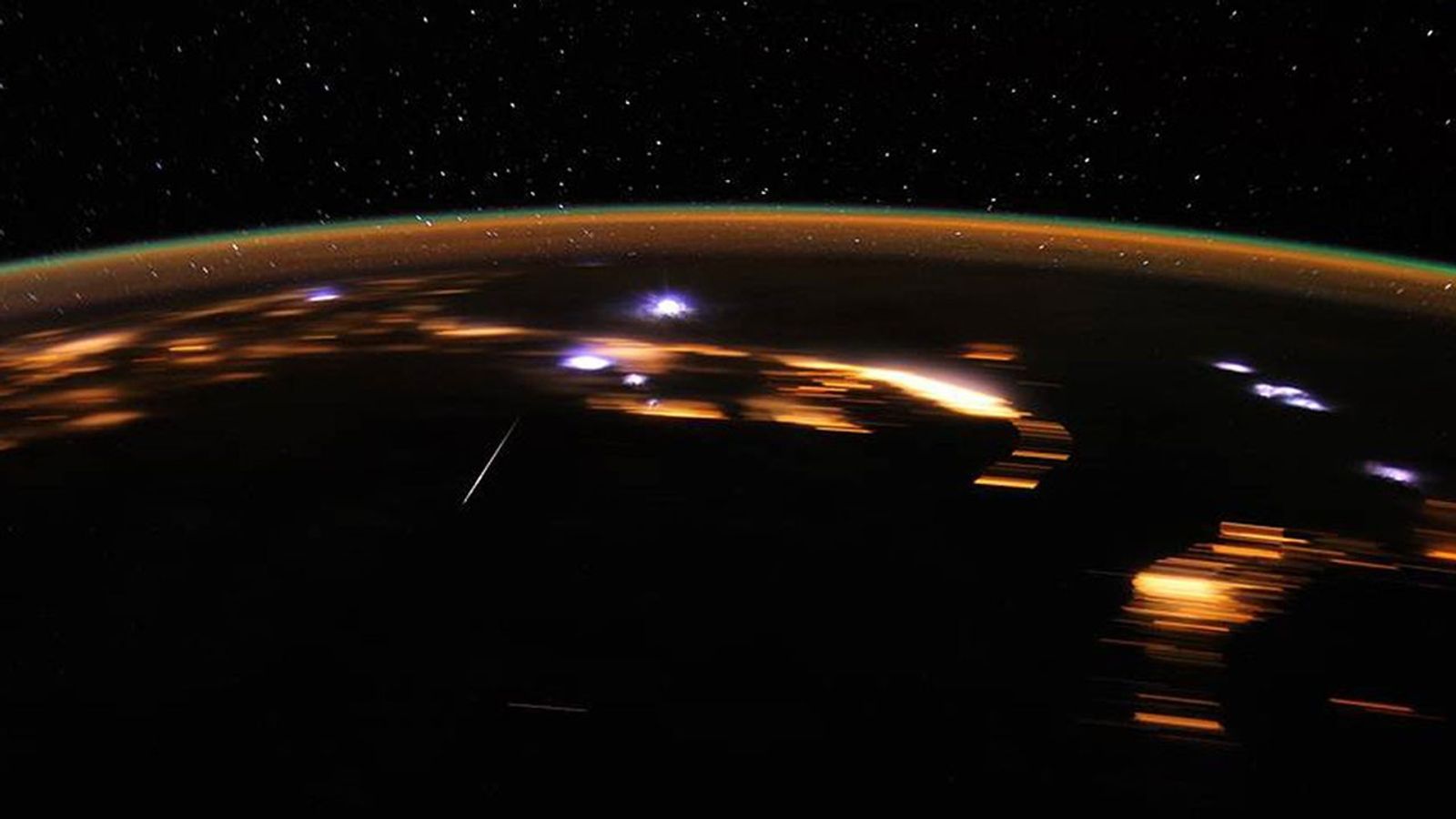
 "Shooting stars" from the Lyrid meteor shower as seen from the International Space Station. (Image credit: NASA/JSC/D. Pettit) Share this article 0 Join the conversation Follow us Add us as a preferred source on Google Newsletter Sign up for the Live Science daily newsletter now
 Get the world’s most fascinating discoveries delivered straight to your inbox.
Become a Member in Seconds
Unlock instant access to exclusive member features.
Contact me with news and offers from other Future brands Receive email from us on behalf of our trusted partners or sponsors By submitting your information you agree to the Terms & Conditions and Privacy Policy and are aged 16 or over.You are now subscribed
Your newsletter sign-up was successful
Want to add more newsletters?
Join the club
Get full access to premium articles, exclusive features and a growing list of member rewards.
Explore An account already exists for this email address, please log in. Subscribe to our newsletterThe night sky is set to deliver one of spring's most anticipated celestial events as the Lyrid meteor shower returns this week.
One of the oldest recorded meteor showers, the Lyrids peak Wednesday (April 22), offering stargazers a rare treat: a chance to witness "shooting stars" — and possibly bright "fireballs" — in dark, moonless skies.
The Lyrids officially run from April 14 through April 30, but their activity will peak in intensity during daylight on April 22 in North America and Europe, according to the American Meteor Society, when around 10 to 20 meteors per hour are expected. That creates two opportunities to catch the Lyrids: the predawn and post-sunset hours of April 22. The most favorable conditions are expected in the early morning hours, particularly around 5 a.m., when the radiant point — located in the constellation Lyra — rises higher in the sky.
Astronomical timing is working in favor of skywatchers this month. The new moon occurs on April 17, so it will still be a crescent by the time the Lyrids peak on April 22. That means the moon will be out of the sky before sunrise that day. Although it will be in the sky after dark later that day, the moon will set in the western sky as Lyra rises in the east, so it won't interfere.
While the Lyrid meteor shower's rate of "shooting stars" doesn't compare to more intense meteor showers like August's Perseids and December's Geminids, the Lyrids are known for their fast and bright "fireball" meteors that leave a persistent train, as well as for occasional bursts of activity — as many as 100 Lyrid meteors were reported per hour in 1803, 1922, 1945 and 1982, according to NASA. However, such outbursts are almost impossible to predict.
The Lyrids are the result of dust and debris left in the inner solar system by Comet C/1861 G1 (Thatcher), which orbits the sun every 415.5 years. When Earth passes through the comet's debris field each year, it causes meteors to burn up in our planet's atmosphere, giving the impression of "shooting stars" moving across the night sky. Comet Thatcher was last in the inner solar system in 1861, according to NASA. It isn’t due to return until around 2276.
For the best chance of seeing Lyrid meteors, check the weather forecast and a light pollution map for a location away from city lights. Allow your eyes to adjust to the darkness, and remain patient, as meteors can appear unpredictably in any part of the sky.
Sign up for the Live Science daily newsletter nowContact me with news and offers from other Future brandsReceive email from us on behalf of our trusted partners or sponsorsMeteor showers are best seen with the naked eye, but you’ll need some special gear if you want to photograph them.
 Jamie CarterLive Science contributor
Jamie Carter is a Cardiff, U.K.-based freelance science journalist and a regular contributor to Live Science. He is the author of A Stargazing Program For Beginners and co-author of The Eclipse Effect, and leads international stargazing and eclipse-chasing tours. His work appears regularly in Space.com, Forbes, New Scientist, BBC Sky at Night, Sky & Telescope, and other major science and astronomy publications. He is also the editor of WhenIsTheNextEclipse.com.
View MoreYou must confirm your public display name before commenting
Please logout and then login again, you will then be prompted to enter your display name.
Logout LATEST ARTICLES 1Largest-ever 3D map of the universe shows 47 million galaxies, from the Milky Way to 'cosmic noon' — Space photo of the week
- 2Can chickens really run around with their heads cut off?
- 3$3 million prize goes to duo whose research led to first sickle cell CRISPR therapy
- 4700-year-old mummy from Bolivia contains earliest confirmed evidence of strep throat bacteria in the Americas
- 5New pain-relief opioid could be much less addictive than morphine, rodent study finds