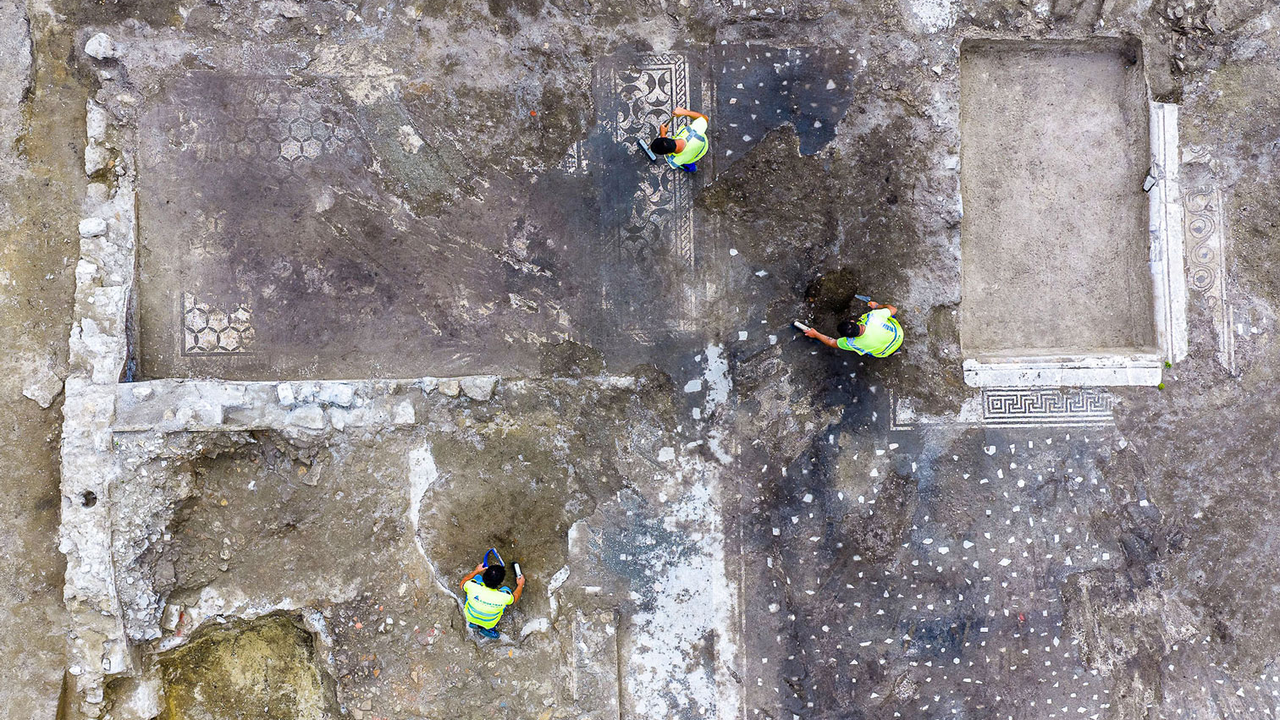
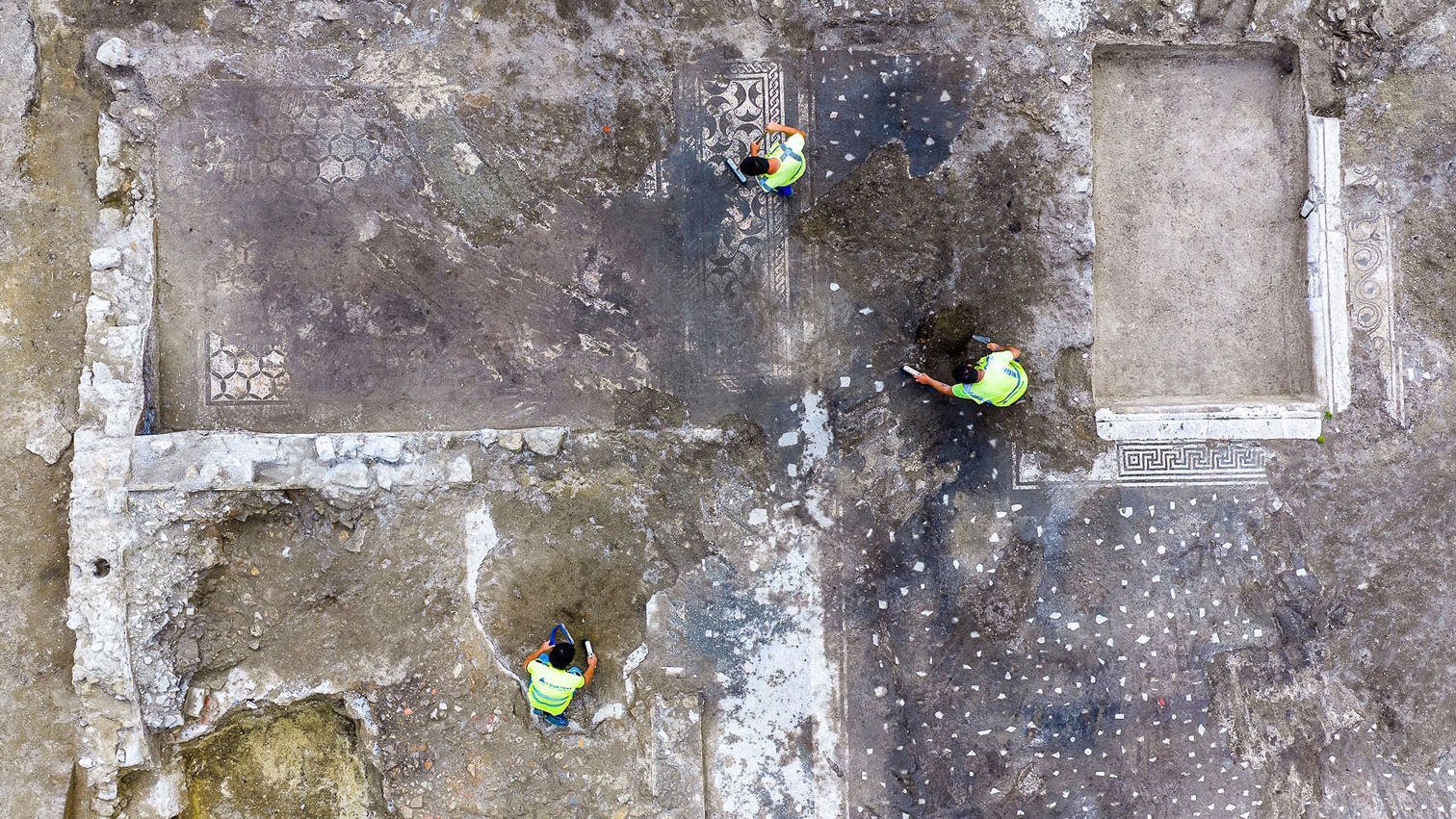
 An overhead view of four rooms at the villa undergoing excavation. (Image credit: Italian Ministry of Culture / Special Superintendency of Rome) Share this article 0 Join the conversation Add us as a preferred source on Google Newsletter Subscribe to our newsletter
 A clandestine excavation on the outskirts of Rome has brought to light a "splendid villa" that may have belonged to a member of the Antonine imperial family, according to archaeologists with the Special Superintendency of Rome. The remains of the first-century villa, which was previously unknown to archaeologists, include frescoed walls and mosaic floors that showcase the elite social status of the owners.
The villa was discovered at Castel di Guido, a village about 12 miles (19 kilometers) west of the ancient city walls of Rome. In ancient times, the area was known as Lorium, and it was frequented by prestigious Roman families, including the Roman emperors Hadrian, Antoninus Pius and Marcus Aurelius.
Image 1 of 12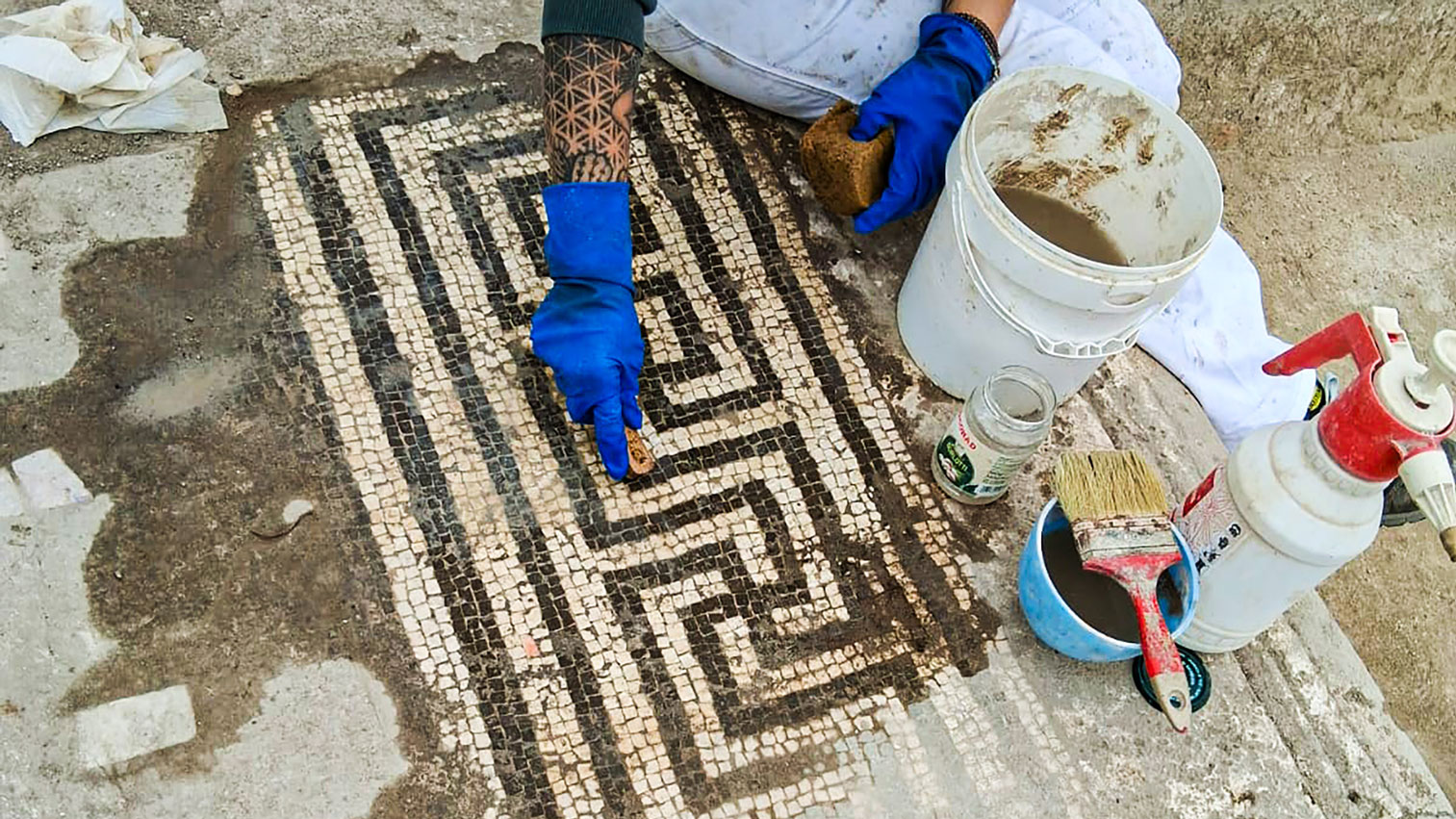 (Image credit: Italian Ministry of Culture / Special Superintendency of Rome)
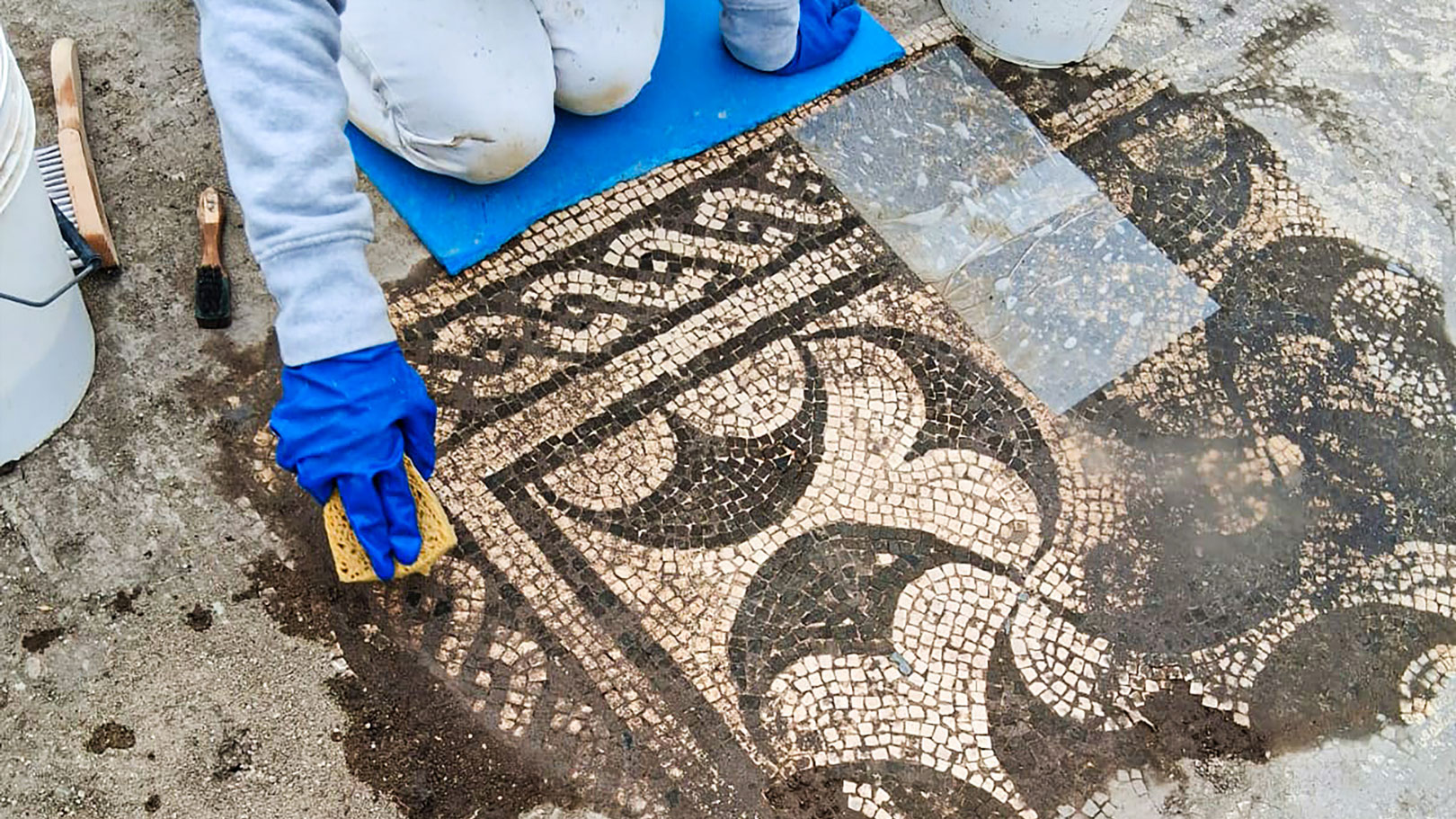
An archaeologist cleans a floor mosaic with a Greek key or meander design at an ancient villa outside of Rome.
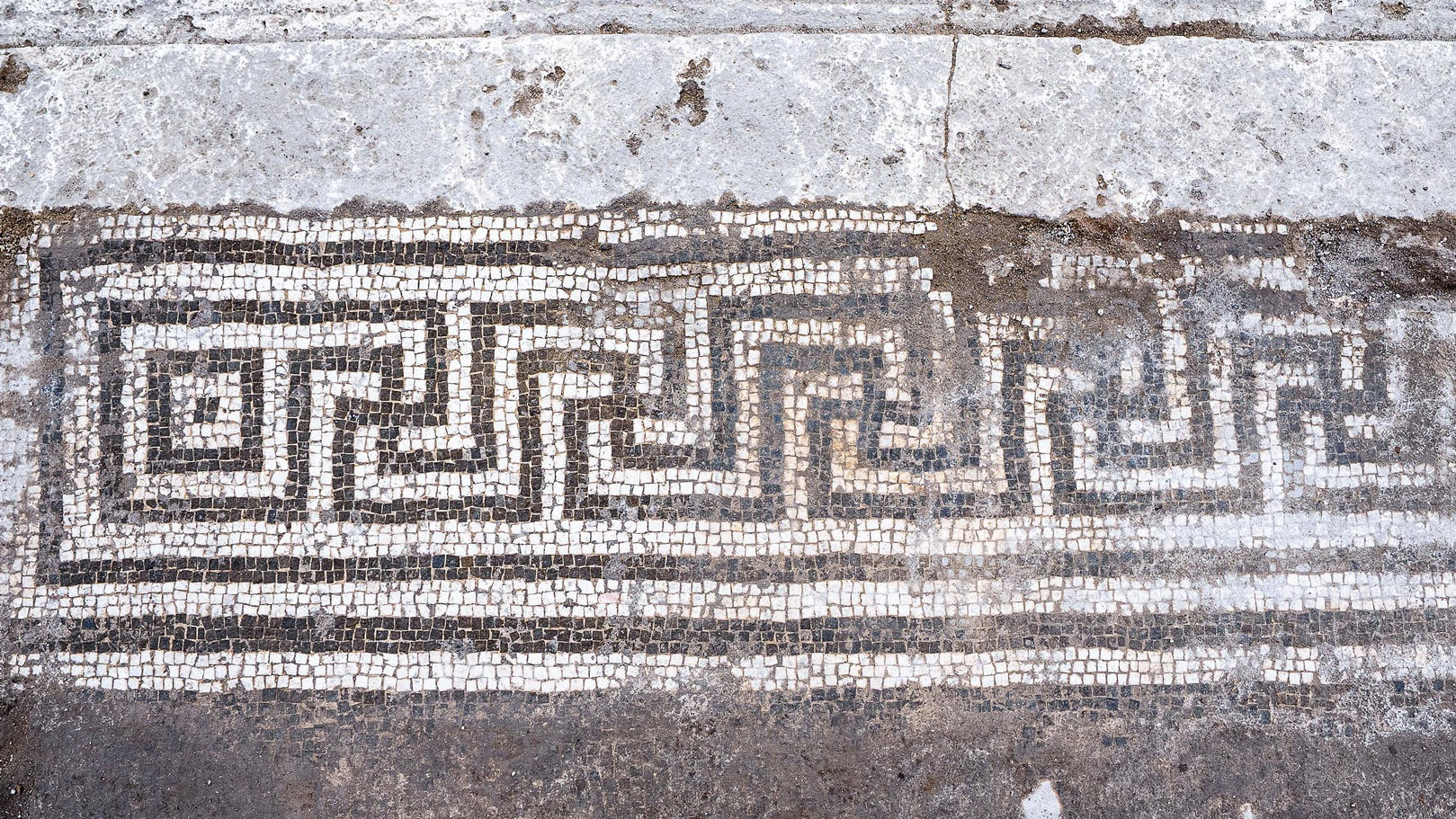 (Image credit: Italian Ministry of Culture / Special Superintendency of Rome)
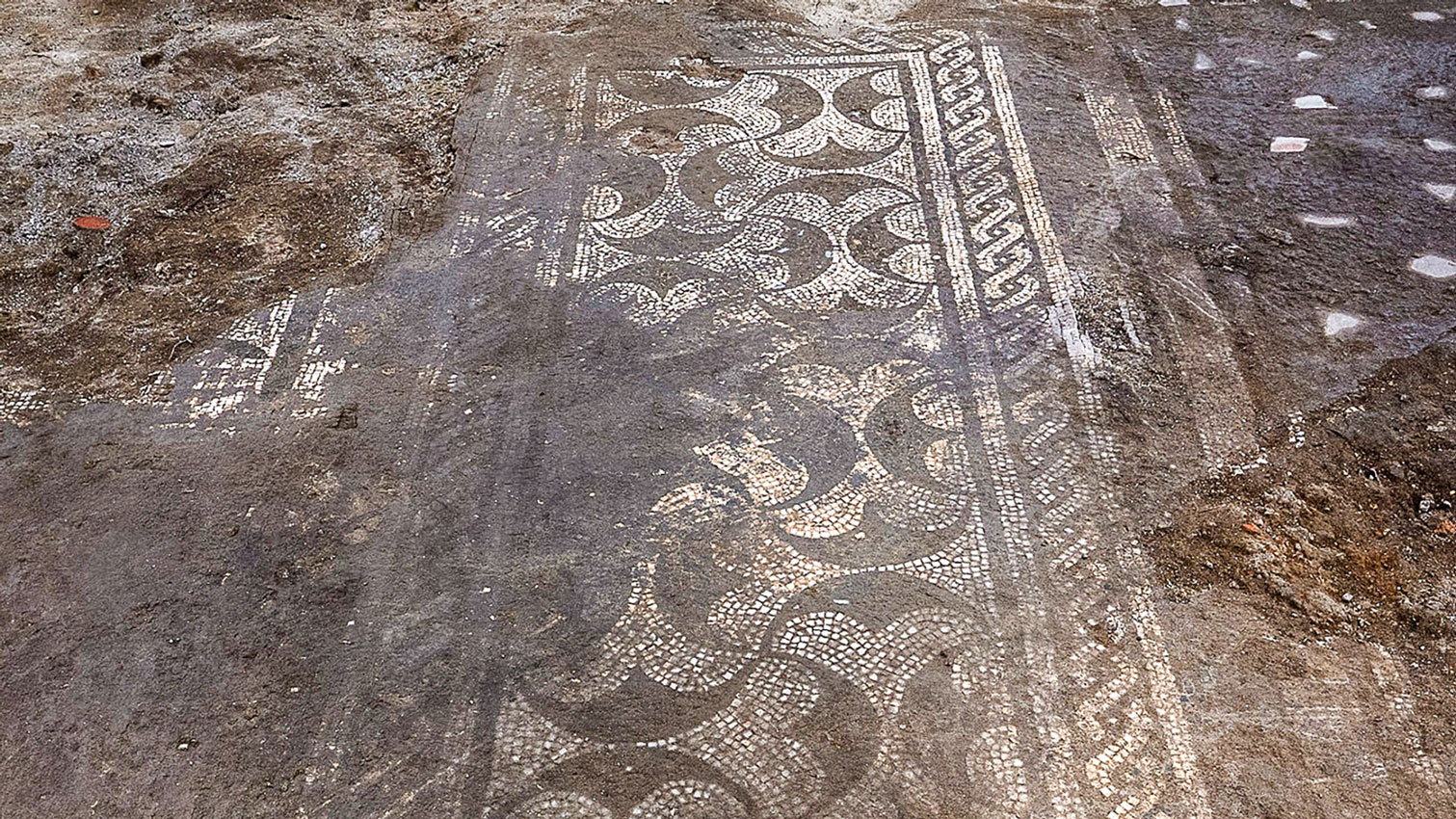
Archaeologists found a floor mosaic with a Greek key or meander design at an ancient villa outside of Rome.
 (Image credit: Italian Ministry of Culture / Special Superintendency of Rome)
An archaeologist cleans a floor mosaic with a shield design at an ancient villa outside of Rome.
 (Image credit: Italian Ministry of Culture / Special Superintendency of Rome)
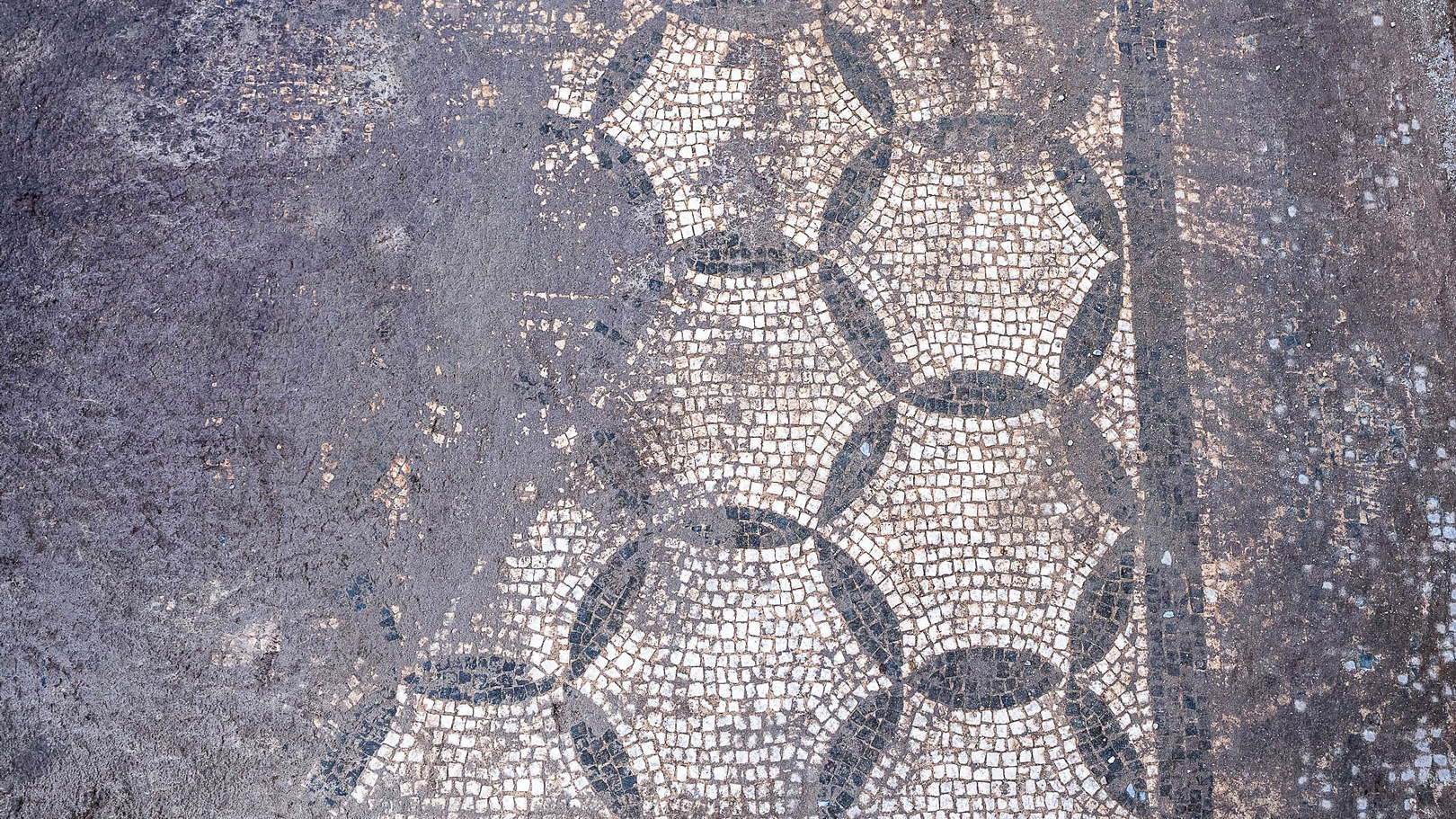
Archaeologists found a floor mosaic with a shield design at an ancient villa outside of Rome.
 (Image credit: Italian Ministry of Culture / Special Superintendency of Rome)
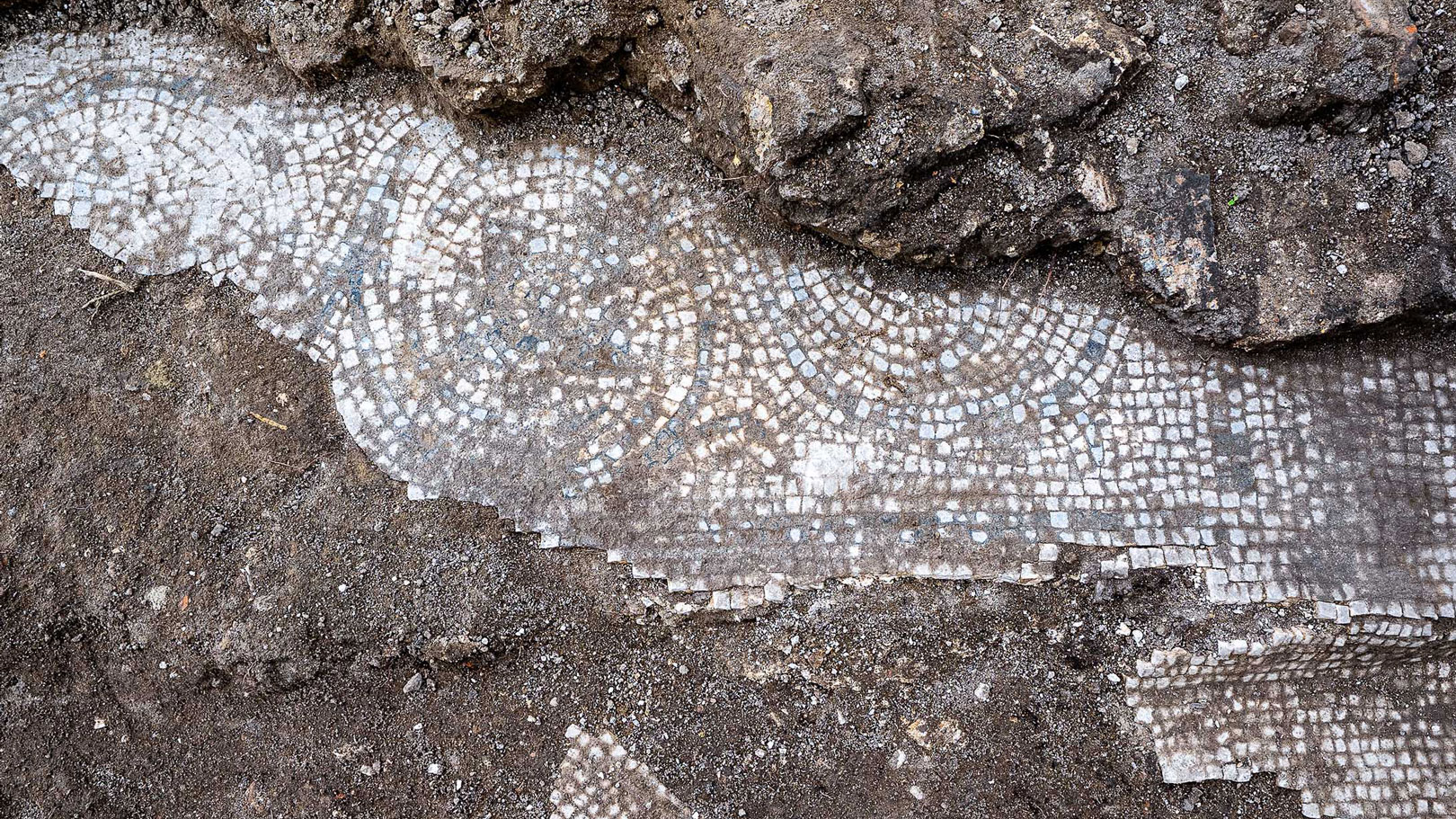
Archaeologists found a geometric floor mosaic at an ancient villa outside of Rome.
 (Image credit: Italian Ministry of Culture / Special Superintendency of Rome)
Archaeologists found a geometric floor mosaic at an ancient villa outside of Rome.
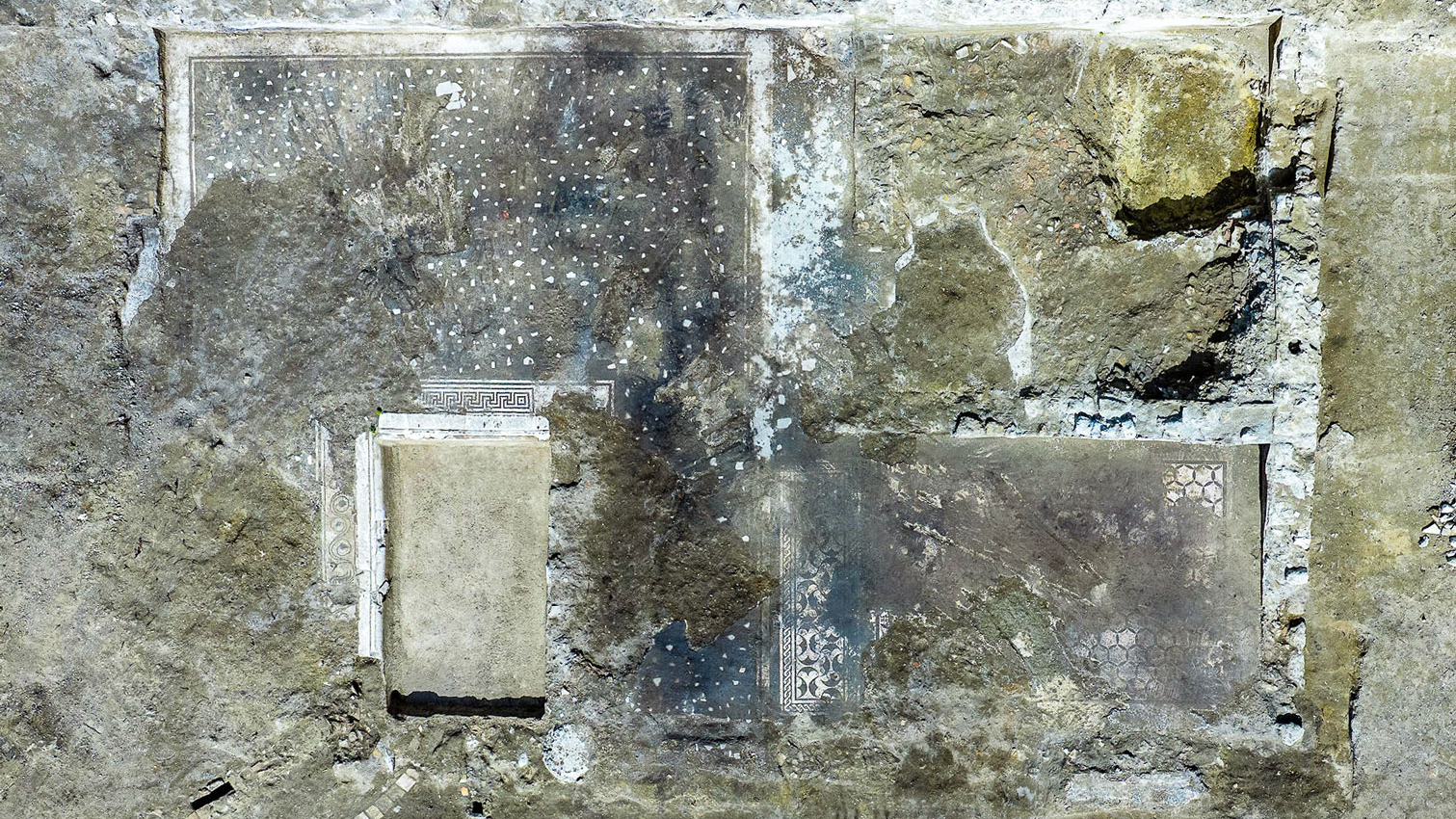 (Image credit: Italian Ministry of Culture / Special Superintendency of Rome)
Aerial photograph of an ancient Roman villa discovered at Castel di Guido near Rome.
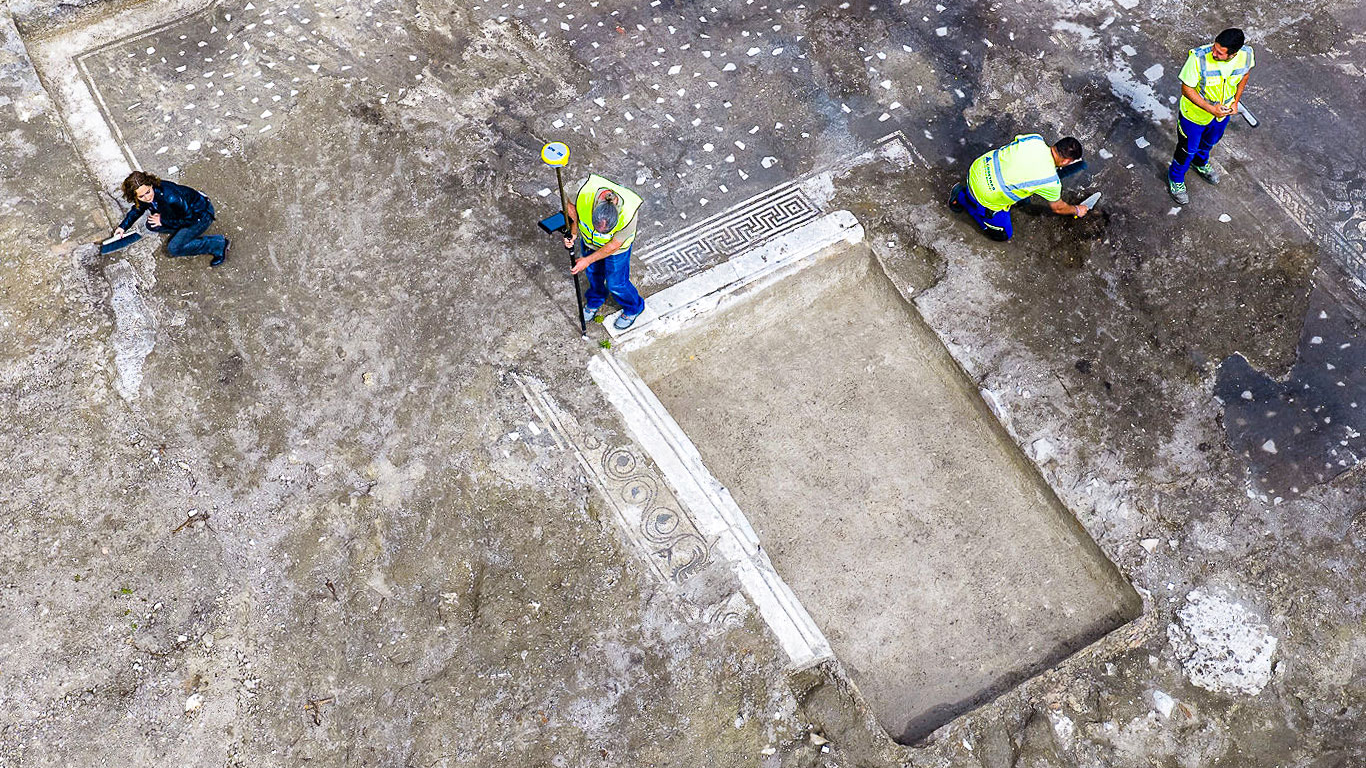 (Image credit: Italian Ministry of Culture / Special Superintendency of Rome)
Aerial photograph of archaeologists working near the impluvium of an ancient Roman villa discovered at Castel di Guido near Rome.
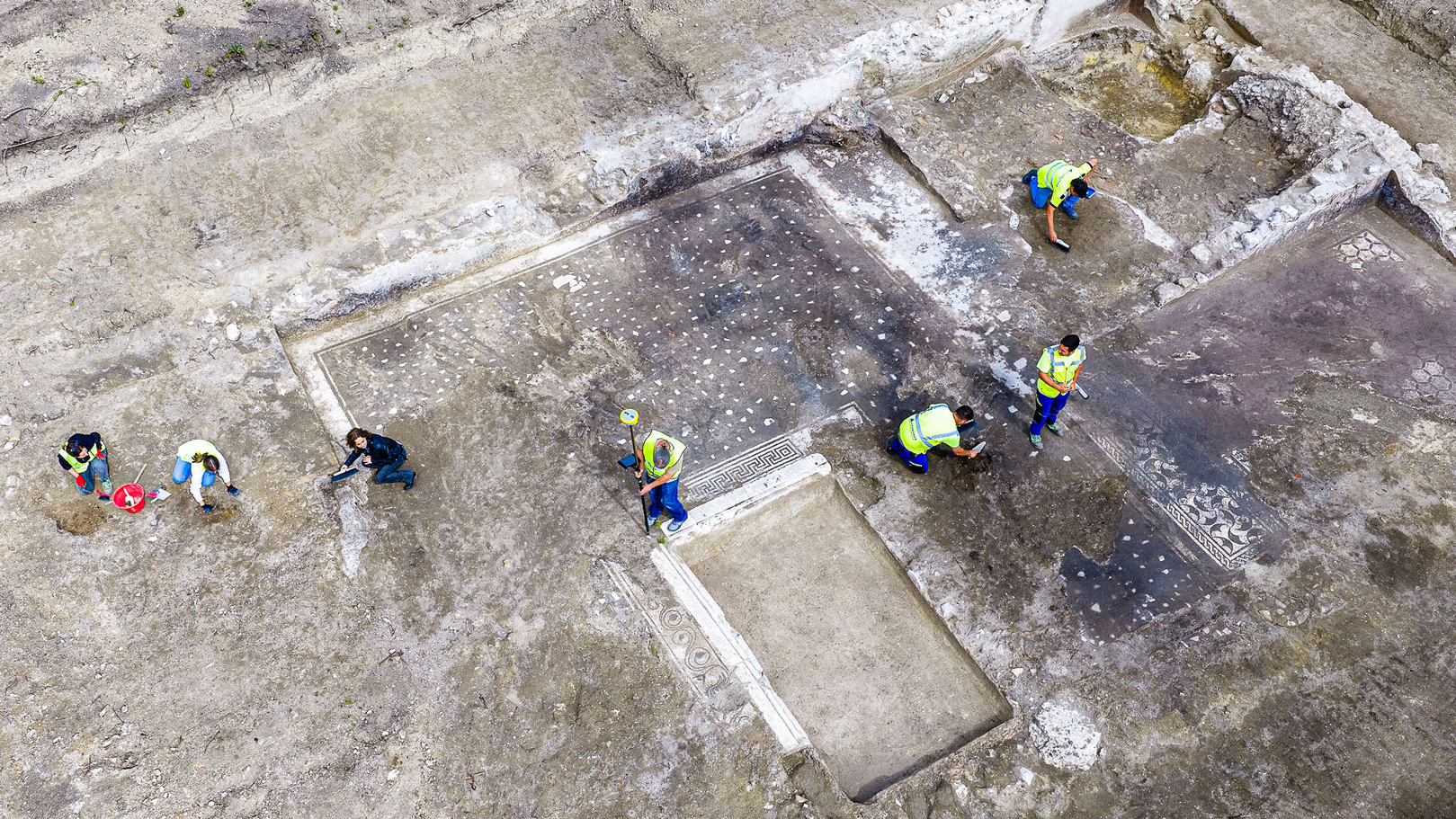 (Image credit: Italian Ministry of Culture / Special Superintendency of Rome)
Aerial photograph of archaeologists excavating an ancient Roman villa discovered at Castel di Guido near Rome.
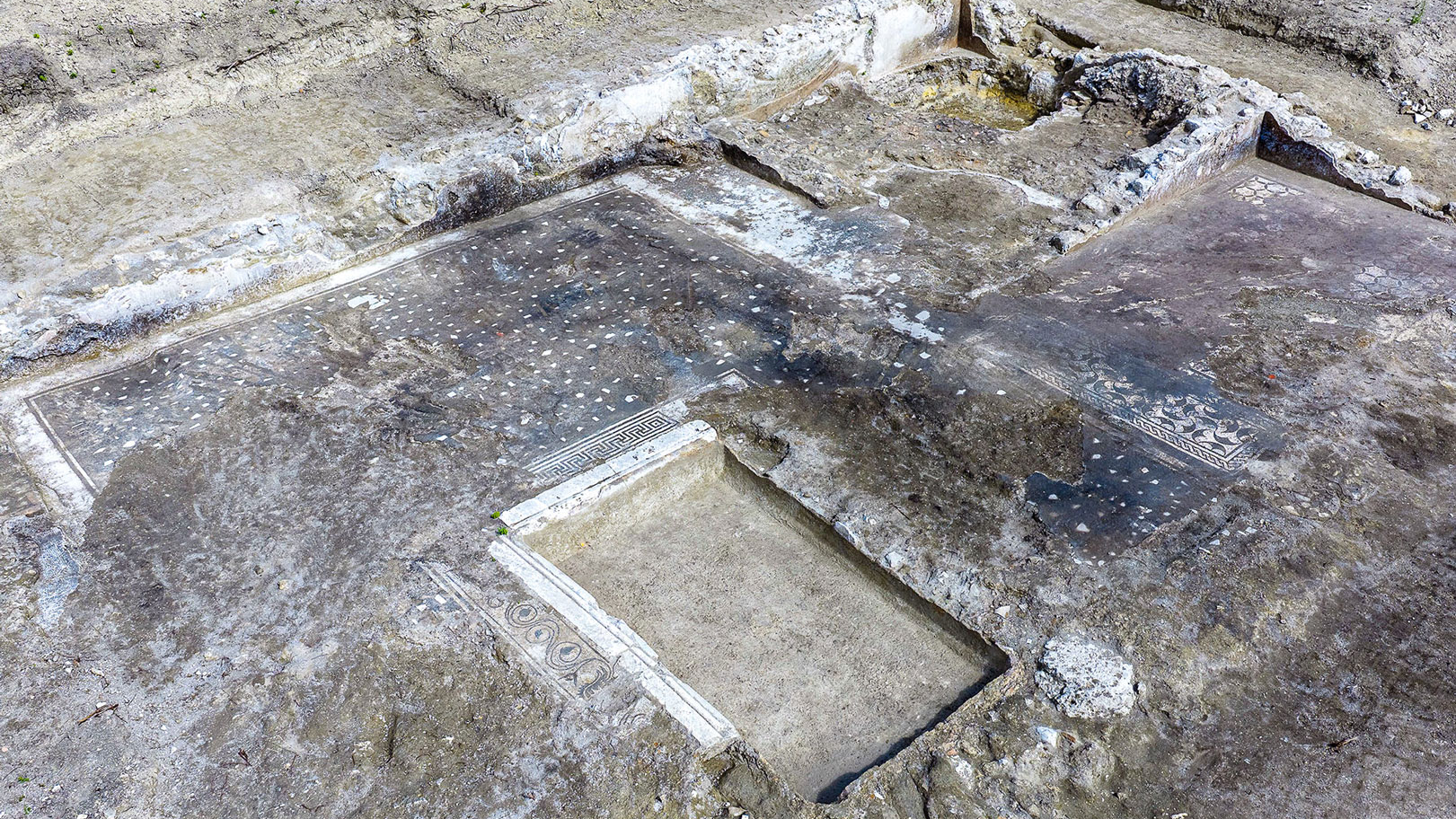 (Image credit: Italian Ministry of Culture / Special Superintendency of Rome)
Aerial photograph of the newly discovered ancient Roman villa at Castel di Guido near Rome.
 (Image credit: Italian Ministry of Culture / Special Superintendency of Rome)
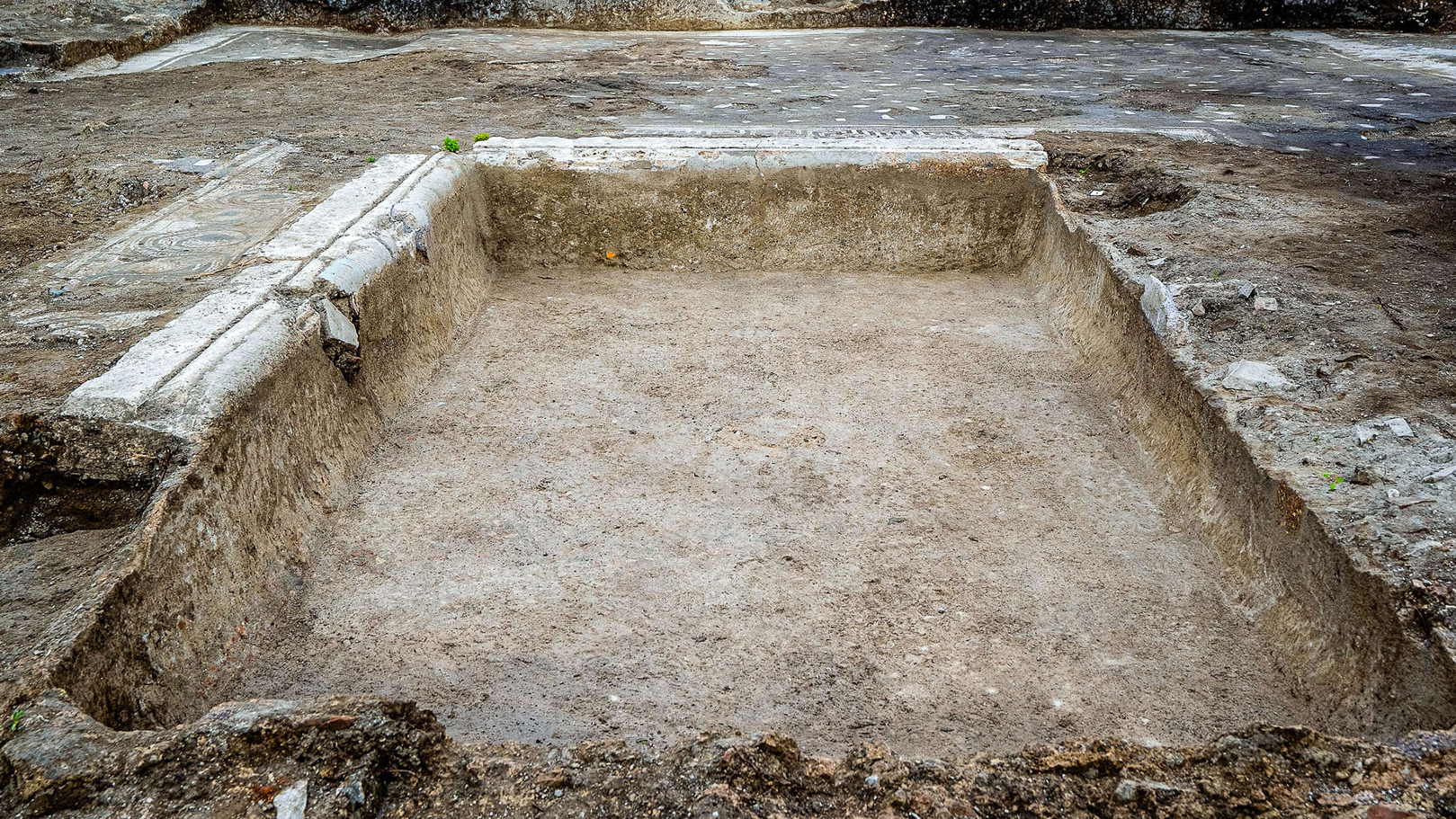
A view of the impluvium (rainwater basin) discovered at an ancient Roman villa west of Rome.
 (Image credit: Italian Ministry of Culture / Special Superintendency of Rome)
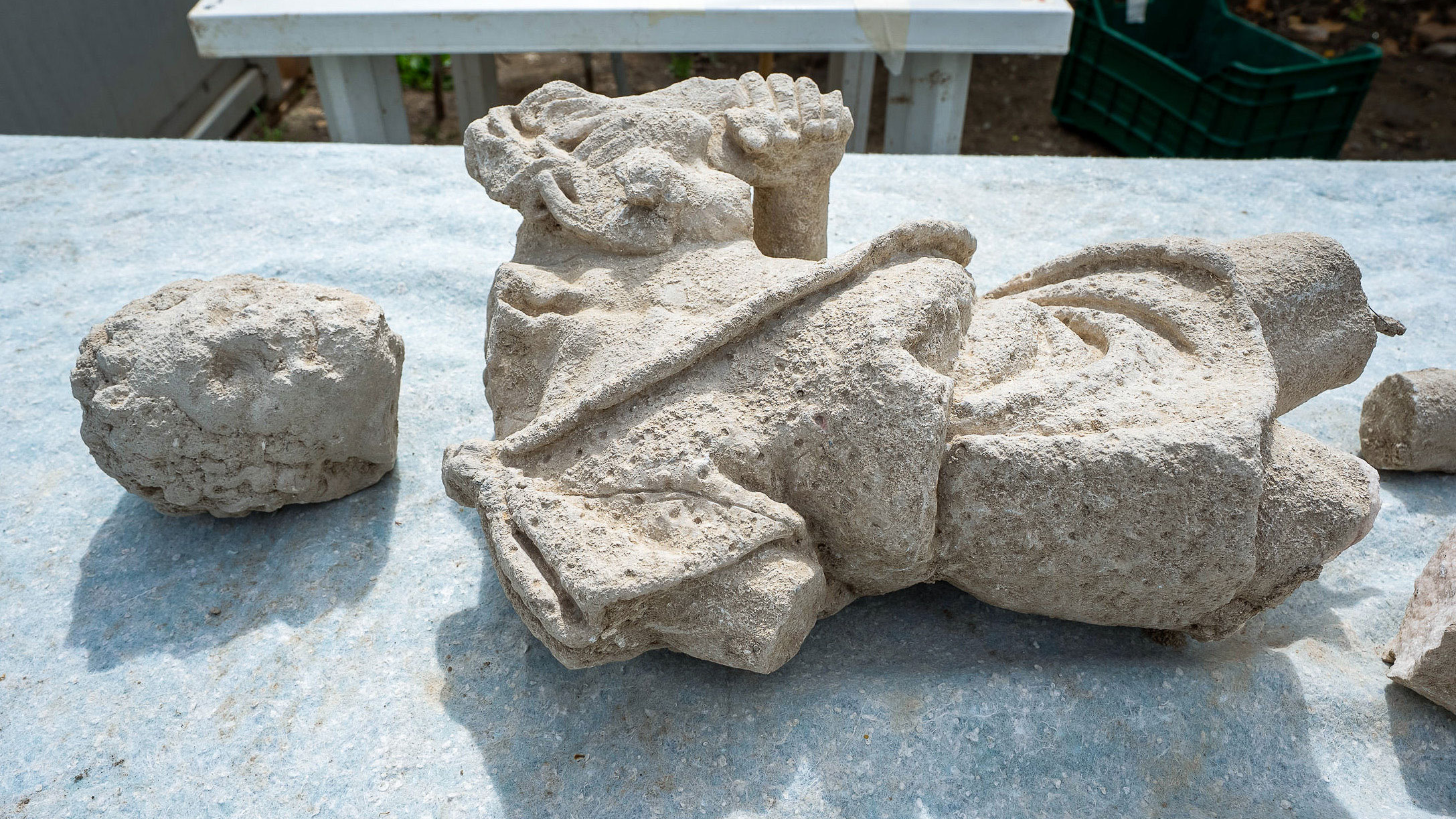
Archaeologists discovered a broken statue of the Roman deity Silvanus in the villa.
Sign up for the Live Science daily newsletter nowContact me with news and offers from other Future brandsReceive email from us on behalf of our trusted partners or sponsors 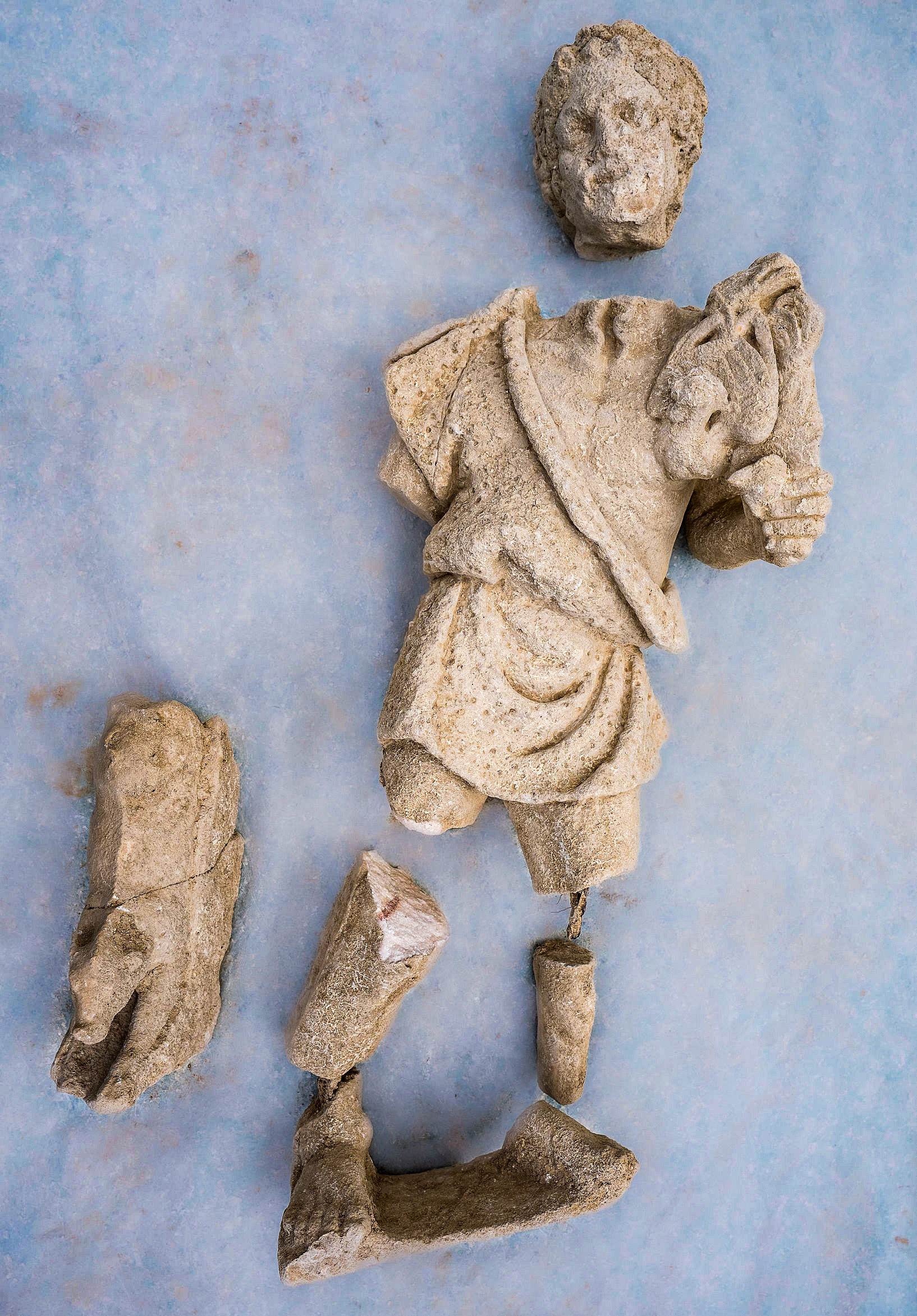
Archaeologists discovered a statue of the ancient Roman deity Silvanus, guardian of the flocks.
(Image credit: Italian Ministry of Culture / Special Superintendency of Rome)RELATED STORIES- Italian teenagers discover 1,800-year-old Roman luxury house underneath their high school gym
- Archaeologists discovered a hidden chamber in Roman Emperor Nero's underground palace
- First-century villa discovered near Mount Vesuvius may be where Pliny the Elder watched catastrophic eruption
 Kristina KillgroveStaff writer
Kristina Killgrove is a staff writer at Live Science with a focus on archaeology and paleoanthropology news. Her articles have also appeared in venues such as Forbes, Smithsonian, and Mental Floss. Kristina holds a Ph.D. in biological anthropology and an M.A. in classical archaeology from the University of North Carolina, as well as a B.A. in Latin from the University of Virginia, and she was formerly a university professor and researcher. She has received awards from the Society for American Archaeology and the American Anthropological Association for her science writing.
View MoreYou must confirm your public display name before commenting
Please logout and then login again, you will then be prompted to enter your display name.
Logout