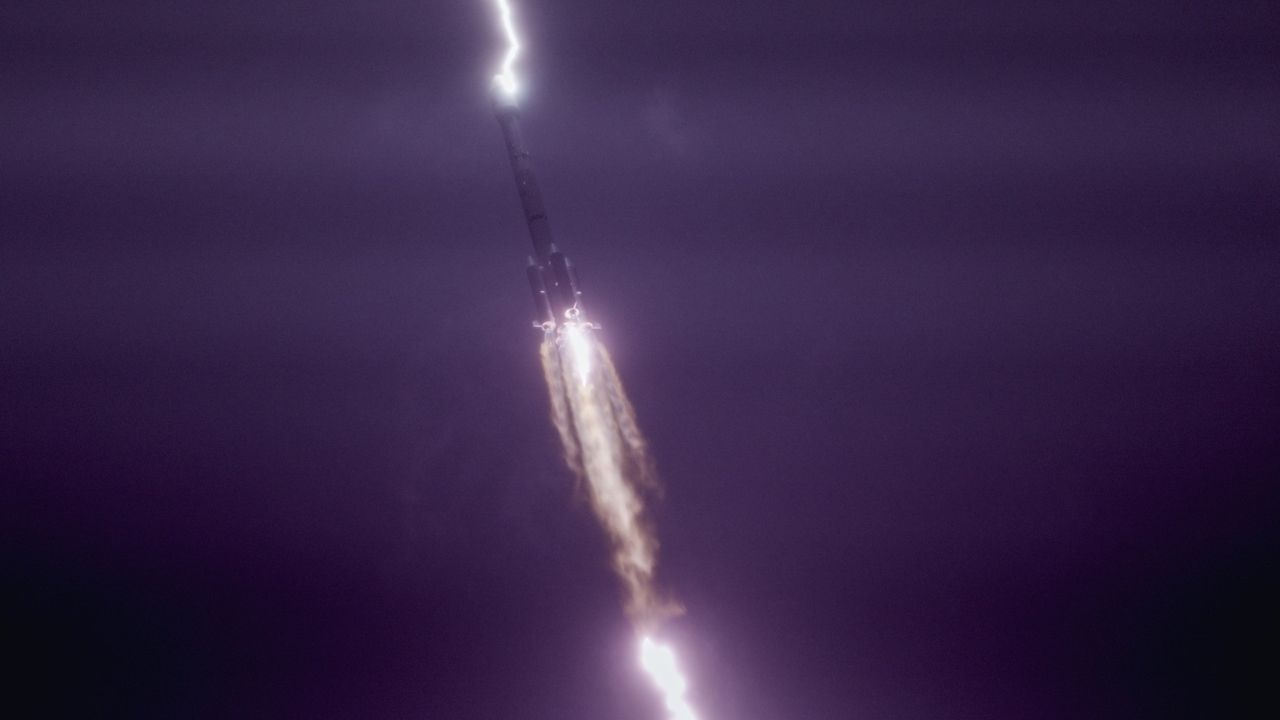
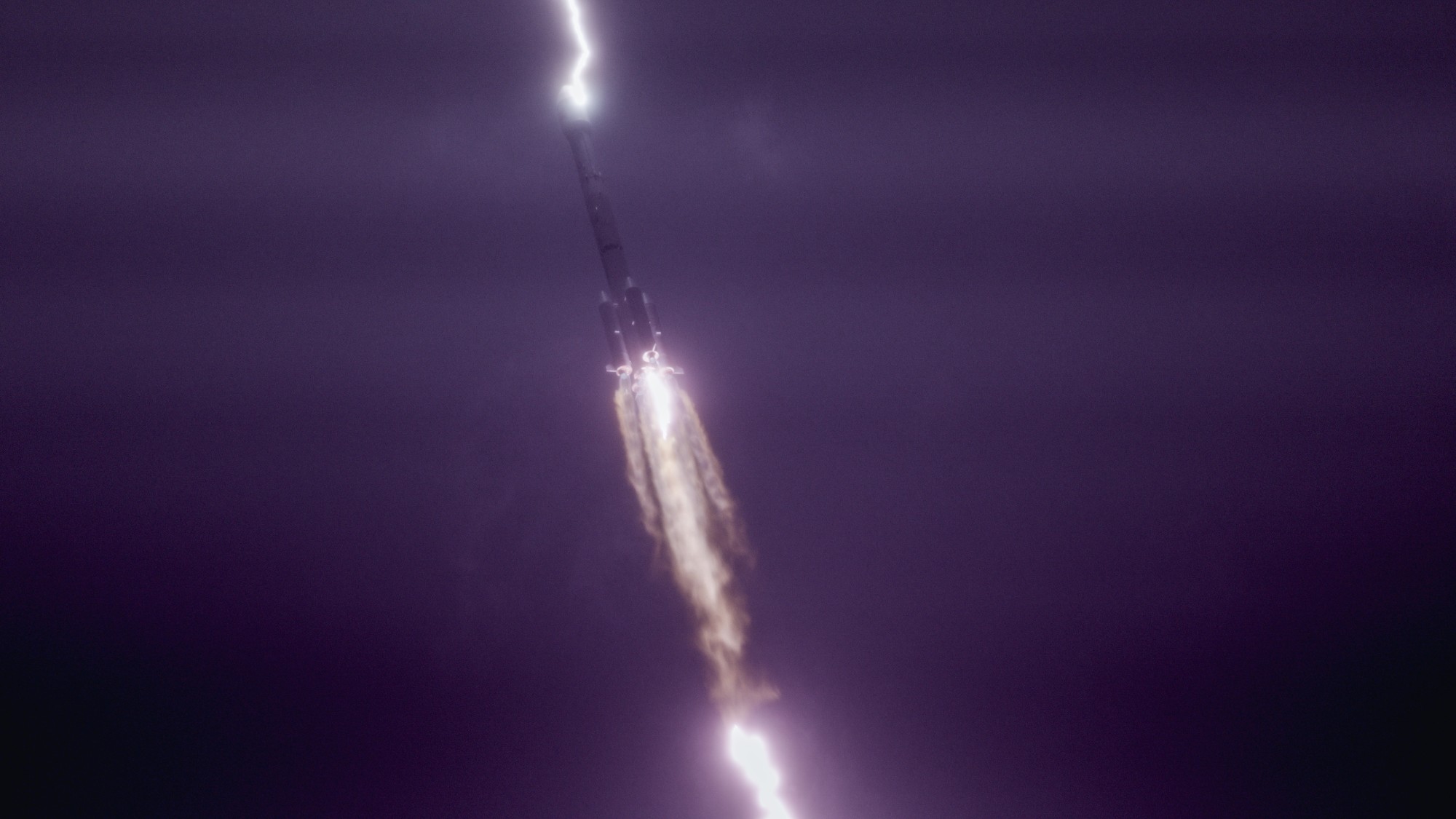
Lightning struck a Chinese rocket shortly after liftoff this week, as seen in incredible video and photographs.
A Long March-3B rocket lifted off from China's Xichang Satellite Launch Center on Thursday (July 23) carrying a communications relay satellite destined for geostationary orbit. Some 30 seconds into flight, lightning struck the rocket, leading to awestruck cries from crowds gathered nearby to watch the launch.
Despite the strike, the rocket delivered the satellite to its intended orbit as planned, according to the China Aerospace Science and Technology Corporation (CASC). The satellite will help relay communications to the nation's Tiangong Space Station and other crewed missions.
This isn't the first time lightning has struck a rocket shortly after liftoff. A lightning bolt famously struck the Saturn V rocket carrying NASA's Apollo 12 mission, the second to ever land astronauts on the moon. In fact, the rocket was struck twice.
According to a report NASA issued after the mission, some non-essential instruments and sensors experienced "permanent effects" from the strikes. Nevertheless, the mission put astronauts Charles "Pete" Conrad, Alan Bean and Richard "Dick" Gordon on the moon as planned.
More recently, lightning struck a Russian Soyuz rocket in 2019 shortly after it launched. Like in this most recent example, the vehicle was able to place its Glasnost communications satellite in orbit despite the strike.
Une fusée Longue Marche 3B vient de se prendre la foudre peu après son décollage de Xichang.Ce n'est pas la première fusée à subir ça, la Saturn V et la Soyouz-2 ont été aussi foudroyées par exemple. Aucun échec n'est lié à la foudre... pour l'instant.pic.twitter.com/vrAqaGAnnCJuly 23, 2026
But not all rockets struck by lightning fare so well. In 1987, a bolt struck the United Launch Alliance Atlas/Centaur-67 rocket, leading to a malfunction in one of the computers that guided the vehicle and "ultimately causing the breakup of the vehicle," NASA wrote in a report of the incident.
The incident led to NASA developing strict Lightning Launch Commit Criteria (LLCC) to lower the risk of strikes by further defining weather conditions that would delay launches. "Since Atlas/Centaur-67 and the rigorous implementation of the LLCC, no other launch vehicles have intercepted or triggered lightning on launch in the United States," NASA wrote in a technical paper outlining the criteria.