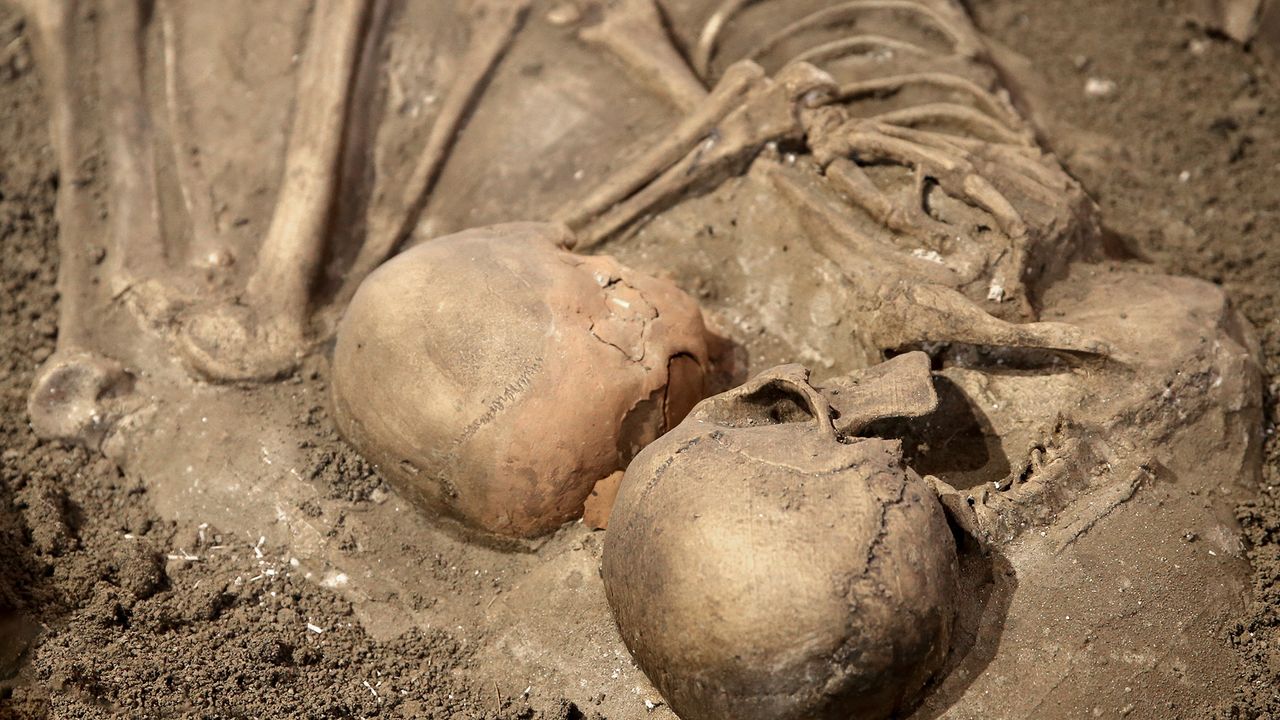
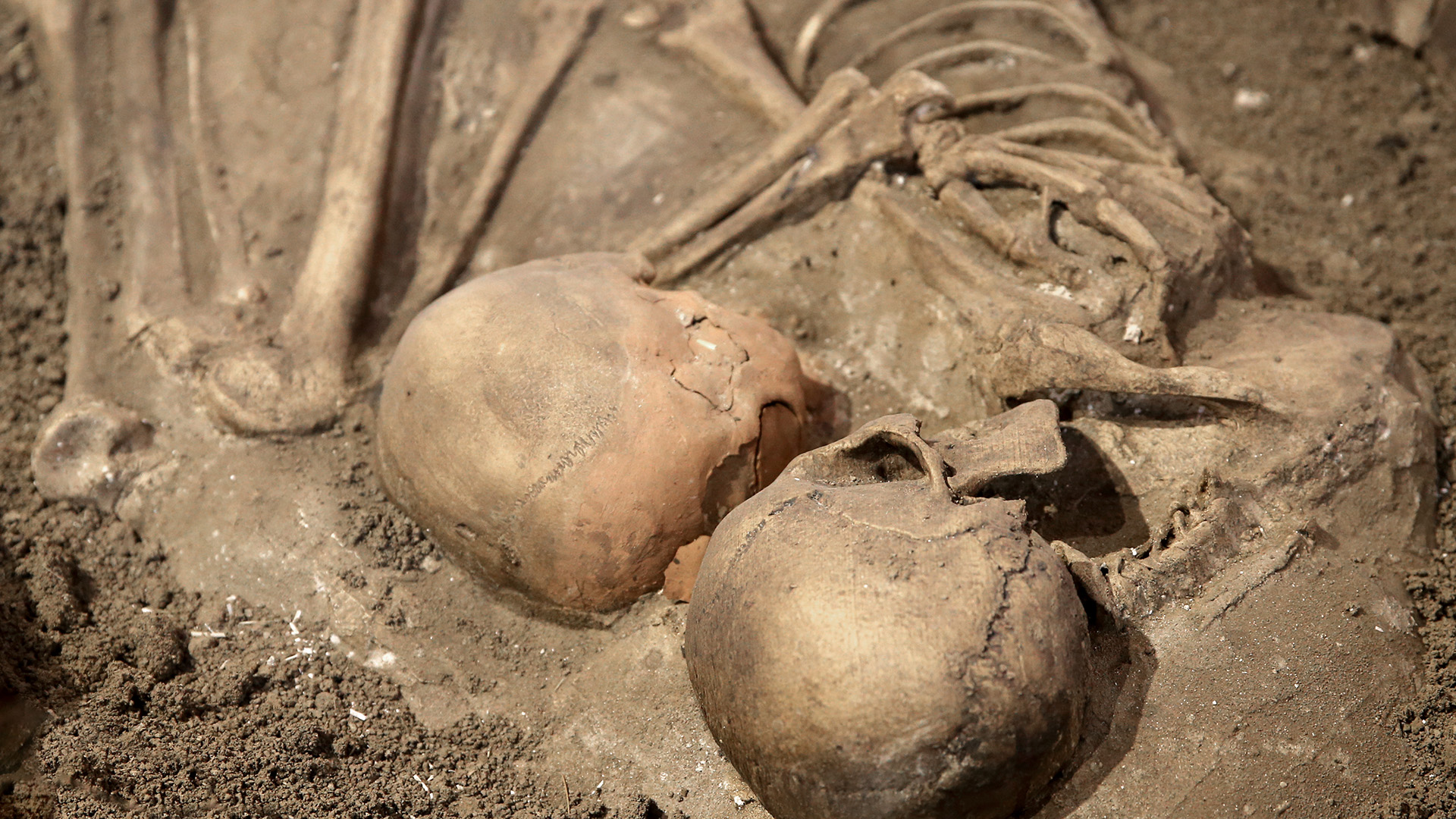
 These human remains from the site of Çatalhöyük in modern-day Turkey date back around 8,000 years. (Image credit: Anadolu via Getty Images) Share this article 0 Join the conversation Add us as a preferred source on Google Newsletter Subscribe to our newsletter
 Over the past two decades, some studies have suggested that human brains are shrinking. But there is also evidence that IQ scores have risen over the past century.
But is it possible for us to get smarter as our brains shrink? Live Science contacted experts to find out.
In Einstein's case, it appears that extraordinary folding patterns in several of his brain regions may help account for his genius. While there is some debate, studies suggest that there is little or no relationship between our intelligence and brain size in humans.
Have human brains shrunk?
Not all scientists agree on whether human brains have gotten smaller. However, many experts we spoke with said there is evidence for shrinkage over time.
"My research indicates that human brain size declined during the [entire span of the] Holocene by about 10% of its volume or about 150 ml on average," Maciej Henneberg, a professor emeritus of anthropological and comparative anatomy at Adelaide University in Australia, told Live Science in an email. The Holocene is an epoch that followed the last ice age, and spans from 11,700 years ago to the present day. In his research, Henneberg looked at the brain size by analyzing skulls from all over the world. In many cases, he analyzed the skeletons personally.
It's important to remember that Homo sapiens emerged around 300,000 years ago, so a brain shrinkage starting around 11,700 years ago would be a relatively recent development.
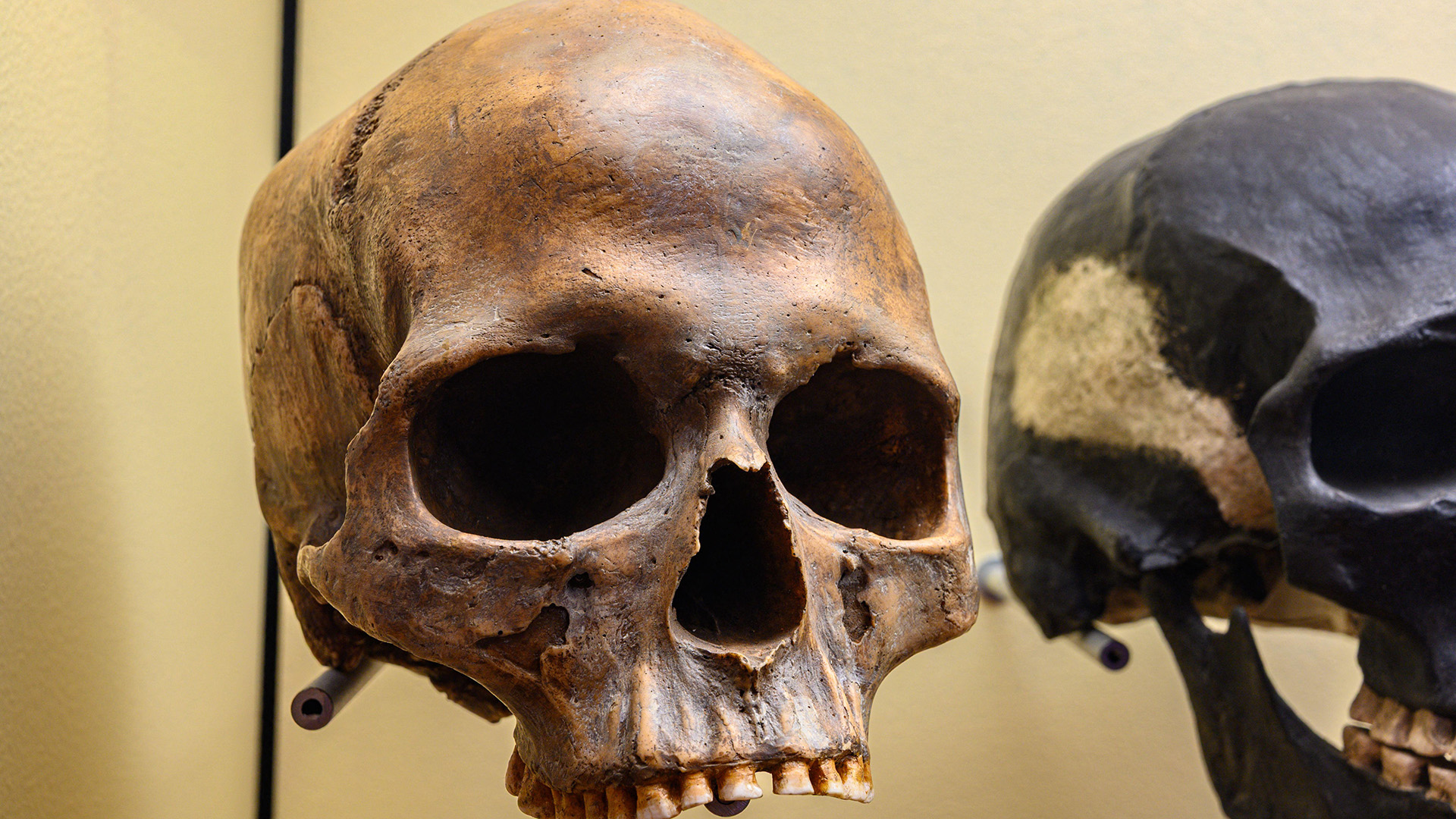
An 11,000-year-old skull of a woman found in Slovakia.
(Image credit: Adam Ján Figeľ via Alamy)Other scientists have reported similar findings. "Our lab thinks that the data currently available show a clear, global trend toward a decrease in brain size in more recent times," said DeSilva, whose research looked at more than 5,000 skulls from people who lived in Europe, Asia, Africa and Australia. Many of the skulls date to the Holocene.
Jeff Stibel, who holds a doctorate in brain science and has published a number of papers on the topic of brain shrinkage, said the "Holocene warming period has coincided with more than a 10% reduction in brain size in modern humans." Stibel took part in DeSilva's research, and then gathered more data by analyzing the brain size of roughly 800 additional skulls from around the world.
Sign up for our newsletter 
Sign up for our weekly Life's Little Mysteries newsletter to get the latest mysteries before they appear online.
However, some scientists disagree. Research by Brian Villmoare, an associate professor of anthropology at the University of Nevada, Las Vegas, and his team found no evidence that human brains are shrinking. "I see no evidence that, once we acquired our modern form, that our brains have changed in any meaningful way," Villmoare said in an email.
Some say more nuance needs to be considered. "Brain size in some human populations decreased over the last 15000 years," John Hawks, an anthropology professor at the University of Wisconsin-Madison, told Live Science in an email. "But there are some complexities."
Hawks noted that datasets of brain size tend to overrepresent men of European ancestry, making it difficult to determine whether there is a global trend among diverse populations.
"Brain size did rebound toward larger sizes during the last 150 years in industrializing countries," Hawks said. "This was likely mostly attributable to nutrition and correlated with body size, but whether body size accounts for the entire effect is not clear from the limited data."
Why are human brains getting smaller?
If our brains have shrunk, then why? Scientists have proposed a few ideas.
One has to do with the introduction of farming.
"During the Holocene, humans gradually introduced food production [such as agriculture and animal husbandry] that allowed them to live in larger communities," Henneberg said. "The brute physical strength required for hunting big game and protecting families against strong predators became less necessary while a smaller body size required less food, so it was favoured by natural selection."
In fact, it's not just our brains; our bodies have also shrunk. "At the end of the Ice Age, male body height was about 1.75 m [5.74 feet], whereas in mid-Holocene agricultural communities it was 1.65 m [5.41 feet]," Henneberg said. "Body mass has declined even more since we see thinner (less robust) human bones." Heights have rebounded recently in some parts of the world, and Hawks said that our brain sizes may be rebounding also.
The warming that occurred after the end of the last ice age also may be a factor. Stibel said two biological principles, known as Bergmann's rule and Allen's rule, state that "bodies and organs tend to become leaner in warmer climates to increase surface area and dissipate heat."
Another possible explanation is that human intelligence itself has changed as we have taken on more specialized jobs and share more information with each other, meaning we don't have to know everything, just a subset of knowledge to keep society going.
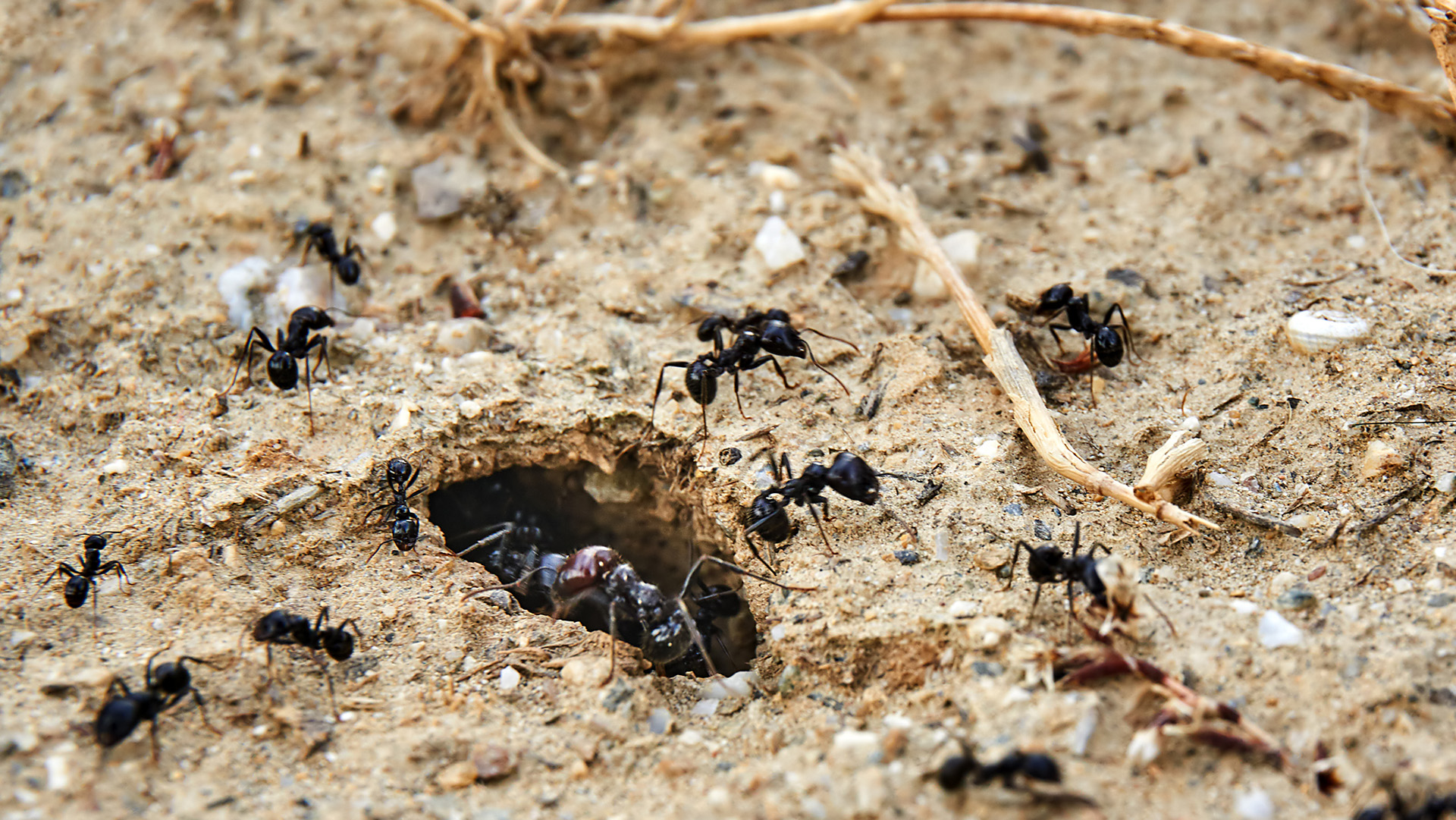
Some eusocial insects like ants and wasps have specific roles for each individual. It's possible that collective intelligence seen in these insects is similarly happening in humans, which may be associated with a smaller brain size.
(Image credit: Tomekbudujedomek via Getty Images)DeSilva said his team proposed that a "population increase, the subsequent specialization of people into specific roles in society and the growth of collective intelligence may have contributed to individual brain size decrease as modeled in some eusocial insects like ants and wasps." For instance, "I'm a decent enough anthropologist and anatomist, but you wouldn't want me fixing your car or investing your retirement savings on Wall Street."
Stibel agrees that this is a significant factor. "Some ant species that develop complex social systems see similar reductions in individual brain size as the colony carries more of the cognitive load," he said. "We appear to have done something remarkably similar with culture and technology.
"What our research suggests is that we've undergone a fundamental shift in how cognition works," Stibel added. "Rather than relying solely on individual brainpower, we've become extraordinarily dependent on cultural and technological networks."
Related mysteries- How much of your brain do you need to survive?
- Do we really use 10% of our brains?
- What happens in our brains when we 'hear' our own thoughts?
Stibel noted that large brains can be a burden, consuming more energy which requires people to eat more food to survive. "Large brains are metabolically expensive, consuming roughly 20% of our resting energy and producing significant heat." During times when food is scarce, such as during an Ice Age, this can result in people with larger brains being more likely to die of starvation.
This doesn't mean humans are smarter or dumber than they were; it just shows our intelligence is different.
"We've likely traded some raw computational capacity for the ability to leverage collective intelligence," Stibel said. "Whether that's a gain or a loss depends entirely on how you define intelligence. And, of course, how stable the cultural and technological systems we now depend on turn out to be in the long run."
See how much you know about the most complex organ in the human body with our brain quiz!
TOPICS Owen JarusLive Science Contributor
Owen Jarus is a regular contributor to Live Science who writes about archaeology and humans' past. He has also written for The Independent (UK), The Canadian Press (CP) and The Associated Press (AP), among others. Owen has a bachelor of arts degree from the University of Toronto and a journalism degree from Ryerson University.
View MoreYou must confirm your public display name before commenting
Please logout and then login again, you will then be prompted to enter your display name.
Logout