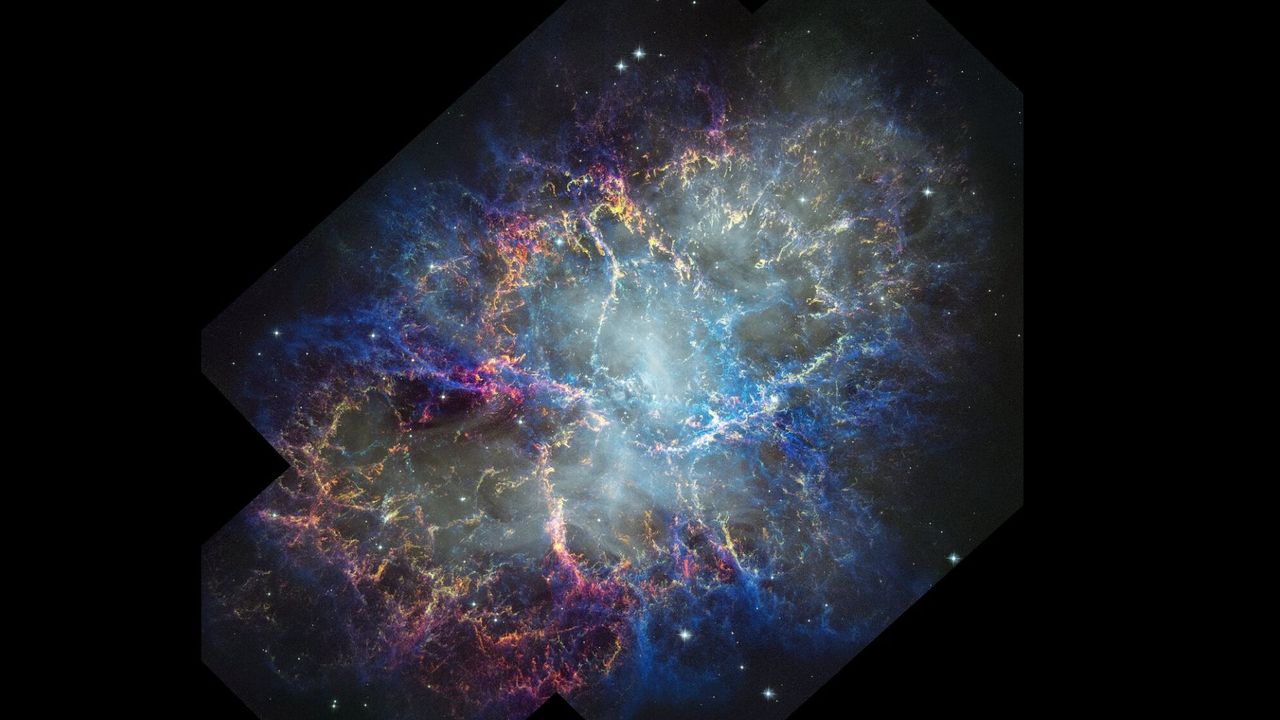
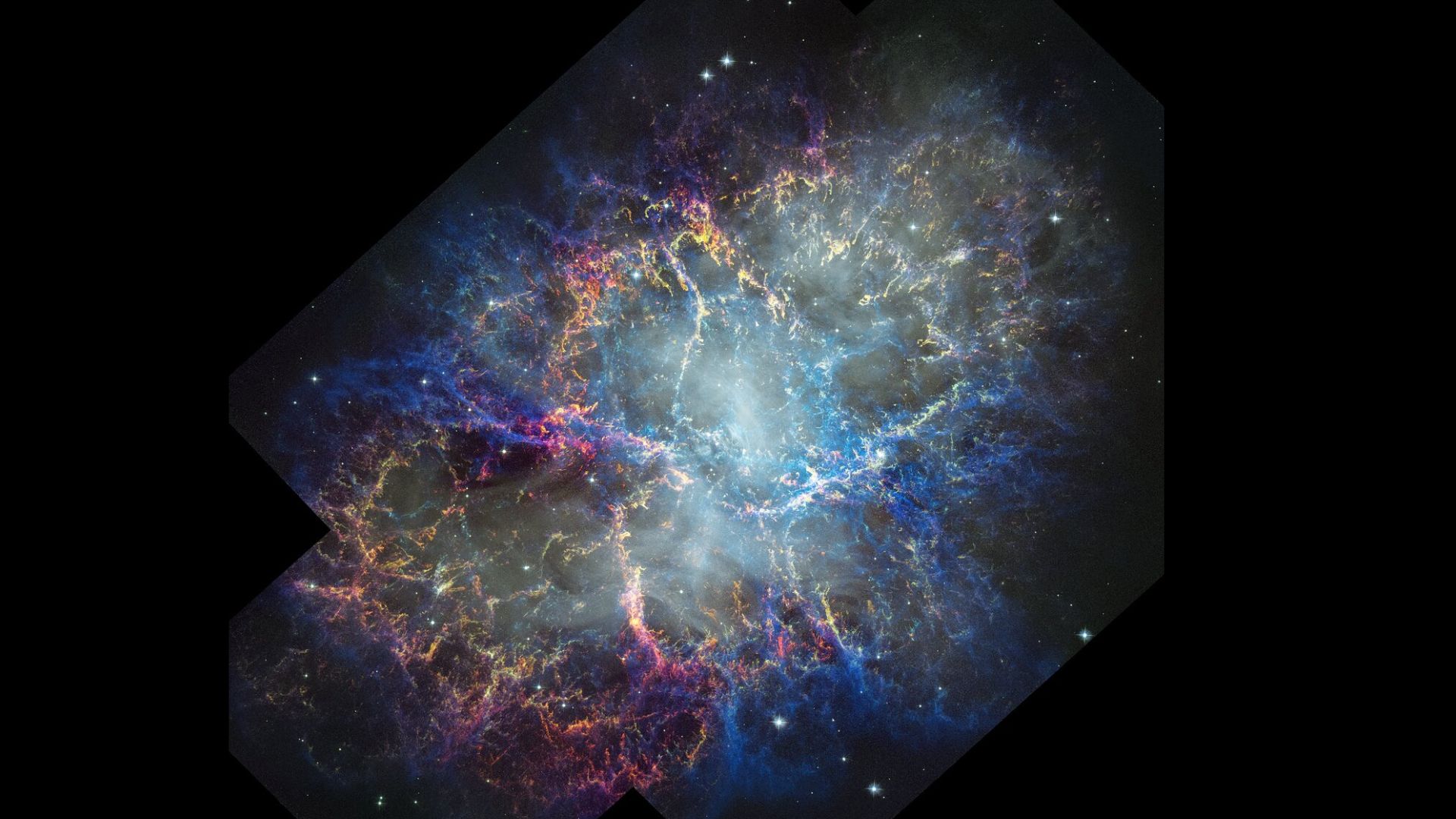
 The Crab Nebula, as seen by the Hubble Space Telescope's Wide Field Camera. (Image credit: NASA, ESA, STScI, W. Blair (JHU). Image Processing: J. DePasquale (STScI))) Share this article 0 Join the conversation Follow us Add us as a preferred source on Google Newsletter Sign up for the Live Science daily newsletter now
 Get the world’s most fascinating discoveries delivered straight to your inbox.
Become a Member in Seconds
Unlock instant access to exclusive member features.
Contact me with news and offers from other Future brands Receive email from us on behalf of our trusted partners or sponsors By submitting your information you agree to the Terms & Conditions and Privacy Policy and are aged 16 or over.You are now subscribed
Your newsletter sign-up was successful
Want to add more newsletters?
Join the club
Get full access to premium articles, exclusive features and a growing list of member rewards.
Explore An account already exists for this email address, please log in. Subscribe to our newsletter Quick factsWhat it is: The Crab Nebula (also called M1), a supernova remnant
Where it is: 6,500 light-years away, in the constellation Taurus
When it was shared: March 23, 2026
The Hubble Space Telescope's surprising longevity is giving astronomers a chance to see not only what distant objects look like up close but also how they change over time.
There are few more iconic objects in the night sky than the Crab Nebula, a cosmic cloud that links ancient astronomy with modern space telescopes. In the year 1054, a supernova in the constellation Taurus lit up the daytime sky for several weeks — an event recorded by early astronomers in Japan, China and the Middle East. This "guest star" eventually faded from view but it remains one of the best-documented cosmic explosions in human history.
Article continues belowCenturies later, in the mid-18th century, the Crab Nebula was discovered in the constellation Taurus. Astronomers, including Edwin Hubble in the 1950s, linked the Crab Nebula to the 1054 supernova. The smoking gun was the discovery of a pulsar — a rapidly rotating neutron star, the typical leftovers of a supernova — at the center of the Crab Nebula.
The newest image of the Crab Nebula from the Hubble Space Telescope. (Image credit: NASA, ESA, STScI, W. Blair (JHU). Image Processing: J. DePasquale (STScI)))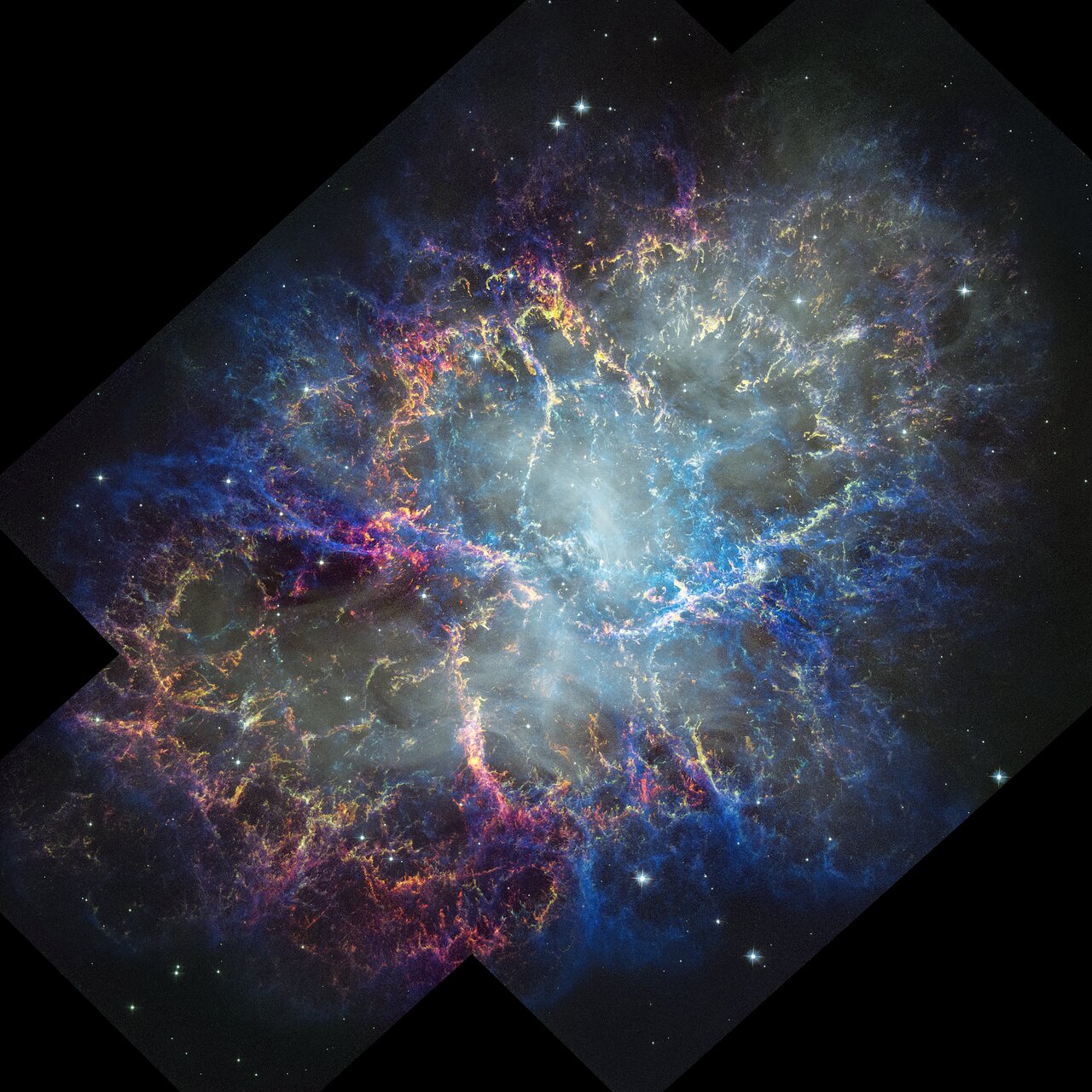
That pulsar has been busy powering the nebula's expansion in the 25 years since it was first photographed by the Hubble Space Telescope. The telescope's latest observations of the Crab Nebula, published earlier this year in The Astrophysical Journal, have allowed astronomers to measure the outward movement of the nebula's intricate filaments.
The differences between the two images may seem slight, but the filaments are expanding at about 3.4 million mph (5.5 million km/h). The expansion is driven not by shock waves from the initial explosion — as many supernova remnants are — but by the pulsar, whose powerful magnetic field propels charged particles outward. This energy source drives the nebula's expansion and illuminates its glowing filaments.
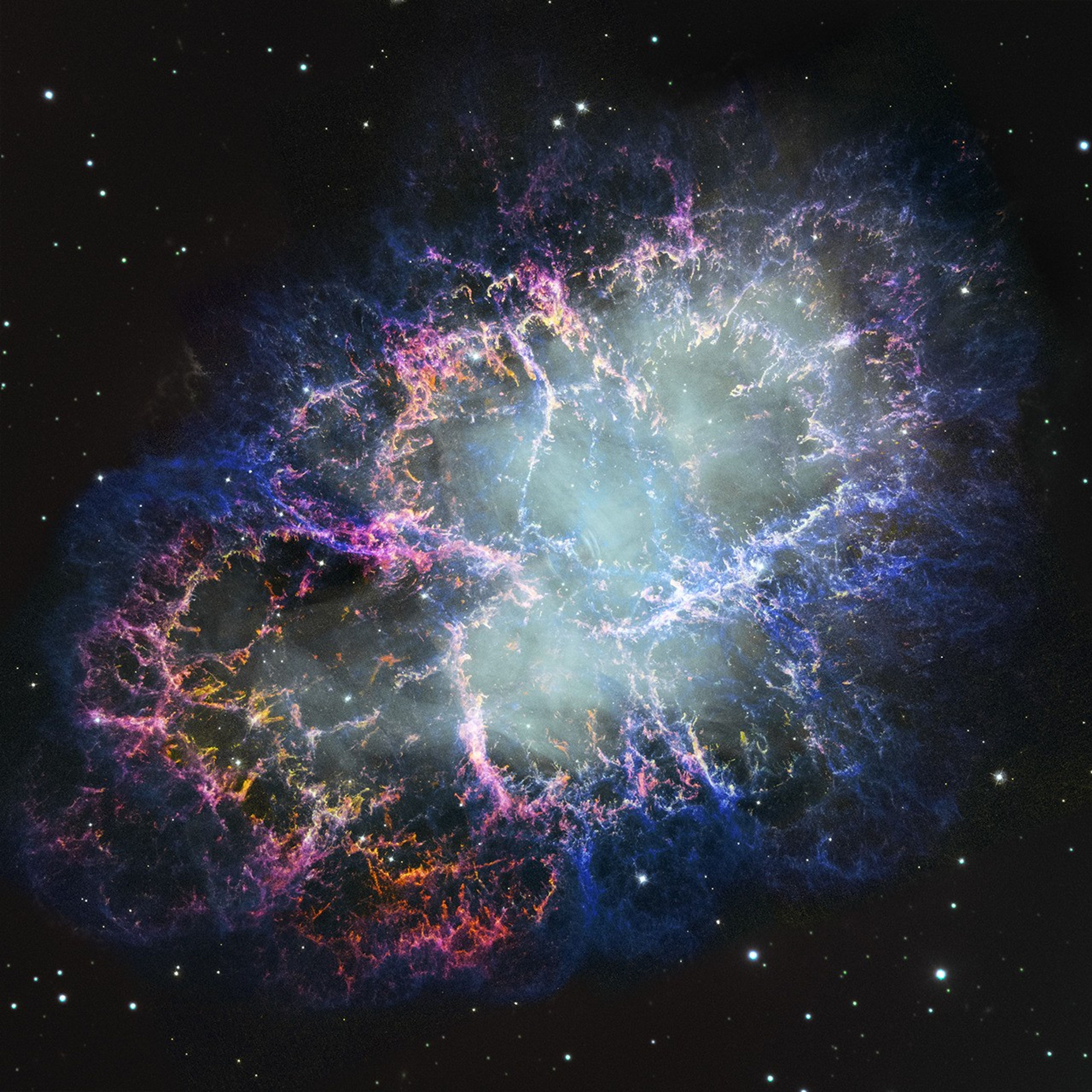
The images, which make use of Hubble's high-resolution Wide Field Camera 3 (installed by astronauts in 2009), allow scientists to see 3D structures and details, with blue regions indicating the hottest, lowest-density gas and yellow and red tones revealing energized sulfur and oxygen. (The 1999/2000 photo has also been reprocessed to match the resolution of Wide Field Camera 3.)
Sign up for the Live Science daily newsletter nowContact me with news and offers from other Future brandsReceive email from us on behalf of our trusted partners or sponsors"We tend to think of the sky as being unchanging, immutable," William Blair, an astronomer at Johns Hopkins University who led the new observations, said in a NASA statement. "However, with the longevity of the Hubble Space Telescope, even an object like the Crab Nebula is revealed to be in motion, still expanding from the explosion nearly a millennium ago."
Hubble is not the only telescope that has managed to snap this spectacular supernova remnant. In 2023, the James Webb Space Telescope also captured a staggeringly detailed shot of the Crab Nebula, which later helped scientists map out the cosmic dust within its expanding shell, according to NASA.
See more Space Photos of the Week
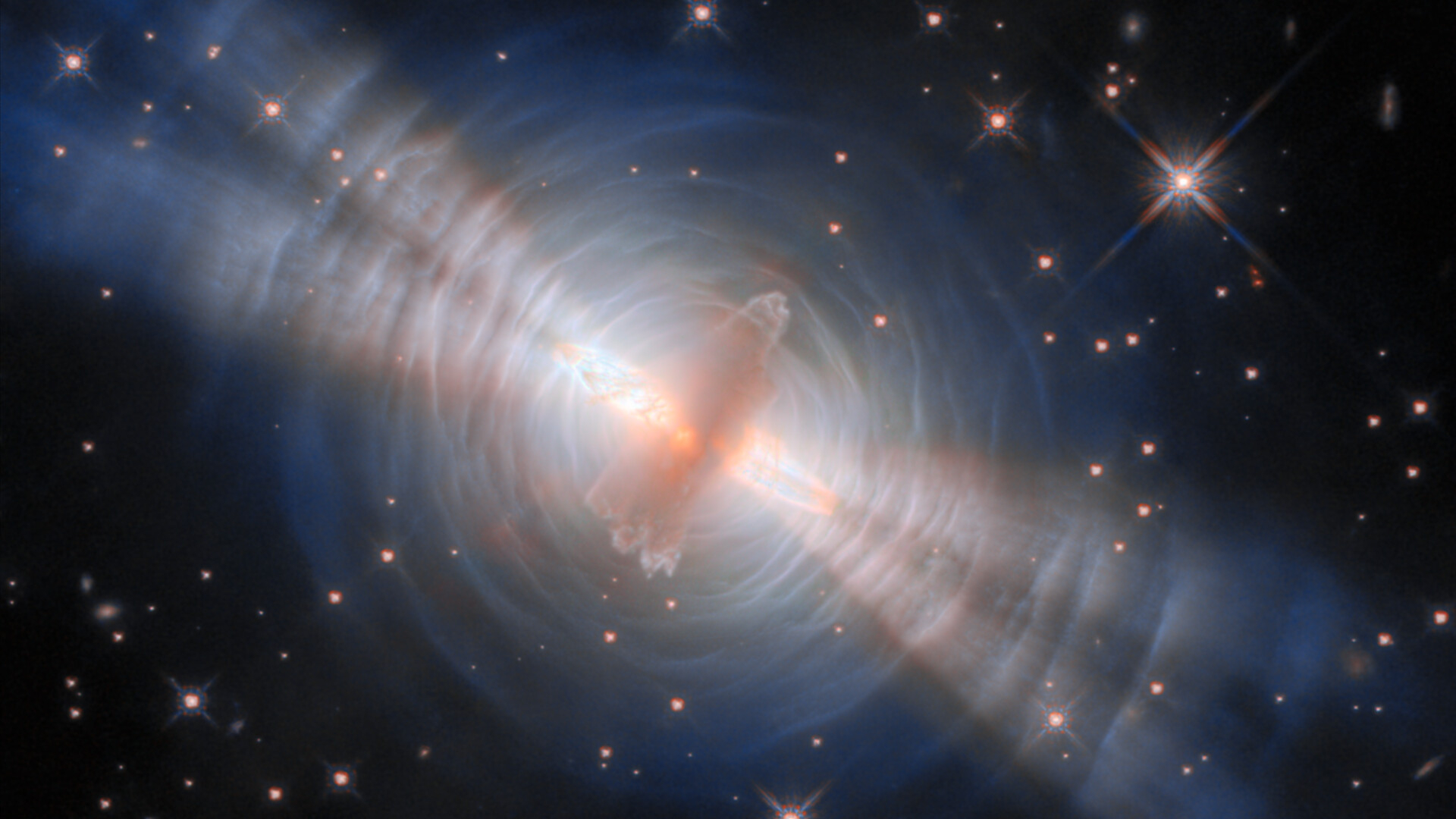 Hubble sees Egg Nebula 'hatch'
The closest baby nebula to Earth was caught spitting up its stardust.
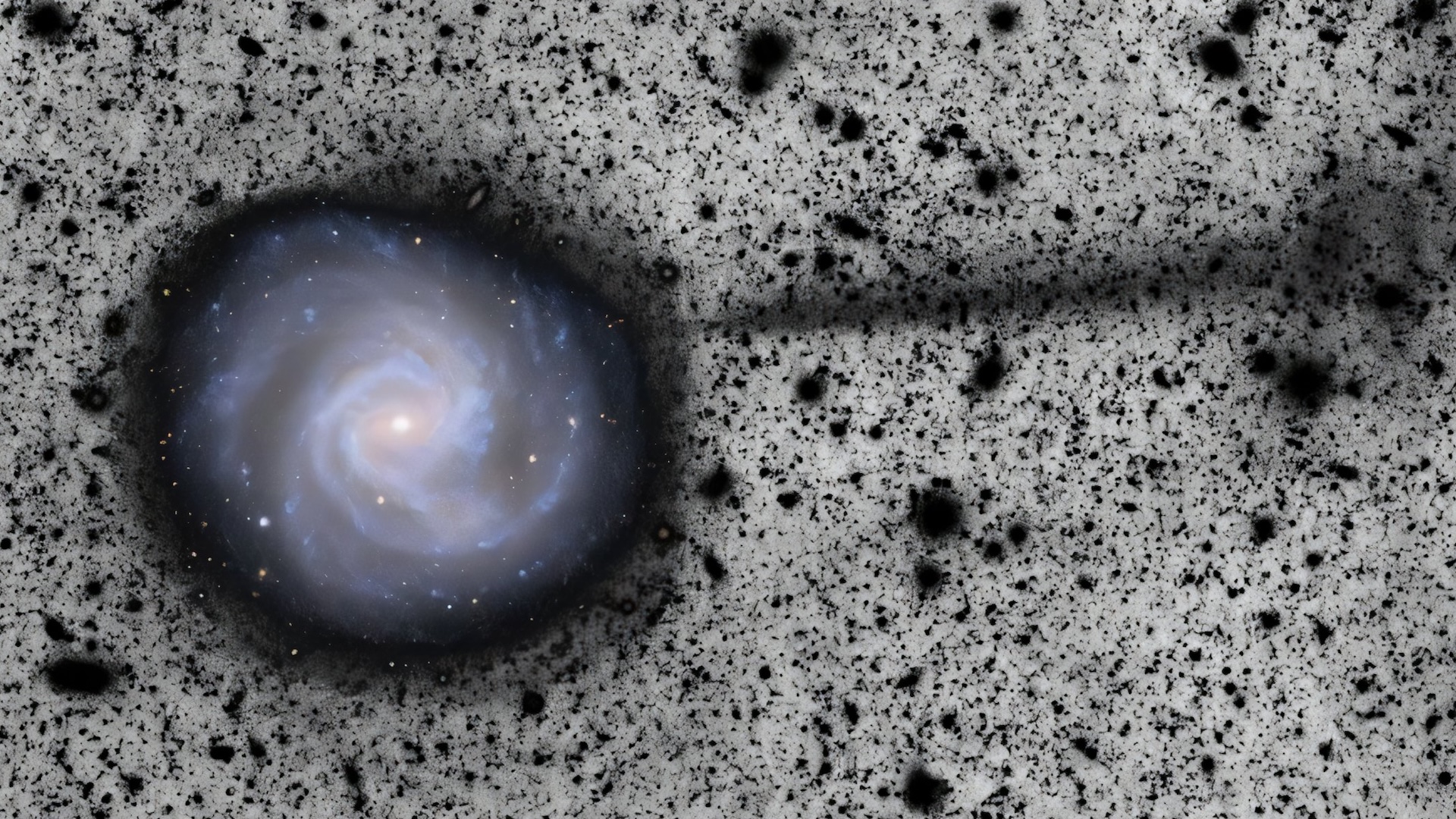 Hidden structure in 1st Vera Rubin image
First-light images from the Vera C. Rubin Observatory reveal a 163,000-light-year stream of stars emanating from a nearby galaxy.
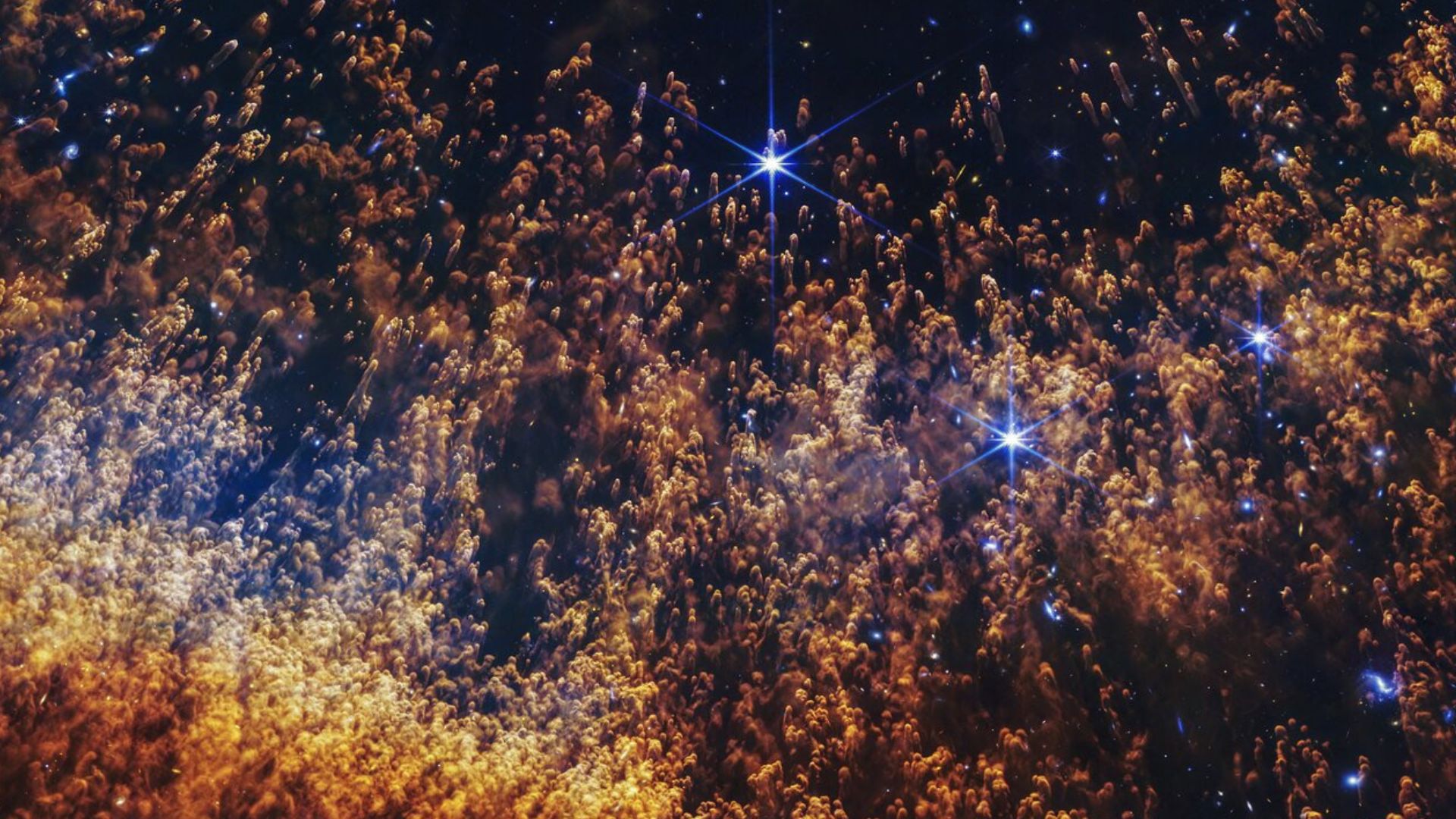 JWST peeps the 'Eye of God'
A spectacular James Webb telescope image reveals intricate structures inside the Helix Nebula.
TOPICS Jamie CarterLive Science contributor
Jamie Carter is a Cardiff, U.K.-based freelance science journalist and a regular contributor to Live Science. He is the author of A Stargazing Program For Beginners and co-author of The Eclipse Effect, and leads international stargazing and eclipse-chasing tours. His work appears regularly in Space.com, Forbes, New Scientist, BBC Sky at Night, Sky & Telescope, and other major science and astronomy publications. He is also the editor of WhenIsTheNextEclipse.com.
View MoreYou must confirm your public display name before commenting
Please logout and then login again, you will then be prompted to enter your display name.
Logout LATEST ARTICLES 1What would happen to Earth if the sun suddenly vanished?
- 2Top 5 health and fitness products to buy during spring sales (and 2 to skip)
- 3A gut microbe linked to the Mediterranean diet boosts muscle strength in mice
- 4NASA announces moon base, Iran war releases staggering carbon, why weed gives people munchies, and Artemis II preps for liftoff.
- 5How to catch the full 'Pink Moon' in April followed by a 'Blue Moon' in May