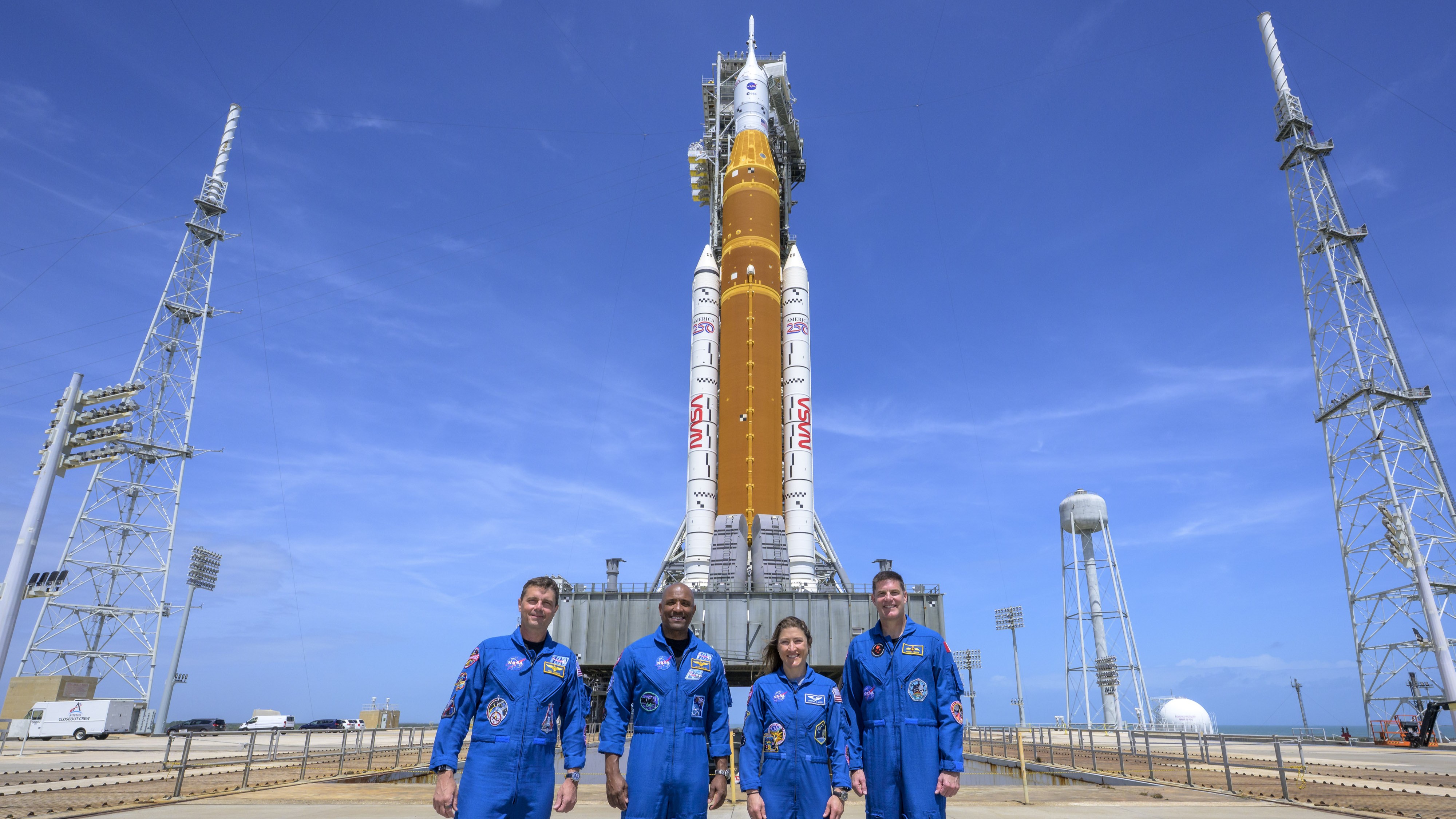
 The Artemis II crew is made up of NASA astronauts Reid Wiseman, Victor Glover and Christina Koch, and Canadian Space Agency astronaut Jeremy Hansen. (Image credit: Bill Ingalls/NASA/Getty Images) Share this article 0 Join the conversation Follow us Add us as a preferred source on Google Newsletter Sign up for the Live Science daily newsletter now
 Get the world’s most fascinating discoveries delivered straight to your inbox.
Become a Member in Seconds
Unlock instant access to exclusive member features.
Contact me with news and offers from other Future brands Receive email from us on behalf of our trusted partners or sponsors By submitting your information you agree to the Terms & Conditions and Privacy Policy and are aged 16 or over.You are now subscribed
Your newsletter sign-up was successful
Want to add more newsletters?
Join the club
Get full access to premium articles, exclusive features and a growing list of member rewards.
Explore An account already exists for this email address, please log in. Subscribe to our newsletterIt's happening! Artemis II, NASA's first crewed moon mission in more than 50 years, Is all set for launch as early as 6:24 p.m. today (April 1).
NASA hopes its gigantic Space Launch System (SLS) rocket will launch the Orion capsule containing its four-person crew during a two-hour window that opens at 6:24 p.m. EDT today. If all goes well, Artemis II will take humans farther into space than ever before during a 10-day flight around the moon.
NASA will stream the launch live from Kennedy Space Center in Florida, broadcasting it via the space agency's official accounts on YouTube, X, Facebook, and Twitch. The live coverage will also be available on NASA's free streaming service, NASA+, as well as a variety of third-party streaming services, including Netflix and Amazon Prime.
NASA's live stream is scheduled to begin at 12:50 p.m. EDT. We can't say exactly what time the launch will be, but if it goes ahead today, then expect the rocket to take off sometime between 6:24 p.m. and 8:24 p.m.
Launch window opening timesWednesday: 6:24 p.m. EDT
Thursday: 7:22 p.m. EDT
Friday: 8:00 p.m. EDT
Saturday: 8:53 p.m. EDT
Sunday: 9:40 p.m. EDT
Monday (April 6): 10:36 p.m. EDT
Thursday (April 30): 6:06 p.m. EDT
This will be an easy live event to watch, given that NASA is streaming it for free across a variety of platforms. You don't have to create an account, pay a subscription or suffer through ads to watch it live.
Although NASA is targeting today, there's no guarantee that Artemis II will launch then. Spaceflight is a delicate process even in the best of times, and the Artemis program has been fraught with delays.
Sign up for the Live Science daily newsletter nowContact me with news and offers from other Future brandsReceive email from us on behalf of our trusted partners or sponsorsThe April launch windows for Artemis II run from Wednesday to Monday (April 1-6), so there is the potential to launch any of those days, along with another opportunity on April 30. As of Tuesday afternoon, Wednesday is looking good, with NASA citing an 80% chance of favorable weather conditions.
NASA will begin its coverage with a live feed and commentary of its tanking operations, which kicks off on NASA's YouTube channel at 7:45 a.m. EDT. Note that this is prior to the main broadcast of the launch, which begins at 12:50 p.m. EDT.
RELATED STORIES—Artemis II timeline: 12 key steps that will take NASA astronauts to the moon and back
NASA will hold a postlaunch news conference about two hours after the launch, assuming it goes ahead, and it will be available on the space agency's official channels.
The launch is only the beginning of NASA's planned coverage for the historic flight around the moon. NASA will provide live, real-time coverage of the mission on its YouTube channel, as well as live conversations with the astronauts and daily mission briefings.
Live Science will share key information from NASA's coverage on our dedicated Artemis II live blog.
TOPICS Patrick PesterTrending News Writer
Patrick Pester is the trending news writer at Live Science. His work has appeared on other science websites, such as BBC Science Focus and Scientific American. Patrick retrained as a journalist after spending his early career working in zoos and wildlife conservation. He was awarded the Master's Excellence Scholarship to study at Cardiff University where he completed a master's degree in international journalism. He also has a second master's degree in biodiversity, evolution and conservation in action from Middlesex University London. When he isn't writing news, Patrick investigates the sale of human remains.
View MoreYou must confirm your public display name before commenting
Please logout and then login again, you will then be prompted to enter your display name.
Logout LATEST ARTICLES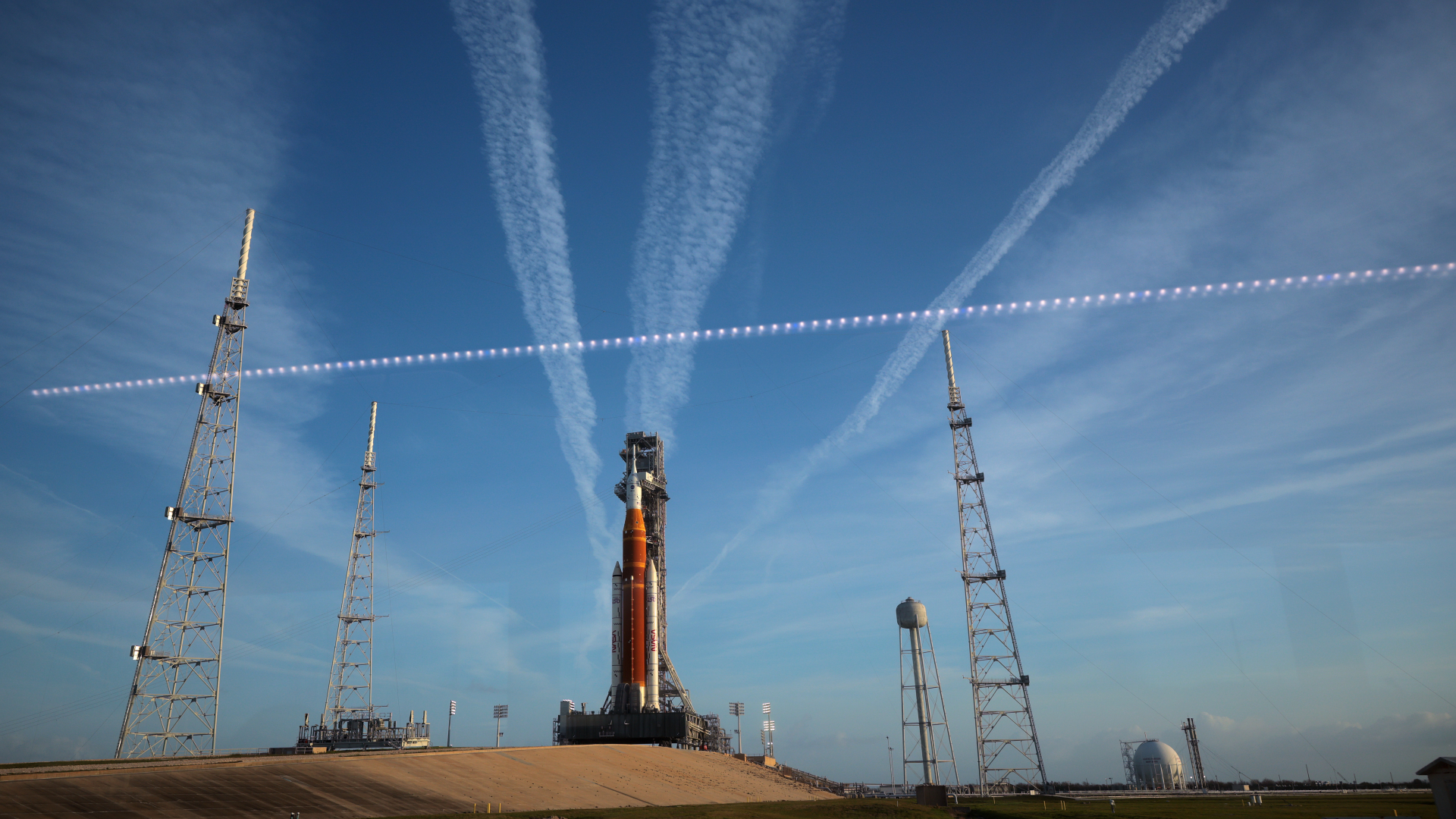 1'80% chance of a go,' launch weather officer says at NASA's Artemis II prelaunch conference
- 2'It blew my mind': Long-lost ice-age ecosystem, including fossils of lion-size armadillo and giant ground sloth, discovered in Texas 'water cave'
- 3China's huge push to reduce air pollution had an unexpected consequence in the Arctic
- 4Scientists have discovered an 'Achilles' heel' in deadly superbugs
- 5Snag this Paramount+ deal and get a bird's-eye view of the world with these amazing documentaries — but be quick, it ends today!