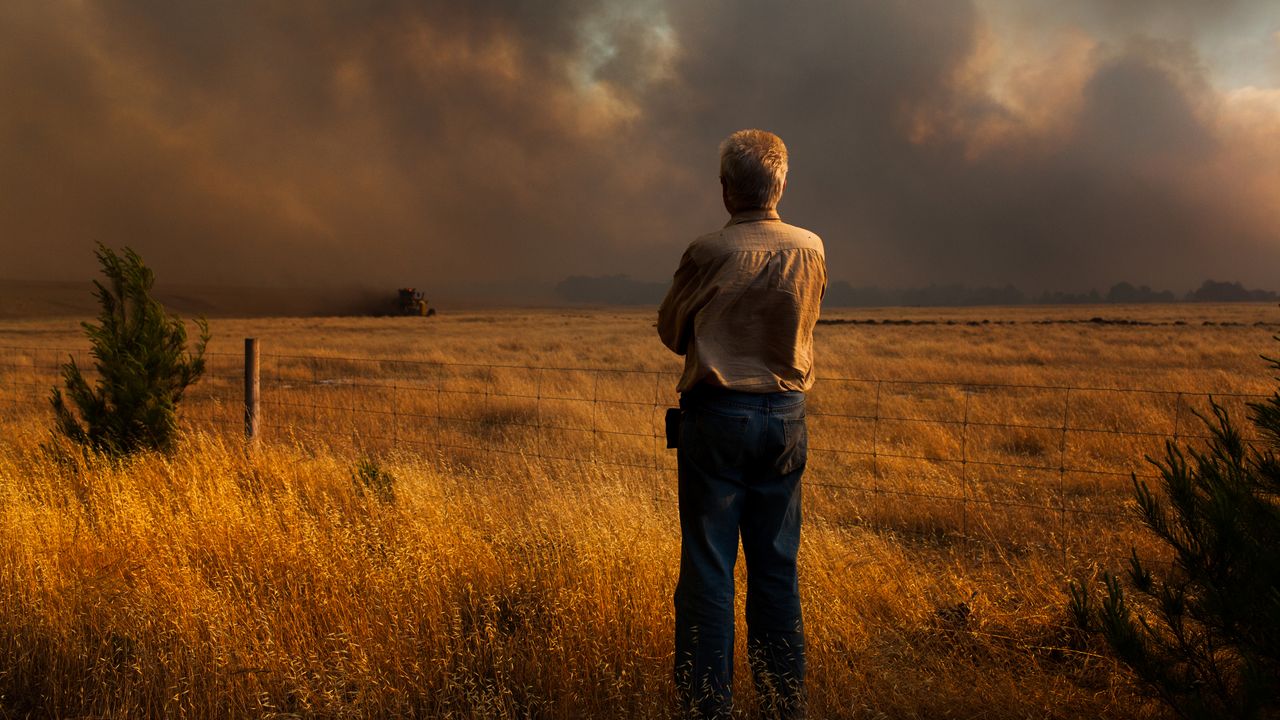
 Extreme climate outcomes are possible under moderate levels of warming, a new study shows. (Image credit: Robert Lang Photography via Getty Images) Share this article 0 Join the conversation Follow us Add us as a preferred source on Google Newsletter Sign up for the Live Science daily newsletter now
 Get the world’s most fascinating discoveries delivered straight to your inbox.
Become a Member in Seconds
Unlock instant access to exclusive member features.
Contact me with news and offers from other Future brands Receive email from us on behalf of our trusted partners or sponsors By submitting your information you agree to the Terms & Conditions and Privacy Policy and are aged 16 or over.You are now subscribed
Your newsletter sign-up was successful
Want to add more newsletters?
Join the club
Get full access to premium articles, exclusive features and a growing list of member rewards.
Explore An account already exists for this email address, please log in. Subscribe to our newsletterDangerous weather events typically associated with extreme global warming could become more frequent even under moderate levels of heating, a new study finds.
Deadly floods in cities and catastrophic droughts in major crop-producing regions may hit more often than previously thought under a climate scenario where global temperatures stabilize at around 3.6 degrees Fahrenheit (2 degrees Celsius) above preindustrial levels, researchers found. The same goes for forest wildfires, which could be more frequent and devastating under a 3.6 F scenario than scientists previously understood.
The researchers used the same ensemble of 50 climate models as the Intergovernmental Panel on Climate Change (IPCC) did in its latest assessment report. However, unlike the IPCC and many climate studies that draw conclusions from averages calculated across all 50 models, Bevacqua and his colleagues explored the models separately to identify a range of possible outcomes under a 3.6 F warming scenario.
The team focused on three sectors that are particularly vulnerable to specific climate impacts: highly populated areas, which are extremely susceptible to rainfall and flooding; breadbaskets, which are more sensitive to drought; and forests, which are especially at risk from wildfires. For each sector, the researchers ranked their model results from lowest impact to highest impact. Then, they compared this ranking to climate outcomes that were obtained by averaging the results of the 50 models under 5.4 F (3 C) and 7.2 F (4 C) of warming.
The study results, published March 25 in the journal Nature, indicate that 3.6 F of warming, which is considered a moderate scenario, can trigger climate events in each studied sector that vary hugely in intensity depending on the model. This means that even under moderate warming, there is great uncertainty and a wide range of possible climate outcomes, some of which are as extreme or more extreme than what researchers had expected for warming of 5.4 F or 7.2 F above preindustrial levels.
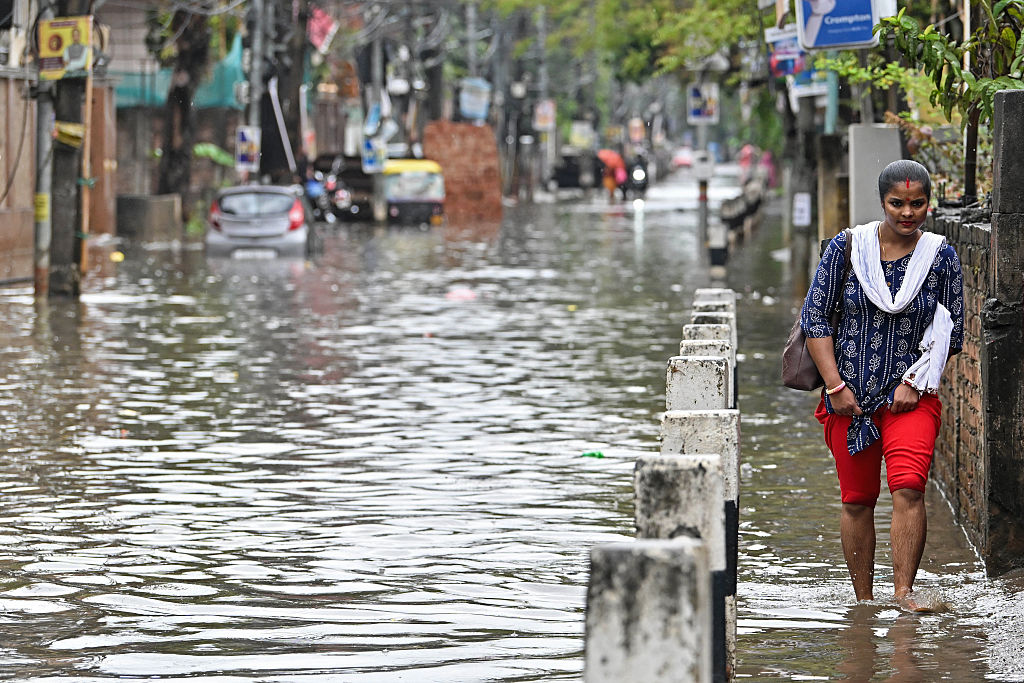
In highly populated areas, precipitation could increase by 4% to 15% under 3.6 F of warming relative to preindustrial conditions, the researchers found. High rainfall in cities can cause disastrous floods because drainage capacity is limited, according to the study. The worst-case scenarios were more extreme than what is typically expected under 5.4 F of warming, particularly in India and west central Africa.
Sign up for the Live Science daily newsletter nowContact me with news and offers from other Future brandsReceive email from us on behalf of our trusted partners or sponsorsDroughts in major crop-growing regions produced the most uncertainty across models, with some showing limited impacts and others — roughly 1 in 4 — indicating that droughts under 3.6 F of warming could be as severe or more severe than is typically expected under 7.2 F of warming. The worst-affected regions were the Indian subcontinent, East Asia, southeast South America, southeast Australia, the Caucasus and central North America.
In forested regions, there is a roughly 1-in-5 chance that fire-causing weather could become as intense or more intense under 3.6 F of warming than what is typically expected from models with 5.4 F of warming, the researchers found. The worst-impacted regions in the grimmest projections were Canada, central Africa, northeast South America, northeastern Europe and parts of Russia. Forests in these regions are critical carbon sinks that have already suffered significant losses in the past two decades, the researchers noted in the study.
There is a low chance that the most extreme outcomes in the study will occur under 3.6 F of warming, but researchers should examine them in case they do, because this would have huge consequences and require advance adaptation planning, Bevacqua said.
"Focusing on the most likely outcome or model averages alone can create a false sense of security about moderate global warming," he said. "At the same time, the plausibility of extreme outcomes should be carefully evaluated. As global warming approaches 1.5 C [2.7 F], these findings reinforce the urgency of limiting warming well below 2 C."
RELATED STORIES—Human-driven climate change is slowing Earth's rotation at a rate not seen in 3.6 million years
—We're within 3 years of reaching a critical climate threshold. Can we reverse course?
Christian Franzke, a professor in the Center for Climate Physics at Pusan National University in South Korea who was not involved in the study, agreed that the results highlight the need to limit warming as fast and as drastically as possible.
What's new in this study is that the authors demonstrated a wide range of best-to-worst impacts with one warming scenario, Franzke told Live Science in an email. "I am not surprised by the results," he said. "But you have to keep in mind that they compare extremes at 2 C global warming with the mean states at 3 C and 4 C."
In crop-producing regions, we could mitigate real-life climate outcomes under 3.6 F of warming with better water policies, Franzke said. But climate models could also be missing something. "In the real world we can face unanticipated bad surprises," he said.
Article SourcesBevacqua, E., Fischer, E., Sillmann, J., & Zscheischler, J. (2026). Moderate global warming does not rule out extreme global climate outcomes. Nature, 651(8107), 946–953. https://doi.org/10.1038/s41586-026-10237-9
 Sascha PareStaff writer
 Sascha is a U.K.-based staff writer at Live Science. She holds a bachelor’s degree in biology from the University of Southampton in England and a master’s degree in science communication from Imperial College London. Her work has appeared in The Guardian and the health website Zoe. Besides writing, she enjoys playing tennis, bread-making and browsing second-hand shops for hidden gems.
View MoreYou must confirm your public display name before commenting
Please logout and then login again, you will then be prompted to enter your display name.
Logout LATEST ARTICLES 1Teenager's hives turned out to be caused by rare water allergy
- 2How to watch NASA's historic Artemis II launch for the moon
- 3'80% chance of a go,' launch weather officer says at NASA's Artemis II prelaunch conference
- 4'It blew my mind': Long-lost ice-age ecosystem, including fossils of lion-size armadillo and giant ground sloth, discovered in Texas 'water cave'
- 5China's huge push to reduce air pollution had an unexpected consequence in the Arctic