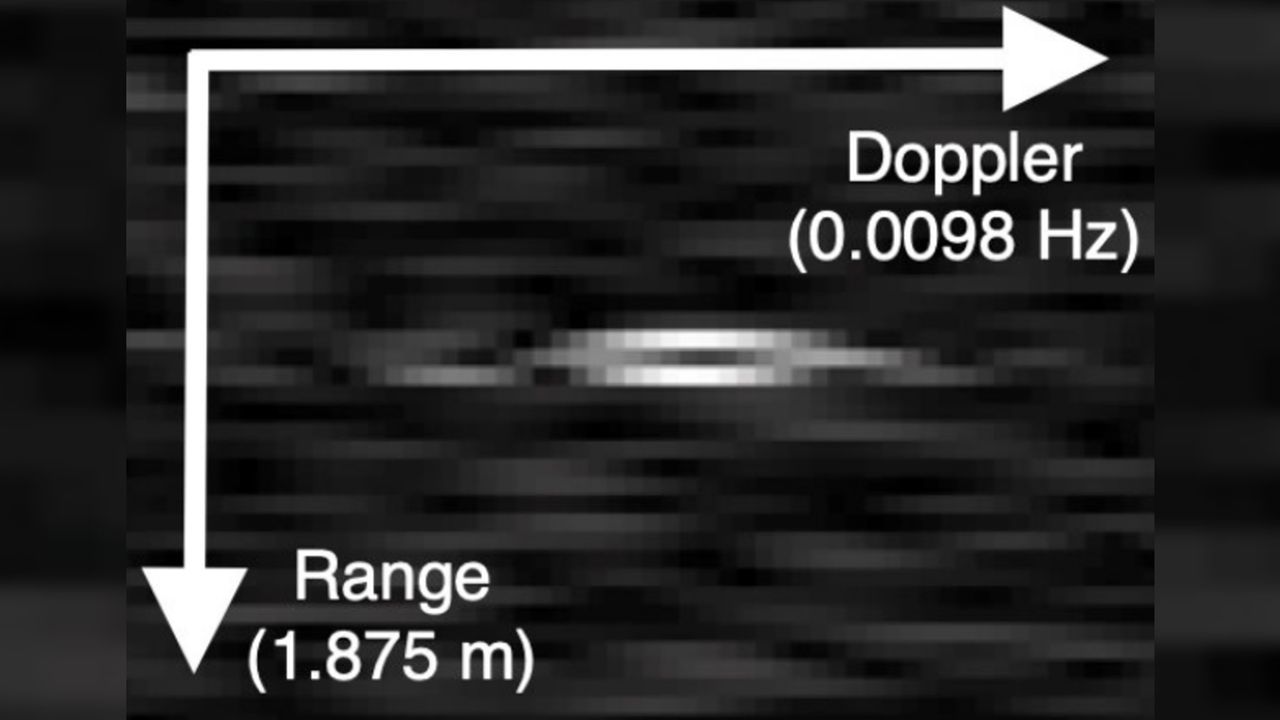
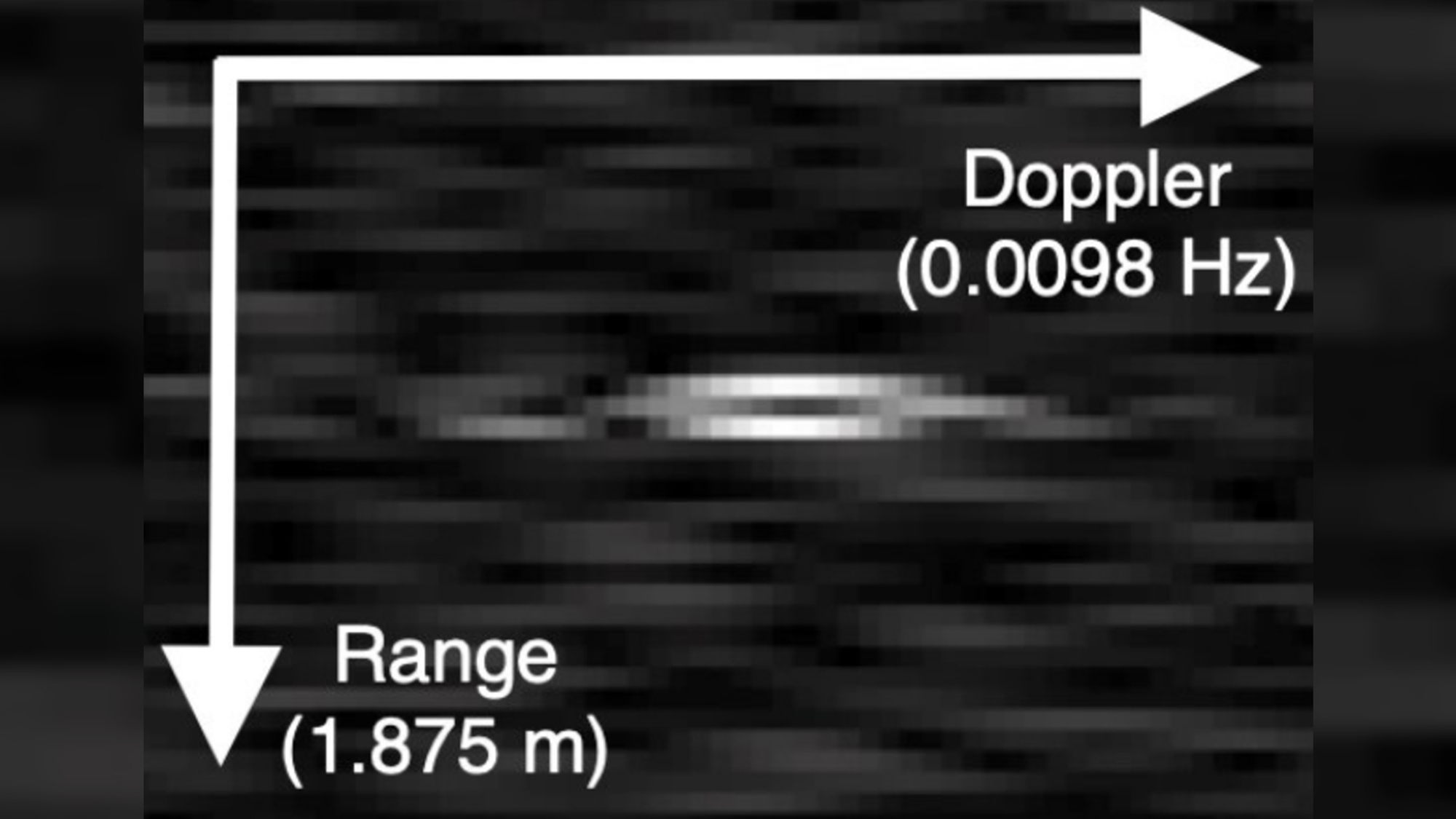
 The pixelated new photo shows the radio signals given off by Integrity. "The vertical (range) axis indicates distance to the spacecraft with distance increasing downward in the image. The horizontal (Doppler) axis indicates a frequency shift from the expected return signal," NRAO officials wrote. (Image credit: JPL & NSF/AUI/NSF NRAO) Share this article 0 Join the conversation Add us as a preferred source on Google Newsletter Subscribe to our newsletter
 Since it launched from Kennedy Space Center on April 1, 2026, we've been treated to some truly incredible photos of NASA's historic Artemis II mission, including a dump of 12,000 images captured by the crew. But a blurry snap, which shows the crewed Orion capsule as nothing more than a handful of black and white pixels, is a contender for the most impressive Artemis II photo — because it was captured by an Earth-based telescope more than 200,000 miles (320,000 kilometers) away.
This makes the photo a candidate for the longest-distance image of humans ever taken from Earth. (Images like the "Pale Blue Dot," which were taken from space, don't count.)
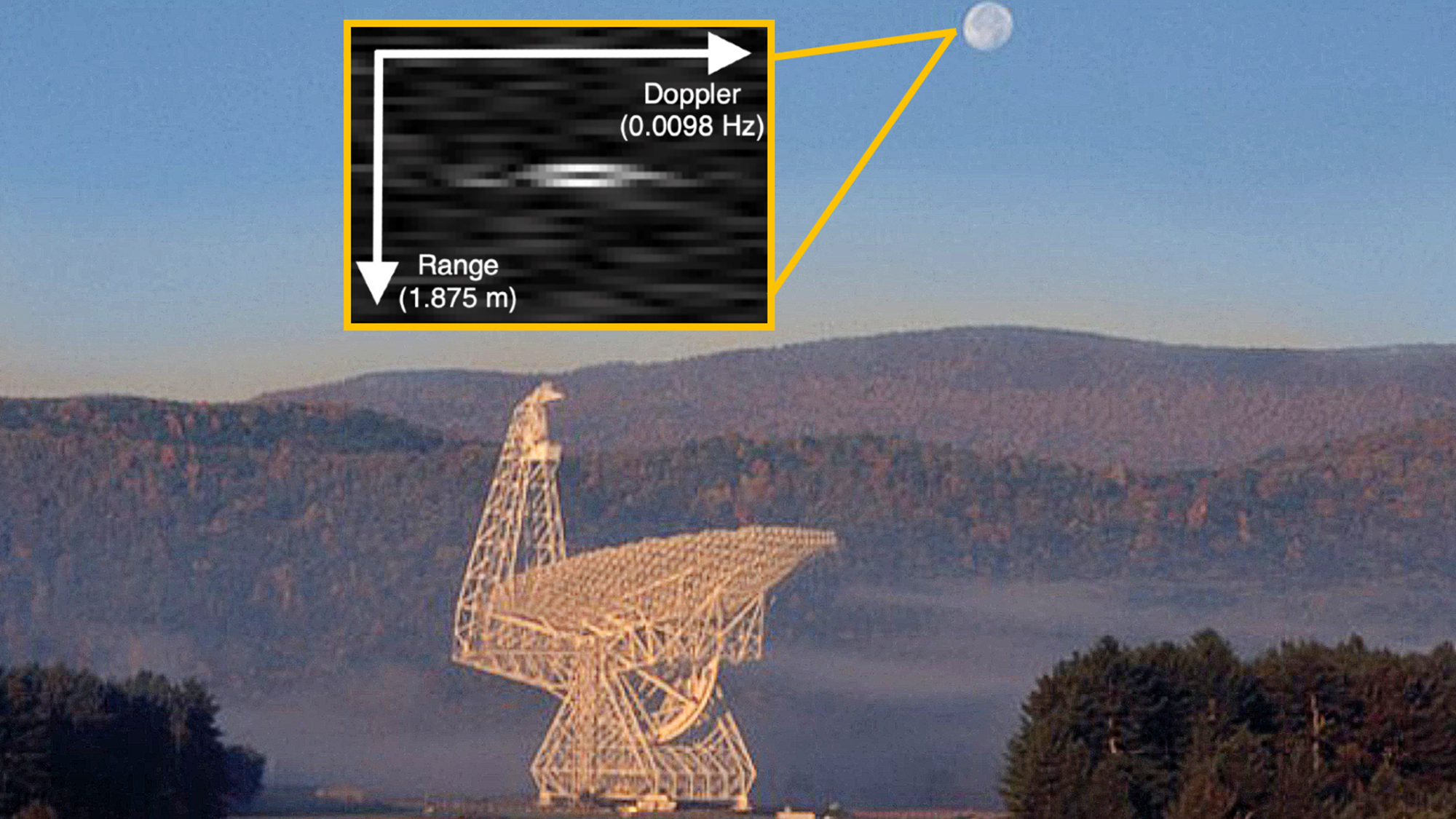
The Green Bank Telescope in West Virginia snapped the Artemis II crew from approximately 213,000 miles (343,000 km) away, shortly before or after their record-breaking slingshot around the moon.
(Image credit: Main: GBO/NRAO; insert: JPL & NSF/AUI/NSF NRAO)Sign up for the Live Science daily newsletter nowContact me with news and offers from other Future brandsReceive email from us on behalf of our trusted partners or sponsorsTracking NASA's return to the moon
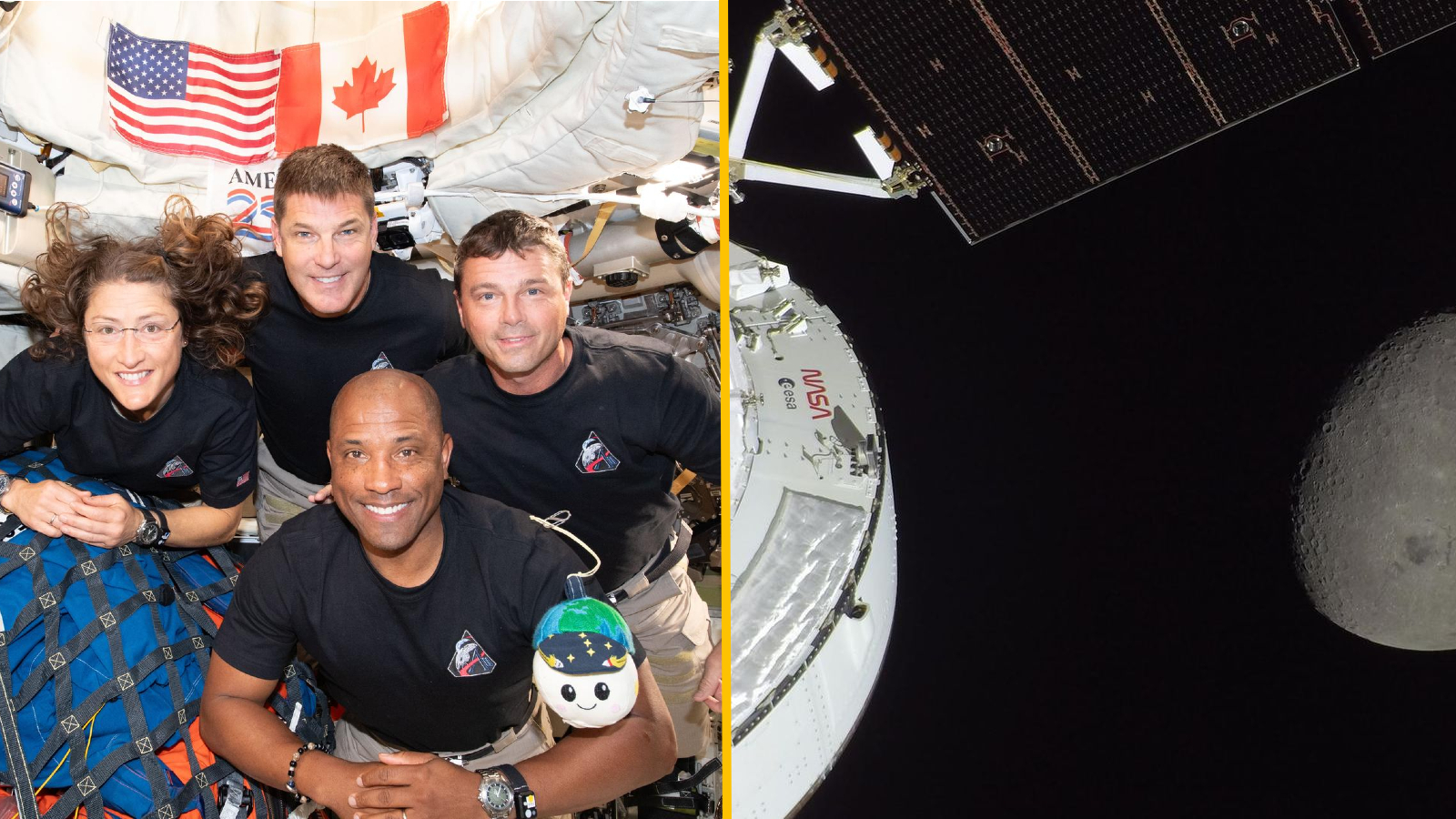
Astronauts Reid Wiseman (right), Victor Glover (bottom), Christina Koch (left) and Jeremy Hansen (top) traveled further from Earth than any other human in history when they went around the moon on April 6.
(Image credit: NASA)RELATED STORIES- 'I have not processed what we just did': Artemis II astronauts share all in first news conference since splashdown
- Can the US be trusted with the moon? A law scholar raises concerns after Artemis II's success.
- I've witnessed nearly 100 rocket launches. Artemis II was like nothing I've experienced.
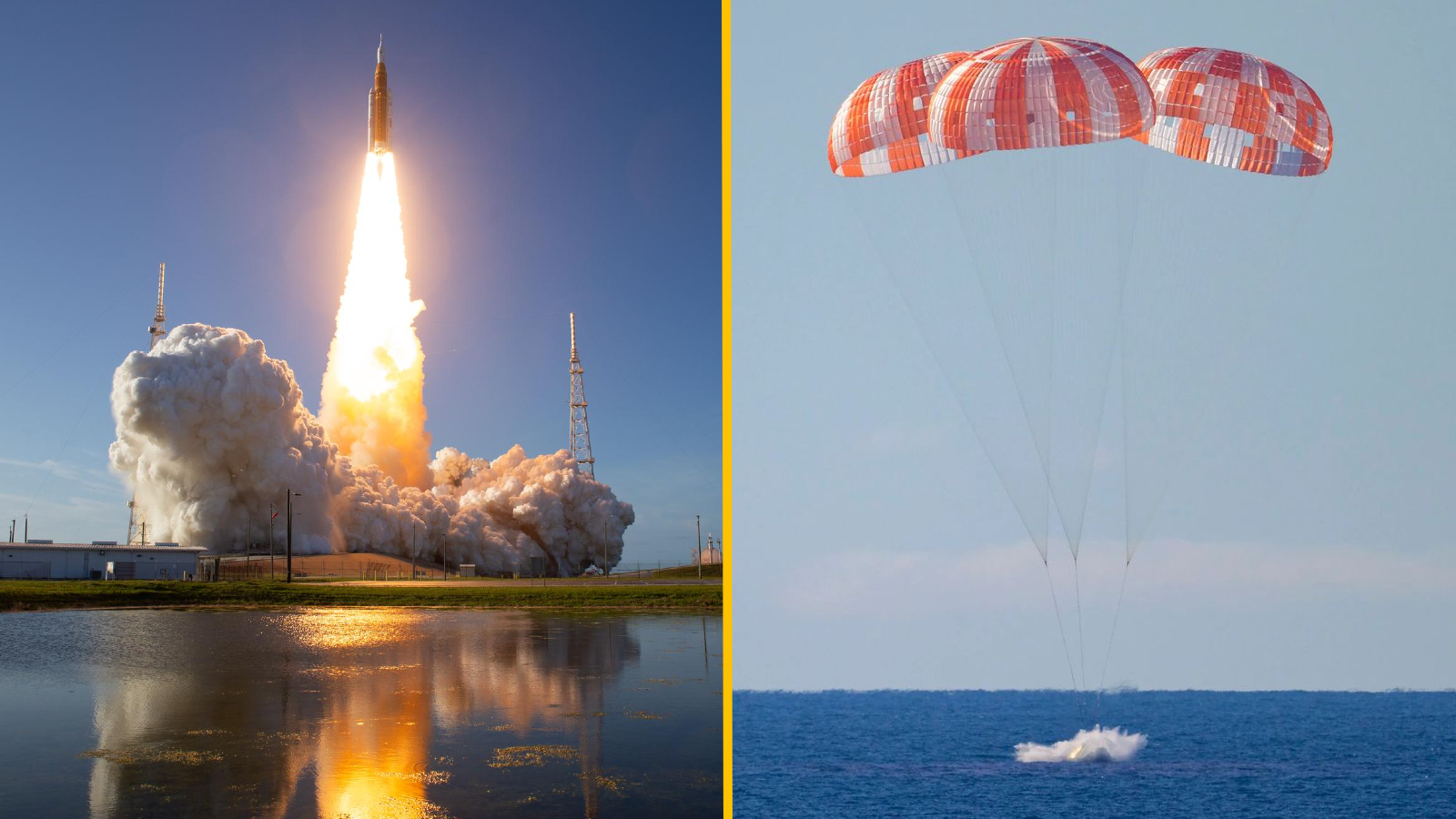
The Artemis II crew lifted off from the Kennedy Space Center in Florida on April 1 and landed just off coast of San Diego on April 10, having traveled a total of 695,000 miles (1.1 million km).
(Image credit: NASA/Bill Ingalls) DisclaimerThis article was first published May 14, 2026.
 Harry BakerSenior Staff Writer
Harry is a U.K.-based senior staff writer at Live Science. He studied marine biology at the University of Exeter before training to become a journalist. He covers a wide range of topics including space exploration, planetary science, space weather, climate change, animal behavior and paleontology. His recent work on the solar maximum won "best space submission" at the 2024 Aerospace Media Awards and was shortlisted in the "top scoop" category at the NCTJ Awards for Excellence in 2023. He also writes Live Science's weekly Earth from space series.
View MoreYou must confirm your public display name before commenting
Please logout and then login again, you will then be prompted to enter your display name.
Logout