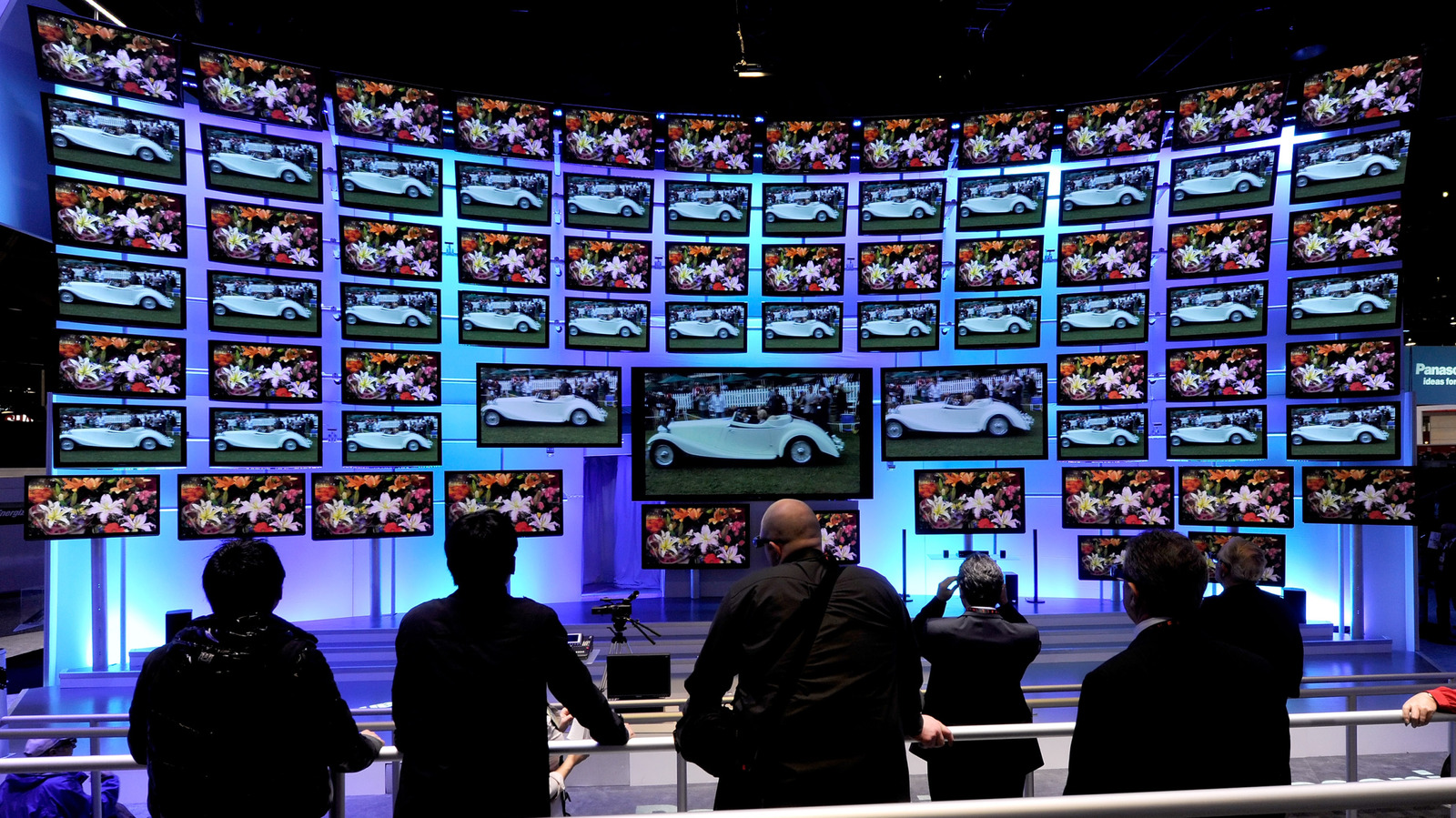
The rise of OLED and a lack of content made 3D TVs a short-lived fad.
By Devindra Hardawar July 5, 2026 2:30 pm EST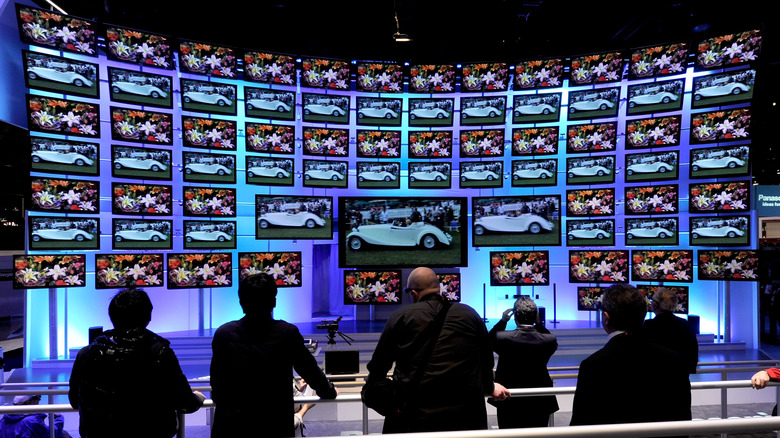 Ethan Miller/Getty Images
 As we gear up for the potential rise of Micro RGB TVs and the evolution of OLED, it's easy to forget that, for a brief moment, 3D TVs were everywhere. TV makers shoved the technology into most of their sets in the early 2010s, following Hollywood's obsession with 3D releases like Avatar and How to Train Your Dragon. But by 2015, as the TV industry started to focus on 4K and HDR-equipped TVs, 3D had completely disappeared at home. What went wrong?
There are a few easy answers: 3D was just a pain to use at home, and Hollywood also oversaturated the market with low-quality 3D releases because they commanded higher ticket prices. Convenience is king for home entertainment, and 3D TVs proved to be anything but.
The pain of using 3D TVs
While many TVs released between 2010 and 2015 supported 3D, using the feature required clearing a series of annoying hurdles. You had to buy 3D glasses, which ranged from $10 to $20 for passive frames, to upwards of $50 for active glasses that required constant charging. You had to make sure your Blu-ray player supported 3D discs. And you had to pay a premium for those 3D Blu-rays, assuming you could find them in stock.
For the niche media geeks who cleared those roadblocks, 3D Blu-rays did a decent job of replicating the theatrical 3D experience. But the results depended heavily on the size and viewing distance of your TV. If you're too far away from a 42-inch or even 50-inch set, you won't really be immersed by Avatar's world of Pandora. It was also extra annoying if you wanted to have a 3D watch party with a crowd — you'd either have to buy a ton of extra glasses, or hope your nerdy friends had their own.
Worst of all, 3D TVs with passive glasses effectively halved the resolution of 1080p, since they had to deliver a separate image. 3D projectors and higher-end TVs avoided that issue since they relied on active glasses, but the expense and battery limitations of those frames made viewing parties all but impossible.
Outside of 3D Blu-rays, it was also tough to find much 3D content. Networks like the BBC and ESPN broadcast a handful of 3D shows and games, but they both gave up on the format in 2013. "I have never seen a very big appetite for 3D television in the UK," Kim Shillinglaw, the BBC's head of 3D, said in a 2013 interview with Radio Times (via The Independent). "Watching 3D is quite a hassly experience in the home. You have got to find your glasses before switching on the TV. I think when people watch TV they concentrate in a different way. When people go to the cinema they go and are used to doing one thing. I think that's one of the reasons that take up of 3D TV has been disappointing."
As the hype around 3D TVs waned, 4K sets with HDR started to crop up with more immediate benefits. They looked noticeably sharper and brighter than earlier HDTVs, and they were buoyed by a ton of 4K content from Netflix and other streaming services. There was no need to buy a Blu-ray player, no need to put on glasses and no need to look hard for special content. It's no wonder 4K took off. (And even if you're not viewing 4K content, those newer TVs still made your older SD and HD shows look better than ever.)
According to a recent study by Precision Reports, around 25 percent of households with 3D TVs actually used the technology during the peak period between 2010 and 2018. Less than 10 percent of households kept using the technology after three years. The same report also found that 65 percent of users stopped using 3D because of a lack of content, 50 percent noted discomfort for long viewing sessions and 42 percent gave up due to high equipment costs.
Despite the many issues, though, Precision Reports also predicts that the 3D TV category will grow by 15 percent by 2036 thanks to the rise of glasses-free 3D sets, commercial implementations and gaming. I've yet to be impressed by any glasses-free 3D TVs, personally, and they typically don't support multiple viewers since they rely on sophisticated eye tracking to function.
The trouble with 3D in Hollywood
 Justin Sullivan/Getty Images
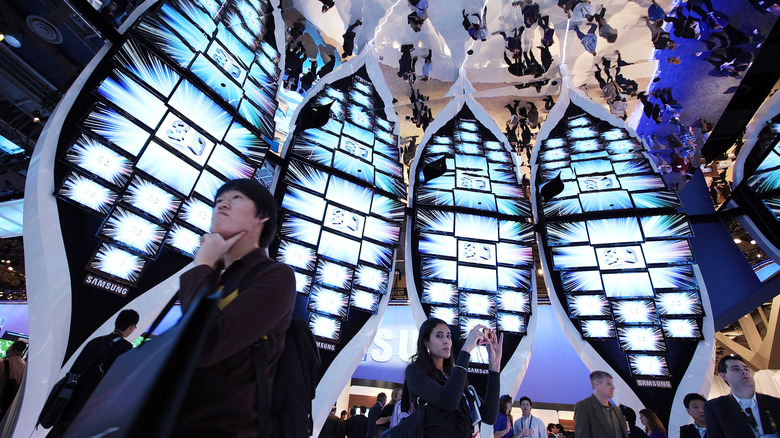
 After the initial rush of 3D box office hits like Avatar and Alice in Wonderland (truly one of the worst films to cross the $1 billion mark) in 2009 and 2010, movie studios were emboldened by the spectacle of 3D. It was a shiny new thing that could entice audiences, and even better, it was something that theaters could charge a premium for. But it didn't take too long for audiences to start revolting. By 2012, major films like Pixar's Brave and Madagascar 3 saw serious drops in their 3D ticket sales, according to The Hollywood Reporter.
"Prices are too high," one studio distributor told THR in 2012. "We've turned our business into appointment moviegoing, at least domestically. There's no more generic moviegoing."
It didn't help that the actual quality of 3D films fell precipitously as studios drove the technology into the ground. While James Cameron meticulously built Avatar around a true stereoscopic 3D camera system, other releases like Alice in Wonderland and Clash of the Titans were simply upscaled to 3D from 2D. The results of that upscaling technology varied widely, but for the most part, it led to 3D films without the same sense of depth as something natively shot in 3D. (When I saw Clash of the Titans in a press screening, the entire film looked like a muddy mess.)
"We have disappointed our audience multiple times now, and because of that I think there is genuine distrust — whereas a year and a half ago, there was genuine excitement, enthusiasm and reward for the first group of 3D films that actually delivered a quality experience," producer Jeffrey Katzenberg (and future Quibi co-founder) told THR in 2011. "Now that's been seriously undermined... It's really heartbreaking to see what has been the single greatest opportunity that has happened to the film business in over a decade being harmed. The audience has spoken, and they have spoken really loudly."
As someone who was regularly reviewing movies during the heyday of 3D cinema, I found there were only a handful of films that truly took advantage of its potential. Beyond Avatar, there was Alfonso Cuaron's Gravity, Martin Scorsese's Hugo, Ang Lee's Life of Pi, and Ridley Scott's The Martian. Each of those films were natively shot in 3D and helmed by some of the most talented directors in Hollywood. CG films like How to Train Your Dragon and Up, which were easily produced in native 3D, also pushed the limits of immersion. This small library of genuinely great titles was yet another reason 3D TVs didn't really take off. Even the technology's biggest fans didn't have much to choose from.
These days we're still seeing major 3D releases in theaters, but aside from the Avatar sequels (which are also trying to push the idea of high-frame-rate footage), practically nobody is shooting natively in 3D. Instead, there's more hype around IMAX's large-scale 2D film technology, thanks to the obsession of one Christopher Nolan.
Where to watch 3D movies at home today
Unless you've kept a 3D TV and Blu-ray player around, there aren't many easy ways to watch 3D movies today... And spoiler alert, most of the capable available options will cost you.
Many modern projectors support 3D, with BenQ models being among the most well-received online. If you have a lot more money to spare, the XGIMI Titan Noir Max projector that we reviewed and awarded a score of 8.5 (out of 10) is also compatible with 3D content. It will set you back $6,000. You'll also need to buy enough active shutter glasses for your entire group, which will cost you more.
Then there is VR. Apple's Vision Pro supports 3D movies in its TV and Disney+ apps, and I can tell you from experience that it all looks spectacular. Unfortunately, you have to shell out $3,690 to experience it.
You can also view 3D movies with a variety of apps on the Meta Quest headsets, including Bigscreen VR, but the process of finding and renting films isn't as easy on the Vision Pro. Any VR headset can play 3D video files, since they natively support stereoscopic 3D, and you can also view them on smart glasses like Xreal's One Pro.
Perhaps one day, we'll finally get glasses-free 3D TVs that can actually work with multiple viewers. But we may just have to wait until holographic TVs are a reality.