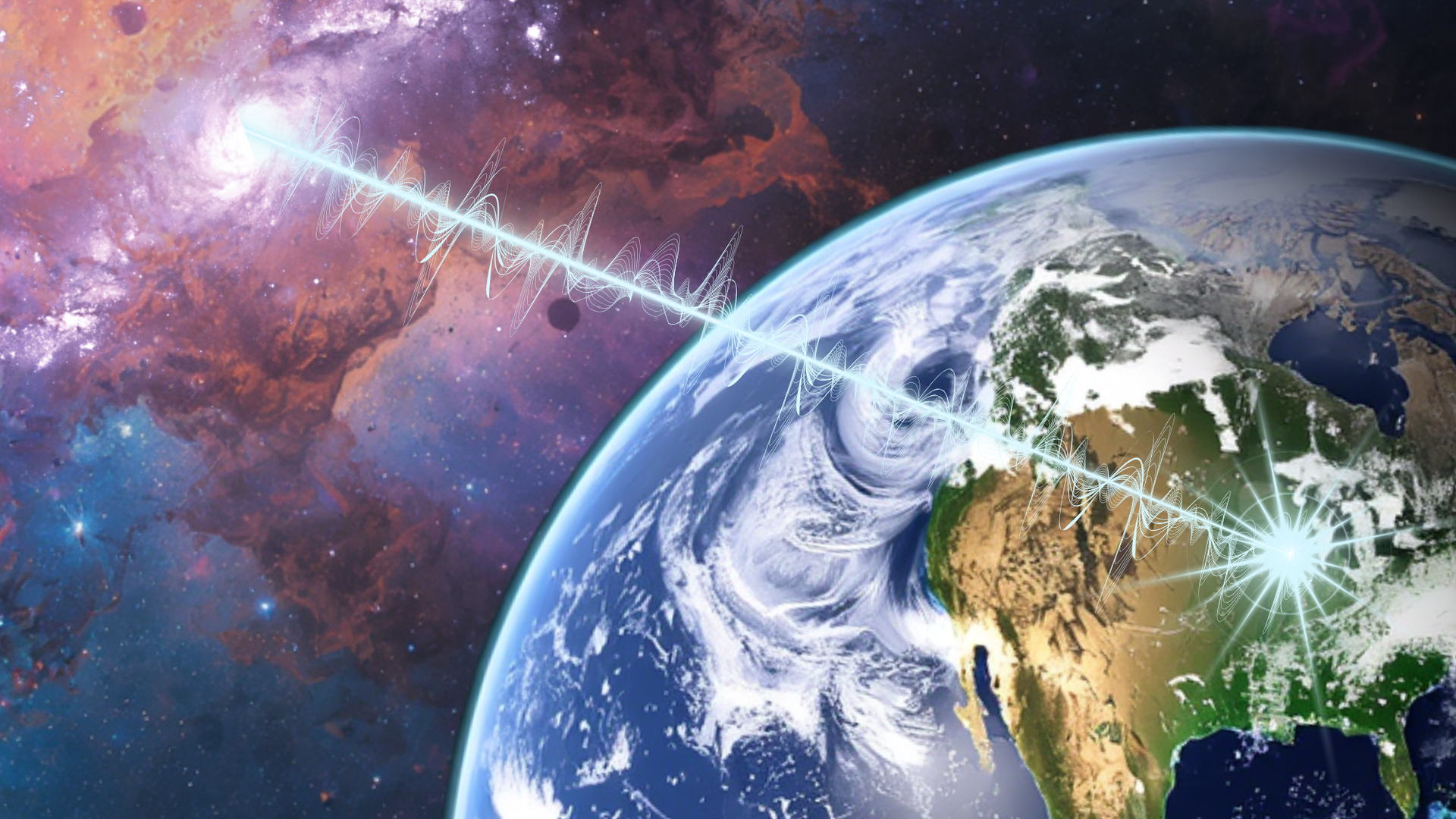
Fast radio bursts, flashes of energy from faraway galaxies, are invisible to our eyes. However, we can now hear their melody, thanks to a composer who has turned them into sound.
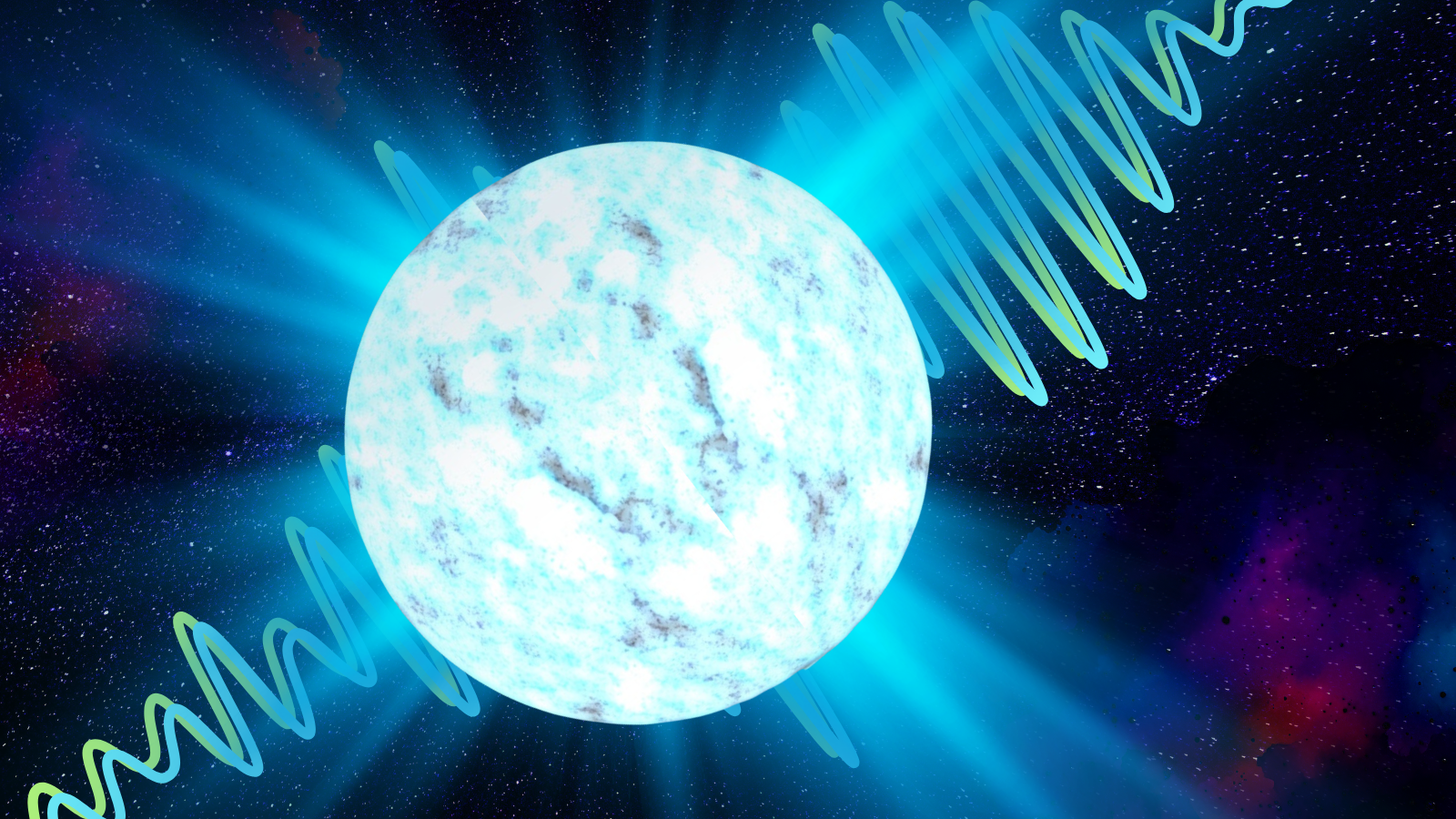
Fast radio bursts, or FRBs, are among the most extreme events in the universe, releasing as much energy in a millisecond as the sun puts out in three days and briefly outshining entire galaxies. Since the first FRB was discovered in 2007, astronomers have detected thousands of them; however, exactly how these cosmic flares are launched remains poorly understood. Recent evidence points to at least one burst coming from the environment around a rotating neutron star.
Despite their power, FRBs last only a few thousandths of a second before vanishing into space. Catching one takes luck, as a telescope has to be pointed at the right patch of sky at the right moment. That changed with CHIME (the Canadian Hydrogen Intensity Mapping Experiment) in British Columbia. With a very wide field of view and a supercomputer to process its data, CHIME more than quadrupled the number of known FRBs in its first year of operation alone. Between 2018 and 2023, CHIME recorded 4,539 bursts from 3,641 sources.
As pulses of radio waves, our eyes haven't evolved to see FRBs, nor can we hear them as they aren't sound waves. Well, not until now. "Artist and composer Andrew Melchior turned all of the CHIME bursts into sound for "The Logos," an installation that has played daily at Oulu Cathedral in Finland since early April and is scheduled to run through the end of the year. Melchior and Kiyoshi Masui, an associate professor of physics at MIT, "sonified" the bursts, translating data into acoustics so that human ears can hear them.
The structure of each real signal is mapped to varying musical pitches and played through 12 loudspeakers spread throughout the cathedral. The result is a range of tones, with distant FRBs humming, rumbling, popping, and whistling.
The signals are old by any human measure. According to a description on Melchior's website, the youngest in the work are about 50 million years old, and the oldest are about 8 to 9 billion years old.
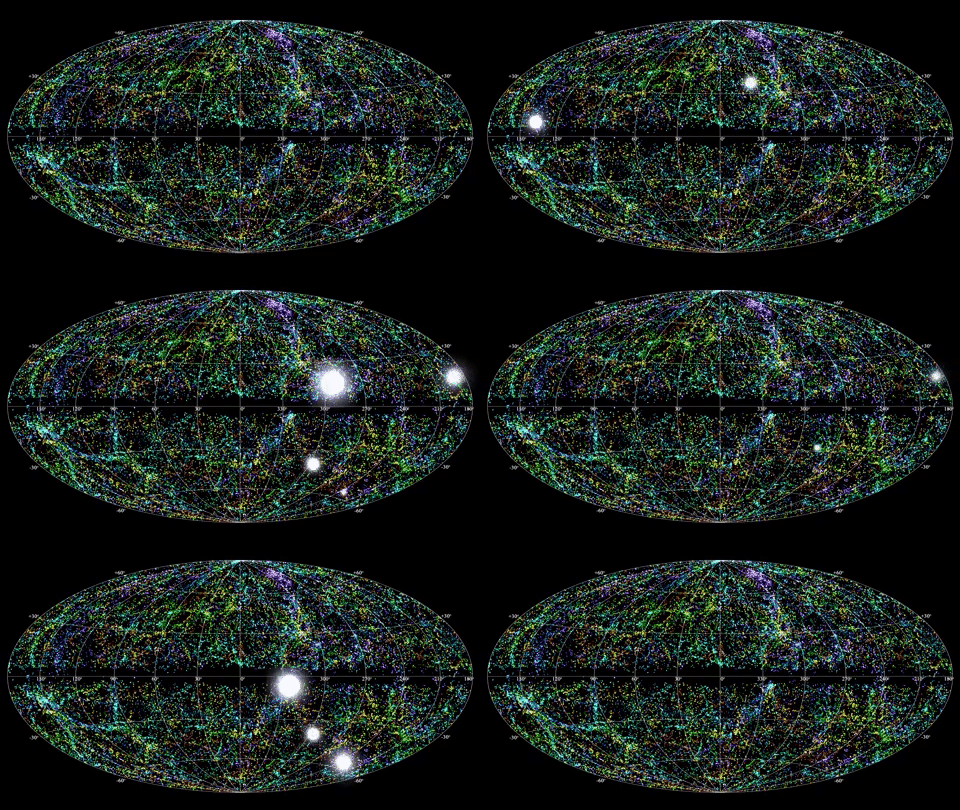
Physics also plays a role in what is heard. Each burst arrives with its high frequencies first and sweeps downward, stretched by its journey through intergalactic gas, "and you can hear that dispersion as it falls from the dome," Melchior told Space.com by email.
Since their discovery in 2007, the bursts are also still yielding discoveries. Last month, astronomers using the James Webb Space Telescope pinpointed the host galaxy of the most distant FRB yet, one that went off when the universe was only about 3 billion years old. The galaxy, a small, young, star-forming dwarf, was far smaller than expected. That makes it harder to square with the theory that FRBs come from merging neutron stars, researchers say, which would take billions of years to occur.
This fits better with a second theory, in which a young, highly magnetic neutron star called a magnetar produces the burst soon after a massive star explodes, according to NASA.
Back on Earth, an upcoming event at Oulu Cathedral offers a more immediate encounter with the bursts. On Nov. 21, 30 singers will stand among the audience and "sing back to the sky in Finnish" while Melchior plays the bursts live from a keyboard, he told Space.com by email.
"The fast flashes will echo as snare-like beats bouncing through the cathedral," Masui said in a previous MIT statement.
"It should feel rich and layered, while also revealing something real about how these signals travel across billions of years of cosmic space before reaching Earth."