NASA has begun replacing references to artificial intelligence with "super intelligence" following an executive order from President Donald Trump, which directs government agencies not to acknowledge the terminology change in their external communications.
An internal NASA document obtained by Space.com lays out plans to update the agency's websites, publications, organizational titles and digital infrastructure with a four-phase "super intelligence" implementation schedule extending into December. And the changes go beyond NASA's public-facing communications, with at least one planned technical update described as "a breaking change" expected to disrupt existing software integrations.
The terminology shift arrives as NASA continues expanding its use of AI across missions and research programs, from autonomous Mars rover navigation to models capable of analyzing enormous amounts of scientific data. The technologies themselves aren't changing, but NASA's effort to implement the nomenclature introduces new obstacles for scientific communication and the agency's digital infrastructure.
Trump's executive order (EO), called "Inaugurating the Era of Super Intelligence," was signed on Sept. 29. It directs federal agencies to replace any mention of "artificial intelligence" and "AI" with "super intelligence" and "SI" in all official government communications. The White House argues that AI has advanced beyond simple automation or imitations of human intelligence, and that language befitting "a new era of Super Intelligence" is needed to better reflect the technology's emerging capabilities.
Despite introducing the new name, the order retains the federal government's existing definition of artificial intelligence, which broadly covers machine-based learning systems capable of making predictions, recommendations or decisions. That means technologies already classified as AI can now be designated "super intelligence" without demonstrating any additional capabilities.
To follow suit, NASA's Office of Communications (OCOMM) and Office of the Chief Information Officer (OCIO) distributed an internal implementation schedule that outlines the span of work that the agency's multiple comms teams now have ahead of them.
"Effective immediately, we must use "super intelligence" and "SI" in all in-scope content/publications," the document says, bolding the key terms.
It covers both internal and external communications and instructs NASA employees to use "super intelligence" and "SI" in all new "presentations, exhibits, printed materials, media interviews, or other collateral or content for external audiences."
Internally, the policy applies to all official employee communications, NASA style guides, intra-agency websites and IT systems referenced in public-facing communications or official materials. And NASA's instructions echo Trump's directive forgoing any kind of transitional language.
Orders from the top
Agency leadership has generally been aligned with the current administration's agenda, adjusting NASA's priorities to meet the president's goals when needed. NASA Administrator Jared Isaacman has helped lead that charge since his appointment to the position in December 2025; he has been a champion of Trump's human spaceflight-heavy vision for the agency since his first day. That should come as no surprise; NASA is, after all, part of the executive branch, and the agency is obliged to abide by executive orders.
But Isaacman's relationship with Trump is, perhaps, more visible than that of past NASA chiefs. The duo have shared several jovial public interactions, including an unexpected phone call from Trump during a press conference celebrating the launch of NASA's Roman Space Telescope on Aug. 30. One month later, Isaacman attended a White House luncheon with more than a dozen AI tech executives, on the same day that Trump signed his super intelligence EO.
While he's not an AI company executive, Isaacman is a member of the tech-billionaire community. Before beginning his tenure at NASA, Isaacman founded and served as CEO for Shift4 Payments, a payment processing company. He used some of that fortune to charter a pair of private astronaut launches with SpaceX — Inspiration4 and Polaris Dawn, which were the first-ever all-civilian orbital spaceflight and the flight that featured the first-ever private spacewalk, respectively.
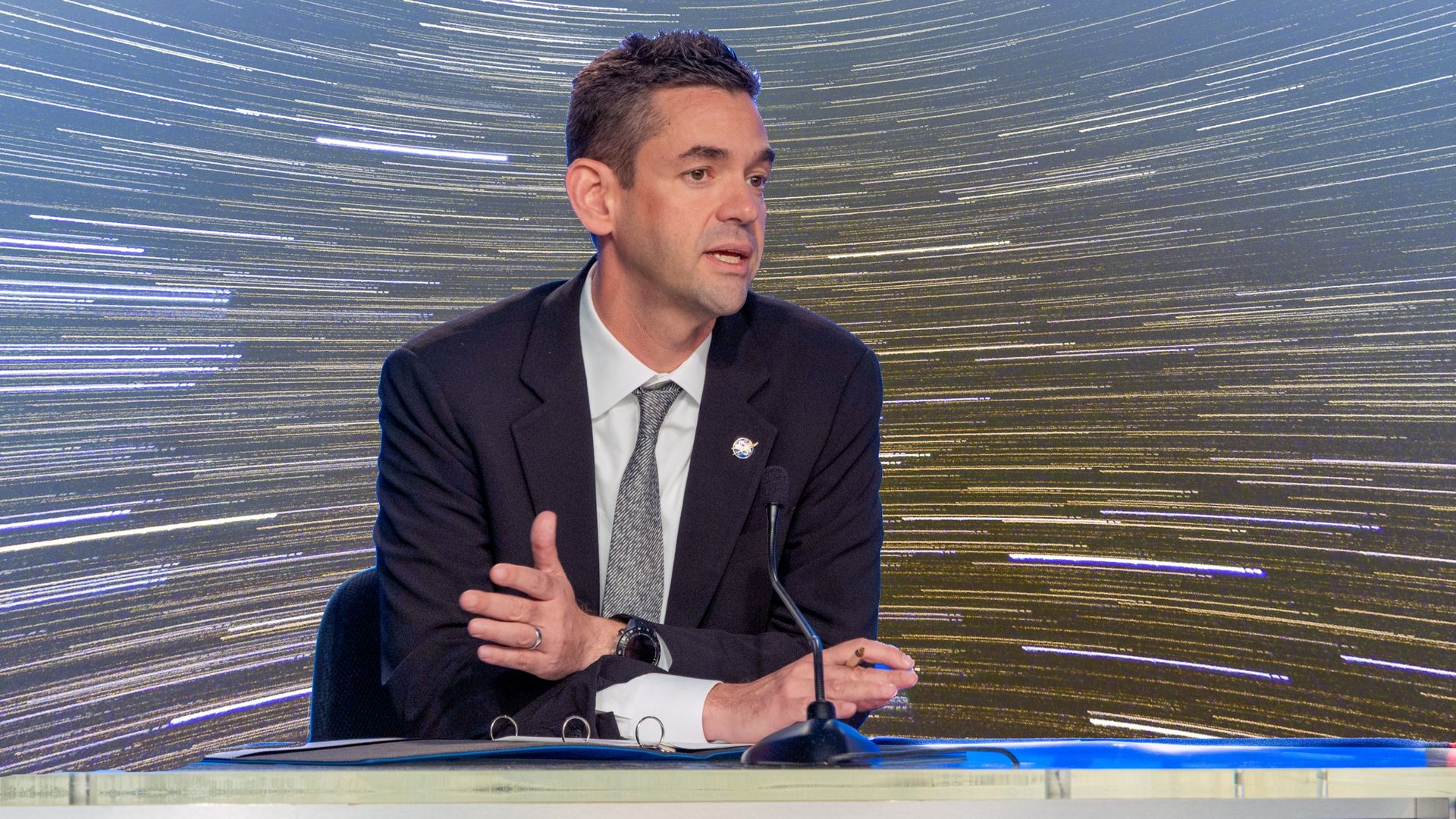
"I was honored to have an opportunity to join that luncheon," Isaacman said when asked his opinion of AI during a post-launch press conference for the SpaceX Crew-13 astronaut mission on Oct. 1. By that point, he had already added the SI nomenclature to his lexicon. "I made clear when it was my turn to speak … I am the space guy here [not an 'AI' guy]," he added as a caveat, before saying that the "potential super intelligence has … [can] change the course of civilizations."
Isaacman's embrace of the new lingo may be partially behind NASA's own accelerated efforts to bring the agency's comms in line with the administration's. One NASA employee told Space.com, "We are getting a lot of pressure from the administrator himself to act on this."
Internal difficulties
Beyond just substituting one term for the other, NASA personnel have been told not to acknowledge the previous nomenclature at all, including short-term phrases such as "SI, also/formerly known as AI."
The changes extend to related terms such as "generative AI" becoming "generative SI," with NASA's guidance directing agency messaging away from "automation." They'll now put an emphasis on how today's technologies "amplify human ingenuity and unlock new forms of creativity," the NASA document says, quoting Trump's order.
The use of the term "SI," and the direction not to use "AI," applies across all NASA's centers and mission directorates, including contractors and personnel at NASA's Jet Propulsion Laboratory (JPL) in Southern California, which is run by Caltech.
Specific technical citations, like "machine learning," "large language models" and "chatbot," remain acceptable, but the new terminology may run the risk of carrying different meanings in different contexts.
Technical exceptions aside, some at NASA responsible for implementing the changes think it may present more obstacles than expected. "There's concern that there's going to be a lot of confusion in the scientific community and in the general population," a NASA employee knowledgeable of the plan told Space.com, under the condition of anonymity.
In recordings of an internal NASA communications meeting obtained by Space.com, employees echoed the same concerns to their direct management and voiced some frustration over their inability to relay to the public that the changes are being made in the first place.
"We're not even supposed to use AI as a term ... it's being talked about like Voldemort or Macbeth, with people calling it 'the technology that must not be named,'" the NASA employee said.
"Super intelligence and artificial intelligence — they have two different meanings. They both are already separate things," one meeting participant said. "As a science communicator … I feel like it's our responsibility to raise our hand and say, 'Hey, this is going to confuse people. This doesn't make sense.'"
To Isaacman's credit, those worries may have a chance of being heard by him and NASA's top brass, thanks to a management culture that seems to encourage concerns at any level being brought up the ladder without reprisal.
One meeting leader references "the idea box," an anonymous online system that allows employees to submit feedback directly to agency leadership, and reminded participants that "using the tools that we have at our disposal to make those concerns heard at the top level will not hurt."
In contrast, during the transition at the start of Trump's second term last year, before Isaacman was appointed to NASA's top seat, things at some NASA centers did not always feel as open when it came to voicing concerns to management. At the time, NASA was operating under interim leadership, first by former Kennedy Space Center Director Janet Petro, from January to July 2025, then by Transportation Secretary Sean Duffy from July to December.
NASA already ahead of the game
While artificial intelligence encompasses a broad range of technologies, super intelligence has traditionally referred to a far more advanced, and often hypothetical (and sometimes sci-fi-level), capability that surpasses the limits of human cognition.
Beyond NASA, AI has entered into the space industry's ongoing realm of conversation in recent years, with several companies exploring the possibility of data centers in low Earth orbit (LEO). SpaceX is already operating the world's largest satellite network — there are currently more than 11,000 of the company's Starlink satellites in LEO, providing internet connectivity around the globe — and has proposed a constellation of up to 1 million satellites functioning as "orbital compute" for CEO Elon Musk's AI endeavors.
NASA began integrating AI into a number of its missions, both current and upcoming, well before conversations about SI stepped into the picture. One of the first to try on that hat was the agency's Perseverance rover on Mars, which used machine learning to plan and complete its first drive on the Red Planet using routes mapped out by generative AI in December 2025.
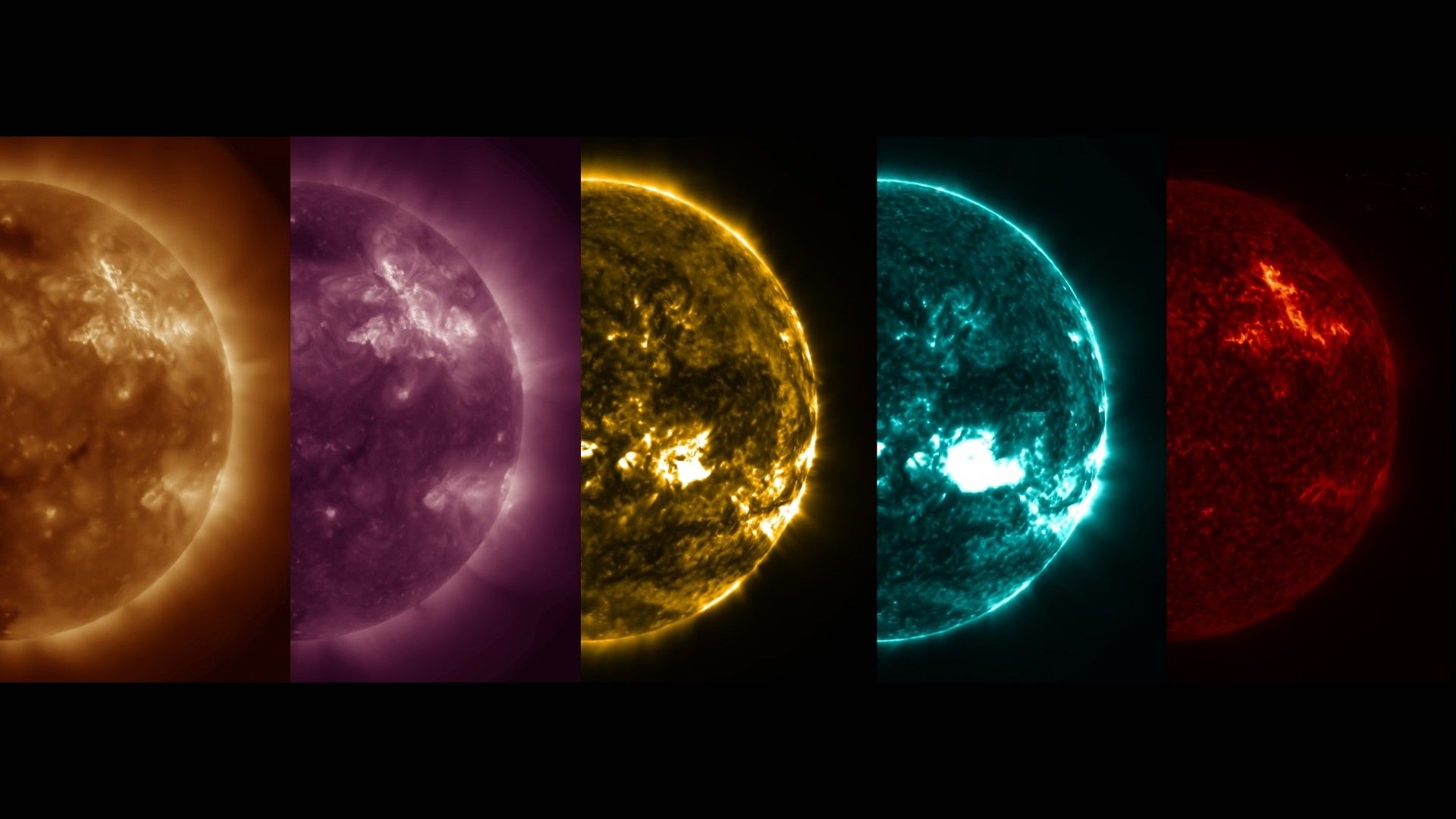
NASA has also put AI to work analyzing massive amounts of data. Surya, an AI-powered foundation model introduced by NASA and IBM last year, was trained on nine years of NASA heliophysics data to help improve space weather and solar activity forecasting. A more recent lunar collaboration between NASA and IBM was introduced last month to help researchers investigate the surface of the moon for potential deposits of water ice, and AI is central to NASA's plan for processing the massive amounts of data expected once Roman is operational.
"Foundation models" like Surya fall under the acceptable precise-language usage that NASA still considers best practice when communicating with scientific audiences, according to the agency's internal guidance. However, separate instructions for scientific publications and research documents are still being developed internally, leaving some uncertainty over how NASA researchers will reconcile the new terminology with established language used by universities, international space agencies and other scientific institutions that may not adhere to Trump's EO.
According to the agency's internal plan, a determination for scientific publications and research documents will be issued by NASA's Scientific and Technical Information, Science Mission Directorate and Chief Science Data Officer teams, along with separate guidance for official agency policy documents, both of which are listed on a page titled "Forthcoming Guidance."
Implementation
Retroactively, certain already published web pages, including applicable evergreen content in active use, will be marked for update or given an added disclaimer with an archival notice. Titles, descriptions and other metadata for older videos and podcasts may also be revised to reflect the new terminology, while the original recordings, transcripts and captions will remain unchanged. NASA's page for Perseverance's AI-guided trek across Mars' surface, for instance, is now titled, "Mapping Perseverance’s Route With SI," but "AI" is still present in the page's URL — for the time being, at least.
Soon, that URL will redirect to a new one, with "SI" in its place. NASA's internal plan divides its implementation into four phases, with proposed deadlines stretching from Oct. 9 through Dec. 23.
"Every agency is doing it at their own pace," one NASA employee told Space.com. "You'll see some places have not implemented the change yet, and others, like NASA, are pushing it forward sooner rather than later."
Internal NASA slide for Super Intelligence implementation (image approximation). (Image credit: Space.com recreation of an internal NASA presentation)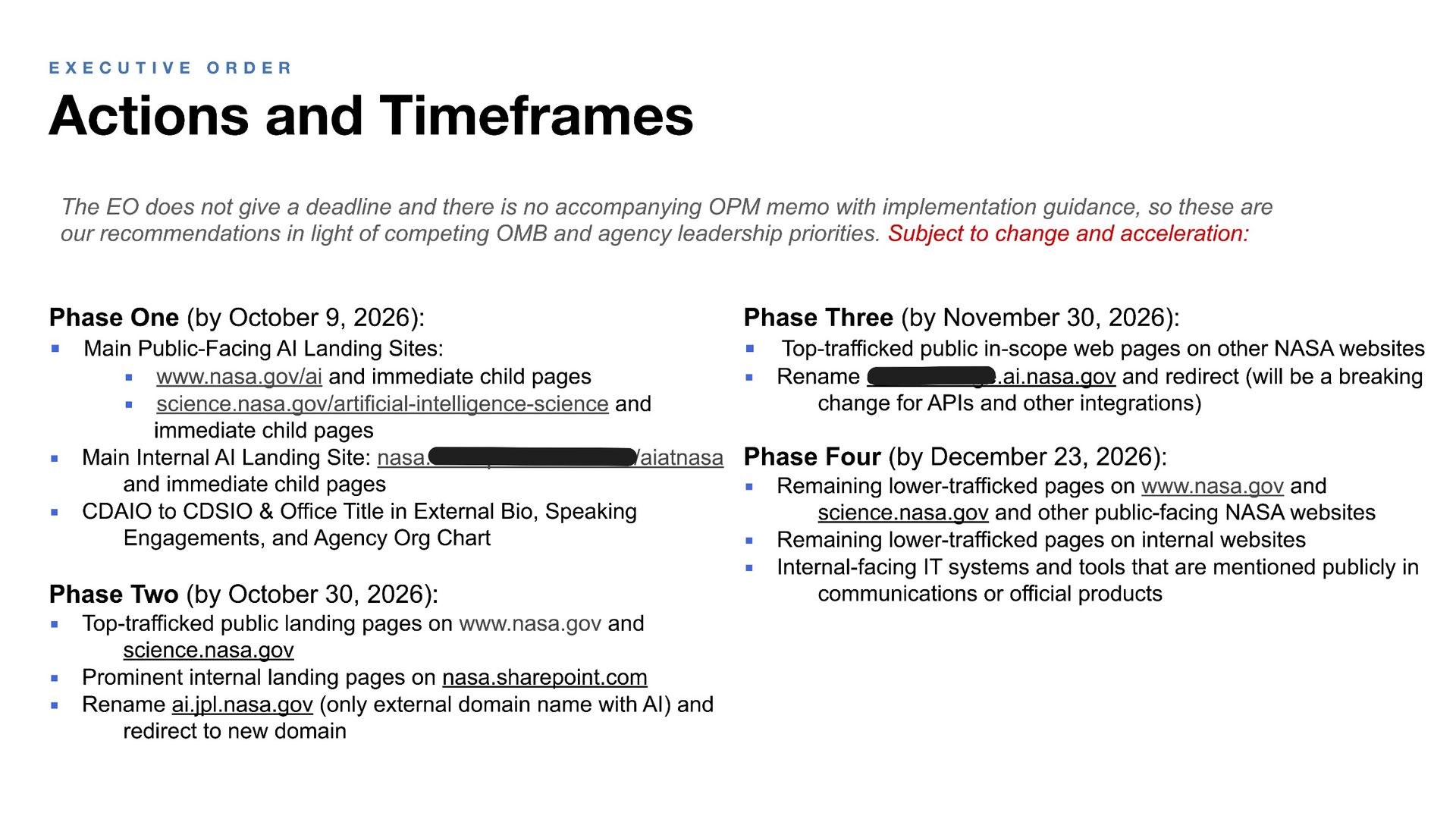
Phase One, which went into effect Oct. 9, included NASA's primary AI-related websites and agency personnel titles, such as that of Kevin Murphy. He is now "acting chief data and super intelligence officer," not "acting chief data and artificial intelligence officer."
Phase Two will expand the overhaul to heavily visited pages on nasa.gov and science.nasa.gov, and rename the website for JPL's Artificial Intelligence Group, ai.jpl.nasa.gov, to redirect visitors to an address reflecting the new SI terminology. The second phase's completion was initially set for implementation by Oct. 30. Sources familiar with the agency's progress, however, said that timeline was accelerated and the changes made ready to go live starting today (Oct. 16), two weeks ahead of schedule, according to a NASA employee.
Phase Three is marked for implementation by Nov. 30. It includes additional high-traffic NASA websites and the renaming of its URL for Ask Sage, a generative AI platform used by federal agencies. NASA's internal plan describes the change as a "breaking change for APIs and other integrations," meaning existing software connections may need to be updated.
Finally, Phase Four, targeted for Dec. 23, will scoop up NASA's remaining, lower-traffic websites, as well as internal IT systems and tools. NASA's guidance notes that Trump's EO doesn't designate a deadline for affected agencies, and that, without accompanying direction from the Office of Personnel Management, its framework ultimately represents the authors' recommendations "in light of competing OMB (Office of Management and Budget) and agency leadership priorities."