The USMNT return to play after Saturday's 5-2 loss to Belgium, an uneven showing in their second-to-last match before Pochettino names the World Cup roster
 By Pardeep Cattry Mar 31, 2026 at 6:59 am ET • 9 min read
  Getty Images
 MARIETTA, Ga. -- Carlo Ancelotti and Mauricio Pochettino have been adversaries before, and, perhaps in an ideal scenario, they could be on opposite sides of the touchline again at this summer's World Cup. First and foremost, though, Ancelotti is your favorite coach's favorite coach and when he drops a platitude in Orlando, Fla., it should come as little surprise that an admirer 400-plus miles away has not only heard it but already internalized it -- even if they are not sure of its veracity.
"I don't know if he said that or not, but we are talking about Ancelotti," Pochettino said excitedly on Monday. "He said [they're] not going to win, the team who will score more. The team that concedes less is going to win the World Cup. Very interesting reflection. Players need to listen to that."
Pochettino did, in fact, paraphrase the Brazil coach correctly, Ancelotti's words making for a fitting theme as the U.S. men's national team prepares for Tuesday's friendly against Portugal. The match falls three short days after the USMNT's 5-2 collapse to Belgium, an uneven showing in which even the most generous read revealed some of the team's fixable, but clear, shortcomings. For a match in which the expected goals tally was 2.33 to 1.27 in Belgium's favor, it is fair to argue that the USMNT had their moments but after going from a 1-1 game to a 4-1 deficit in the span of 15 quick minutes in the second half, it is hard not to single out the defensive unraveling as the U.S. take on another talented foe in Portugal.
How to watch USMNT vs. Portugal
- Date: Tuesday, March 31 | Time: 7 p.m. ET
- Location: Mercedes Benz Stadium
- TV: TNT | Live stream: HBO Max
"The thing that we need to improve is about [being] much better in the defensive phase. The whole team -- I am talking about the whole team," Pochettino said. "I think what we provided is too much time to Belgium to build the attack. It was too easy to translate from their box to our box, the ball with[out] aggression. That is what [we will] pay more attention [to]."
Experimental back line comes up short
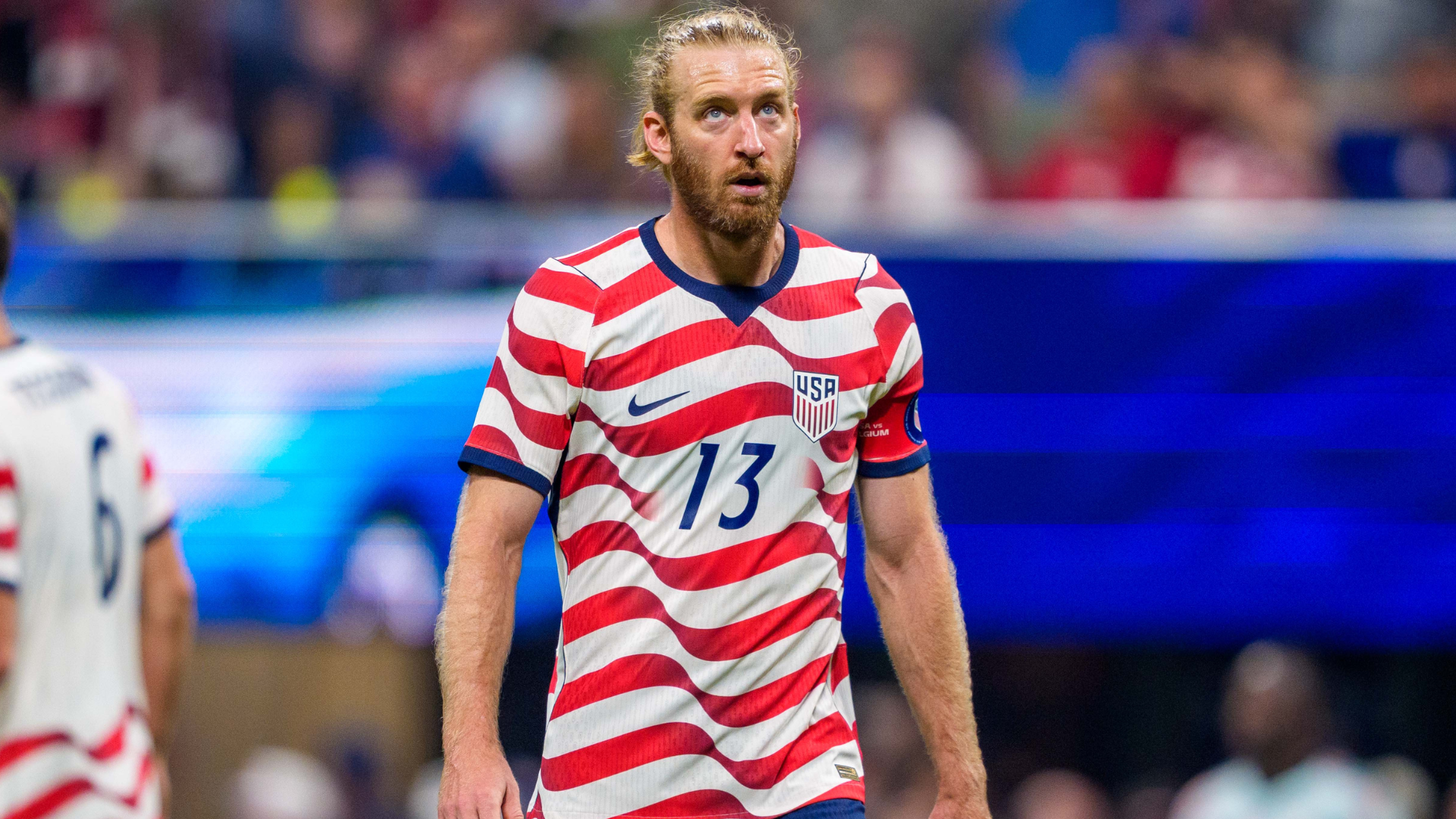
The USMNT's poor defensive showing came as Pochettino experimented with his back line once again, some of it forced. Chris Richards was unavailable for the game, resulting in Pochettino's choice to line up with four in the back rather than the three center-back formation that he utilized last fall. Mainstay Tim Ream was joined by familiar face Mark McKenzie, while Tanner Tessman filled in some of the gaps thanks to his understanding of the center back role with Lyon, and Matt Turner got a nod in goal after Matt Freese took the job from him last June. The group proved they were second-best, at least for the time being -- Richards' absence was felt, Pochettino admitted that Tessman had played better games and perhaps needed more time to understand the responsibilities of a center back, while Turner did nothing to improve his standing.
Pochettino, though, is not wrong to note that it was a team-wide issue. The USMNT's defense looked frozen at times as Belgium's attack, led by a world-class Jeremy Doku, pounced on the openings they found midway through the second half. There was something missing and not for the first time – an intensity and an aggressiveness, a theme that has defined Pochettino's version of the USMNT as his experimentation, though the issue pre-dates the coach. He slipped into sicko mode as he detailed his requirements for his players, referencing World Cup winners France and Argentine second division side Racing de Cordoba in virtually the same breath.
"Do you think that [Didier] Deschamps or Neto Lorenzo told the players, 'We need to be intense?,'" he said after watching France's 3-1 win over Colombia on Sunday. "After the [USMNT-Belgium] game, I watched another game – Racing, a second division or third division team in Argentina, and then Newell's Old Boys-Acassuso. If you don't have aggression and intensity and energy, you cannot play there!"
Figuring out why the USMNT lacks intensity, though, has been a difficult puzzle to piece together. The progress from the Concacaf Nations League disappointment a year earlier, a pair of games defined by Pochettino's focus on the team's mentality, is clear, but it still appears to be a final hurdle they cannot overcome.
"I think in some moments it's a decision," Ream said. "It's a conscious decision. It's just an overall effort, and I know it's not that guys don't want to do it. I think sometimes it's [that] we've just made an effort and now it's about making another one, right? It's about making not just the first, the second, the third, the fourth, and sometimes that doesn't happen, and that's just, again, something that is a non-negotiable, really, and it's something that we were doing really well in the fall last year and it's something we have to get back to."
Inconsistency still plagues USMNT
The USMNT has brought that intensity in flickers, going toe-to-toe with Belgium in a first half that ended 1-1 and truly seizing the opportunity in a 5-1 win over Uruguay to end their 2025 slate, notably doing so with an inexperienced group of players. It does not feel like a consistent habit just yet, though, something Richards argued takes time -- even if the USMNT do not have a lot of it left before they open World Cup play on June 12 against Paraguay.
"When you think of the best defenders, you think of guys who kind of want to run through a brick wall, and I think that's something that we can add to our game," Richards said. "There's moments here and there where you've seen that kind of toughness, and I think sometimes, like for example, the other day, we maybe let in a few, I guess, soft goals so I think something that we can bring to it is just this toughness. I think when an attacker is in front of you, I think it makes your game a little bit easier. Maybe they're a bit hesitant to go into a header, maybe they're a bit hesitant taking a shot because they know that the back line is going to be strong so no, I think again, that takes time, I know we don't have that much time left but I know that when we're able to play in these high level games, I think we're able to get good performances and get results against high level teams, it definitely gives you confidence."
It helps that Richards will be available for selection on Tuesday after missing Saturday's match with knee soreness, the 25-year-old likening himself to the brick wall he wants the rest of his defensive teammates to be on the regular. While he returns to the fold, though, midfielder Johnny Cardoso has returned to Madrid as he deals with leg discomfort following a planned halftime substitution against Belgium. It leaves the USMNT somewhat understaffed in the defensive midfield role against Portugal – Tessman, Sebastian Berhalter and Aidan Morris are in the group, while presumed starter Tyler Adams was omitted from the roster through injury.
A change to the USMNT's shape, though, might be in order against Portugal, considering the team's other strengths and weaknesses. While the defensive showing against Belgium was the overarching takeaway against Belgium, U.S. star Christian Pulisic had his latest off day in a string of them. He has 10 goals for AC Milan this season, but has not scored once since Dec. 28, while his last international goal came in 2024. His rough patch was epitomized by a golden opportunity early in the second half against Belgium, somehow sending the ball over the bar. The attacker was visibly upset before Amadou Onana scored on the other end of the pitch moments later to give the visitors a 2-1 lead, the game permanently tilting in Belgium's favor from that point on.
Pulisic's current form may pave the way for opportunities for the other USMNT attackers in camp but considering the 27-year-old's previous form and overall talent, Pochettino said it might be worth throwing him back into the lineup to see if the floodgates can open just before the World Cup.
"Maybe tomorrow [it would[ help him to start because I think in 2026, I don't know if he's scored or not," the coach said. "Maybe we help [him] a little bit to go a little bit more close to the goal, maybe we give some possibility and maybe because it's a non-official game, we can do some tests also to play maybe with more midfielders and less offensive players … It is an idea after Saturday that is in my mind but it's not sure."
Experimentation remains at the core of Pochettino's preparation for the World Cup, perhaps because of his necessary fixation on a consistent intensity that the USMNT lacks as a whole, regardless of what players are on the field – or maybe because of which players take to the pitch. The starters on Saturday were as close to a first-choice team Pochettino could field, Pulisic starting alongside probable World Cup starters Weston McKennie and Malik Tillman, while Antonee Robinson slotted in at left wingback for the first time since recovering from a long-term knee injury. The intensity, though, was lacking for the most part – McKennie was a standout as he continues a run of career-best form, but Tillman seemed unwilling to do the grunt work at times, one of several players failing on the day.
Not all of Pochettino's potential fixes to the problem are clear, but he has openly revealed one of them: his rebranding of this month's matches, refusing to call them friendlies and instead terming them "non-official matches" in the hopes of inspiring a competitive edge in his players.
"Listen, first and foremost, these aren't friendlies, and that's something that Mauricio has made very clear to us," Ream said. "It's more of a non-official game. They're obviously games that are preparing us for the World Cup."
Pochettino has not questioned the players' desire necessarily -- in fact, he likened their efforts to a person who wants to lose weight but cannot resist "the chicken, the steak, the lasagna, the pasta," saying that desire on its own is not enough. Despite all of the progress this team has made from a tactical standpoint since Pochettino took charge in the fall of 2024, hIs ability to fix this longstanding problem may be the pass-fail test of his tenure with the group – and the greatest indictment of the USMNT's most talented generation of players.
"I am so happy [about] what happened because it's still time to realize and we need to compete like [in] the [Colombia] game against France," he said, growing more animated by the second. "That was a friendly game? You call [it] a friendly game? But it's true! It was not a friendly game! It was not an official game but it was really competitive. That is what I want to translate to you but also need to translate to the players and the players need to believe in that. If not, what are we doing here?"
Join the Conversation comments