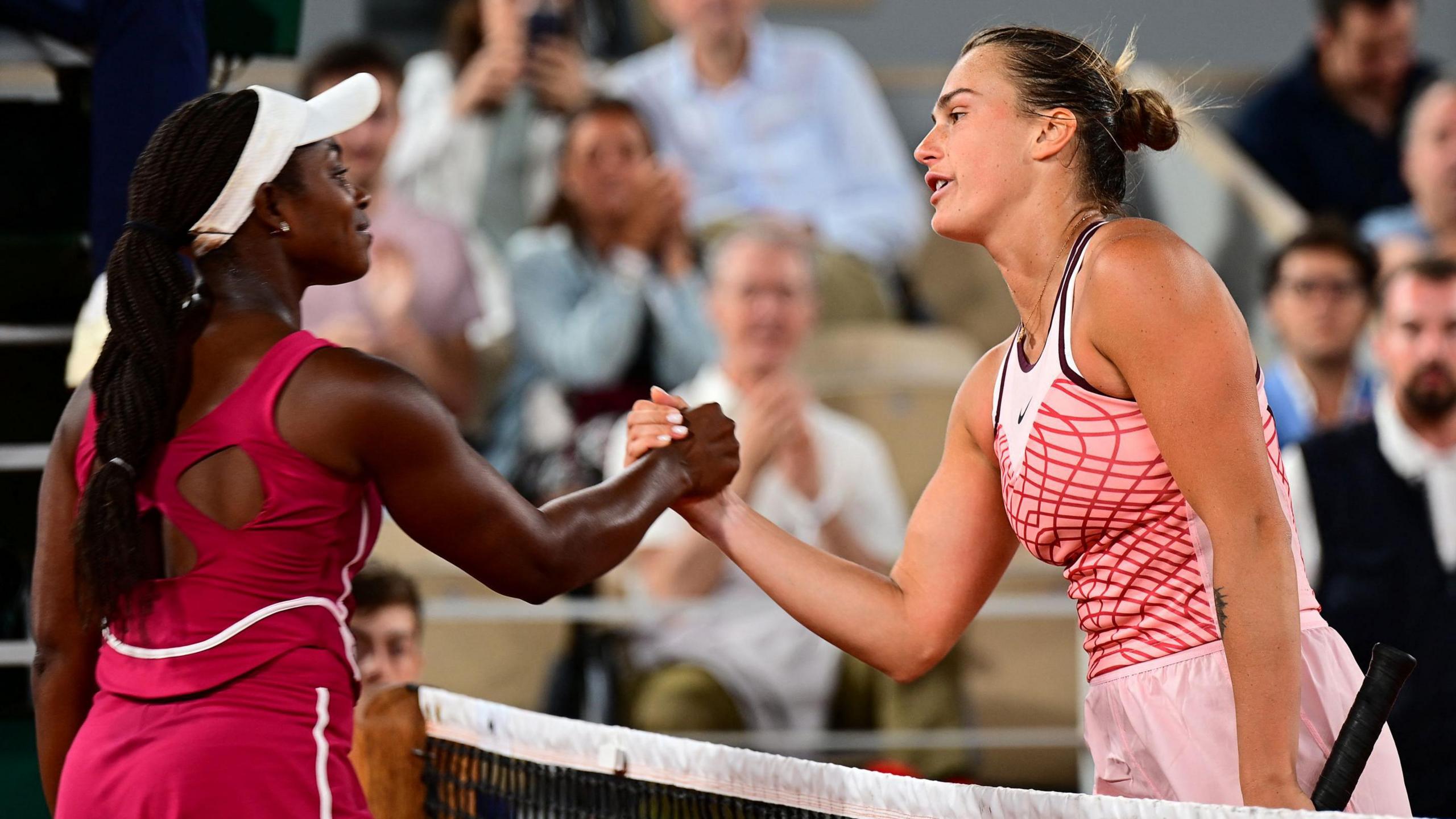
 Image source, Getty ImagesImage caption,
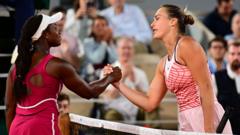
 There has not been a women's match in the French Open night session since Sloane Stephens lost to Aryna Sabalenka in the 2023 third round
ByJonathan JurejkoBBC Sport tennis news reporter at Roland Garros- Published59 minutes ago
An important question continues to be raised at the French Open - why are the leading women not being picked to play in the Grand Slam tournament's coveted night-time slot?
Each of the past 32 primetime sessions - scheduled to showcase the sport to the largest possible audience in France, Europe and the US - have been allocated to the men.
No women's match has been held at night since 2023.
It felt telling when four-time Grand Slam champion Naomi Osaka said on Saturday she did not "even associate" the French Open with night matches.
Since the one-match sessions were introduced in 2021, only four of the 60 slots on Court Philippe Chatrier have been given to the women - including Sunday's scheduled night match between Casper Ruud and Joao Fonseca.
American world number five Jessica Pegula said last year she felt like she was "hitting her head against the wall" over the subject, while two-time Wimbledon finalist Ons Jabeur questioned whether the people making the decision "have daughters".
Jelena Ostapenko, who won the French Open women's singles in 2017, has reiterated change is needed.
The Latvian is one of the few women to have played in the night session, when her second-round match against France's Alize Cornet was scheduled there in 2022.
"I wish women's tennis could be shown more in those spots. The men always have the priority with the scheduling, they take the most popular slots, and on bigger courts," Ostapenko told BBC Sport.
"I like to play at night - especially when the stadiums are full. I'm the kind of player that really enjoys it when there are a lot of fans watching and I think that's what we all play for."
Defending champion Gauff out of French Open
- Published3 hours ago
Svajda wins on late father's birthday as five-set record broken
- Published1 hour ago
Ukrainian makes impassioned speech after facing Russian
- Published6 hours ago
This debate is nothing new - but nothing has changed.
In each of the past three years, questions have been raised about whether the French Open should do more to showcase the women's game.
"I don't think they have daughters, because I don't think they want to treat their daughters like this," said Jabeur.
The lack of action prompted recently appointed WTA chief executive Valerie Camillo to seek answers from French Open tournament director Amelie Mauresmo - a former women's world number one - when they met at Roland Garros this week.
In what the WTA describes as an open and productive conversation, Camillo underlined her belief that women's players have delivered some of the "most exciting and dynamic competition in global sport" over recent months and years.
It remains to be seen whether Camillo's call for action is listened to.
Mauresmo has consistently argued that the danger of women's matches going "really fast" is the justification behind the choices.
With tickets ranging from €60 to €280 (£50 to £240), tournament organisers think the possibility of a short two-set women's match does not represent value for money.
Mauresmo has insisted the night sessions will not be extended to two matches - like the Australian Open and US Open - in fear of creating late finishes.
Will the French Open be swayed? It refused to waver last year, despite pressure from players, the women's governing body and - according to reports, external - broadcasters.
Former world number one Osaka will meet Aryna Sabalenka - the current top women's player - in the last 16 on Monday.
The Japanese player said she did not know if that blockbuster match would be under consideration for the night session, but added she felt the slot was reserved for "popcorn matches".
If Osaka against Sabalenka does not fulfil the French Open's criteria, it feels like nothing will.
"I hope it will change," added Ostapenko.
"Even if it's not me playing, I would like to see some women's matches there. But I don't know that we will."