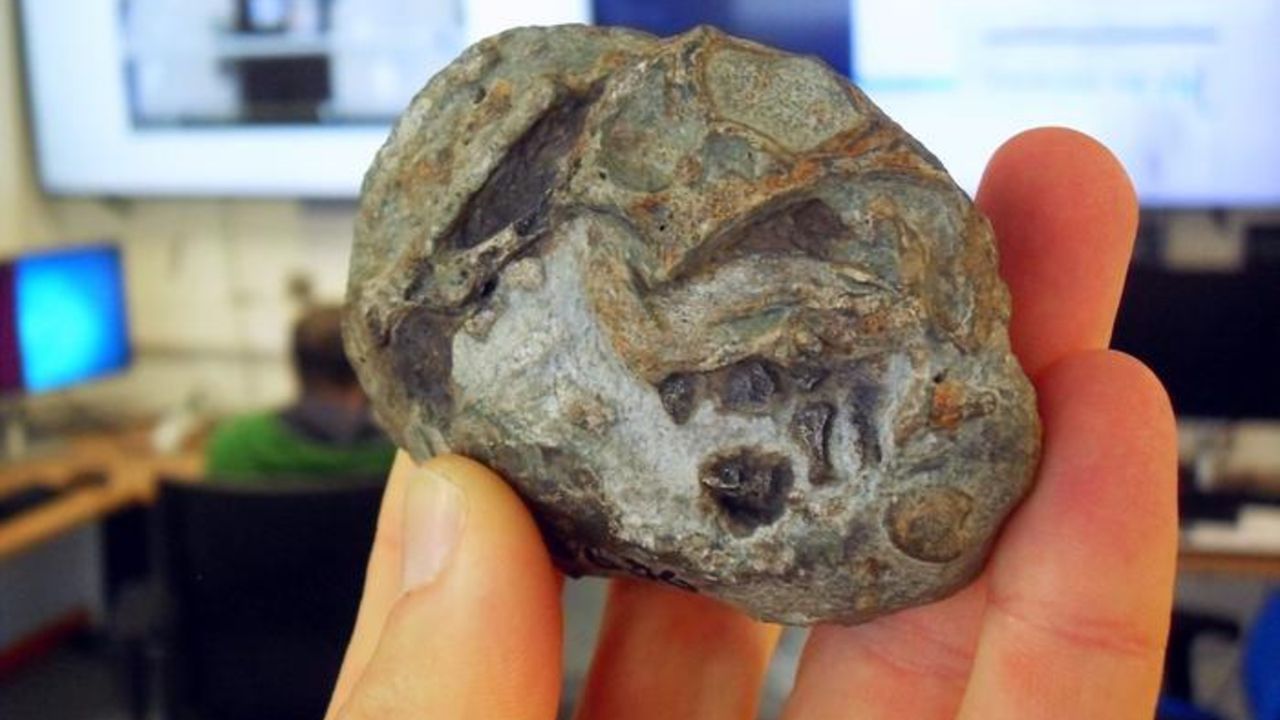
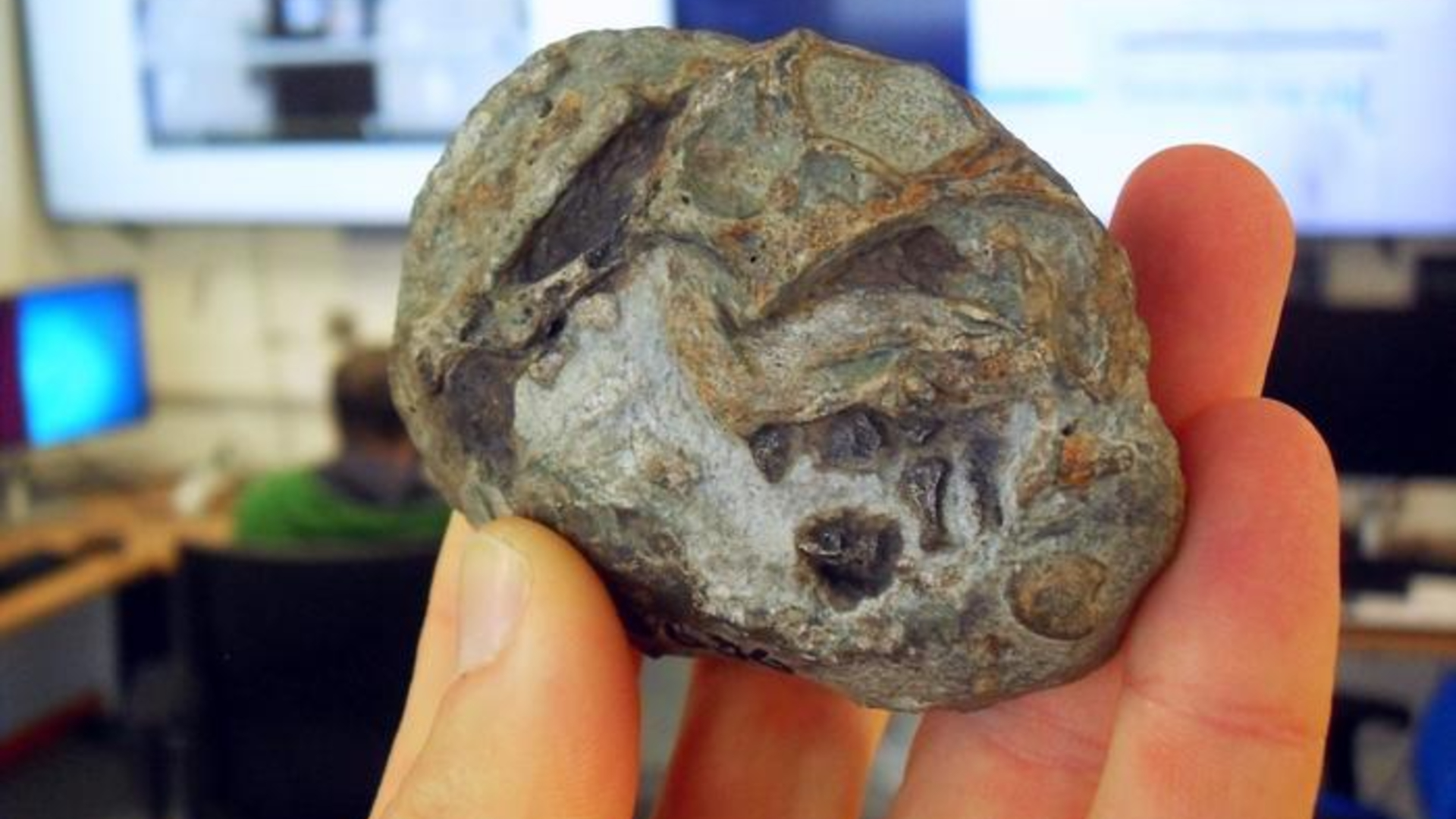
 A researcher holds up the fossilized egg in the control room of the European Synchrotron Radiation Facility in France, just before its scan. (Image credit: Professor Julien Benoit) Share this article 0 Join the conversation Follow us Add us as a preferred source on Google Newsletter Sign up for the Live Science daily newsletter now
 Get the world’s most fascinating discoveries delivered straight to your inbox.
Become a Member in Seconds
Unlock instant access to exclusive member features.
Contact me with news and offers from other Future brands Receive email from us on behalf of our trusted partners or sponsors By submitting your information you agree to the Terms & Conditions and Privacy Policy and are aged 16 or over.You are now subscribed
Your newsletter sign-up was successful
Want to add more newsletters?
Join the club
Get full access to premium articles, exclusive features and a growing list of member rewards.
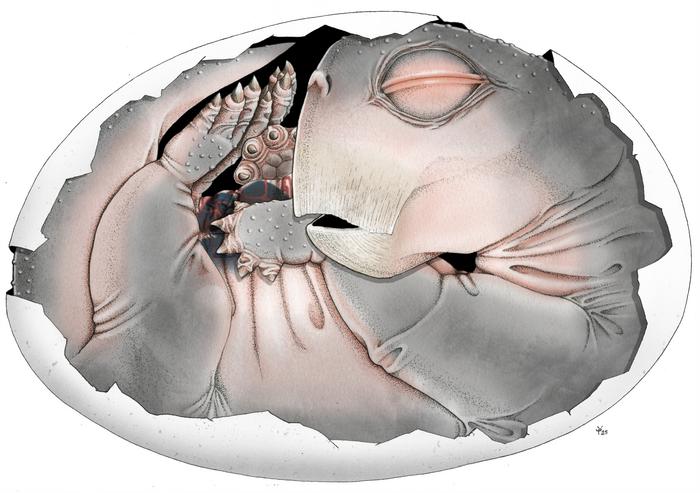
Explore An account already exists for this email address, please log in. Subscribe to our newsletterScientists have cracked a major mystery about mammal evolution after discovering a 250 million-year-old fossilized egg from before the time of the dinosaurs. Researchers say the specimen, which holds a curled-up embryo of the plant-eating animal Lystrosaurus, is the first known egg ever found from a mammal ancestor, proving that mammals' ancestors laid eggs.
The egg could help paleontologists better understand how these animals survived the Permian-Triassic extinction, also known as the Great Dying, which occurred around 252 million years ago. During this event, Earth faced brutal heat, drought, volcanic eruptions and ocean acidification, and 90% of Earth's species died.
The researchers revealed their findings April 9 in the journal PLOS One.
Which came first: the therapsid or the egg?
The fossilized egg was first found in 2008 during fieldwork near the Xhariep municipal district in South Africa. Although the specimen only had small flecks of bone near a nodule, it contained a nearly complete, tightly curled embryo. The researchers identified the animal as Lystrosaurus, an early ancestor of mammals belonging to a group known as therapsids. Therapsids were mammal-like reptiles that lived around 272 million to 250 million years ago that modern mammals descended from.
"The adult [Lystrosaurus] looked like a pig, with naked skin, a beak like a turtle, and two tusks sticking out and pointing down," the researchers wrote for The Conversation.
Scientists have known about this mammal ancestor for years, but they weren't sure whether the animal laid eggs.
Sign up for the Live Science daily newsletter nowContact me with news and offers from other Future brandsReceive email from us on behalf of our trusted partners or sponsorsInitially, the researchers couldn't determine if the embryo had already been born or was still inside an egg when it died, because the fossil lacked an outer shell and only the embryo was preserved.
"I suspected even then that it had died within the egg, but at the time, we simply didn't have the technology to confirm it," Jennifer Botha, a professor at the University of the Witwatersrand's Evolutionary Studies Institute in South Africa, said in a statement.
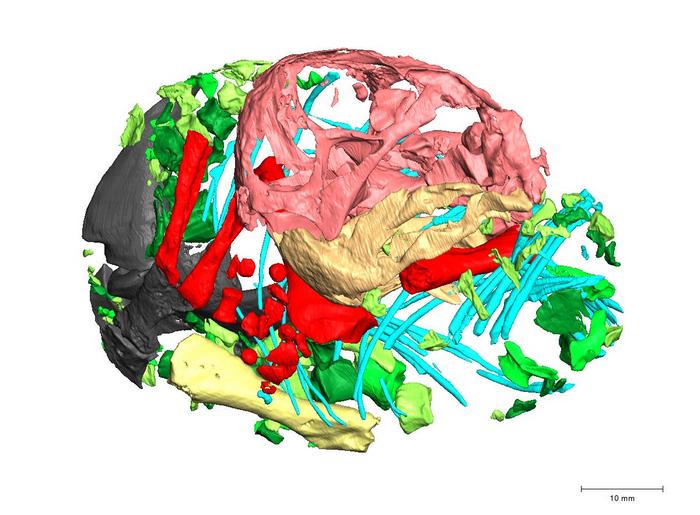
For the new study, the researchers used powerful CT scans at the European Synchrotron Radiation Facility in France to study the fossil without damaging it. The scans revealed tiny structures inside the fossil, including an unfused lower jaw, still in two halves. That meant the embryo was not developed enough to feed on its own — a sign that it hadn't hatched yet. The researchers suspect the shell was leathery and dissolved.
"For over 150 years of South African palaeontology, no fossil had ever been conclusively identified as a therapsid egg," Botha said in the statement. "This is the first time we can say, with confidence, that mammal ancestors like Lystrosaurus laid eggs, making it a true milestone in the field."
Putting all the eggs into one surviving basket
The researchers found that Lystrosaurus laid unusually large eggs for its body size. In living animals, large eggs carry more yolk, which can fuel more complete development before they hatch. That finding points to Lystrosaurus having young that were relatively mature and mobile soon after birth, the researchers suggested. This would have made these animals more capable of feeding themselves and avoiding danger, thus helping them survive the Great Dying, the researchers said.
The larger size of the eggs and their leathery texture helped these animals survive in other ways too, the researchers suggested.
"The larger the egg, the smaller its surface area (comparatively speaking), so Lystrosaurus eggs would lose less water through their leathery shell than those of other species of that time," the researchers wrote in The Conversation. "Given the dry environment during and in the immediate aftermath of the extinction, this was a significant advantage, especially since hard-shelled eggs would not evolve for another 50 million years, at least."
While many lineages vanished in the Permian-Triassic extinction event, Lystrosaurus not only survived but became one of the dominant land animals afterward.
RELATED STORIES- Ancient platypus-like fossil could rewrite the history of egg-laying mammals
- In rare evolutionary event, weird platypus cousin evolved from living in water to living on land
- Rarest of rare: 2 albino egg-laying mammals spotted in Australia
"Growing up fast, reproducing young and proliferating were the secrets of Lystrosaurus survival," the researchers added in The Conversation article.
The findings could help scientists understand more about how animals can survive changing climates.
"In a modern context, this work is highly impactful because it offers a deep-time perspective on resilience and adaptability in the face of rapid climate change and ecological crisis," Benoit said in the statement. "Understanding how past organisms survived global upheaval helps scientists better predict how species today might respond to ongoing environmental stress, making this discovery not just a breakthrough in palaeontology, but also highly relevant to current biodiversity and climate challenges."
Article SourcesBenoit, J., Fernandez, V., & Botha, J. (2026). The first non-mammalian synapsid embryo from the Triassic of South Africa. PLoS ONE, 21(4), e0345016. https://doi.org/10.1371/journal.pone.0345016
 Kenna Hughes-CastleberryContent Manager, Live Science
Kenna Hughes-Castleberry is the Content Manager at Live Science. Formerly, she was the Content Manager at Space.com and before that the Science Communicator at JILA, a physics research institute. Kenna is also a book author, with her upcoming book 'Octopus X' scheduled for release in spring of 2027. Her beats include physics, health, environmental science, technology, AI, animal intelligence, corvids, and cephalopods.
View MoreYou must confirm your public display name before commenting
Please logout and then login again, you will then be prompted to enter your display name.
Logout LATEST ARTICLES 173 moon landings? NASA's 'Moon Base User's Guide' reveals the agency's 'most ambitious space project' will be fraught with challenges
- 2Diagnostic dilemma: A woman heard voices telling her she had a brain tumor — and scans confirmed she did
- 3Triassic croc relative from Ghost Ranch, New Mexico finally identified after nearly 80 years in museum basement
- 4There were 'audible screams of delight': Why Artemis II sightings of meteor flashes on the moon have scientists giddy
- 5Physicists witness pinpricks of darkness moving faster than the speed of light


