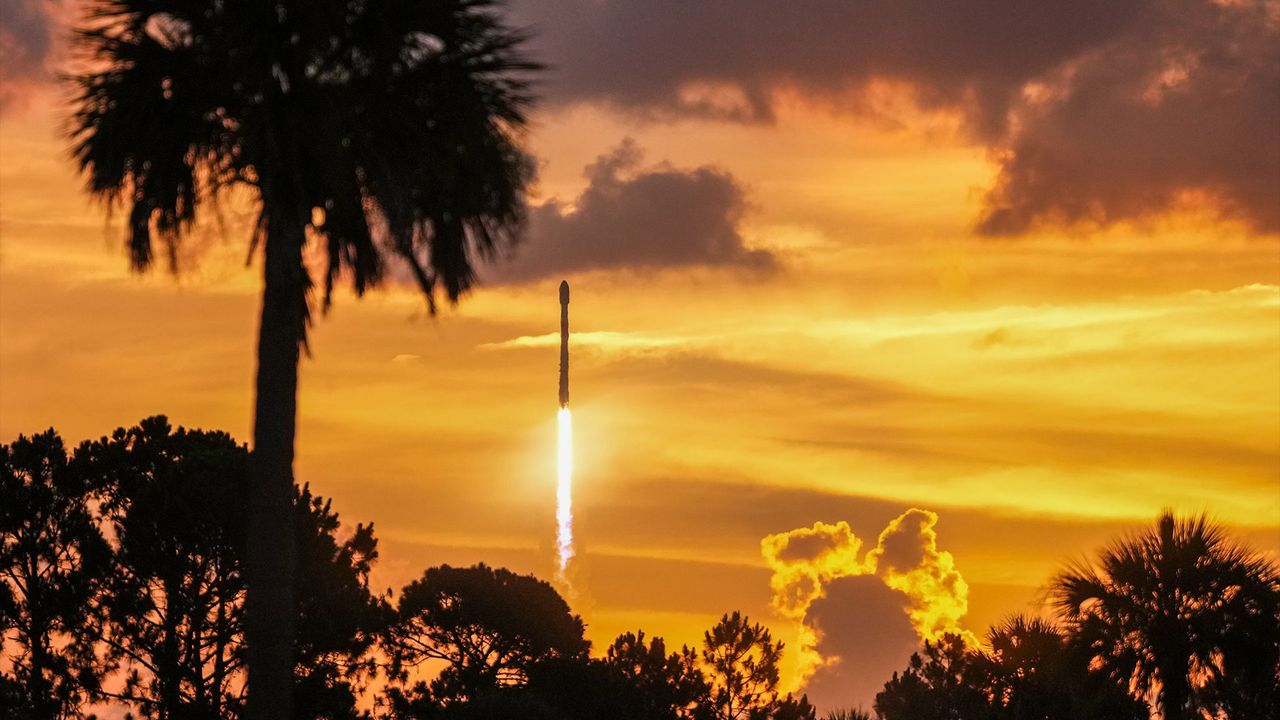
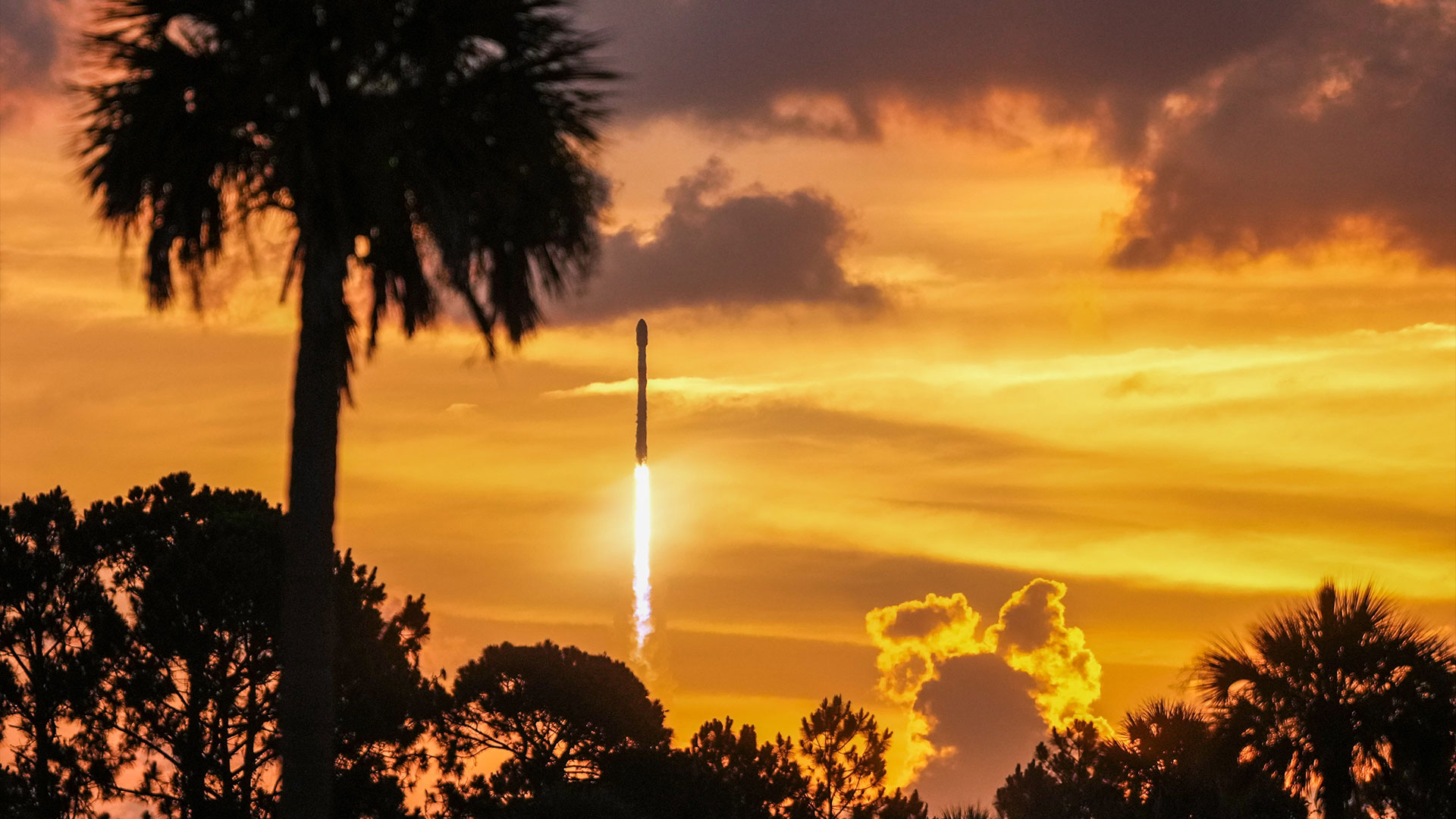
 A SpaceX Falcon 9 rocket climbs into a vibrant dawn sky after lifting off with Starlink satellites from Cape Canaveral Space Force Station in Florida on June 4, 2026. (Image credit: SpaceX) Share this article 0 Join the conversation Add us as a preferred source on Google Newsletter Subscribe to our newsletter
 SpaceX now has 53 more Starlink satellites in low Earth orbit after two successful launches in less than 19 hours from opposite U.S. coasts.
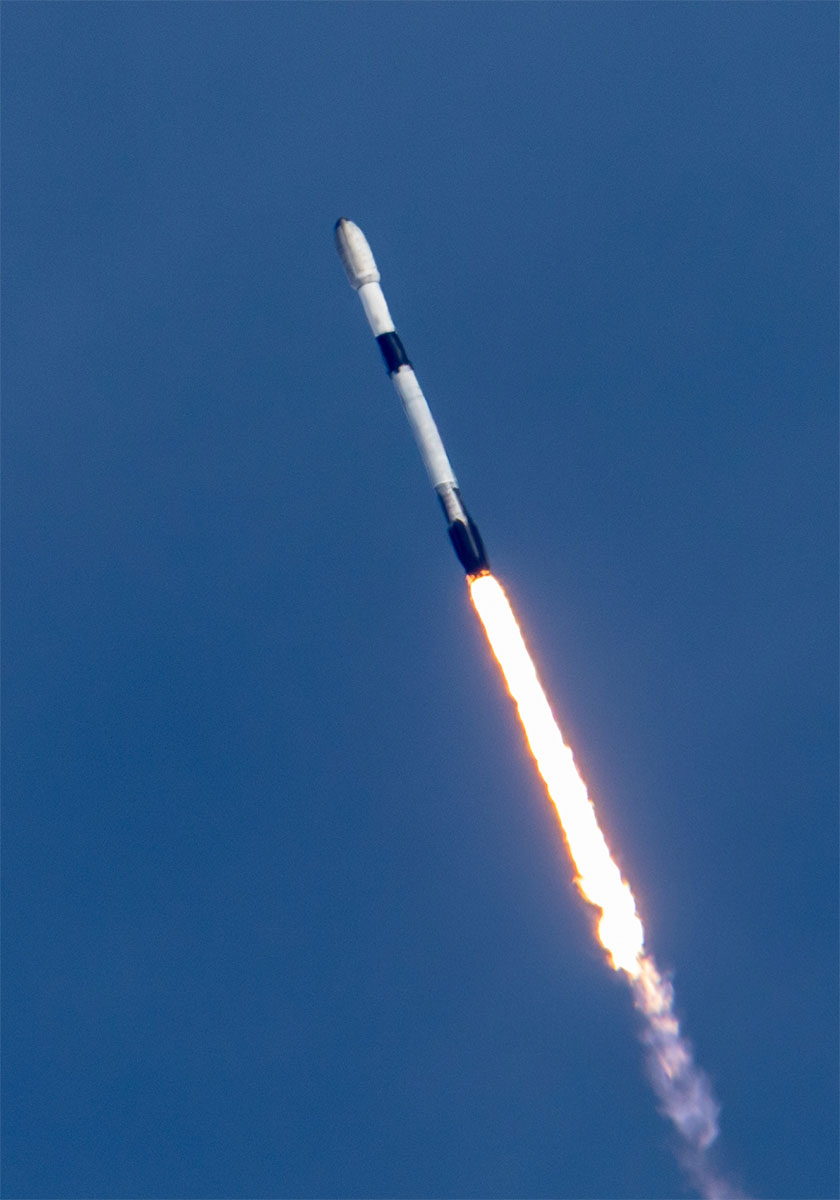
A pair of Falcon 9 rockets lifted off within hours of each other on missions to expand the private spaceflight company's broadband internet relay megaconstellation. The flights, which left their launch pads at 11:40 a.m. EDT (1540 GMT) on Wednesday (June 3) and 6:26 a.m. EDT (1026 GMT) on Thursday (June 4), carried 24 and 29 satellites, respectively.
The first mission, carrying Starlink batch 17-47 on the Falcon 9 booster B1088, departed from Space Launch Complex 4 East at Vandenberg Space Force Base in California. The second, with group 10-43 on B1090, left Space Launch Complex 40 at Cape Canaveral Space Force Station in Florida.
Latest Videos FromView moreWatch full video here: Previous Booster B1088 missions
NROL-126 | Transporter-12 | SPHEREx | NROL-57 | 11 Starlink missions
Both missions successfully deployed their payloads into their target orbits about an hour after leaving the ground, as confirmed by SpaceX.
Both also safely recovered their first stage boosters. B1088, launched Wednesday, completed its 16th flight with a landing on the "Of Course I Still Love You" droneship stationed in the Pacific Ocean. B1090 concluded its 12th launch by touching down on "A Shortfall of Gravitas" off the coast of Florida in the Atlantic Ocean on Thursday morning.
O3b mPOWER-E | Crew-10 | Bandwagon-3 | mPOWER-D | CRS-33 | 6 Starlink missions
The two missions raised the total number of active Starlink satellites in orbit to over 10,500 spacecraft, out of the more than 12,162 launched since 2019.
The two missions were SpaceX's 63rd and 64th Falcon 9 launches of the year.
View MoreYou must confirm your public display name before commenting
Please logout and then login again, you will then be prompted to enter your display name.
Logout Robert Z. PearlmancollectSPACE.com Editor, Space.com Contributor
Robert Pearlman is a space historian, journalist and the founder and editor of collectSPACE.com, a daily news publication and community devoted to space history with a particular focus on how and where space exploration intersects with pop culture. Pearlman is also a contributing writer for Space.com and co-author of "Space Stations: The Art, Science, and Reality of Working in Space” published by Smithsonian Books in 2018. In 2009, he was inducted into the U.S. Space Camp Hall of Fame in Huntsville, Alabama. In 2021, he was honored by the American Astronautical Society with the Ordway Award for Sustained Excellence in Spaceflight History. In 2023, the National Space Club Florida Committee recognized Pearlman with the Kolcum News and Communications Award for excellence in telling the space story along the Space Coast and throughout the world.