Examining the offseason buzz for all 16 teams in the SEC after an eye-opening spring
 By Brad Crawford May 12, 2026 at 8:01 am ET • 10 min read
  Getty Images
 Spring practice in the SEC is built for overreaction. Every fan base talks itself into playoff contention after one glowing quarterback report, one viral practice clip or their head coach insisting this roster is "different" from the last. And every offseason, somewhere between optimism and reality, the truth usually lands much harder by October.
That's what makes this time of year fascinating across the league.
The 2026 SEC Championship race already feels loaded with volatility, led by perceived preseason title contenders. Six new coaches are trying to accelerate timelines through the transfer portal, returning quarterbacks are carrying massive expectations, and several traditional powers are attempting to prove last season's flaws were temporary rather than foundational.
College football first-year coaches patience meter: How Lane Kiffin, James Franklin debuts will be judged Brad Crawford
In other words, post-spring headlines are flying faster than actual evidence. Some overreactions will eventually age well. Others won't survive the first road trip in conference play. Separating legitimate signs of progress from offseason noise before the games begin counting is easier said than done.
Alabama
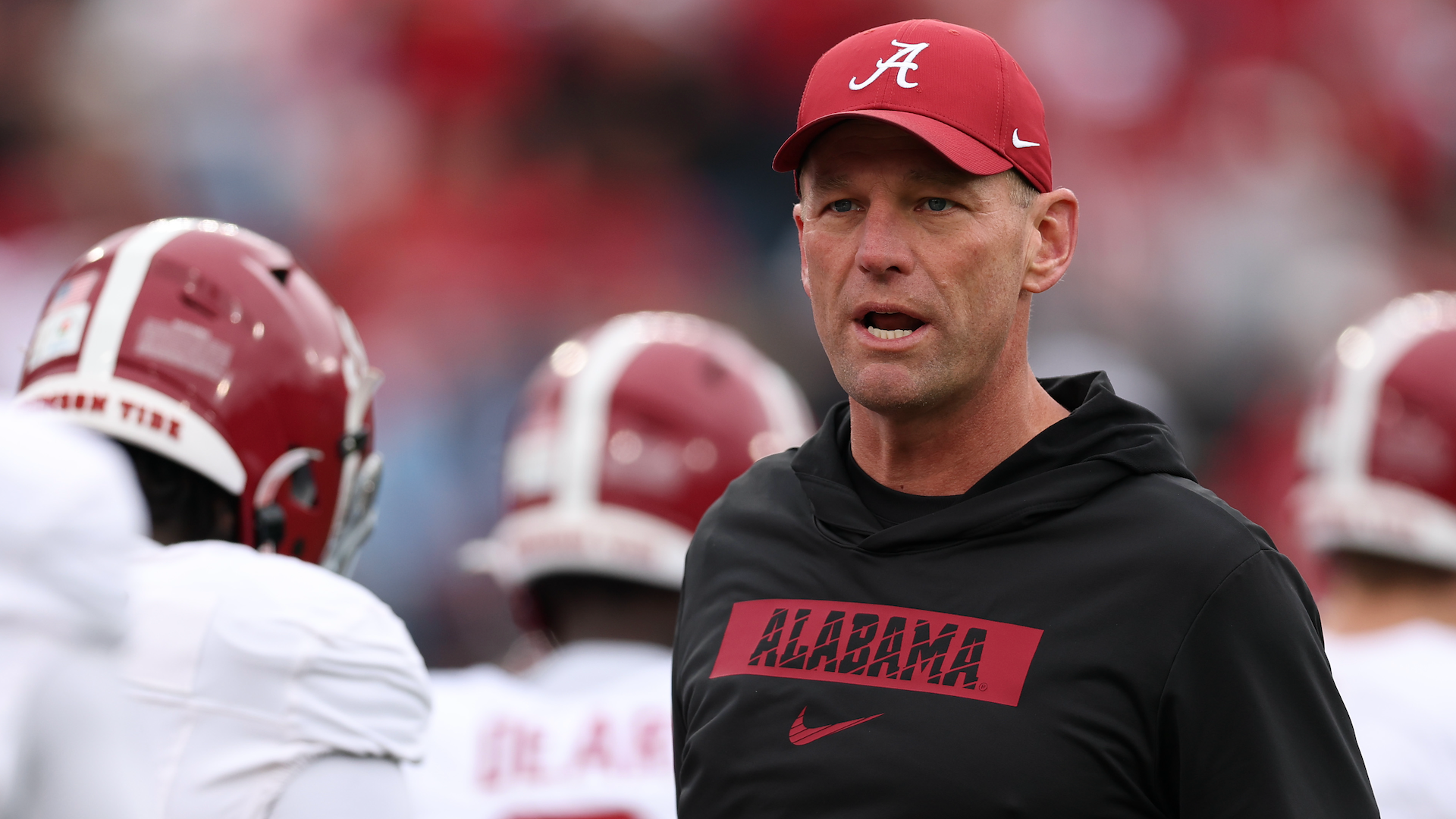
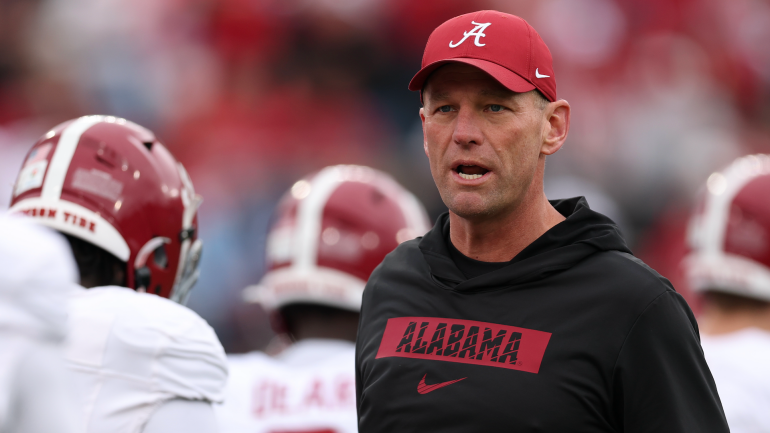
Motivation is real in Tuscaloosa: Kalen Deboer has to be tired of the offseason banter involving the Crimson Tide. Few have picked Alabama to get back to the College Football Playoff, and many have opined whether his team will find itself from a physicality standpoint, a factor equally important to success as making the right decision between competing quarterbacks Austin Mack and Keelon Russell
Outside of those at Alabama who signed off on DeBoer's recent long-term extension, Nick Saban might be the only national voice who viewed the decision as a good idea, and he has a stake in the matter. That's more than enough for DeBoer and his staff to work furiously behind closed doors this summer to make the 2026 season memorable, independent of those -- like myself -- who didn't believe he's shown enough yet over his first two years to warrant a pay bump and longer contract.
Arkansas
Resets take (a lot of) time: Ryan Silverfield's move to the Razorbacks comes with the kind of warning label that rarely gets said out loud in the SEC, but is obvious to everyone watching closely -- patience. This isn't a plug-and-play job, and it won't behave like one in Year 1 or likely even Year 2. The roster transition alone is significant. Arkansas is still trying to fully stabilize talent acquisition in the NIL and transfer portal era, where keeping pace with conference elites requires near-perfect roster management and resources the Razorbacks simply do not have yet.
Auburn
Byrum Brown is the least of the Tigers' worries: These are the kind of trash takes that happen in spring practice when a star player has a bad public scrimmage, or something looks off, but isn't. Bryce Underwood was horrible in Michigan's spring game, but do you think the rising sophomore and former five-star is worried about losing his job at quarterback? For a signal caller who threw for 3,158 yards last season and ran for another 1,008 yards and 14 touchdowns at South Florida, Brown is destined to be one of the league's most impactful transfers and has more experience playing at a high-level than most counterparts in the league.
Alex Golesh is in great leadership hands with Brown, and he'll have to focus on more than just quarterback. Running back Jeremiah Cobb is Auburn's only returning starter offensively, and there are a couple of newcomers along the defensive front tasked with replicating havoc stats from last fall.
Florida
Quarterback play under microscope: Jon Sumrall takes over the Gators with defensive credibility and a clear culture vision, but the single biggest swing factor in Year 1 is still quarterback play -- and that's where the concern lives. In the SEC, even a strong roster foundation can be undercut quickly if the passing game doesn't consistently stress defenses, and this one's an unknown under OC Buster Faulkner and two extremely green options behind center -- Tramell Jones Jr. and Georgia Tech transfer Aaron Philo.
Florida's quarterback situation entering Sumrall's first season is unsettled enough to limit the offense's upside early. Turnover margin, third-down efficiency and red-zone execution all tend to travel with experienced, high-level quarterback play, and the Gators haven't consistently had that stability in recent seasons. If the position remains inconsistent, Florida's defense will be forced to play on longer fields and take more snaps against elite competition, which will compound pressure over a full SEC schedule. Sumrall can raise the floor with structure and toughness, but until quarterback efficiency catches up, Florida's ceiling in Year 1 may be limited regardless of defensive improvement or roster additions in Gainesville.

Georgia
Mike Bobo has a wide receiver problem: The Bulldogs addressed Zachariah Branch's departure to the NFL by signing Georgia Tech's Isiah Canion, but more is needed on the outside. Branch's impact in the passing game is substantial after he led the Bulldogs in targets, catches and receptions as a portal addition himself last fall. Third-year sophomore Sacovie White-Helton and London Humphreys are expected starters, with Canion, as this offense moves back to a tight end-heavy attack on third down. The good news? The defending SEC champions are loaded there, led by Lawson Luckie and Elyiss Williams, headlining a room that rivals the depth the Bulldogs had with former All-American Brock Bowers and others at the position.
Kentucky
Will Stein faces a steeper climb than all other SEC coaches: Wrong. His arrival brings a much-needed schematic jolt that could translate into immediate offensive flash, even in Year 1. Stein's background is rooted in modern spacing concepts, tempo variation, and quarterback-friendly reads that prioritize efficiency over complexity -- exactly the kind of system that can produce early returns when paired with playmakers within a top-15 transfer portal class.
Kentucky's roster isn't starting from zero. The Wildcats have already shown they can attract portal talent with heavy spending, and Stein takes the field with a group that is more skilled at the perimeter than in recent seasons. That matters in today's SEC, where explosive plays often determine whether a team is merely competitive or actually dangerous. Mark Stoops failed to deliver offensively in the latter years, so the Wildcats made sure history would not repeat itself.
LSU
Grab the Sharpie for the Tigers' playoff berth: For the record, LSU is the third of our four SEC picks to reach the CFP this season, but that's no guarantee despite signing the top-ranked portal class after convincing Lane Kiffin to leave Ole Miss six months ago. There's pressure to accomplish something the program hasn't done since 2019 -- get to the bracket and win. Kiffin has already pumped the brakes on the hype train, perhaps scaling back stratospheric expectations others have placed on him. Elite success doesn't come "overnight," according to Kiffin, which is exactly what the state of Louisiana expects to happen, given the resources pushed to the center of the table for his regime with a contract of $13 million annually before incentives.
Mississippi State
Lack of buzz not necessarily a good thing: Most coaches love spring anonymity and the lack of national focus on their program's expectations. However, in Starkville, seven wins in two seasons -- including a 1-15 mark in SEC play -- ain't cutting it. Jeff Lebby could be on the league's next chopping block if improvement fails to show up this season. And it's another complete roster reset, with more than 50 newcomers, over half of them from the transfer portal. Building something sustainable in the conference takes time when you're not signing elite-level classes annually, but Lebby could lose much of the belief that got him the job two cycles ago if the 2026 campaign results in another bottom-tier finish.

Missouri
Roster optimization wavering: Eli Drinkwitz signed a top 25 class in the 2026 cycle, but continuing to slug portal home runs year after year may be catching up to the Tigers' coach. Last season's eight-win finish ended a two-year stretch inside the top 20 for his program, and he was tasked with replacing a program-record six draft picks, along with leading pass rusher Damon Wilson II's departure to Miami and five offensive starters. That's a tall order for the Tigers, given their placement in the middle of the conference in terms of reloading.

Oklahoma
Slight regression incoming: Has anyone else sold their stock on the Sooners? This team could be headed for regression in 2026 under Brent Venables, and it starts with the same issue that has lingered during his tenure: offensive inconsistency against elite defenses.
In the SEC, that weakness gets exposed fast. Even when the Sooners show defensive improvement, the margin for error shrinks dramatically if the offense can't sustain drives or consistently finish in the red zone. Venables' defensive identity is clear, but modern college football -- especially in a league loaded with elite quarterback play -- demands complementary offense to stay competitive at the top. There's also the schedule reality. Oklahoma doesn't get many breaks in SEC play, and road environments amplify offensive inefficiencies. If quarterback play remains uneven and the run game fails to stabilize, the Sooners risk sliding from fringe contender status back into the middle tier of the conference.
Ole Miss
Defensive personnel changes are significant: Will senior linebacker Suntarine Perkins be able to handle the load after the Rebels watched many of their best players either exit for the NFL Draft or transfer portal? Part of that is on first-year coach Pete Golding, a defensive-minded guru of sorts, but there's pressure on Perkins to have his best season in Oxford. Coming out of spring, there are seven new starters on that side of the football from the transfer portal and another half-dozen in the two-deep. Ole Miss needs former Oregon pass rusher Blake Purchase, Colorado nose guard Jeheim Oatis and Luke Ferrelli to be immediate impact players.

South Carolina
Guaranteed improvements on the ground: There's a real belief inside the Gamecocks' program after spring that South Carolina's rushing attack will be better this season, and I believe it. Matthew Fuller returns as a lead option for the first time in his career, while new addition Christian Clark (Texas) from the transfer portal brings something South Carolina has been missing: downhill physicality and experienced backs who can create yards after contact. Running backs coach Stan Drayton comes to the Gamecocks from Penn State and liked what he saw in terms of development this spring. Expected offensive line improvements also play into this projection. Portal reinforcements up front should help stabilize interior run fits and create more consistent crease opportunities, something the Gamecocks struggled to generate last year.

Tennessee
Josh Heupel's offense takes a step back: That's the assumption, but a projection that should be handled with extreme care. Tennessee's offensive line could be a strength of the team, and the Vols are confident in their backfield despite talent losses. At quarterback, Heupel will have to decide between George MacIntyre and Faizon Brandon during fall camp after the two battled without separation this spring. Given this scheme's production under his tutelage, perhaps Heupel deserves the benefit of the doubt here, especially after Tennessee failed to sign a transfer at the position this cycle after losing Joey Aguilar to eligibility.

Texas
Texas is preseason No. 1: Yes, the Longhorns have the Heisman frontrunner at quarterback and college football's top defensive player returning at edge rusher, but there's still a sense of disbelief among some after last year's team -- with comparable talent -- lost three games as the top-ranked team in August and failed to reach the playoff. Steve Sarkisian believes this is the deepest group he's had on the Forty Acres after a handful of high-end portal additions to fill needed holes, along with the return of two future first-round picks along the offensive line. The Longhorns are our early pick to win the SEC, but getting to No. 1 will take several wins against elite competition, both during the regular season and in the playoff.
Texas A&M
Linebacker production is worrisome: This is why coaches hate spring scrimmages. Mike Elko lost veteran Daymion Sanford late in the first half of the Aggies' spring game to a lower-body injury, and the recovery process is lengthy. Given how much linebacker play factors into Texas A&M's overall scheme success, Sanford's absence is significant. We're expecting sophomore Noah Mikhail to handle the weak side with Sanford on the shelf. Tulsa transfer Ray Coney should start in the middle as he replaces three-year starter Taurean York.

Vanderbilt
Diego Pavia Part II?: Five-star freshman quarterback Jared Curtis reportedly told Pavia this offseason that he was "going to win the national championship that you couldn't win" with the Commodores. That's a bold statement from the former Georgia commit who signed with Vanderbilt after developing a relationship with Pavia during his recruitment. Pavia shared at the NFL Combine that he's ultra-confident that Curtis means business and that will be reflected in his first season. He's competing for the starting role with Blaze Berlowitz, with all signs pointing toward Curtis getting the nod. Following Pavia is an absurd ask, but Curtis might have the moxie to pull it off.
Join the Conversation comments