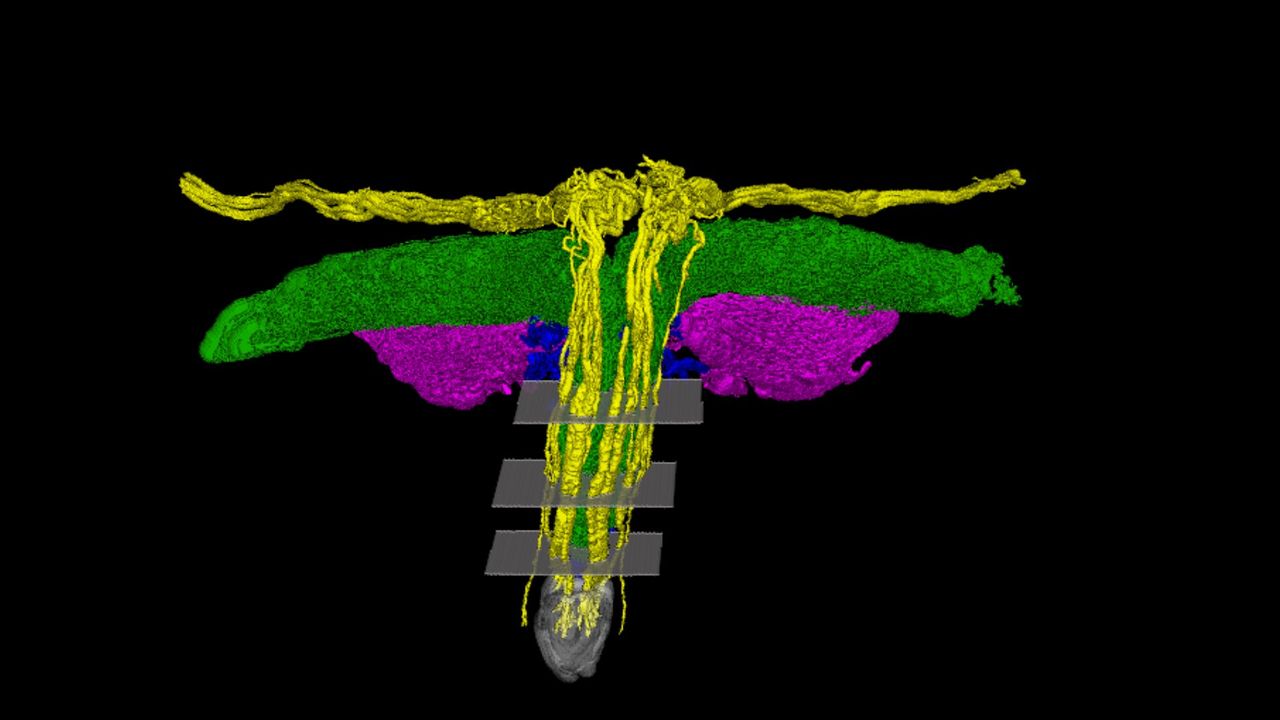
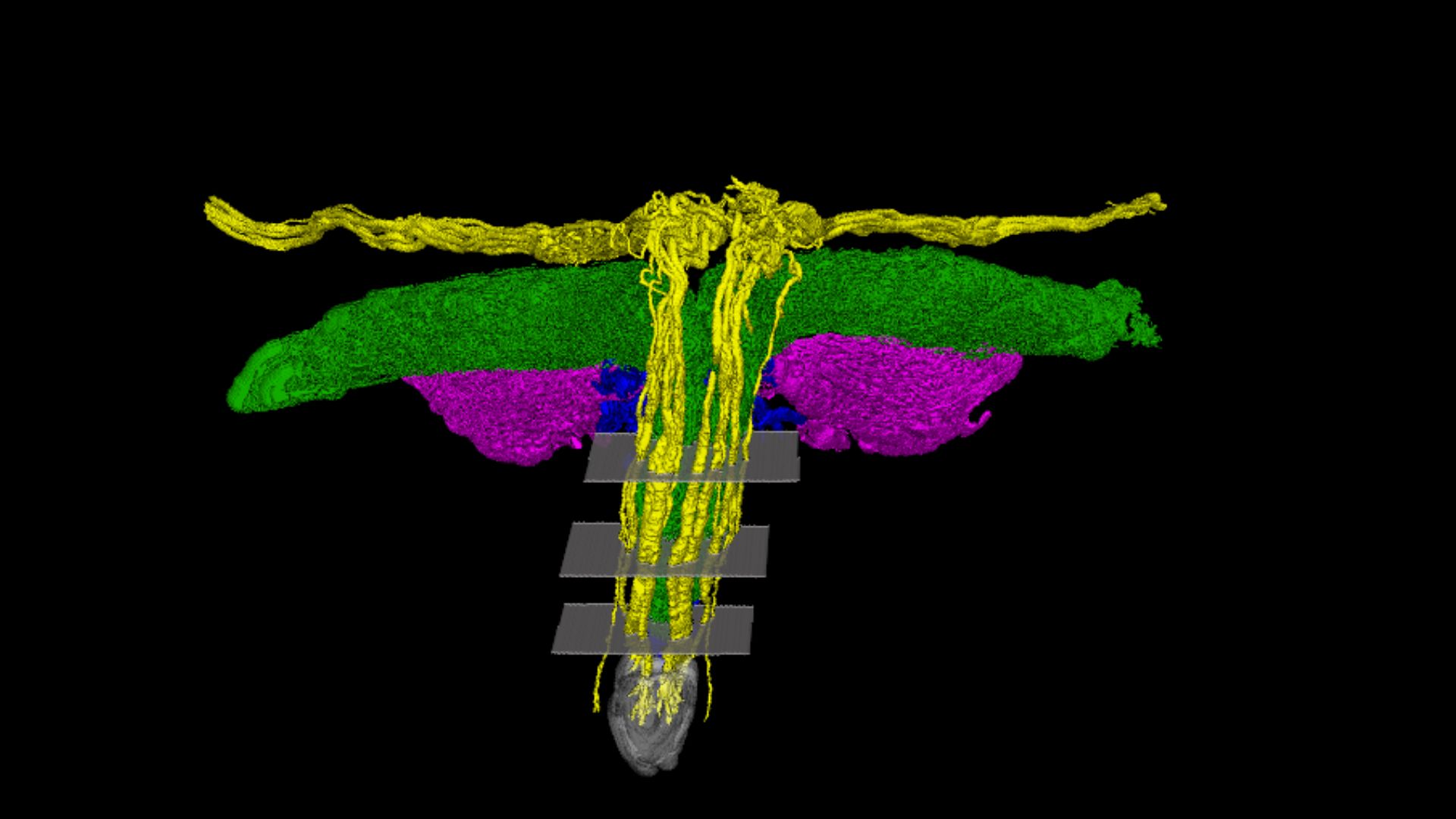
 The main sensory nerve of the clitoris, the dorsal nerve, is labeled in yellow. Veins and other tissues are shown in different colors. (Image credit: Ju Young Lee et al., 2026) Share this article 0 Join the conversation Follow us Add us as a preferred source on Google Newsletter Sign up for the Live Science daily newsletter now
 Get the world’s most fascinating discoveries delivered straight to your inbox.
Become a Member in Seconds
Unlock instant access to exclusive member features.
Contact me with news and offers from other Future brands Receive email from us on behalf of our trusted partners or sponsors By submitting your information you agree to the Terms & Conditions and Privacy Policy and are aged 16 or over.You are now subscribed
Your newsletter sign-up was successful
Want to add more newsletters?
Join the club
Get full access to premium articles, exclusive features and a growing list of member rewards.
Explore An account already exists for this email address, please log in. Subscribe to our newsletterNew research offers a closer look at one of the least-studied organs in the human body: the clitoris, the structure responsible for female sexual pleasure.
Once described by a 16th-century anatomist as the "shameful member," the clitoris has historically been ignored in research in part due to taboo. Additionally, dissecting clitoral nerve tissue is challenging due to its position in relation to the surrounding pelvic organs.
"Our research was able to show different parts of the clitoris," lead study author Dr. Ju Young Lee, a postdoctoral researcher at Amsterdam University Medical Centers, told Live Science in an email. She and her collaborators imaged two pelvises that had been donated postmortem to the university. The project was part of the Human Organ Atlas initiative, which aims to render whole organs in fine detail.
Their findings, which have not yet been peer-reviewed, were published March 20 on the preprint server bioRxiv.
Using CT images, the researchers traced the dorsal nerve of the clitoris (DNC) — the organ's main sensory nerve — from its origin point in a larger pelvic nerve structure. While prior studies reported that the DNC tapers off as it nears the clitoral glans, the external portion of the clitoris, the new imaging instead reveals that the DNC extends a robust array of branches into the glans. The DNC also splits off toward the mons pubis (the fatty tissue over the pubic joint) and the clitoral hood.
A diagram showing the anatomy of the clitoris. (Image credit: Diagram (Left): Public domain, via Wikimedia Commons; Infographic by Live Science)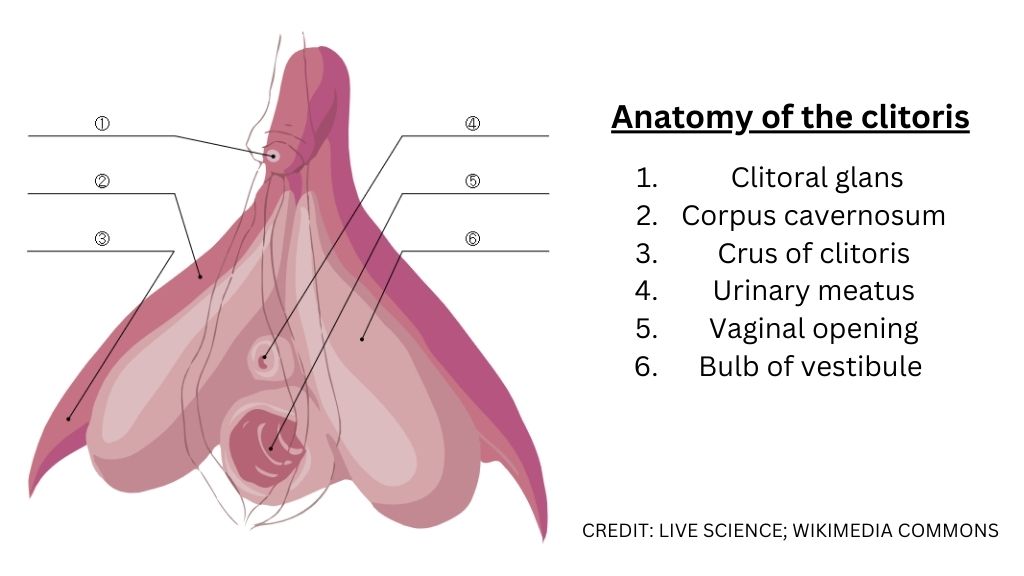
This work could be used to improve reconstructive procedures to restore the clitoris and clitoral function in patients who have experienced female genital mutilation, the study authors wrote. These procedures, which involve partial or total removal of the external female genitalia, are carried out mostly on young girls between infancy and age 15, can cause serious medical complications, and are considered a human rights violation, the World Health Organization states.
Sign up for the Live Science daily newsletter nowContact me with news and offers from other Future brandsReceive email from us on behalf of our trusted partners or sponsorsThe new study may also help surgeons avoid damaging clitoral nerves during other operations on or near the vulva, the authors added.
Dodging nerve damage is key, since there is typically little overlap between surgeons trained to operate on genitals and those who treat peripheral nerves, said Dr. Blair Peters, an associate professor of surgery in the Oregon Health and Science University School of Medicine. Peters, who specializes in genital nerve procedures, and his colleagues published a tally of all 10,000 nerves in the human clitoris in 2022.
Although Peters was not involved with the new study, he told Live Science that the results align with his own observations.
"I have the privilege of actually seeing these things with my own eye," Peters said. Until now, "that hasn't been quantified in any meaningful way in the medical literature."
Peters added that medical recognition of the importance of genital nerves is on the rise, informed in part by insights from gender-affirming surgeries. However, more progress is needed.
RELATED STORIES- 'Useless' female organ discovered over a century ago may actually support ovaries, study finds
- Scientists are building an ultimate atlas of the vagina. Here's why.
- 1st 'atlas' of human ovaries could lead to fertility breakthrough, scientists say
"We have peripheral nerve treatments for everything else from head to toe, but the genital region is like a black box that's been unexplored," Peters said. "This anatomic work is super important to better treat a lot of medical conditions that for the most part have very limited options."
Lee said she hopes to expand her research to a larger sample size that covers a broader age range. Both of the imaged pelvises featured in the new work came from postmenopausal organ donors.
"I see this work as the beginning of a long journey for a new clitoris science," she said.
 Lauren SchneiderLive Science Contributor
Lauren Schneider is a health and science journalist currently pursuing a master's degree from the Science, Health and Environmental Reporting Program at New York University. She earned a bachelor's degree in neuroscience at The University of Texas at Austin prior to becoming a writer. In her spare time, you can find Lauren watching movies, swimming, editing Wikipedia, or spending time with Lucy, her impossibly cute black cat.
View MoreYou must confirm your public display name before commenting
Please logout and then login again, you will then be prompted to enter your display name.
Logout LATEST ARTICLES 1IBM quantum processor achieves highest fidelity calculations for the longest period of time on record
- 2Rare 'sungrazer' comet MAPS could appear brighter than ever on Saturday: What to know
- 3The 10 best running shoe deals, as chosen by an experienced runner
- 4New tweak to Einstein's relativity could transform our understanding of the Big Bang
- 5Artemis II officially leaves Earth's orbit on the way to the moon