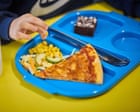
 Foods that are easily eaten on the move, such as pizza slices and paninis, are often less nutritious than a full meal. Photograph: Mark Waugh/AlamyFoods that are easily eaten on the move, such as pizza slices and paninis, are often less nutritious than a full meal. Photograph: Mark Waugh/Alamy School dinners in England dominated by grab-and-go foods such as pizza and sausage rolls
Study backed by Jamie Oliver finds pupils are foregoing sit-down meals for often less healthy, convenient options
Pupils in England are routinely eating pizza slices, sausage rolls and paninis for lunch as school canteens become dominated by a “grab-and-go” culture of unhealthy food.
Convenience foods eaten on the move are ousting sit-down meals as the main way secondary pupils in England refuel during lunch breaks, a report backed by the TV chef Jamie Oliver found.
Food campaigners fear the trend could worsen childhood obesity, leave pupils struggling to focus in classes and undermine the government’s pledge to raise “the healthiest generation ever” of children.
Time and money pressures are driving pupils to increasingly buy food that is less nutritious but easier to consume while moving around, according to Bite Back, the charity behind the report. Such options also include chips, rolls, sugary drinks, cakes and confectionery.
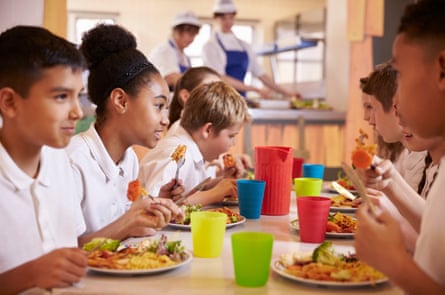 Main meals were being ‘edged out’, the charity said, in favour of cheaper and more convenient options. Photograph: monkeybusinessimages/Getty Images
Bite Back found that 60% of pupils buy “grab-and-go” options at lunchtime at least once a week, 40% do so three, four or five times a week and 32% consume such items at morning break.
“Grab-and-go food and soft drinks now make up a substantial and routine part of the food on offer at secondary schools in England,” the report found. “Despite these items frequently falling short of the school food standards, they have become embedded. Current provision prioritises convenience and profitability over nutrition.”
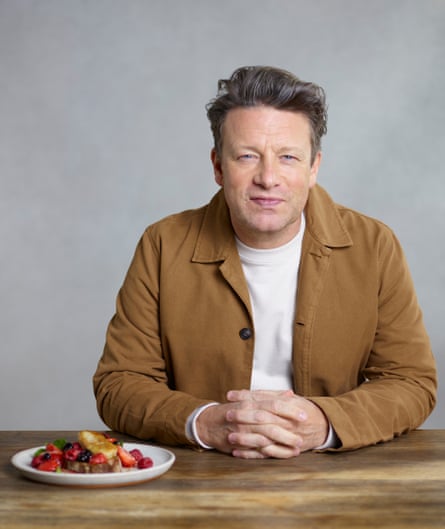 Jamie Oliver has long campaigned for healthier school dinners. Photograph: Paul Stuart 2025/PA
Bite Back surveyed 2,000 secondary school pupils, as well as some teachers and head teachers, and analysed school lunch menus.
The charity, founded by Oliver, said: “Grab-and-go is not inherently problematic and can play a positive role in busy school days.” However, it said the option had become dominated by unhealthy “nutrient-poor, predominantly carbohydrate-based items, including pizza, rolls, pastries and chips, which are cheaper than main meals”.
“Its popularity and affordability is edging out main meals which are more expensive and nutritionally balanced,” Bite Back said.
D’Arcy Williams, its chief executive, said widespread breaches of long-established standards for school food, which are supposed to guarantee nutritious fare, were going unchecked. “The real problem here is that no one is clearly responsible for enforcing school food standards, and in practice, that means they’re not being enforced at all,” he said.
Parents of Send pupils without EHCPs are least satisfied with schools, survey in England findsRead more“We have rules that are meant to protect children’s health. But without proper monitoring or accountability, they’re being undermined by a system that increasingly prioritises speed, convenience and profit. That’s how we’ve ended up with a grab-and-go culture taking hold in schools. Unhealthy, nutritionally poor food has become the easiest option.
“With short lunch breaks, long queues and limited healthier choices, young people are being pushed towards quick fixes. But these options are often leaving them hungry, tired and unable to focus in lessons.”
Oliver, a veteran campaigner for healthier school food, said: “What children eat at school shapes their health, their confidence and how well they learn, so when the food isn’t nutritious, it’s a missed opportunity. This report is a stark reminder that we’re still not getting this right.”
The findings come as ministers consider new moves to improve school dinners, including an overhaul of the standard to ensure food contains less fat, salt and sugar. Groups such as Bite Back, the Food Foundation and the all-party parliamentary group on school food want monitoring of school food to be overseen by Ofsted, the Food Standards Agency or school governors.
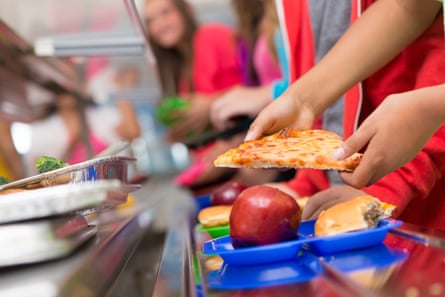 Ministers are considering new moves to improve school dinners. Photograph: SDI Productions/Getty Images
Shalom, a 17-year-old pupil and Bite Back activist, said: “By the time the lunch bell rings, the grab-and-go section is always the busiest place in school. Students run past the main meal to avoid long queues and wasted free time.
“The shelves are filled with packaged sandwiches, pizza slices, paninis and fizzy drinks, the smell of pastry and cheese dampening the air. It looks tempting at first but week after week becomes beige, bland and boring.”
Bite Back believes that too many schools are getting trapped into long-term contracts with big food companies that then provide too many unhealthy “grab-and-go” products.
The Department for Education said: “We know school food needs to improve, which is why we are working with experts to revise the school food standards for the first time in over a decade as part of our mission to create the healthiest ever generation of children.
“This, alongside our historic step to offer free school meals to every child from a household in receipt of universal credit, will ensure children across the country have access to good-quality nutritious food in that sets them up to achieve and thrive.
“We recognise the importance of compliance and are developing options to help supports schools and caterers to get this right.”
Explore more on these topicsShareReuse this content


