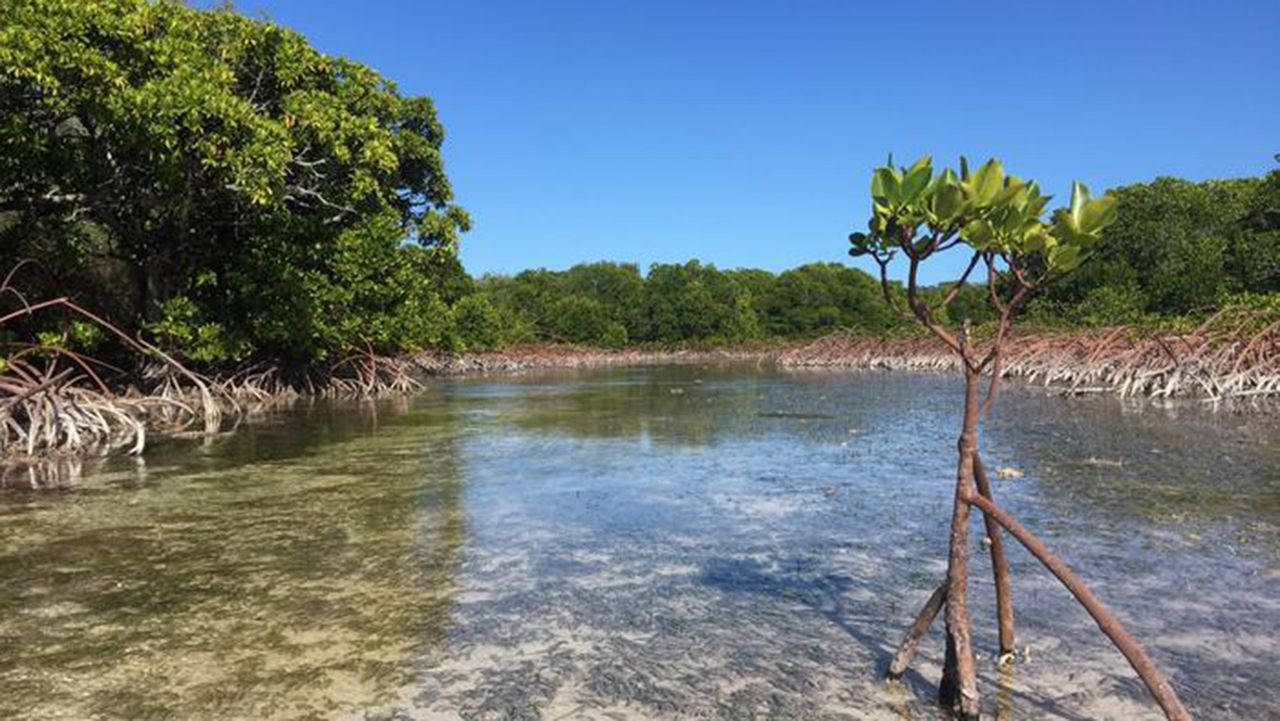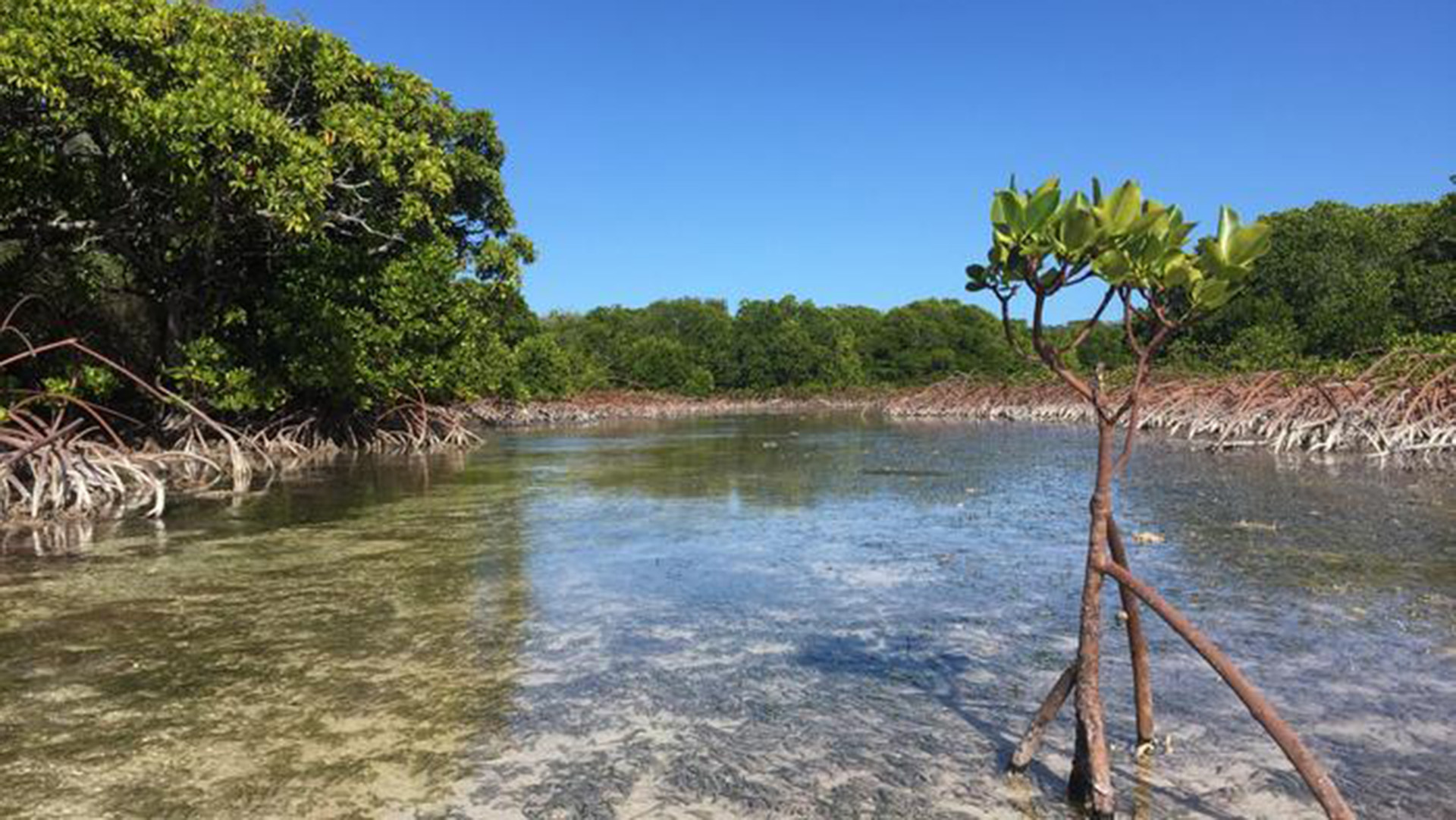
Mangroves seen in Ouvéa, a crescent-shaped atoll in New Caledonia's Loyalty Island archipelago in the South Pacific. (Image credit: Daniel Friess/Tulane University)
Share this article Join the conversation
Follow us Add us as a preferred source on Google Newsletter Subscribe to our newsletter
Mangrove forests, long considered among the world's most threatened ecosystems, are now showing signs of global rebound, a new study reports. These findings mean experts are cautiously optimistic about gains in coastal protection.
The results are based on 40 years' worth of satellite data, which shows that mangrove forests are more resilient than expected. Gains over the past 16 years have outpaced losses, leaving the world with about a 1% net decline in mangrove area since the 1980s, far less than previous estimates suggested. The findings were published Thursday (June 4) in the journal Science.
Historically, mangrove populations have been declining mainly because coastal development, aquaculture and agriculture have cleared large areas of mangrove forests. Pollution and rising sea levels have also weakened these ecosystems, shifting the balance of saltwater and freshwater that these trees need to survive.
"After decades of loss, we're finally seeing a global turning point for mangroves," study first author Zhen Zhang, a postdoctoral scholar in the School of Science and Engineering at Tulane University in Louisiana who specializes in mangrove forest coverage, said in a statement. "This highlights their strong resilience and their potential as a powerful nature-based solution for climate mitigation and coastal protection."
Eyes in the skies
Mangroves make up salt-tolerant forests full of shrubs and trees that grow along tropical and subtropical coastlines. They protect coastal communities by acting as a natural barrier against storms, strong winds and flooding. Their dense root system helps slow down storm surge and reduces erosion by holding shoreline soil in place. Mangrove forests also help support ecosystems because their tangled roots provide safe habitats where fish, crabs, shrimp and other marine animals can grow before moving into open waters.
These forests are also important in the fight against climate change, as they store large amounts of carbon in their trees, roots and deep muddy soils, helping to reduce the amount of carbon dioxide in the atmosphere.
To track the changes in mangrove populations, researchers at Tulane's Mangrove Lab used long-term observations from the Landsat program, a joint mission between NASA and the United States Geological Survey (USGS). The researchers combined Landsat's digital eyes with high-resolution satellite imagery from the European Space Agency's PlanetScope to validate the mangrove maps.
Sign up for the Live Science daily newsletter now
Get the world’s most fascinating discoveries delivered straight to your inbox.
Contact me with news and offers from other Future brandsReceive email from us on behalf of our trusted partners or sponsors
"Ground fieldwork is extremely valuable, but it is often costly, and doesn't allow this large-scale perspective," Daniel Friess, a professor of Earth and environmental sciences at Tulane and the director of the Mangrove Lab, told Live Science in an email. "Satellite observations allow us to fill these gaps and detect long-term changes in places where field measurements are sparse or unavailable."
The team used machine-learning techniques to create baseline mangrove maps for the 1980s, 2010 and 2021, then applied change-detection methods to generate annual records from 1984 to 2023. Those maps allowed the researchers to calculate yearly mangrove losses and gains across the globe and identify a shift from a global decline before 2010 to a net gain after 2010.
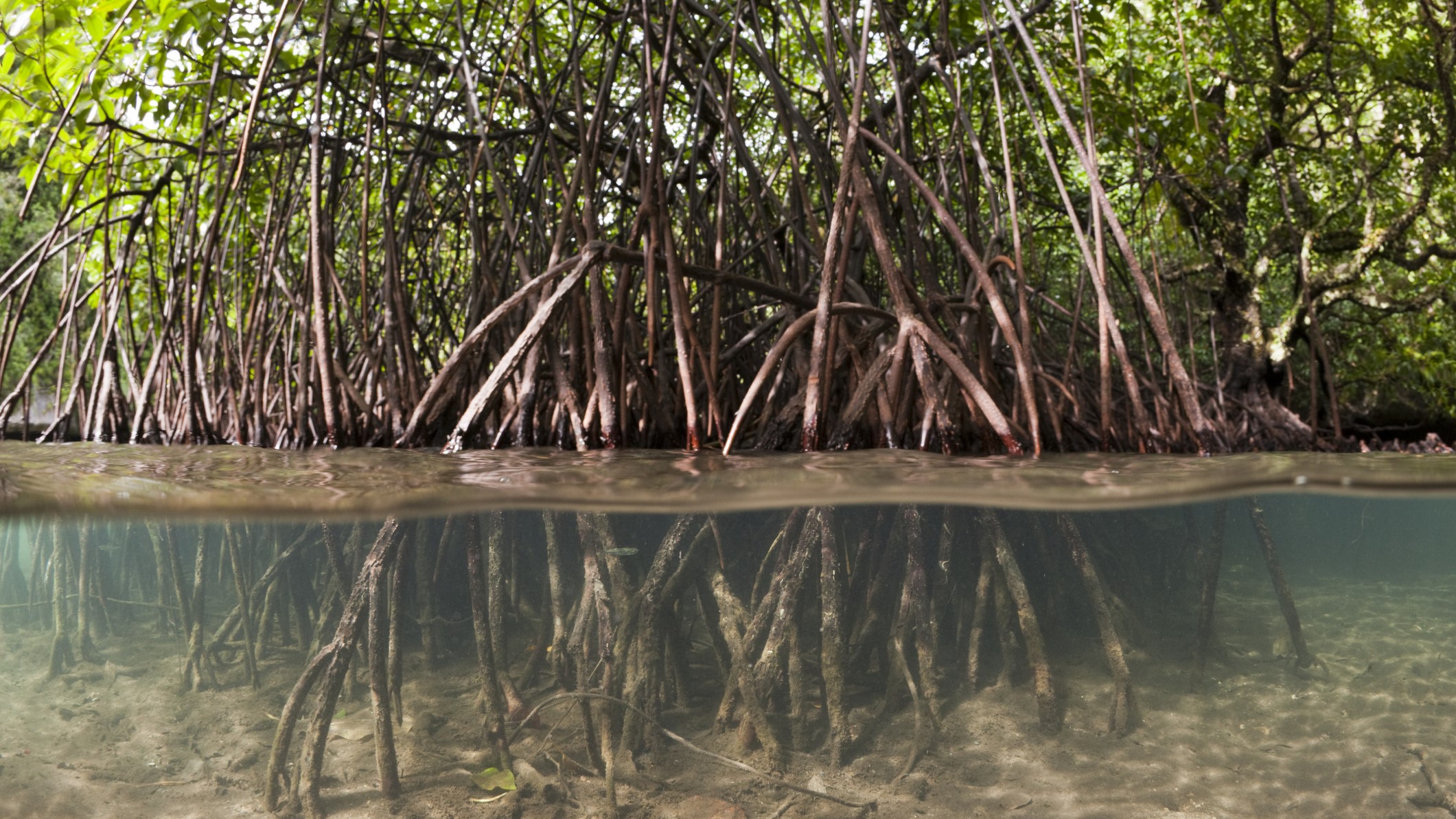
The researchers found that mangrove forests began rebounding globally after 2010.
(Image credit: Reinhard Dirscherl via Getty Images)
The rebound was driven by both restoration and natural expansion, according to the researchers. In some places, mangroves have recolonized abandoned aquaculture ponds. In others, the forests have spread onto newly formed coastal mudflats, particularly in river deltas where sediment creates favorable conditions.
Along the U.S. Gulf Coast, warming temperatures have also encouraged mangroves to expand into higher-latitude areas. Louisiana has seen an overall increase in mangrove area over the past 40 years, while mangroves in the Mississippi River Delta began increasing more sharply after 2012, the researchers said.
But the findings, while encouraging, do not mean mangroves are safe. Friess said continuing losses must be halted so that mangrove forests can continue to rebound.
"We may have underestimated the state of the world's mangroves, " Friess said, as there is evidence that the forests are naturally regenerating and expanding. "It means that if we can halt continuing loss through conservation, then we may see an even bigger gain in the world's mangroves."
Recovery remains fragile
A separate study published Wednesday (June 3) in the journal Earth's Future warned that rising seas could reduce the amount of carbon dioxide mangrove forests store and, in some cases, turn them from carbon sinks, storing more carbon than they emit, into carbon sources, in which they would emit more carbon than they could store.
Related stories
The researchers used a model that combined water flow, sediment movement, carbon storage, and mangrove growth and dieback — when a large number of mangrove trees rapidly die off — to get a bigger picture of mangrove ecosystems. They found that sea level rise may increase carbon storage in some localized areas at first, but whole-forest carbon storage is likely to decline over the next century, meaning more carbon will be kept in the atmosphere, adding to the effects of climate change. Mangroves need a certain amount of tidal flooding to survive, but too much flooding could cause them to disappear.
The findings underscore the ongoing need to protect existing mangroves so they can continue protecting ecosystems and sequestering carbon. Friess said he hopes global gains continue, but the effects of climate change could lead to losses instead.
"While we hope that net gains in mangrove area will continue, it may be challenging to maintain this trajectory in many places under climate change," he said. "So we need to focus on conserving and restoring mangroves now in order to give them the best chance in the future."
 Kenna Hughes-Castleberry
Content Manager, Live Science
Kenna Hughes-Castleberry is the Content Manager at Live Science. Formerly, she was the Content Manager at Space.com and before that the Science Communicator at JILA, a physics research institute. Kenna is also a book author, with her upcoming book 'Octopus X' scheduled for release in spring of 2027. Her beats include physics, health, environmental science, technology, AI, animal intelligence, corvids, and cephalopods.
View More
You must confirm your public display name before commenting
Please logout and then login again, you will then be prompted to enter your display name.
Logout