Image source, Getty ImagesImage caption,
In January 2026, wildfires in Chile caused the evacuation of more than 50,000 people
ByMark Poynting and Alex BrianBBC News Climate & Science- Published9 August 2021
Many extreme weather events are becoming more common and more intense around the world, fuelled by human activities such as the burning of fossil fuels.
Here are four ways that rising temperatures are affecting weather extremes.
1. Hotter, longer heatwaves
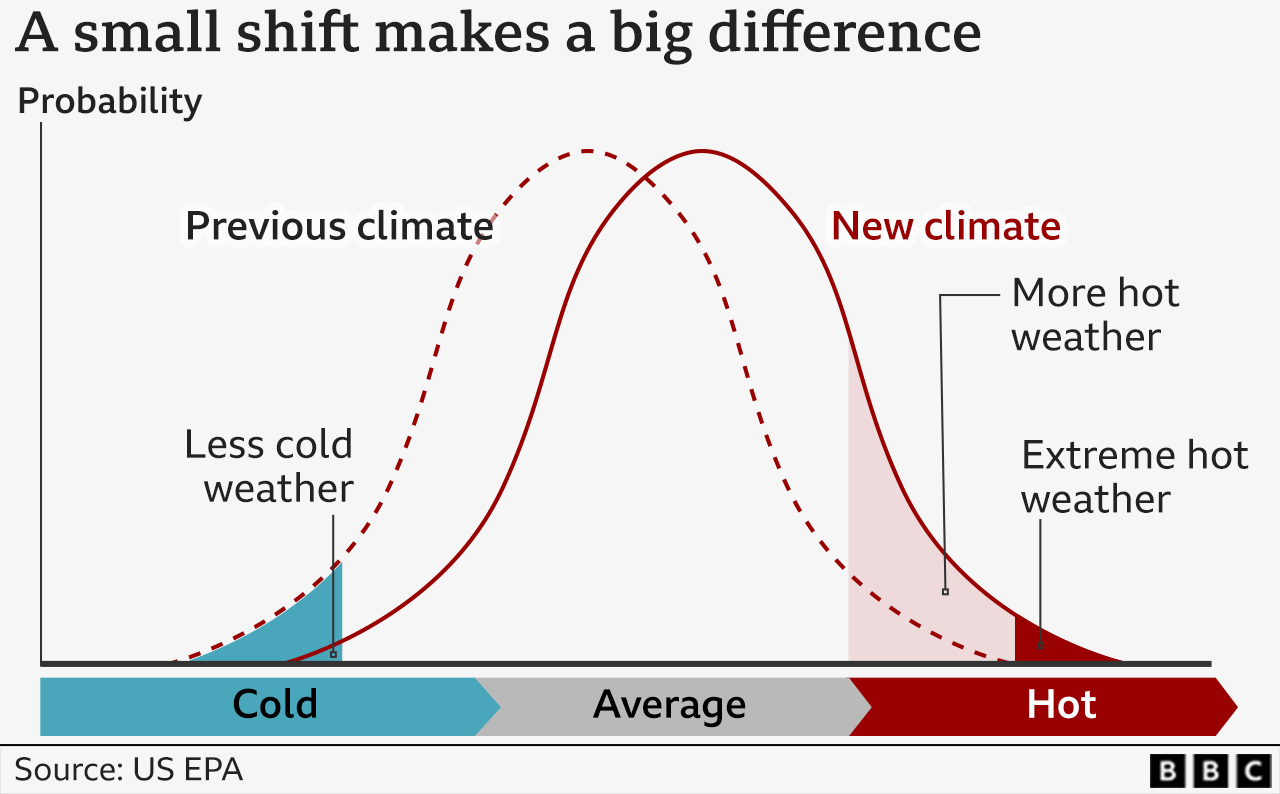
Even a small increase in average temperatures makes a big difference to heat extremes.
As the range of daily temperatures shifts to warmer levels, hotter days become more likely and more intense.
Scientists use computer models to simulate how individual extreme weather events unfold in two scenarios:
today's world with about 1.4C, external of human-caused warming
a hypothetical world without human influence on the climate
That way, they can estimate, external how much a particular heatwave, storm or drought was affected by climate change.
The UK experienced its hottest summer on record in 2026, which the Met Office said was made 130 times more likely by climate change.
Five widespread heatwaves affected the country, resulting in 40 days of temperatures above 30C (86F).
Head of Climate Attribution at the Met Office, Dr Mark McCarthy, described summer 2026 as "remarkable" and warned that extreme heat events would only become more common as the world warms.
A really simple guide to climate change
- Published17 minutes ago
What is net zero and is the UK on track to achieve it?
- Published35 minutes ago
Climate change has also intensified multiple heatwaves across the world this year, according to scientists at the World Weather Attribution group (WWA).
Examples include Australia's worst heatwave in six years in January, the 45C that India experienced in April and Europe's deadly June temperatures.
Heatwaves can happen as a result of heat domes, external, which are created when an area of high pressure stays over the same area for days or weeks, trapping hot air underneath.
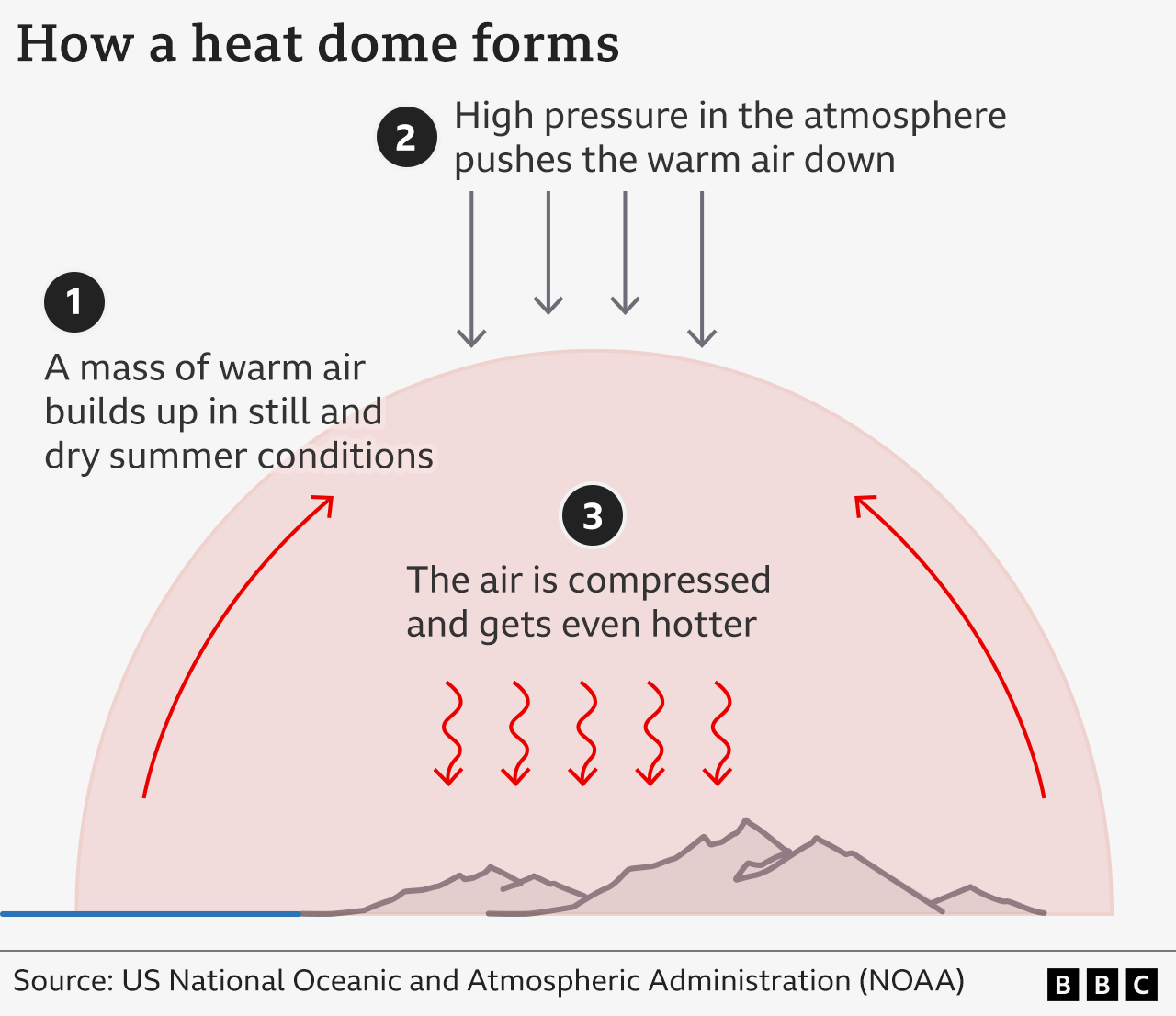
Higher temperatures in the Arctic - which has warmed nearly four times faster than the global average, external - may be affecting the fast band of winds high in the atmosphere known as the jet stream.
One theory suggests that this is making heat domes more likely, although this is not clear cut.
2. More extreme rain
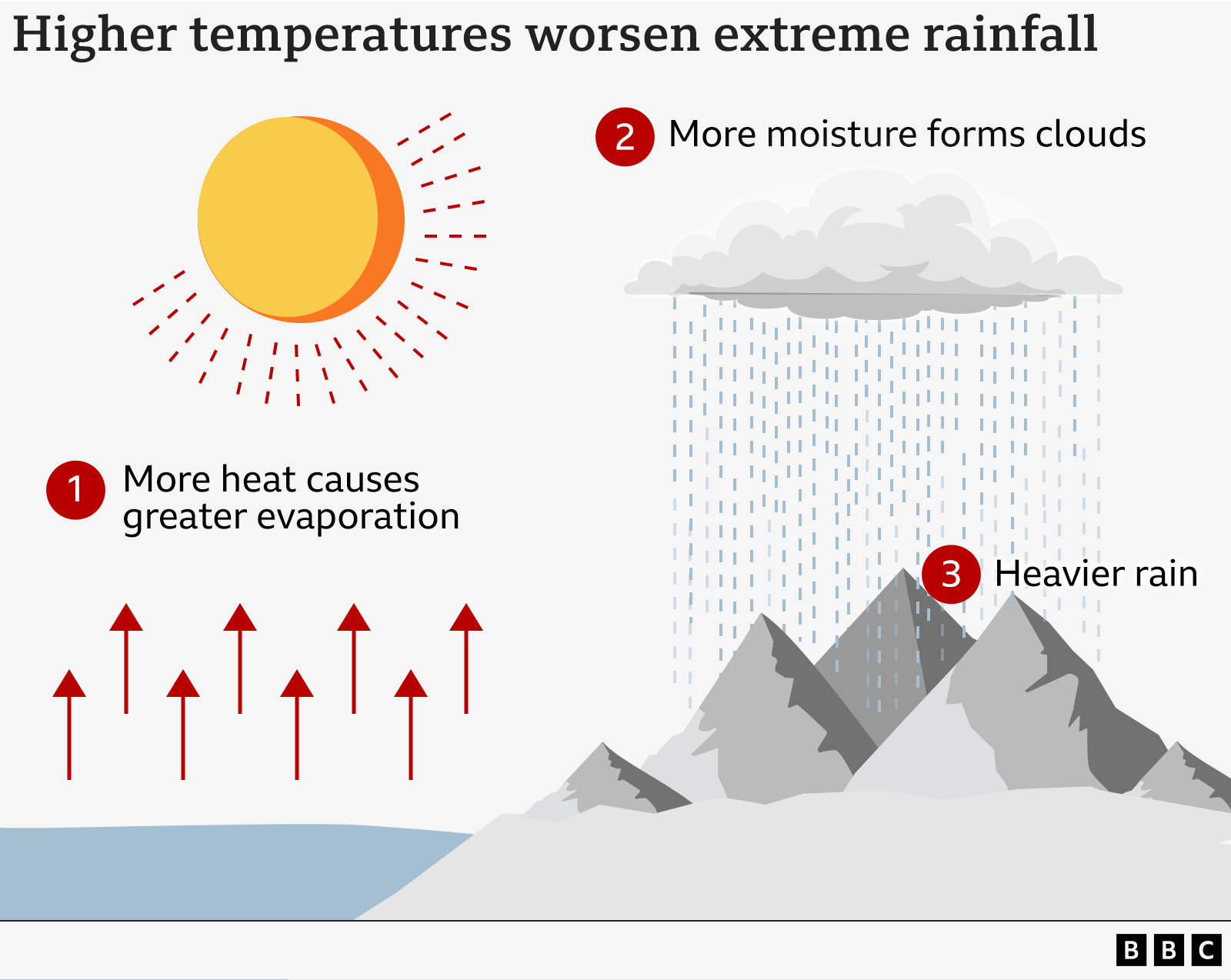
For every 1C rise in air temperature, the atmosphere can hold about 7% more moisture, external.
With more moisture available, rainfall can become heavier.
UK winters were 13% wetter, external in the decade from 2016 to 2025 than between 1961 and 1990, the Met Office says.
However, the large annual variation in rainfall makes it difficult to draw conclusions from a single decade, its scientists warn.
Globally, heavy rainfall events have become more frequent and intense over most land regions due to human activity, according to the UN's climate body, the IPCC, external.
For example, in October 2025, Hurricane Melissa became one of the strongest hurricanes to ever hit the Caribbean.
WWA researchers found that climate change increased extreme rainfall associated with the storm by 16%.
3. Longer droughts
 Image source, ReutersImage caption,
A drought in Puerto Rico led to water rationing in summer 2026
Linking climate change with specific droughts can be difficult because there are lots of different factors that affect the availability of water.
Natural weather systems like El Niño can play a key role, as was the case with drought in southern Africa in early 2024.
But climate change is shifting global rainfall patterns. While some of the world is getting wetter, other parts are becoming drier, which can make them more prone to drought.
And heatwaves fuelled by climate change can worsen dry conditions when they do occur by increasing evaporation from the soil.
This makes the air above warm up more quickly, leading to more intense heat.
During periods of hot weather, increased demand for water, especially from farmers, puts even more stress on the water supply.
Severe drought declared and hosepipe bans in force - is your area affected?
- Published15 October
Climate-driven heatwaves worsened drought conditions throughout Europe this summer, according to the EU's Joint Research Centre, external.
Four of Europe's key rivers - the Loire, Po, Rhine and Danube - reached record low levels.
Drought was declared in all of Wales and two-thirds of England, with the highest category - "severe drought" - being used for the first time in parts of southern England.
Elsewhere, the WWA found that climate change intensified a severe drought in Jamaica and Puerto Rico from May 2026.
Global warming made extreme dry conditions 40% more likely, external in Jamaica and 30% more likely in Puerto Rico, the WWA said.
4. More fuel for wildfires
Fires happen naturally in many parts of the world.
It is difficult to know if climate change has caused or worsened a specific wildfire because other factors are also relevant, such as changes to the way land is used.
But climate change is making the weather conditions needed for wildfires to spread more likely, the IPCC says, external.
Extreme, long-lasting heat draws more moisture out of soils and vegetation.
These tinder-dry conditions provide fuel for fires, which can spread at incredible speeds, particularly if winds are strong.
In January 2026, fires in Chile and Argentina resulted in 55,000 evacuations. The area burned was around 36% larger due to climate change, according to a global report on wildfires, external.
More than 5,000 wildfires burned across Canada this summer, resulting in some of the worst air quality levels in the world being recorded in nearby cities.
Climate change made the conditions which enabled the fires to spread twice as likely, according to the WWA, external.
 Image source, ReutersImage caption,
Wildfires produced record air pollution in Canadian cities this summer
Many fires are started deliberately or accidentally by humans. But rising temperatures may also increase the likelihood of lightning in some forests, which can in turn trigger more fires.
The combined effects of shifting land use and climate change mean extreme wildfires are projected to become more frequent and intense globally, according to the UN Environment Programme (UNEP), external.
The number of the most extreme fires may rise by up to 50% by 2100, UNEP suggests.
2026 was the UK's second worst year for wildfires after 2022, according to provisional data, external from the housing department.
In Stourbridge, two fires destroyed 19 homes on the hottest day of the year.

Sign up for our Future Earth newsletter to keep up with the latest climate and environment stories with the BBC's Justin Rowlatt. Outside the UK? Sign up to our international newsletter here.