A manager with a history of combativeness, who fans are protesting against getting the job is now the man tasked with saving Tottenham
 By James Benge Mar 31, 2026 at 12:27 pm ET • 7 min read
  Getty Images
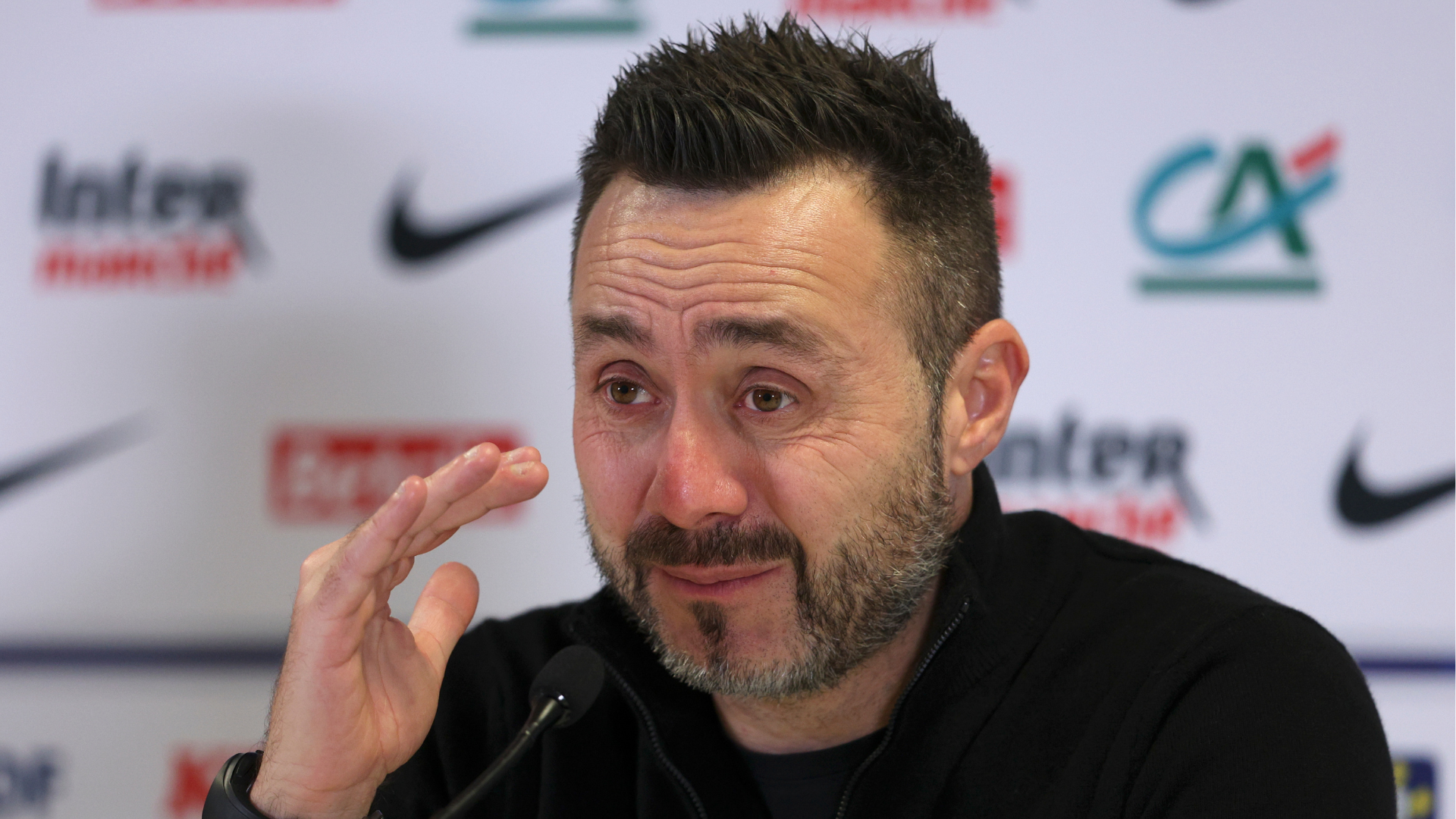
 Tottenham have officially appointed Roberto De Zerbi as their new manager, with the 46-year-old signing a contract that could run for five years. Before the Italian considers how Spurs will look in the 2030s, however, there is a more pressing matter to address, that of the club's ongoing Premier League status. With seven games remaining in the season, De Zerbi's new club sit one point above the relegation zone. The consequences of slipping behind West Ham are catastrophic for Tottenham: hundreds of millions lost in revenue, an exodus of talent at cut-price fees, and a generation of humiliation for the club that is supposed to be ranked among England's big six, all for a team that just announced eye-watering losses before even considering the unthinkable drop.
It is in that context that De Zerbi feels like, at best, a huge gamble by CEO Vinai Venkatesham and sporting director Johan Lange. This is an all-hands-on-deck moment for Spurs, the sort where clubs have to start buying into the sort of intangibles that do not require such immediate consideration at a well-functioning organisation. It is not at all clear why their new manager, formerly of Brighton and Marseille, should be capable of managing it.
For starters, when the XI they put out on the pitch are performing as poorly as Spurs have, you're going to need your 12th man. When Brighton, Leeds and Everton rock up at the Tottenham Hotspur Stadium, they must feel like they are entering a cauldron, facing off against a fanbase united in support of their manager. Perhaps that is what they will be up against. After all, supporters showed a better grasp of the danger their club found themselves in as they rallied along before Sunday's 3-0 defeat to Nottingham Forest than their players seemed to during the game.
Tottenham Hotspur's relegation woes get even worse in embarrassing home loss to Nottingham Forest Pardeep Cattry
And yet, for some, it will be difficult to back a man who so publicly offered his backing to Mason Greenwood when the two worked together at Marseille.
Greenwood was charged in October 2022 over an attempted rape, one count of assault occasioning actual bodily harm, and one count of controlling and coercive behavior. He denied the charges. The case was dropped in February of the following year following what the Crown Prosecution Service said was "a combination of the withdrawal of key witnesses and new material that came to light meant there was no longer a realistic prospect of conviction." In November De Zerbi said Greenwood was a "good guy" who had paid "a heavy price." It "saddened" De Zerbi to see how the former Manchester United forward had been described in England.
Several supporter groups publicly announced their opposition to De Zerbi's appointment. Proud Lillywhites, the club's official LGBTQ+ fan group, said: "When someone in that position publicly defends a player like Mason Greenwood, and frames it in a way that downplays the seriousness of what happened, it matters, not just in isolation but in what it signals." The club's official race, ethnicity and cultural heritage fans' group, Spurs Reach, said that De Zerbi's comments "risk normalising harmful attitudes...regardless of intent." Women of the Lane said, "This is not an appointment Tottenham Hotspur should make."
Unanswered questions on the field
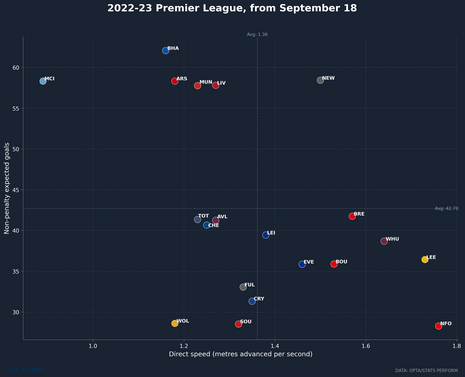
For some, this issue alone serves as a disqualifying factor for De Zerbi. Others may be inclined to let the manager explain himself, not only through his comments but through his football. Tactically, this journeyman of Series A and B has made for an interesting case study. It is not a stretch to say that his management of Brighton was among the most interesting experiments in the last half-decade of Premier League football. As the English game leaned heavily into pressing, De Zerbi's side invited the opposition to come at them. Do that, and we can pass our way around you, they reasoned.
 CBS Sports
 When it clicked, Brighton proved themselves to be one of the most devastating attack forces in England, drawing you in with steady and slow possession at the back before a fizzing pass into Moises Caicedo and Alexis Mac Allister, primed to unleash their attackers in the space in behind. At the helm of a who's who of future Premier League stars -- Caicedo, Mac Allister, Leandro Trossard, Levi Colwill and Kaoru Mitoma to name but a few -- De Zerbi achieved great things in his first year, leading the Seagulls to a sixth-place finish that was the best in their history.
But, and this might be significant if you are under time pressure, implementing his methods took a while. De Zerbi's first five matches delivered just two points for a team that, frankly, had a lot more talent to call on than Tottenham currently do. And then there is the question of whether this approach still works. It did not take long for richer teams to imbue their games with some of those press-breaking qualities. It did not take much longer after that for the rest of the league to observe this tactic and conclude "nah lads, you're not baiting us."
Arsenal and Manchester City would love it if their opponents took the game to them without the ball. Instead, they are tasked with bunker-busting, using set pieces and anything else they can find to break down opponents. Those other teams have learned how to transition from a man-to-man oriented system that, given the speed and strength of your average Premier League player, might hold out against a De Zerbi style and can still drop into a defensive block as and when required.
The signs of his time at Marseille are that De Zerbi has not changed his style, and that might be a worry when he returns to a league that has adapted to play against it.
It is not the only way in which De Zerbi remains the same. Eighteen months at Marseille were best described as turbulent, the first threat to quit coming four months after his appointment. Training ground bust-ups took place in full view of the cameras, in January of last year he questioned whether his players had the necessary "hunger." At Brighton, a club that by then had firmly established its model of buying low and selling high, De Zerbi had publicly questioned the club's transfer policy after the departures of Mac Allister and Caicedo.
Sources who have firsthand experience of De Zerbi describe him as combustible. That would make for a high-risk element to introduce into the powder keg that is Tottenham in a relegation battle.
Perhaps all of this could be explained away. Spurs' circumstances are desperate. In those circumstances, you have to take big swings: that a manager might stumble upon a squad innately suited to his tactics, that his demeanour might spark a fire in a squad who seem to have frozen up. Right now, Tottenham need someone to ensure their ongoing Premier League status.
What evidence is there that their new boss can do that job? He has Premier League experience, but it came at a high-functioning club whose previous coach, Graham Potter, had guided them away from the relegation rat race. One can imagine De Zerbi building on foundations set out for him because we've seen him do it at Sassuolo and Brighton. We have not seen him as the relegation firefighter that Tottenham need. Curiously, that coach was out there and, according to CBS Sports sources, Sean Dyche would have been keen on the vacancy. There is a manager who has proven he can guide a team to 15th-ish. Even his half-season at tumultuos Nottingham Forest had them puttering along at 46-point pace. You don't get relegated with a 4-4-2, deep blocks and long balls if that is the rate at which you are putting points on the board.
Would Dyche be the man for the five-year mission of restoring Tottenham to adequacy? Not really, but honestly, why are Spurs thinking about five years when the next five games are so potentially cataclysmic? When there is a one in four chance of an event that could wipe nine figures off your revenue and change the immediate future of your club, every decision you make should be framed around averting the apocalypse. Playing the Tottenham way, that's a luxury summer problem.
Perhaps five years from now it will look like a triumph that they did not wait, that they gave themselves a head start on their future in seven of the most trying games in their history. Even if that is the case, though, it will still be true that, on the brink of the greatest short-term crisis in their history, Spurs made the long-term play, committing against the wishes of some supporters to a volatile manager whose tactics would need bedding in. No matter the end result, it will always have been an almighty gamble.
Join the Conversation comments