 Paul BiancardiMar 30, 2026, 08:00 AM ETClose
- National Recruiting Director for ESPN.com
- 18 years of coaching experience at Division I level
- Former Horizon League coach of the year at Wright State

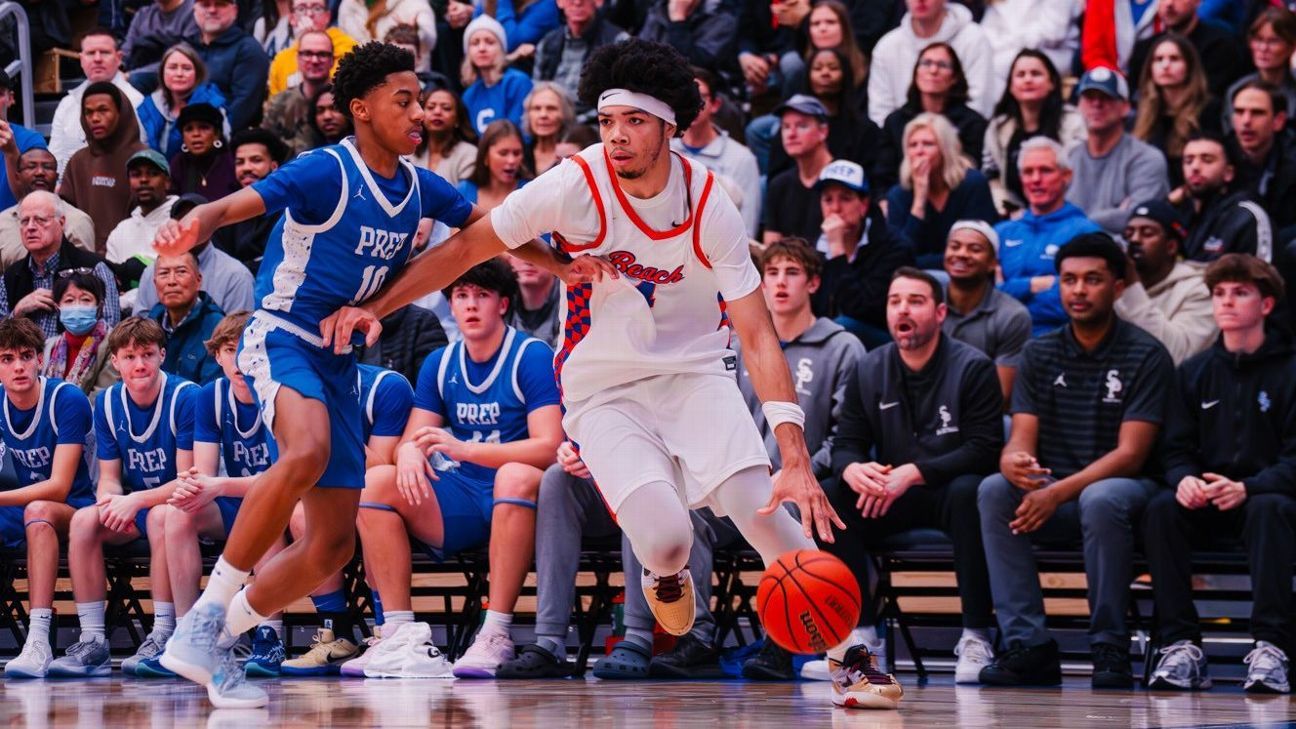
High school basketball's premier showcase returns this week. The McDonald's All American game annually brings together the nation's top prospects in the senior high school class, serving as one of the final live evaluation opportunities before this group heads to college.
All 24 players in this year's boys' game are ranked inside the ESPN 100 -- including the top seven players in the class, headlined by No. 1 Tyran Stokes and No. 2 Jordan Smith.
Monday, March 30 Sprite Jam Fest: A select group of All-Americans compete in the 3-point shooting, dunk and skills contests (9:30 p.m. ET, ESPN2)
Tuesday, March 31 Girls' All-American game (7 p.m. ET, ESPN) Boys' All-American game (9 p.m. ET, ESPN)
What Stokes brings: Stokes is all physicality and brute force. His 6-foot-7, 230-pound frame is everything evaluators look for in a power forward. But he's also a highly-skilled point forward as well as an underrated passer. His 3-point shot, handle, driving ability and free throw ability are tough to cover. Kentucky, Oregon and Kansas are the favorites to land the top prospect in the country.
What Branch brings: Branch was once in the conversation for the No. 1 prospect in the 2027 class before reclassifying up. He can space the floor and defend multiple positions, and is a skilled catch-and-shoot 3-point threat who made 50% of his 3-pointers last summer on the 3SSB circuit, according to Synergy Sports. Branch will replace AJ Dybantsa next season at BYU.
What we're watching: These are two of the biggest and most skilled perimeter threats in high school basketball, who are also projected lottery draft picks. They're used to using their skill-to-size advantage to score at high clips. Both are excellent at turning rebounds into transition opportunities. Branch will need to find ways to slow down Stokes, win the leverage game -- especially close to the basket -- and do it all without fouling. Stokes averaged 10 free throw attempts per game last summer, per Synergy Sports. Stokes, meanwhile, will need to fight over ball screens and challenge Branch's jumper. He'll also need to use his length and footwork to hold up in the post.
What Stokes brings: Smith has built a reputation for enormous effort, especially defensively. He's a forceful on-ball defender and smart off the ball. Offensively, he creates for himself off the dribble and finds open pockets of space to finish through contact or utilize his consistent mid-range pull-up jumper. Smith takes smart shots and is effective from long range. He's a natural leader and should make a significant impact replacing Darius Acuff Jr. at Arkansas.
What Holt brings: A powerful combo guard who's comfortable playing both on and off the ball, Holt attacks downhill and has made noticeable improvements with his handle and shooting. He shot 43% from deep and 50% on two-pointers over 22 Grind Session circuit games, also averaging 8.2 rebounds and 2.3 steals. He's at his best, though, locking opposing guards by using his pressure to deny catches and force turnovers.
What we're watching: These are two of the best perimeter defenders in this game. Both have college-ready strength, long wingspans and relentless two-way energy. Whoever finds a rhythm with their jumper will have an advantage. Both will also try to use their overwhelming physical tools to impose their will defensively. Smith needs to try and take away Holt's straight-line drive, while Holt will need to try to take away Smith's paint penetration and easy points at the line.
What Rippey brings: Rippey has a huge vertical bounce to help him finish above defenders. His speed puts tremendous pressure on opponents, particularly in transition. He's also a capable jump shooter who shot 38% on the 3SSB circuit last summer. Rippey uses his vision to make good decisions and is a tenacious on-ball defender.
What Crowe brings: The lefty guard led the EYBL in scoring (23.6 points) last summer and broke Jayson Tatum's Hoophall Classic single-game scoring record with 48 points in January. He's a blur in transition, with an uncanny ability to blow past defenders, as well as a quality mid-range game and knack for making contested shots. He also gets to the line frequently.
What we're watching: Both are wired to score and never turn off attack mode. Both capable playmakers, they're equally hungry to seek out offense in isolation situations and seek out scoring opportunities, which happens plenty in all-star game settings. The points will be flowing, so the better defender will win the matchup.
What Collins brings: With his explosive play above the rim, switchability on defense and burst in the open court, Collins is a true mismatch offensively. Defensively, he uses his 7-1 wingspan to cover ground and guard multiple defenders. Don't be surprised when he takes a rebound coast-to-coast with a highlight finish.
What Thompson brings: Thompson is a skilled lefty forward with a high-level shooting touch across all levels. He knows how to use his 7-4 wingspan to block shots. Whether it's from the elbow, mid-post or down on the block, he's one of the game's best shooters and a true floor spacer who can extend beyond the 3-point line, even in transition.
What we're watching: This is a battle of five-stars with enormous wingspans but contrasting styles. Thompson's shooting accuracy and feathery touch present problems, while Collins is more of an athletic scorer and defender who will relish the defensive opportunity to take on Thompson. Thompson has a major opportunity to prove he can step up defensively and combat Collins' smart, aggressive drive game.
What Williams brings: The 18-year-old Williams is uniquely blends center size with small forward scoring ability. His long strides are reminiscent of Evan Mobley, and he's also agile in tight spaces. He's consistent beyond the arc and is especially comfortable as a trailing 3-point shooter, a major asset in today's game. Williams uses his enormous 7-foot-2 wingspan to rebound and stay in front guards as a switchable defender, but his strengths are in blocking shots and being mobile on ball-screens.
What Ratliff brings: The USC commit's perimeter shooting quickly draws attention. His gravity opens up opportunities for teammates, and he is dangerous on offense and as a fluid, accurate passer. Ratliff will go inside and score when needed and also loves to utilize his 7-4 wingspan as a rim protector on defense.
What we're watching: This will be a clash of two modern big men with high-level skill, shooting and shot-blocking ability. The biggest question: Can either extend his defensive range out to the arc and defend jumpers while remaining quick enough to recover on a drive? Both have the footwork and touch to score in the post, but neither is strong enough to play early post defense. Even so, both can have a block party on defense.