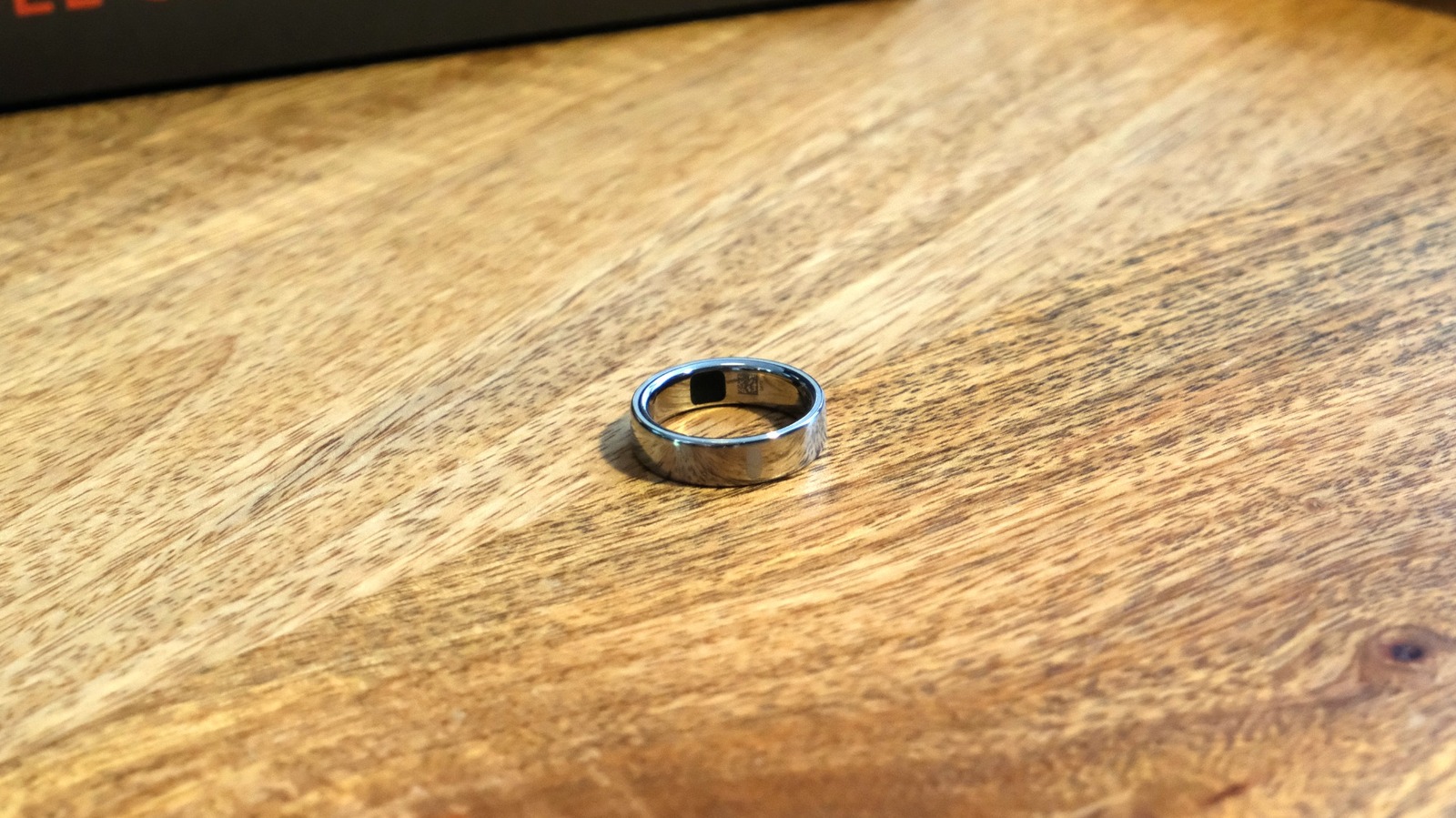
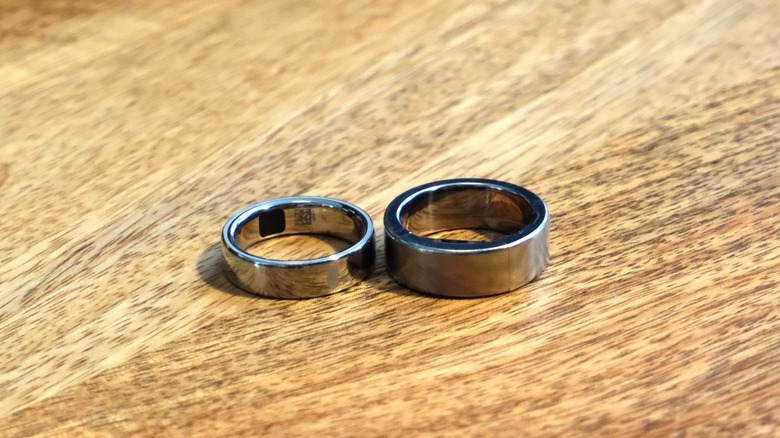
It’s the Oura Ring 4, but 40 percent smaller.
By Daniel Cooper June 29, 2026 8:00 am EST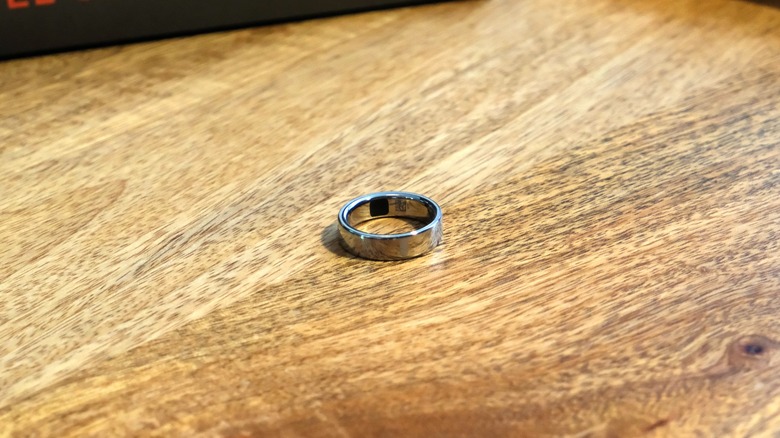 Daniel Cooper for Engadget RATING : 9 / 10 Pros
 - It’s so small!
- Seven-day battery life
- You still have to pay extra for colors (paint)
- App hides the depth of its data
Sometimes, the biggest and most notable achievement is also the thing expected to pass unnoticed. The Oura Ring 5 is dramatically smaller than its predecessor without any real compromise to its performance. Battery life is improved, up to a full week on a single charge, despite less room for a power cell. On one hand, it's more or less the same ring I reviewed a year ago in a vastly smaller package, but let's not undersell that achievement.
Hardware
 Daniel Cooper for Engadget
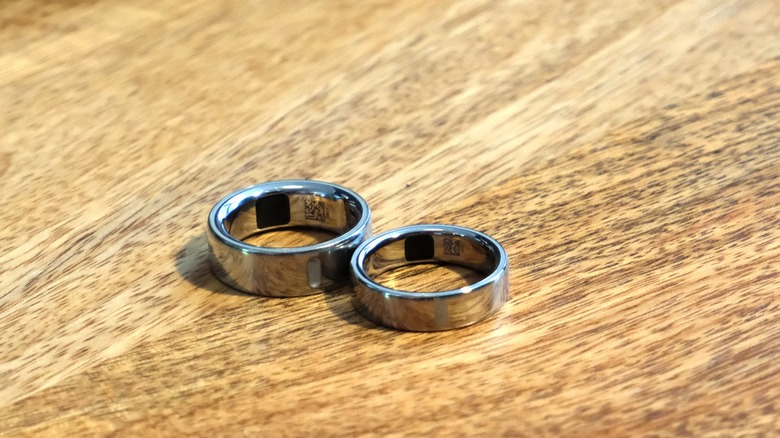
 The Oura Ring 5 is 40 percent smaller than its predecessor, a feat that shocked even me when I was first told. Yes, gadgets tend to get smaller, but smart rings were already tiny, and it's a flex to get the size down by that much. The company deserves its flowers for the scale of such a task, especially since it came without compromises on battery life and performance. Naturally, the target market is all those people who love the idea of a smart ring, but found existing models too hefty for their dainty digits. The 5 still isn't likely to pass for a regular ring, but it's far less obviously a smart ring than the 4, and I doubt people will notice it on your hand.
Features-wise, there's not much here to talk about. Not because Oura was lazy, but because there are no new features to add. Without a dramatic shift in medicine or physics, there are no new sensors you can add to a tracker that offer more insights than what we presently have available. It's clear Oura felt the same, which is why it pivoted to shrinking its existing package by such a degree. And most of the changes that stem from that decision aren't too noticeable unless you review wearables for a living, so I won't bore you with them here.
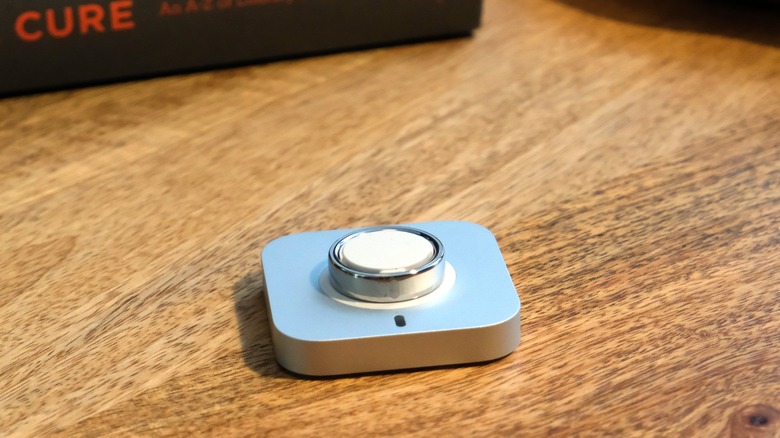
As usual, the Ring 5 ships with a wireless charging plate which you'll be tasked with plonking your ring on once a week or so. For an additional $99, the company will also sell you a travel case capable of holding five additional charges. I've never understood the appeal of such a case in this context, however, given the Oura charging plate is already pretty small. I've taken Oura chargers on trips across the Atlantic for years, and never once thought "gee, this tiny doodad is too unwieldy."
In-use
 Daniel Cooper for Engadget
 Like its predecessors, the Oura Ring 5 monitors your activity, heart rate and temperature, crunching the numbers to offer insights on your health. Its app boils down your metrics to a series of scores (out of 100), keeping you appraised on how well you're doing. Open it up and you'll get a glanceable picture of how rested you are, how much you've moved and how relaxed you are. Below that, about half of your screen's real estate will be taken up with a single item you need to focus on — if the system thinks you're too tired or stressed, for example, it'll show you.
These metrics aren't tied to your vital statistics in the way you may think or expect, which can sometimes give odd results. For instance, the recent UK heatwaves meant I had a night sleeplessly laying in bed, but the next day I got a sleep score of 84. But the ring knew I was struggling, and gave me a Readiness score of 56 thanks to my elevated resting heart rate and lowered heart rate variability. This is because the Sleep score doesn't measure how well you sleep, but how well structured your sleep is — go to bed and wake up on time, and you'll get praise.
Unfortunately, Oura's interesting new features aren't yet available to test here in the UK, including Health Radar. It's an evolution of the company's Symptom Radar, which keeps an eye on trends to act as an early warning system for any impending issues. Health Radar keeps watch on the longer term picture, including monitoring your blood pressure and breathing at night. The ring can't actually measure your blood pressure, it's algorithmically derived from the signals it already collects. For instance, it'll use the optical heart rate sensor while you're sleeping to examine your pulse wave velocity, and make an inference from there. Similarly to Health Radar, Health Records and GLP-1 insights are presently limited to the US and some other territories.
The existing suite of features are plenty good enough to help you stay healthy. For instance, the app is proactive about advising you to rest or keep your stress down, and it gives you alerts when it thinks you've been sedentary too long. As with all wearables, so long as you don't entirely outsource your relationship with your body to its conclusions, you'll benefit from having something keeping an eye on how you're doing.
I'm not qualified to speak about the health features for people who menstruate but there's plenty of those here. Oura has a longstanding tie-up with Natural Cycles, the app that provides non-hormonal birth control utilizing the ring's temperature monitoring. Natural Cycles recently began offering sleep insights that pull data from Oura, giving users an even deeper picture of their health.
As for the ring's battery life, I found the claim of seven days to be on the conservative side for once. I started wearing the ring on a Saturday and it only started warning me I had less than a day of charge remaining the following Monday. For all smart rings, short battery life is a major reason people stop using them, because it's easy to forget to charge them. Or worse, you forget to pick them back up from the charging plate if you miss the notification saying it's charged. A week of battery life from such a small piece of gear is deeply worthy of praise.
Price and the competition
 Daniel Cooper for Engadget
 Oura Ring 5 is available in sizes 6 to 13, with the base finishes of Silver and Black priced at $399. If you'd rather pay $100 more for a different paint job, then you can get a ring in Gold, Stealth, Brushed Silver and Deep Rose. I cannot stress enough: You are paying $100 for paint. It's not a different material, otherwise you could probably justify the added expense.
Whatever finish you opt for, you'll get the basic wireless charging plate (which is size-specific), but that's it. If you want to unlock all of the ring's features, you'll need to pay $6 a month or $70 per year for the annual membership. And if you'd like to take your ring on vacation without packing a USB cable, that charging case I mentioned is $99, and it's size-specific too.
There are plenty of smart rings in the market, but I'd argue only three are worth talking about in any level of detail. You've got Oura, Ultrahuman and Samsung, the latter of which remains relevant more due to the size of its brand than any smart ring engineering notoriety. The obvious alternative is the Ultrahuman Ring Pro which launched last month and earned a 8.9 out of 10 from yours truly. That device is designed more for fitness diehards, with more visible data and a focus on marginal gains. It also has a far more muscular charger, designed to reduce battery wear and improve reliability. You'll be able to snag one for $479, and while it lacks a monthly subscription, you can buy individual software features for one-time payments.
As for Samsung's Galaxy Ring, it hasn't been updated since 2024, costs the same as the Ring 5 and is at least two generations behind Oura and Ultrahuman. The only reason I even bring it up is because it's technically still one of Oura's main competitors, even at its advanced age.
Wrap-up
I think the Oura Ring 5 will send a shockwave through the industry, acting as a jumping on point for the smart ring fence sitters. Taking the class-leading wearable and shrinking it this much is a massive deal, especially since it comes with longer battery life. In every other regard, it's not a dramatic leap beyond the Ring 4, and the real magic will come in the utility of its services. If you already own an Oura Ring, you don't need to rush out to buy this one unless you're due for an upgrade. But if you're new to this type of wearable, and have been waiting for something a bit less showy, this is your moment.


