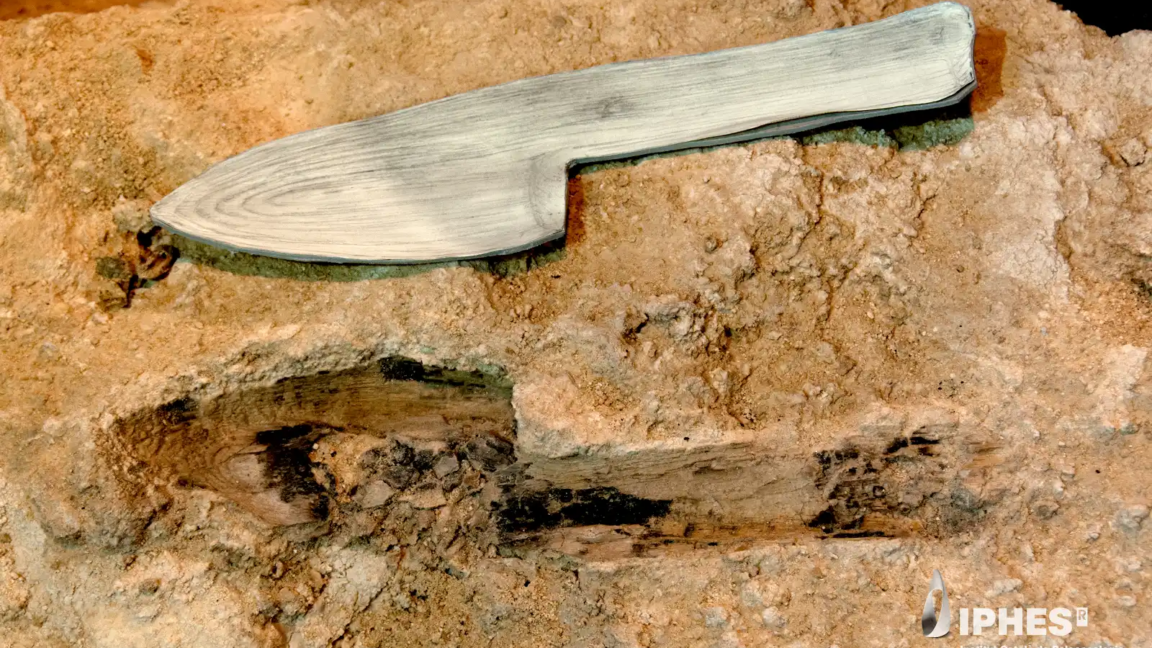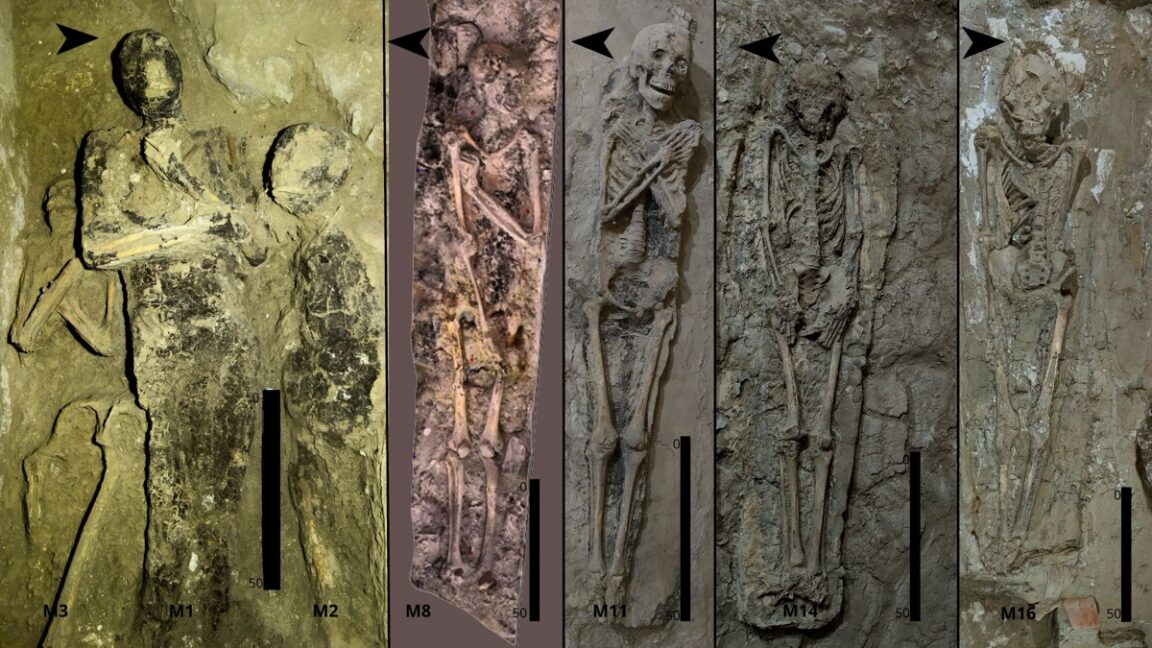
Egypt's Theban necropolis holds over 400 tombs, a rich resource for archaeologists eager to learn more about that region's ancient history. A new paper published in the journal Frontiers in Environmental Archaeology outlines how Egyptian burial trends likely changed over the course of centuries, shifting from individual burials in elaborate coffins to reusing earlier burial sites for later interments, resulting in greater density and the occasional superposition of bodies.
There has been prior research on the reuse of tombs in Thebes. This latest paper focused on a Theban tomb known as 209 in the western necropolis, dating back to the early 25th Dynasty (754–656 BCE) and ultimately abandoned in the Ptolemaic period (305–30 BCE). The original owner was likely a high official of Nubian origin named Nisemro. Over the centuries, the tomb was prone to repeated flash flooding due to its location within an active drainage channel of the Wadi Hatasun, so it's a complex site, archaeologically speaking.
That made it ideal for what the authors term an "integrated archaeothanatological approach," incorporating collected data on body position, coffin use, superpositions of remains, and stratigraphic relationships with osteological analysis in order to reconstruct the chronological sequence of the burials. They focused on a site known as Side Chamber 3, one of the main secondary areas of the tomb that was largely undisrupted.