Breaking space news, the latest updates on rocket launches, skywatching events and more!
Contact me with news and offers from other Future brands Receive email from us on behalf of our trusted partners or sponsors By submitting your information you agree to the Terms & Conditions and Privacy Policy and are aged 16 or over.You are now subscribed
Your newsletter sign-up was successful
Want to add more newsletters?
An account already exists for this email address, please log in. Subscribe to our newsletter This image of the Trifid Nebula was captured by the Hubble Space Telescope 29 years after the telescope first imaged the nebula in 1997. (Image credit: NASA, ESA, STScI; Image Processing: Joseph DePasquale (STScI))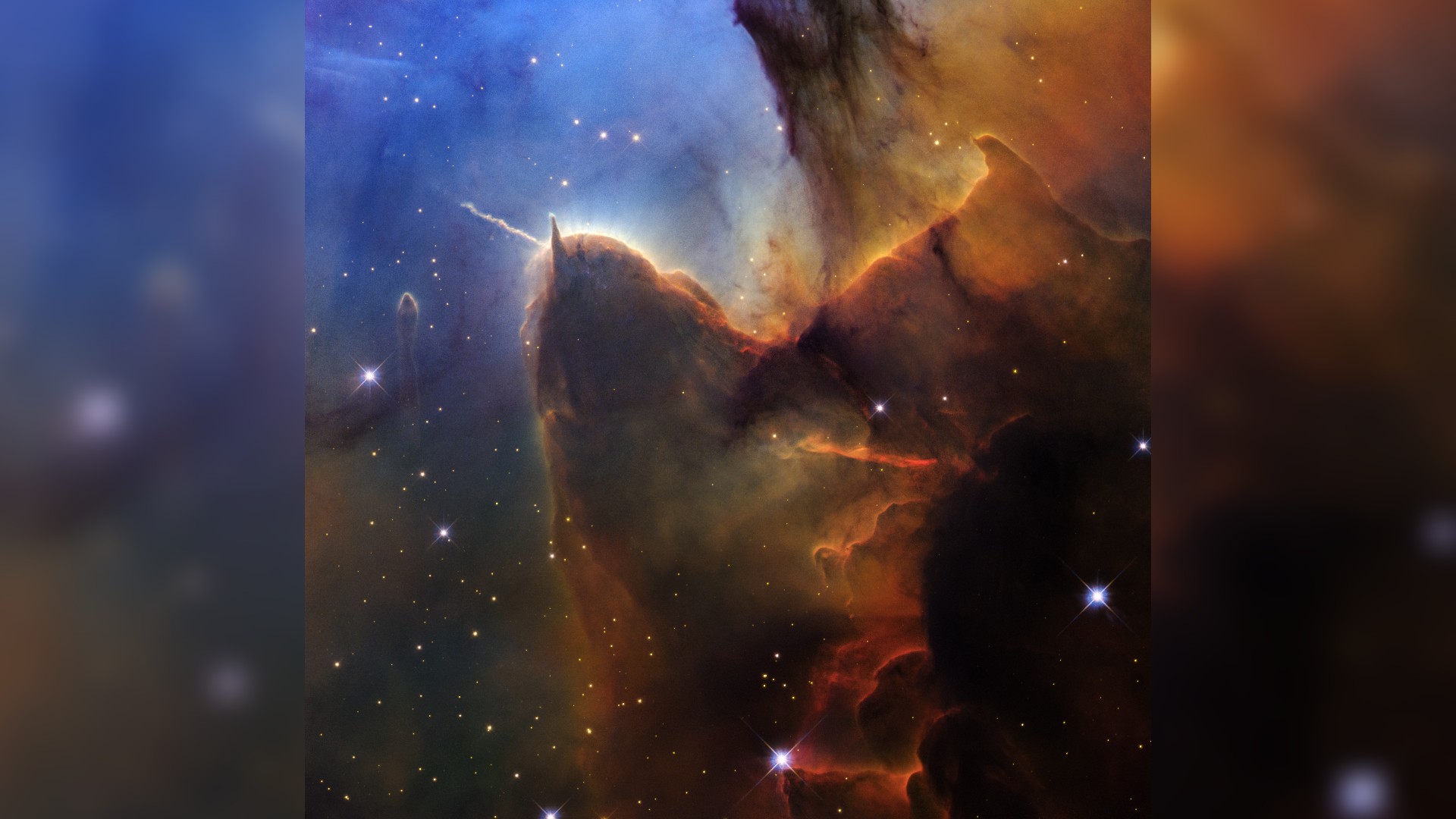
A new image captured by the Hubble Space Telescope shows a spectacular nebula in all its glory. (And yes, it does kind of look like a cosmic sea slug.)
What is it?
The Trifid Nebula, more formally known as Messier 20, is a star-forming region located about 5,000 light-years away.
Article continues belowThe Hubble Space Telescope first looked at this nebula about 29 years ago in 1997. In looking at the nebula again all these years later, Hubble can show us how the nebula itself has changed over time, but it can also reveal new details as Hubble's camera has improved since taking its original image. During the space shuttle mission STS-125 in 2009, a of astronauts installed a better camera on Hubble with a wider field of view and improved sensitivity.
Why is it incredible?
While this is a massive cloud of dust and gas where stars are created, in this new image, the nebula looks a bit like a sea slug, some have pointed out.
In the image, the nebula has a "body" made out of dust and gas and even a "horn" or "antenna" that is actually part of a plasma jet ejected by a young protostar in the nebula.
Get the Space.com NewsletterContact me with news and offers from other Future brandsReceive email from us on behalf of our trusted partners or sponsors Chelsea GohdContent Manager
Chelsea Gohd served as a Senior Writer for Space.com from 2018 to 2022 before returning in 2026, covering everything from climate change to planetary science and human spaceflight in both articles and on-camera in videos. With a M.S. in Biology, Chelsea has written and worked for institutions including NASA JPL, the American Museum of Natural History, Scientific American, Discover Magazine Blog, Astronomy Magazine, and Live Science. When not writing, editing or filming something space-y, Gohd is writing music and performing as Foxanne, even launching a song to space in 2021 with Inspiration4. You can follow her online @chelsea.gohd and @foxanne.music
View MoreYou must confirm your public display name before commenting
Please logout and then login again, you will then be prompted to enter your display name.
Logout MORE FROM SPACE... 1Japan's audacious sample-return mission to the Mars moon Phobos has made it to the launch pad
- 2Making contact with ET? Aliens may already know we're here
- 3Our recommended choice as the best beginner mirrorless camera has $400 off, and has just hit its best price of the year at Best Buy
- 4'That's just not a winning strategy': Congress objects (again) to Trump's planned NASA budget cuts
- 5From 'Starfield' to Artemis: designing moonbases in games and reality