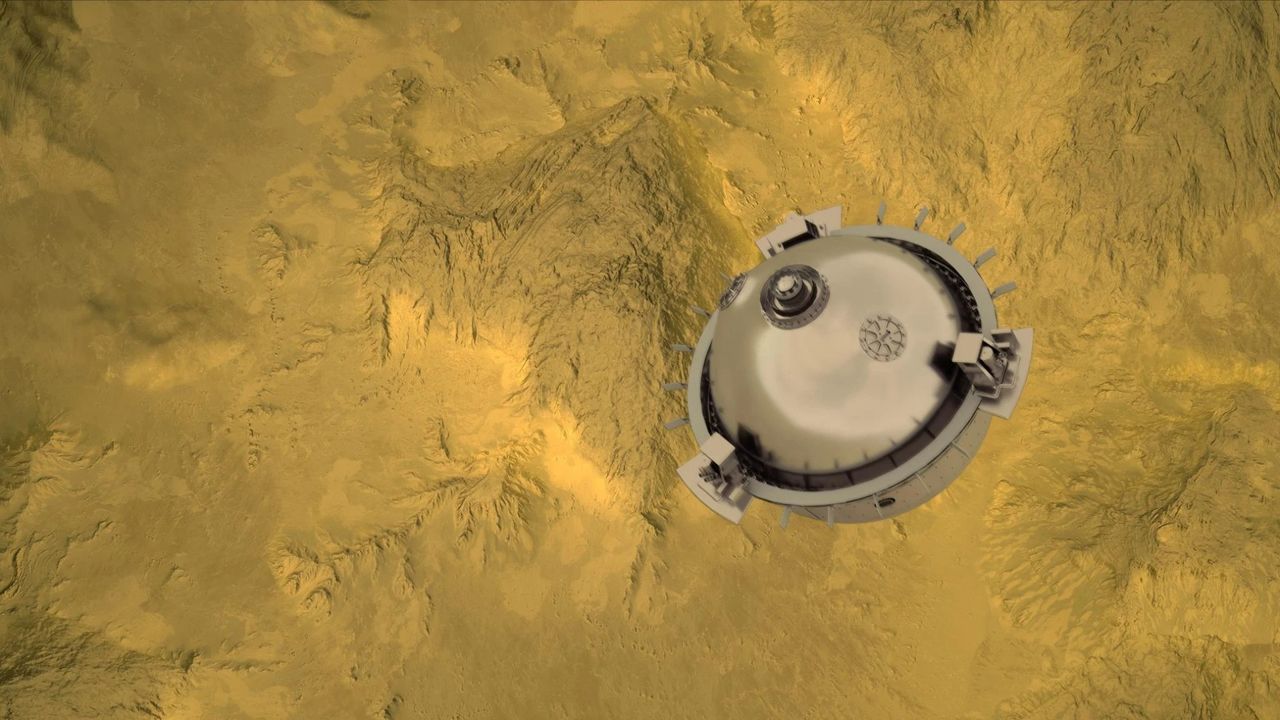
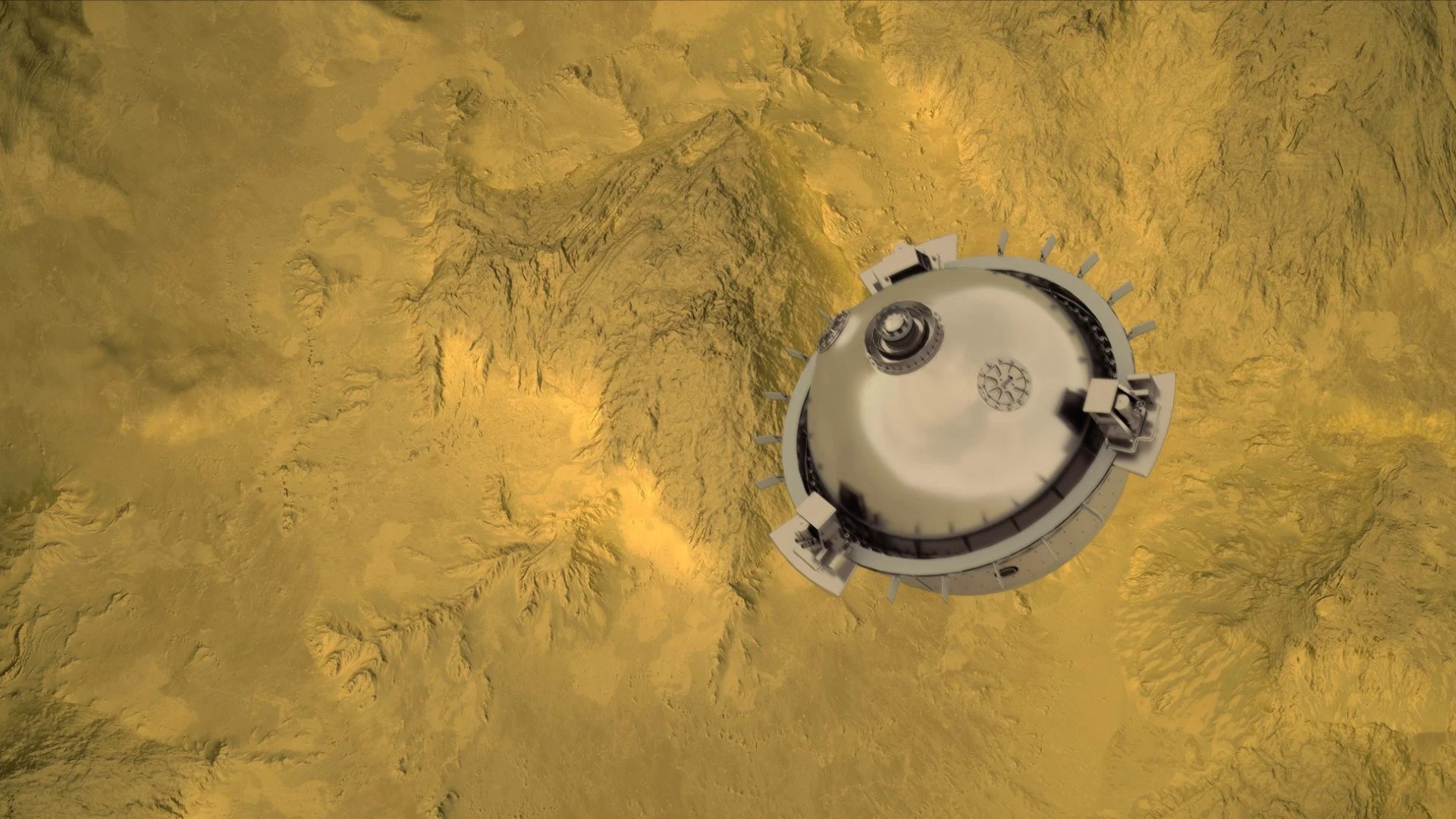
 An illustration of the DAVINCI mission's descent probe above Venus. (Image credit: NASA GSFC visualization by CI Labs Michael Lentz and others/NASA Solar System Exploration Division/NASA Goddard Space Flight Center) Share this article 0 Join the conversation Follow us Add us as a preferred source on Google Newsletter Get the Space.com Newsletter
 Breaking space news, the latest updates on rocket launches, skywatching events and more!
Contact me with news and offers from other Future brands Receive email from us on behalf of our trusted partners or sponsors By submitting your information you agree to the Terms & Conditions and Privacy Policy and are aged 16 or over.You are now subscribed
Your newsletter sign-up was successful
Want to add more newsletters?
An account already exists for this email address, please log in. Subscribe to our newsletterNASA's role in a planned Europe-led mission to Venus remains uncertain as budget pressures drive "hard strategic choices" about which missions will be able to continue, Louise Prockter, director of NASA's planetary science division, said on Monday (March 16).
Speaking at a town hall at the Lunar and Planetary Science Conference in Texas, Prockter said NASA is "still in negotiations" with the European Space Agency (ESA) over its role in the planned Envision mission. The January appropriations bill allocated $2.54 billion to the planetary science division for 2026. Although this was higher than the administration’s proposed $1.89 billion, it was still about $200 million less than the prior year, she said, "and that means that not everything can continue forward or continue forward in the same way."
Article continues belowThe Envision mission, which began construction in 2025, is designed to map Venus' surface and atmosphere in detail from orbit. It is one of three major missions underpinning what scientists have described as a "decade of Venus" exploration, alongside the NASA-led DAVINCI and VERITAS missions.
"It's going to be a challenge getting all three Venus missions to continue," Prockter said.
While NASA is still developing its fiscal year 2026 budget to finalize funding allocations, the 2026 appropriations bill provides $99 million to continue DAVINCI, while work on VERITAS is "ramping up slowly," she said.
Under the original Envision plan, NASA would contribute a key instrument known as VenSAR, a high-resolution radar system intended to map the planet's surface features. However, due to NASA's tightened financial constraints, ESA officials are exploring contingency options to keep Envision on track, including working with member states to develop the radar instrument domestically.
Get the Space.com NewsletterContact me with news and offers from other Future brandsReceive email from us on behalf of our trusted partners or sponsorsKeeping the mission on schedule is critical, as missing Envision's launch window — no later than 2033 — could delay it by at least three years due to planetary alignment constraints.
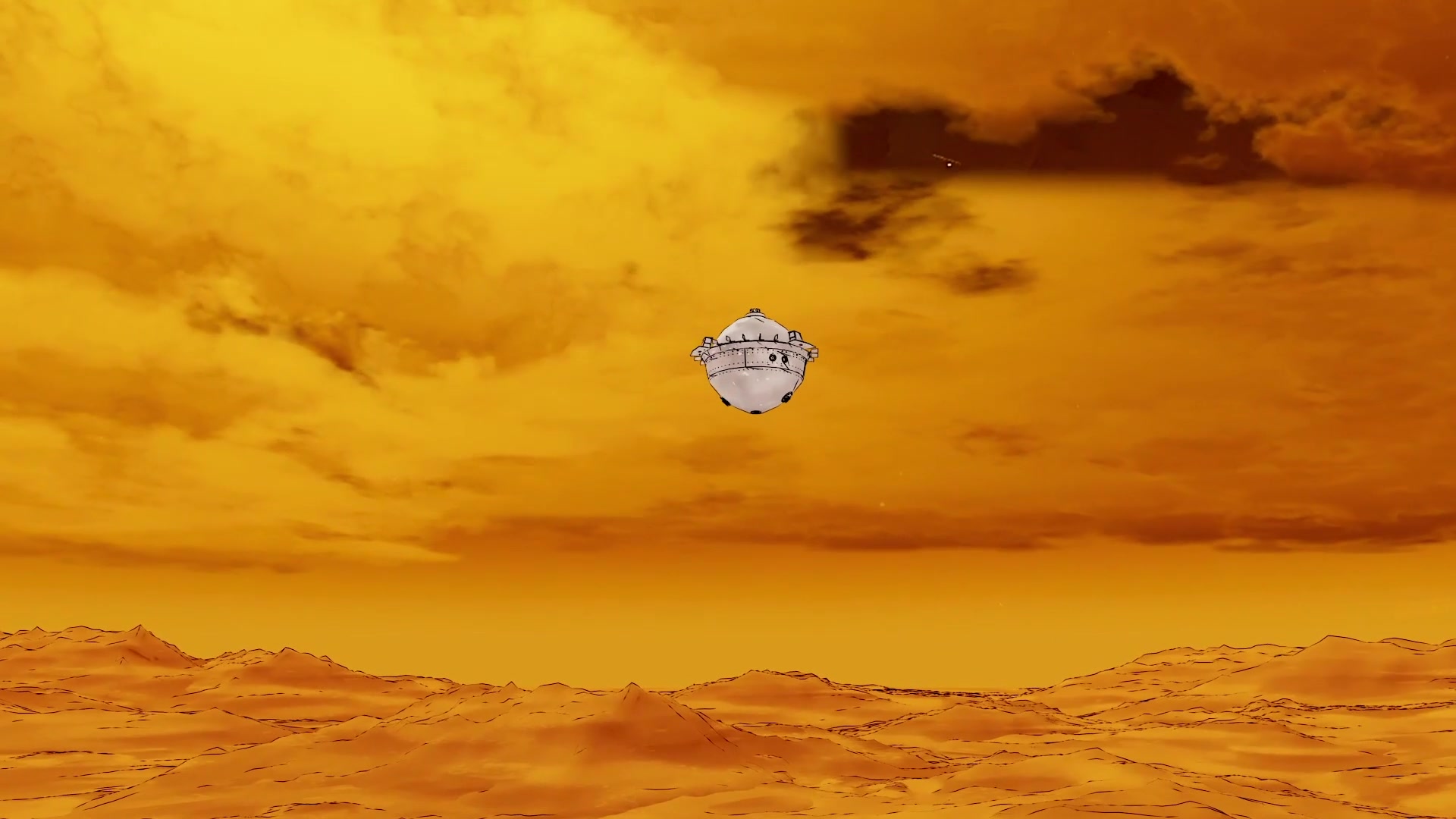
Meanwhile, the DAVINCI mission, now expected to launch sooner than previously planned and ahead of the other missions, may be the first to kick off the new wave of Venus exploration. Speaking at the conference on Tuesday (March 17), Natasha Johnson of the Goddard Space Flight Center said the mission now targets a launch for December 2030 — earlier than previous estimates of no sooner than 2031 — driven by what she described as a "rush for science now."
The spacecraft is expected to reach Venus and release its descent probe in January 2033. The probe will transmit data "as fast as it possibly can" as it plummets through the planet's thick atmosphere, capturing measurements and images down to the surface, said Johnson.
And despite persistent funding constraints, the DAVINCI and VERITAS science teams have continued making progress, including field campaigns in analog environments such as Iceland, she added.
"Even though our funding has been very limited, we've still been pressing forward," Johnson said. "We've been doing more with less, in a sense, or we've just been doing as best we can."
 Sharmila KuthunurContributing Writer
Sharmila Kuthunur is an independent space journalist based in Bengaluru, India. Her work has also appeared in Scientific American, Science, Astronomy and Live Science, among other publications. She holds a master's degree in journalism from Northeastern University in Boston.
View MoreYou must confirm your public display name before commenting
Please logout and then login again, you will then be prompted to enter your display name.
Logout MORE FROM SPACE... 1What time is NASA's Artemis 2 moon launch on April 1?
- 2NASA is developing the '1st nuclear powered interplanetary spacecraft.' What about the Voyager probes?
- 3Hitting the brakes: Hubble Space Telescope watches doomed comet reverse its spin
- 4Sun storms are powered by a magnetic engine 16 Earths deep, study finds
- 5'For All Mankind' is confirmed for season 6, but it'll be the final mission for Apple TV's incredible space show