 Image source, ReutersImage caption,
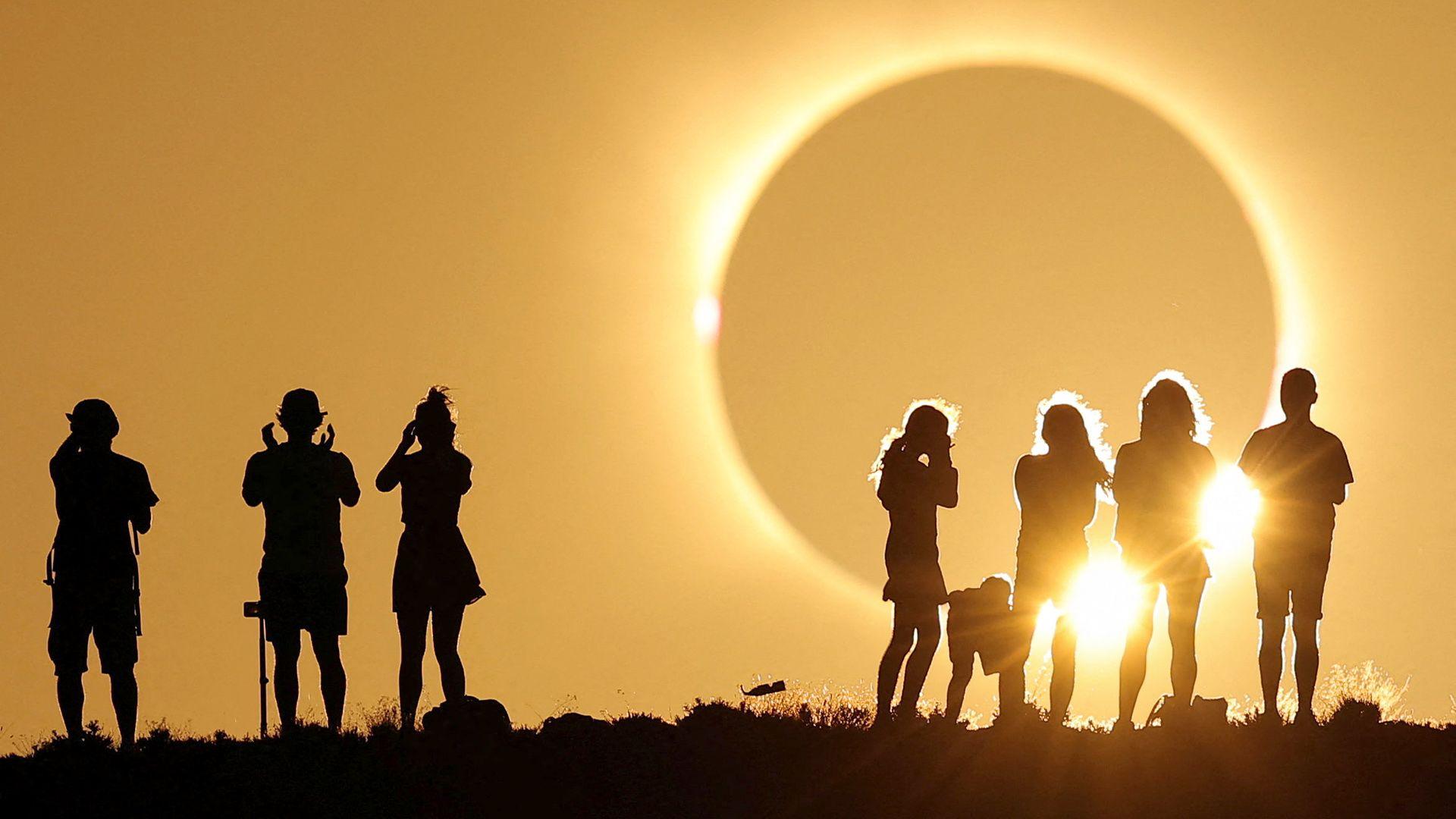
 Moments before the total solar eclipse in the sky above Arcos de las Salinas, near Spain plunging the skywatchers into darkness
ByBBC Climate and Science team- Published3 minutes ago
The UK and Europe have enjoyed their most dramatic solar eclipse for nearly 30 years, with millions thought to have witnessed the once-in-a-generation event.
Those watching the astronomical phenomenon from the UK were treated to a partial eclipse which peaked shortly after 19:00 BST, when most saw more than 90% of the Sun covered by the Moon.
But parts of Greenland, Iceland and Spain experienced the complete darkness and spectacle of a total eclipse.
Large crowds at viewing sites across the UK and Europe reacted with gasps and cheers, with astronomy enthusiasts saying it serves as a reminder of how "amazing" the universe is.
The path of the total eclipse began at the northern tip of Siberia in Russia, far away from crowds and telescopes.
But it soon began curving around the Arctic Ocean arriving in Iceland in the early evening before sweeping southwards to treat the UK to its wonder.
The partial eclipse began at about 18:00 BST in northern Scotland and just before 18:20 on the south coast of England.
It was imperceivable at first, but for those blessed with cloud-free skies, crowds noticed the Moon nibbling away at the Sun.
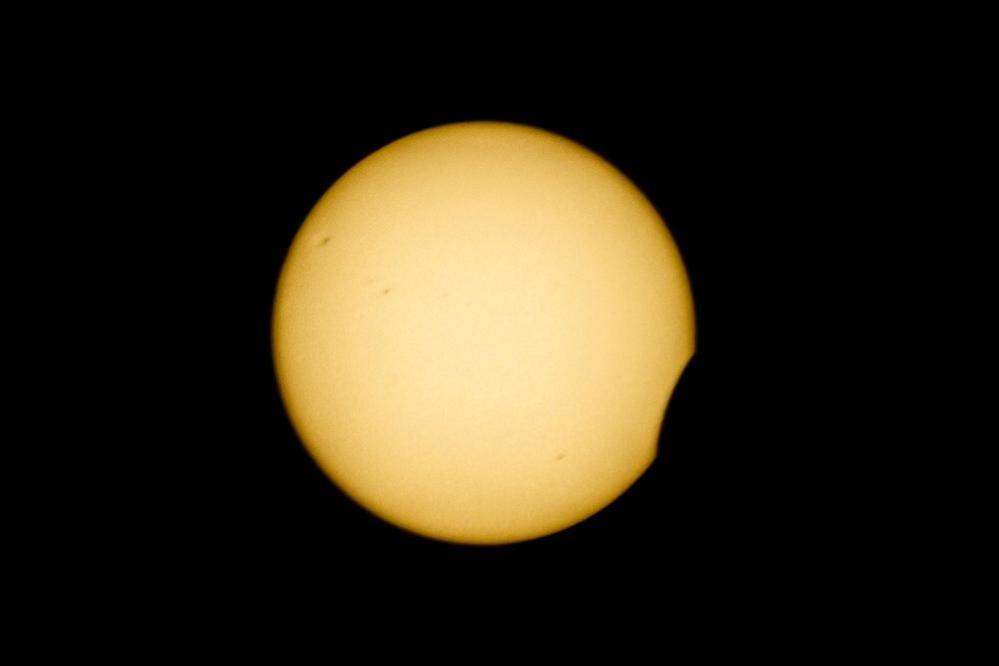 Image source, EPA/ShutterstockImage caption,
 The Moon began its journey across the Sun for the partial eclipse as seen from Asten, Netherlands
Much of central and southern England and Wales enjoyed perfect clear skies giving them an unrivalled view as the Moon moved slowly across the Sun over the course of an hour.
Northern England, Scotland and Northern Ireland were cloudier, but it did not stop crowds turning out at famous landmarks across the country.
Some had been successful in acquiring solar eclipse glasses, but the vital eye protectors were in short supply in the run-up to the event with opticians, hardware shops and bakeries all selling out.
But that did not deter people - colanders, cereal boxes and pieces of paper were deployed to offer them a glimpse of the partial eclipse safely.
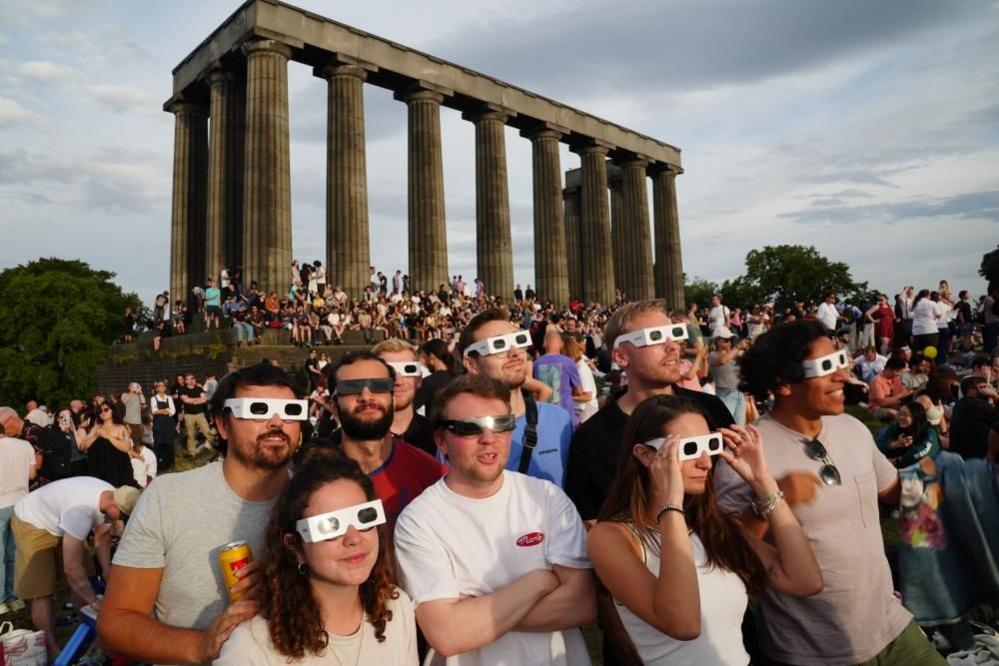 Image source, PA MediaImage caption,
 Large crowds gathered at Calton Hill, Edinburgh, but had to negotiate cloudy skies
A solar eclipse happens when the Moon passes between the Sun and Earth, blocking some or all of the Sun's light and casting a shadow on our planet.
As time ticked by, slowly but surely the Moon obscured more of the Sun - acting like a dimmer switch as it did so.
As seen from the UK, the Sun, Moon and Earth were not quite directly in line.
The result was a partial eclipse, with the Moon covering about 90% of the Sun for most of the UK - the country's most dramatic eclipse since 1999. In Cornwall, this was as high as 95%.
Parts of Spain got to experience something even more magical.
At roughly 19:30 BST (20:30 local time), the Sun, Moon and Earth were perfectly aligned - a total eclipse.
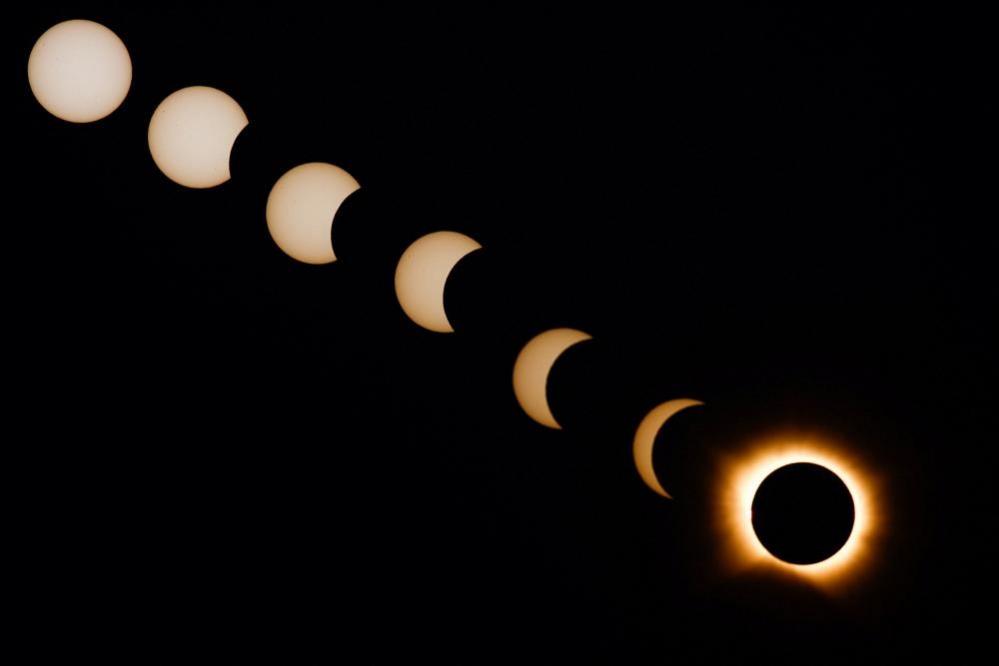 Image source, ReutersImage caption,
 Composite image showing the process of a total eclipse over an hour as seen from Arija, Spain
Chilean scientist Yasmin Catricheo, travelled all the way to La Coruna, north-west Spain for the event.
"At the totality, everyone was cheering and sharing the excitement of what we were seeing. No words could describe the feeling," she said.
"The universe is amazing."
A total solar eclipse happens somewhere on Earth every 18 months or so.
But they are much rarer for any given place, only occurring once in roughly 400 years.
Crowds along the path of the total eclipse in Spain were treated to that rare event - with the red glow of the Sun behind the Moon to go with it.
The light coming from the darkness was the Sun's corona - superheated jets of gas thrown thousands of miles out into space.
And for those looking closely they may have seen small loops of pink gas called prominences following the Sun's turbulent magnetic field.
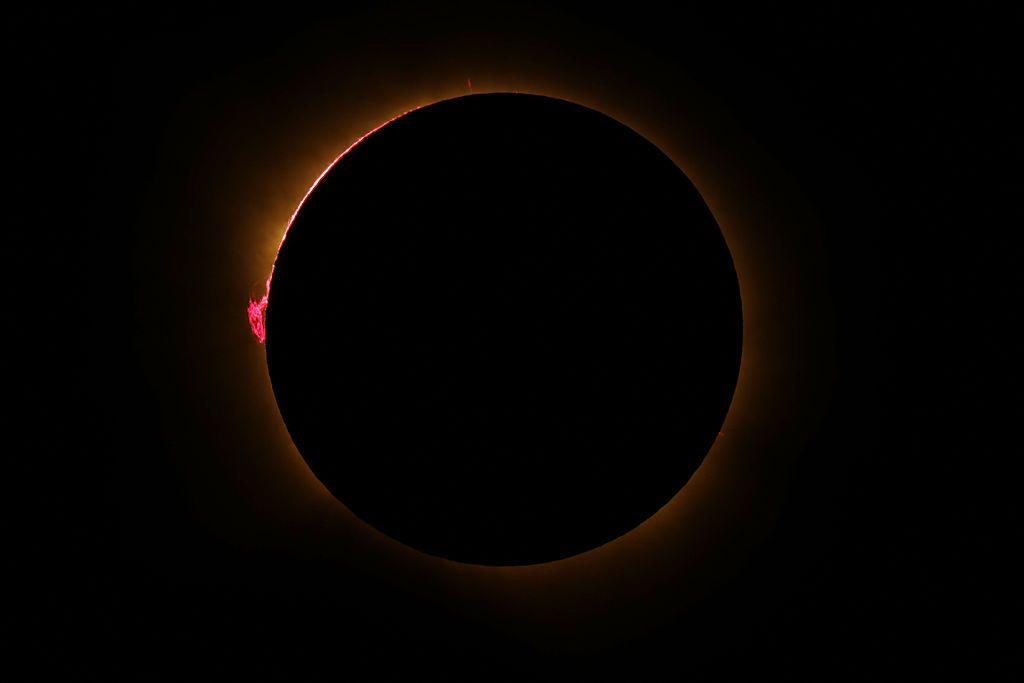 Image source, Cesar Manso/AFP/Getty ImagesImage caption,
 The Sun's atmosphere and pink loops of gas can be seen bending out from the Sun's surface during totality in Bergos, Spain
And then, the Moon began to reveal the Sun that it had hidden.
The partial eclipse lasted for less than two minutes - but for many it was unforgettable.
The fact that we get to experience a total eclipse at all is an incredible cosmological coincidence.
The Sun is 150 million kilometres (93 million miles) away from the Earth - 400 times further away than the Moon.
But because the diameter of the Moon is 400 times less than the Sun's, they appear exactly the same size in our sky.
If the Moon was slightly smaller or its orbit was a little further away from the Earth then we would never see a total eclipse.
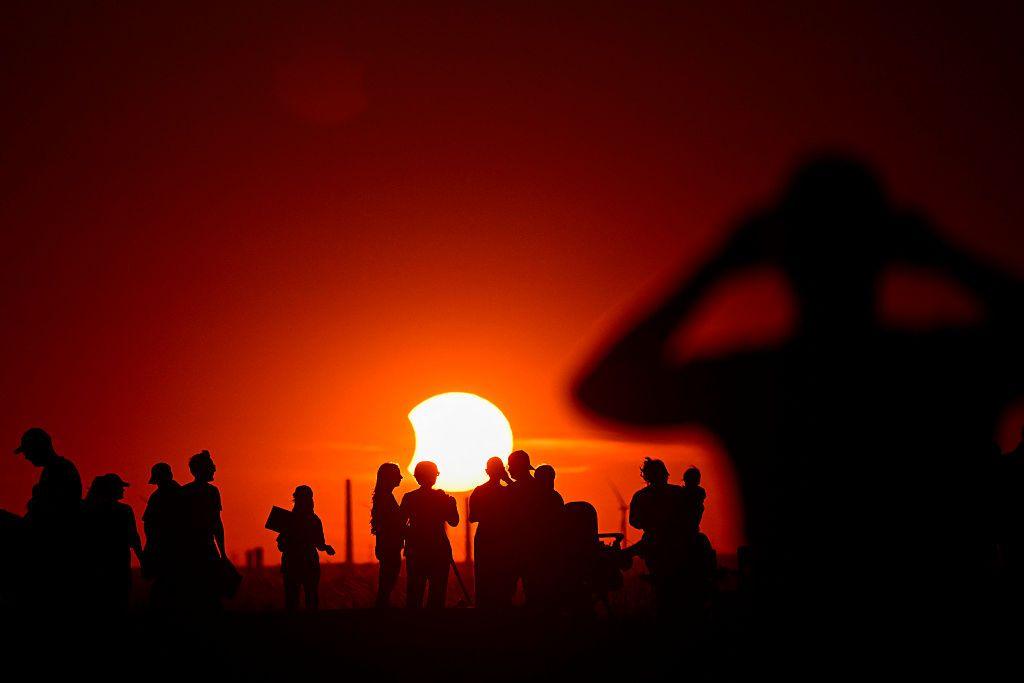 Image source, Ina Fassbender/AFP/Getty ImagesImage caption,
 People turned out in towns across Europe, including Herten, Germany for what might be their best partial eclipse for 50 years.
We're about to enter a "golden age" of total solar eclipses between 2026 and 2028.
After tonight, none of these are visible in the UK. But eclipse chasers can travel around the world to be wowed by the spectacle of three total solar eclipses in the next couple of years.
We'll only see a partial eclipse in the UK, and with less of the Sun covered than this time. For the one in 2027 there will be about 45% coverage in some parts of the country.
It will be decades until the UK experiences a fuller solar eclipse than today.
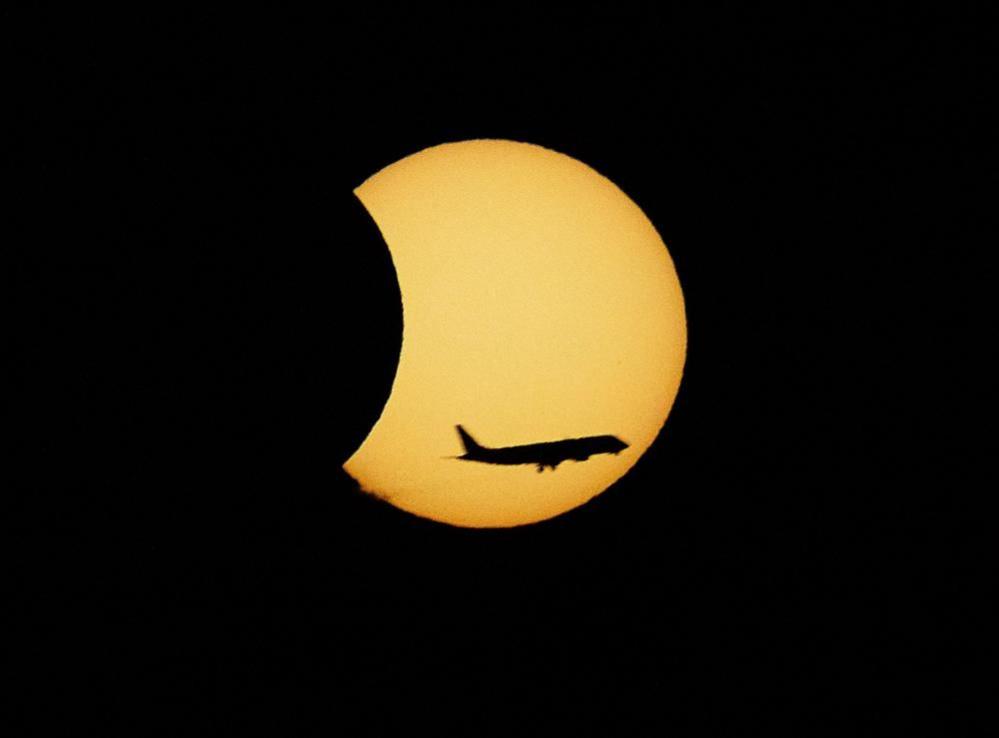 Image source, EPA/ShutterstockImage caption,
 The Moon continued on its journey as the spectacle of the eclipse drew to a close in around Europe
That will be in 2081, where up to 99% of the Sun will be covered.
And the UK's next total solar eclipse will be in 2090.