 Image source, ShutterstockImage caption,
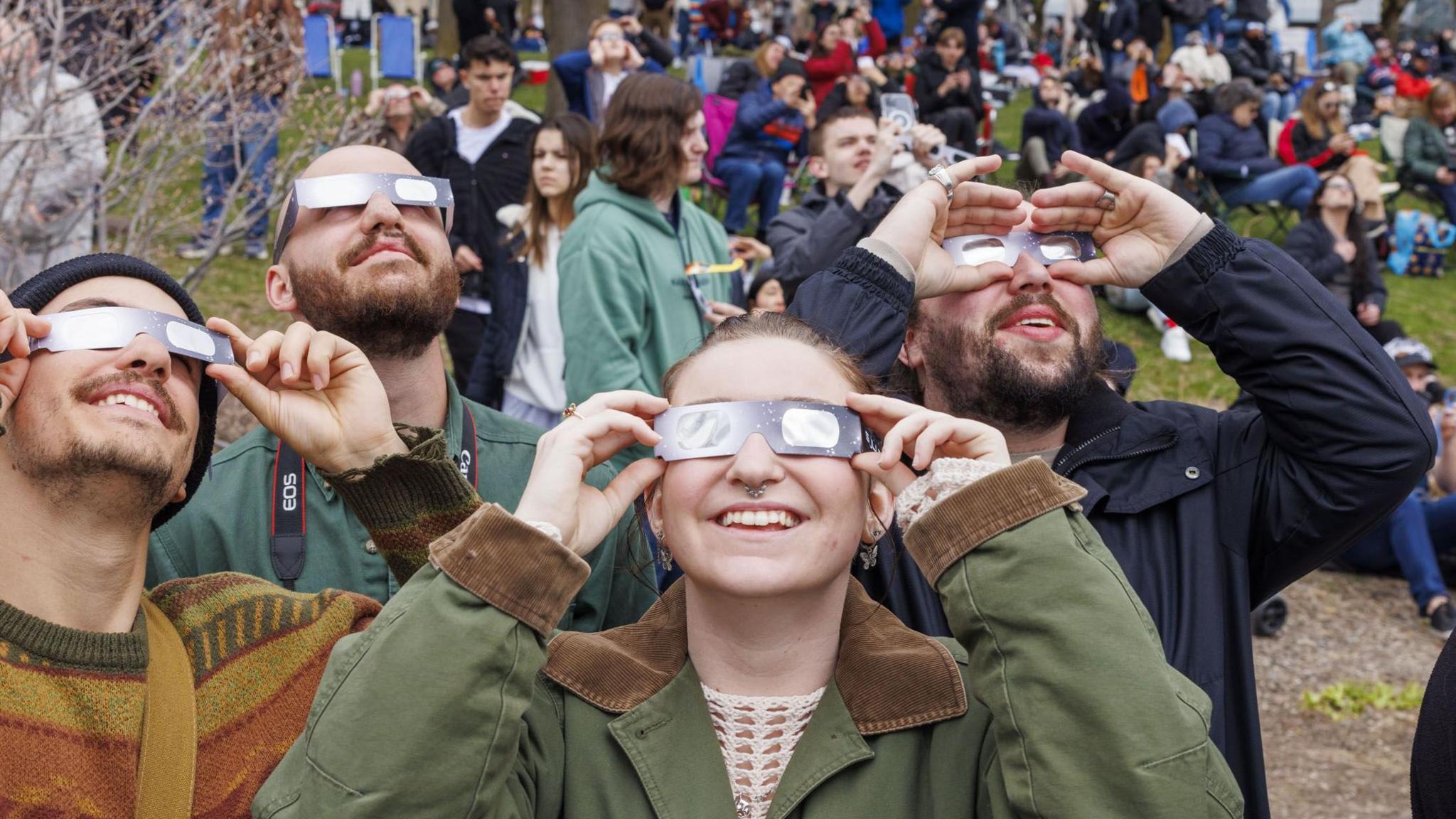
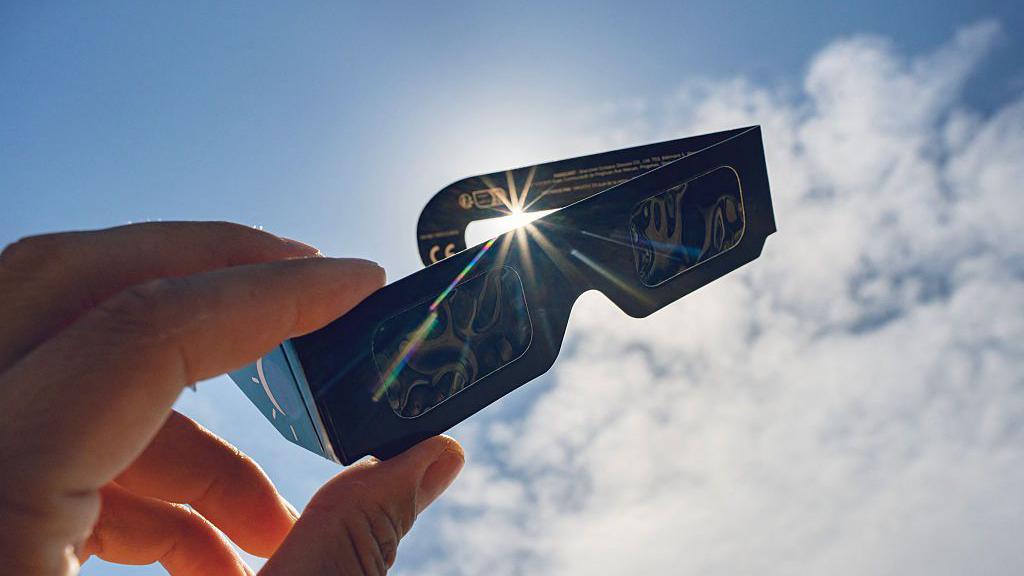
 Special glasses should be used to watch an eclipse, like the ones stargazers used in the US in 2024
ByCharlotte CoxCornwall- Published40 minutes ago
Specialist glasses which make it safe to view an eclipse have become a sought-after commodity, according to a Cornwall tourism expert.
Peter Friend, a tourism business leader in Looe, said his organisation said had bought 80 pairs to hand out to visitors for the partial solar eclipse due on Wednesday evening - and all had been snapped up "within 10 minutes".
"There was a queue along the quay," he said, while many businesses had ordered glasses which would now "failed to arrive on time".
The scarcity comes amid an ophthalmologist's warning that looking directly at the sun during an eclipse risks the "real danger" of causing burnt retinas.
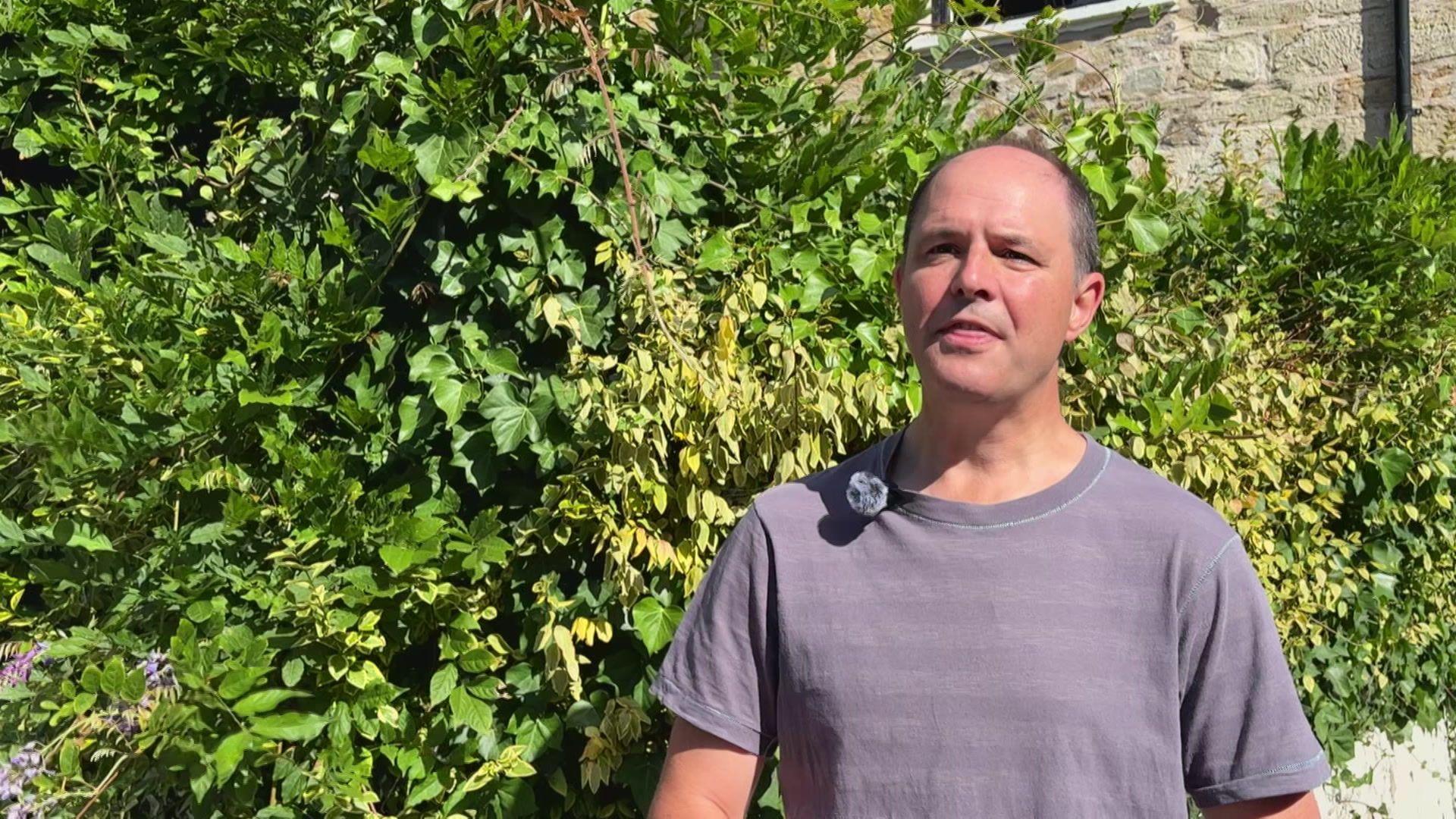 Image caption,
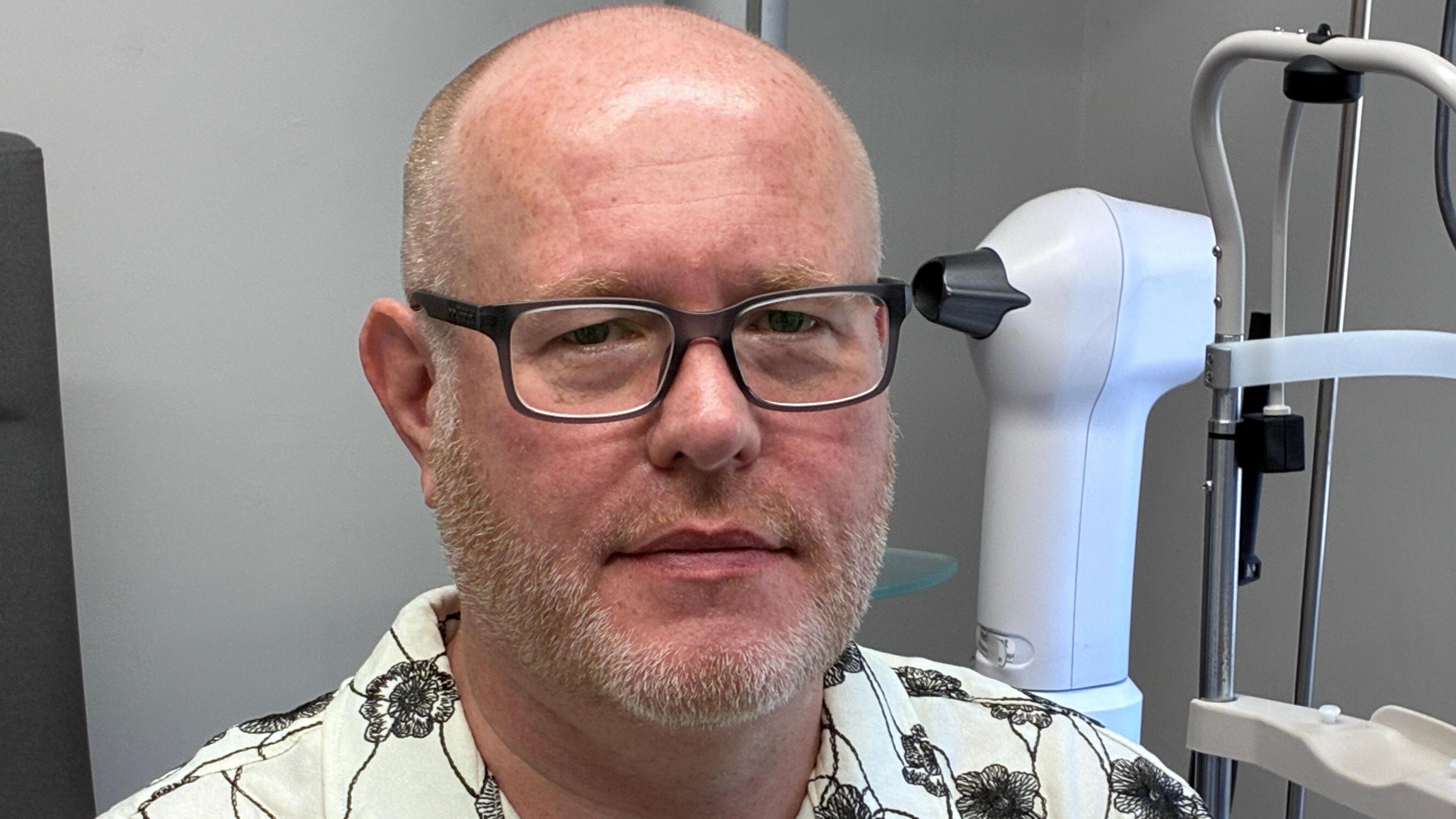
 Opthalmologist David Jones urges people to resist the temptation of looking directly at the eclipse
David Jones, consultant ophthalmologist at Royal Cornwall Hospital, said the safest way to view the eclipse was through certified eclipse glasses that met the ISO 12312-2 safety standard, or by viewing the eclipse indirectly.
Viewing the eclipse directly could cause the retinas - "the lining at the back of the eye that acts like a film in a camera" - to burn, he warned.
He added: "Your eye, being a very strong magnifying glass, will actually magnify the sun's rays on to your retina and can potentially burn it.
"So, if you can possibly resist the temptation - it's really difficult to resist - there are a number of things you an do to enjoy it."
Alternatives to the sought-after glasses include a colander or home-made pinhole viewer.
Peter Smith has told how he was among 70 people recorded by the Royal College of Ophthalmologists to have suffered eye damage during the 1999 eclipse.
"Even now, there's residual impact," he said.
"When I'm tired sometimes a flashing dot might come back, and it's not nice when it does."
'Awe and terror'
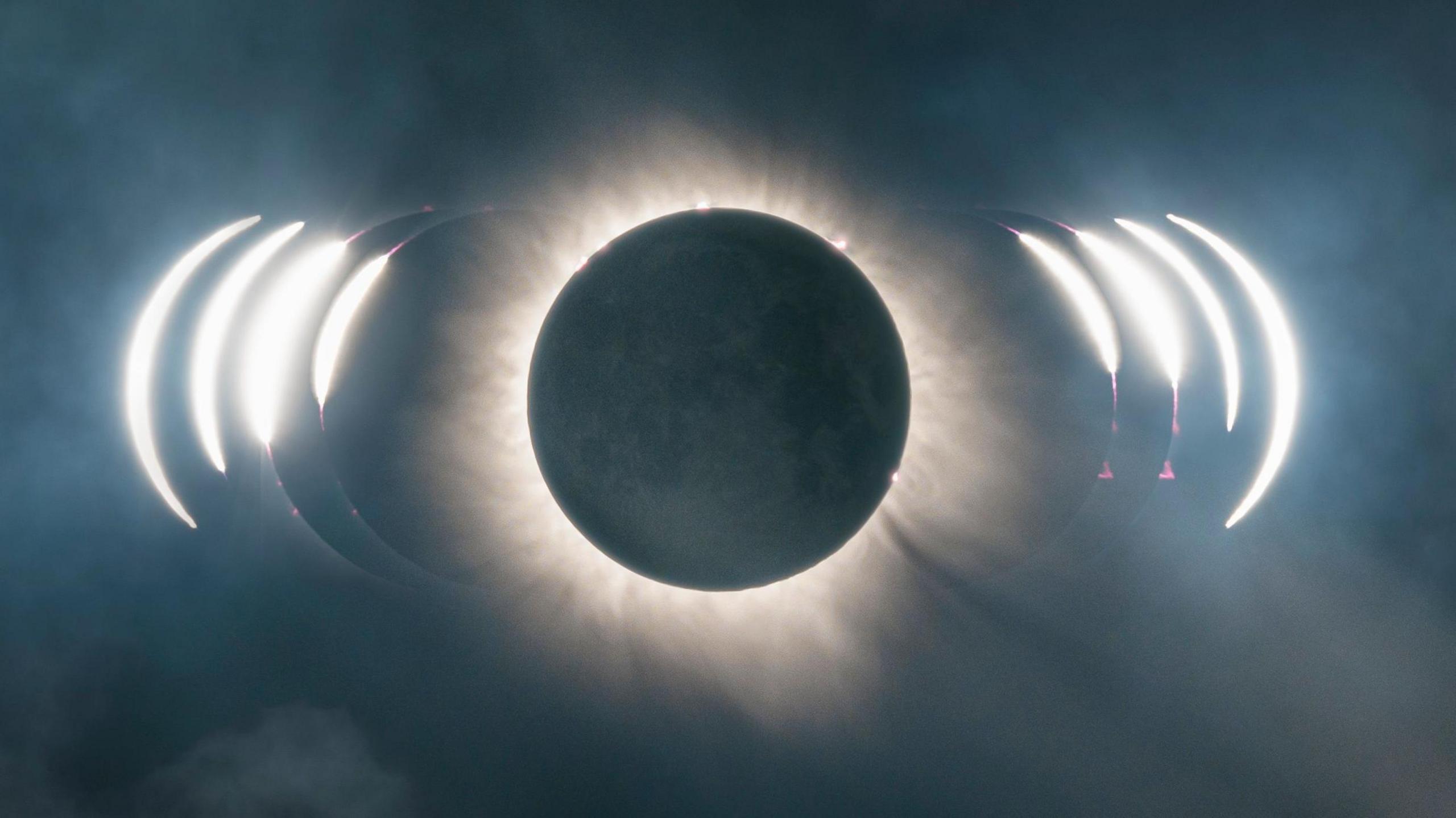
In Devon and Cornwall, the eclipse will start at about 18:18 BST, peak at 19:15 and finish at about 20:10.
There are a number of associated events being held across both counties.
Carolyn Kennett, from Penzance, Cornwall, is an astro-archaeologist - studying how ancient cultures interacted with the sky.
With a lack of historical scientific knowledge surrounding eclipses in years gone by, safety advice would have been scarce, she said.
Citing a hope for "clear skies in Cornwall", Kennett has headed to the plains of Spain in the hope of catching a full eclipse.
"All the way through history, people talk and write about the awe and the terror they brought to different cultures.
"Those people didn't have the scientific knowledge about what was happening - suddenly the world in the daytime would have gone dark."
Follow BBC Cornwall on X, external, Facebook, external and Instagram, external. Send your story ideas to [email protected], external.
Related topics
Eclipse chasers scramble for glasses as stocks run low
- Published23 minutes ago
Watch safely says man with eye damage from eclipse
- Published2 hours ago
'Day turned into dusk' in 1999 total solar eclipse
- Published7 hours ago
What can we see during the partial solar eclipse?
- Published1 day ago