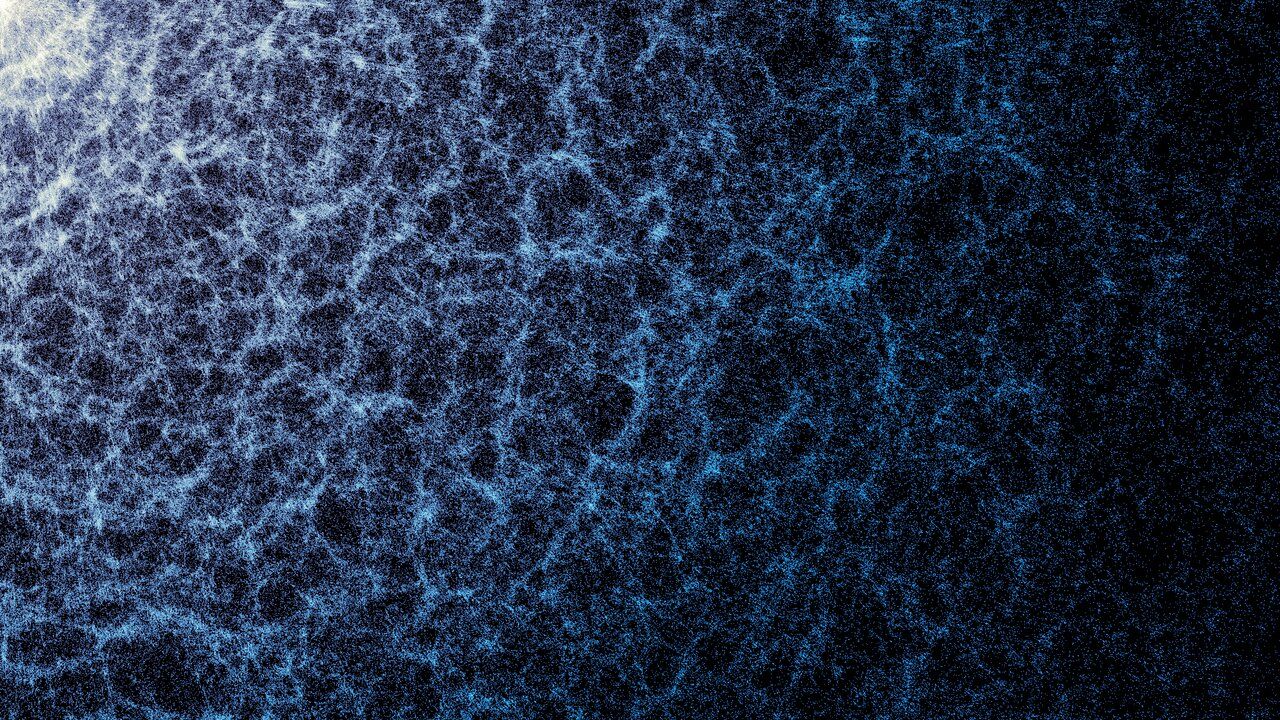
 A small portion of DESI's year-five map of the large-scale structure of the universe. (Image credit: DESI Collaboration and DESI Member Institutions/DOE/KPNO/NOIRLab/NSF/AURA/R. ProctorImage Processing: M. Zamani (NSF NOIRLab)) Share this article 0 Join the conversation Follow us Add us as a preferred source on Google Newsletter Sign up for the Live Science daily newsletter now
 Get the world’s most fascinating discoveries delivered straight to your inbox.
Become a Member in Seconds
Unlock instant access to exclusive member features.
Contact me with news and offers from other Future brands Receive email from us on behalf of our trusted partners or sponsors By submitting your information you agree to the Terms & Conditions and Privacy Policy and are aged 16 or over.You are now subscribed
Your newsletter sign-up was successful
Want to add more newsletters?
Join the club
Get full access to premium articles, exclusive features and a growing list of member rewards.
Explore An account already exists for this email address, please log in. Subscribe to our newsletter Quick factsWhat it is: The largest 3D map of the universe ever created
Where it is: The universe, as seen from Earth
When it was shared: April 17, 2026
This snapshot is just a small part of one of the most comprehensive and spectacular views yet of the universe — a web-like structure formed by millions of galaxies, stretching back to near the dawn of time.
The full DESI map of the cosmic web, showing roughly 47 million galaxies. (Image credit: DESI Collaboration and DESI Member Institutions/ DOE/ KPNO/ NOIRLab/ NSF/ AURA/ R. Proctor)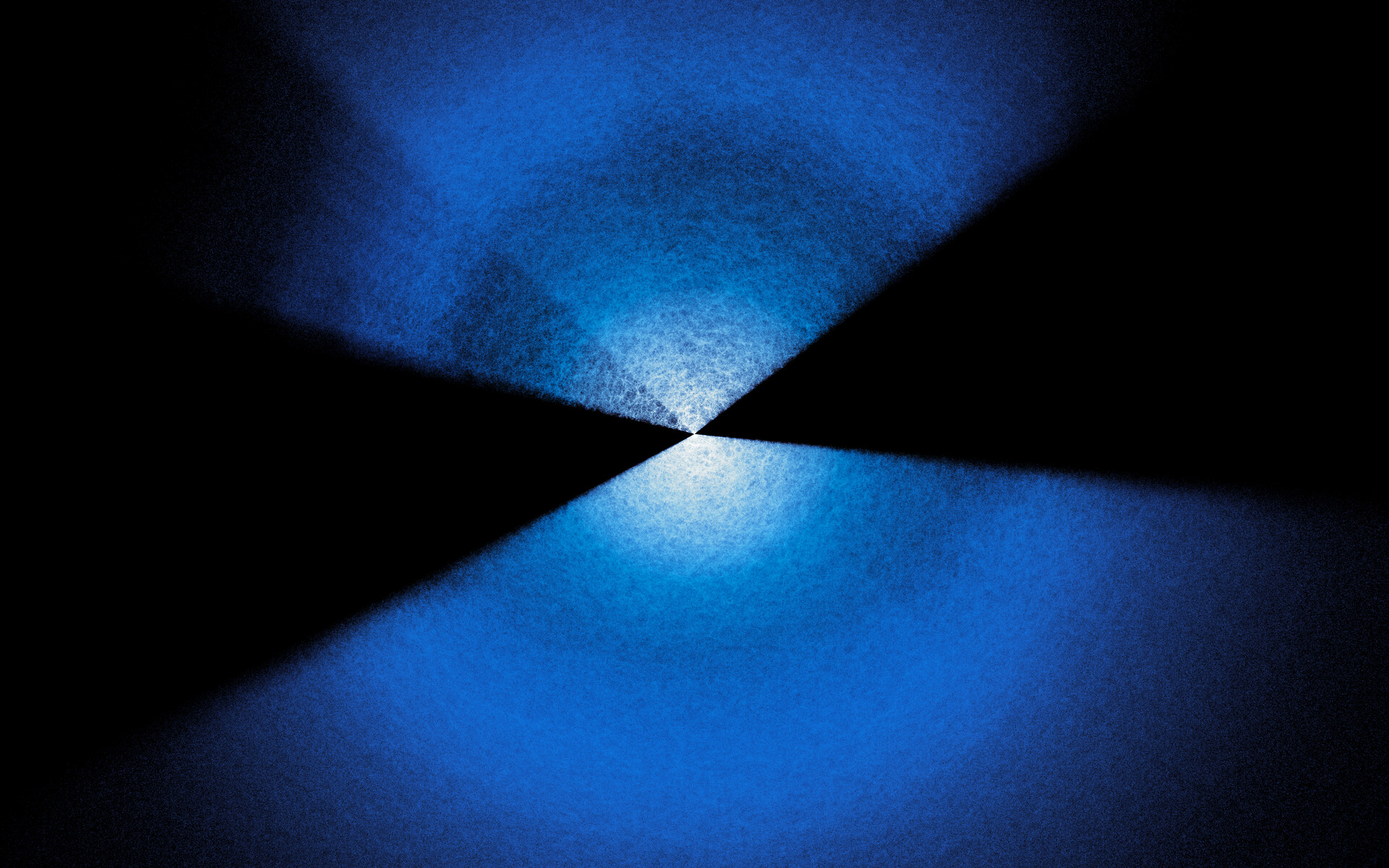
The five-year survey was supposed to gather data on 34 million galaxies and quasars (the bright cores of distant young galaxies). In practice, it detected over 47 million, along with more than 20 million nearby stars in the Milky Way. A visualization published alongside DESI's map shows how it has grown over those five years.
Some of the light captured in this image took billions of years to reach Kitt Peak, so it allows scientists to look back in time to reconstruct how the universe evolved. The result is a three-dimensional view that not only shows where galaxies are but also how they have moved and clustered over time.
Beyond its visual impact, the image plays a crucial role in probing mysterious dark energy, the name physicists have given to a force that appears to be driving the universe's accelerated expansion. It makes up roughly 70% of the universe, and its nature and distribution are among the biggest questions in physics.
By comparing the distribution of galaxies across different epochs, researchers can track how dark energy has influenced the structure of the universe over the past 11 billion years. Early DESI data has already hinted that dark energy may evolve through cosmic history — a breakthrough that would fundamentally reshape scientists' understanding of the universe and its ultimate fate.
Sign up for the Live Science daily newsletter nowContact me with news and offers from other Future brandsReceive email from us on behalf of our trusted partners or sponsorsThe image is the result of a massive international collaboration. More than 900 researchers from over 70 institutions contributed to the project, which was led by Lawrence Berkeley National Laboratory and funded by the U.S. Department of Energy Office of Science.
DESI will continue observing the sky through 2028, expanding its map by about 20%. Future observations will target fainter and more distant galaxies, as well as harder-to-observe regions near the Milky Way (where stars get in the way) and in the southern sky (which requires the telescope to peer through more of Earth's atmosphere). The first results from the full dataset are anticipated in 2027.
See more Space Photos of the Week
 Boggling the human mind
Artemis II crew recalls unreal moment when Earth disappeared
 Hidden structure in 1st Vera Rubin image
First-light images from the Vera C. Rubin Observatory reveal a 163,000-light-year stream of stars emanating from a nearby galaxy.
 JWST peeps the 'Eye of God'
A spectacular James Webb telescope image reveals intricate structures inside the Helix Nebula.
TOPICS Jamie CarterLive Science contributor
Jamie Carter is a Cardiff, U.K.-based freelance science journalist and a regular contributor to Live Science. He is the author of A Stargazing Program For Beginners and co-author of The Eclipse Effect, and leads international stargazing and eclipse-chasing tours. His work appears regularly in Space.com, Forbes, New Scientist, BBC Sky at Night, Sky & Telescope, and other major science and astronomy publications. He is also the editor of WhenIsTheNextEclipse.com.
View MoreYou must confirm your public display name before commenting
Please logout and then login again, you will then be prompted to enter your display name.
Logout LATEST ARTICLES 1Can chickens really run around with their heads cut off?
- 2$3 million prize goes to duo whose research led to first sickle cell CRISPR therapy
- 3700-year-old mummy from Bolivia contains earliest confirmed evidence of strep throat bacteria in the Americas
- 4New pain-relief opioid could be much less addictive than morphine, rodent study finds
- 5Experimental drug doubles one-year survival in pancreatic cancer