
 Many questions about how exactly gambling bans will be enforced and what the rules will require of operators and advertisers, are still to be decided. Illustration: Nash Weerasekera/The GuardianMany questions about how exactly gambling bans will be enforced and what the rules will require of operators and advertisers, are still to be decided. Illustration: Nash Weerasekera/The GuardianAnalysisLabor dropped their long-awaited gambling report on budget day. Were they betting no one would notice?Josh Butler
The government’s response to the Murphy report is hardly dynamite. Harm advocates, gambling operators and advertisers are all waiting to see whether Labor’s rhetoric will be matched by action
The Labor government decided to release its contentious, much-delayed response to Peta Murphy’s report on gambling on one of the biggest political news days of the year.
They dropped it while the nation’s federal political journalists were trapped in budget lockup.
Tuesday was the first parliament sitting day since the prime minister, Anthony Albanese, sketched out the rough shape of the government’s long-awaited response in his National Press Club speech on 2 April, and therefore the first opportunity to table that report. Government sources are pointing to this procedural rationale to explain the timing of the response, maintaining the scheduling was coincidence, not conspiracy.
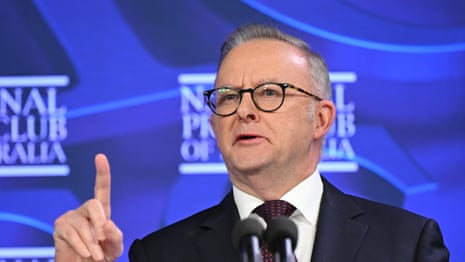 1:47Albanese announces new restrictions on gambling advertising – video
 But little is going to shift the claims from gambling harm advocates that – after three years of delay, deliberation and false starts – the government’s timing is, at the least, convenient if they wanted to bury this report.
“Australians deserve better,” independent senator David Pocock said moments after the response landed, calling the timing “disrespectful”.
“It is really clear that the government is trying to avoid public scrutiny because it knows that its response on gambling reform is not good enough,” said teal MP Kate Chaney, one of the members of Murphy’s committee.
The long-awaited response, where the government merely “notes” the recommendations of the Murphy report, is hardly dynamite. Many questions about how exactly the settings will work, how the bans will be enforced and what the rules will require of gambling operators and advertisers, are still to be decided.
“Further details will be settled through the legislative drafting process,” the government states.
“The Government notes the 31 recommendations made by the Committee,” it says of the report.
But the fact the report barely gets a few hours of clear air before a veritable tidal wave of economic news – tax cuts, contentious negative gearing changes, NDIS reforms – hits every newspaper, website, social media feed and TV network for the next few days, has angered longtime advocates for change.
Betting account on 18th birthday, dead at 22: inquest probes death of Melbourne man who gambled $895,000Read moreTuesday is 1,049 days since Murphy’s landmark “you win some, you lose more” report was tabled in parliament. Guardian Australia has been among the outlets continually asking about the government’s response, so it is to be welcomed that the reforms are in train and will come into force on 1 January 2027.
A less-expected element was plans to standardise criminal laws against match-fixing. Long-awaited changes to clamp down on online ads, restrict TV and radio ads during matches, set new rules about social media influencers and podcasters, nip in the bud the emerging online lottery market, and strengthen the BetStop self-exclusion register, have been rightly described by the government as the “most significant reform” on gambling in Australian history. Breaking the link between sports and gambling is an admirable goal, as is doubling funding to financial counselling.
Senior people in the Labor government have long said they expected almost everyone involved in the gambling debate to be annoyed by some part or another of their advertising reforms: harm advocates will say it’s not enough while the wagering industry will say it’s too much, resigned-sounding sources have continually told us.
They’re not wrong. This is spiky, difficult, complicated reform, with big dollars and major stakeholders. The communications minister, Anika Wells, has deftly trod a fine line between numerous interlinked challenges, with obvious interplay between gambling advertising, the news bargaining incentive, the under-16s social media ban and other online safety reforms, and the Australian government deserves recognition for its world-leading reforms to rein in the power of big tech.
Gambling operators say they’re still waiting to hear concrete details of what they’ll need to do. Changes to ad frequency on TV and radio are simple enough to understand, but more ambitious changes – including restricting podcasters and celebrity endorsements – will take some defining. The “triple lock” rules for online platforms, requiring digital streamers and websites to allow users to opt out of gambling ads, are a major change that will let users simply choose to never see another annoying promotion for same-game multis and odds.
But industry also wonders whether large platforms such as TikTok, Facebook and Netflix will build in such functionalities or simply put a blanket ban on advertising. The blurry lines created by some online content creators, who make sporting content for fans but also plug sponsored content from wagering companies, will also require close inspection.
The government has committed to reform, which is welcome. It would have been easier to let the issue quietly slip away rather than stick by a difficult process where it knew everyone would be cranky.
But everyone is also waiting for more detail about what is to be done, and whether the government’s rhetoric on addressing gambling harms will match its actions.
Explore more on these topicsShareReuse this content