 NASA shared a flurry of never-before-seen comet 3I/ATLAS images on Wednesday. (Image credit: Chip Somodevilla via Getty Images) Share this article 0 Join the conversation Follow us Add us as a preferred source on Google Newsletter Sign up for the Live Science daily newsletter now
 Get the world’s most fascinating discoveries delivered straight to your inbox.
Become a Member in Seconds
Unlock instant access to exclusive member features.
Contact me with news and offers from other Future brands Receive email from us on behalf of our trusted partners or sponsors By submitting your information you agree to the Terms & Conditions and Privacy Policy and are aged 16 or over.You are now subscribed
Your newsletter sign-up was successful
Want to add more newsletters?
Join the club
Get full access to premium articles, exclusive features and a growing list of member rewards.
Explore An account already exists for this email address, please log in. Subscribe to our newsletterOn April 1, four astronauts blasted off on what will be a 10-day voyage around the moon and back. Their mission, the first to send humans to the moon since 1972, will test key systems for two lunar landings in 2028, which will, in turn, lay the foundation for a permanent base on the moon's surface.
The Artemis II crew — which consists of commander Reid Wiseman, pilot Victor Glover, and mission specialists Christina Koch and Jeremy Hansen — are slingshotting around Earth before initiating a translunar injection burn to send them on a roughly 245,000-mile (394,000 kilometers) flight to lunar orbit.

Sunrise over moonshot
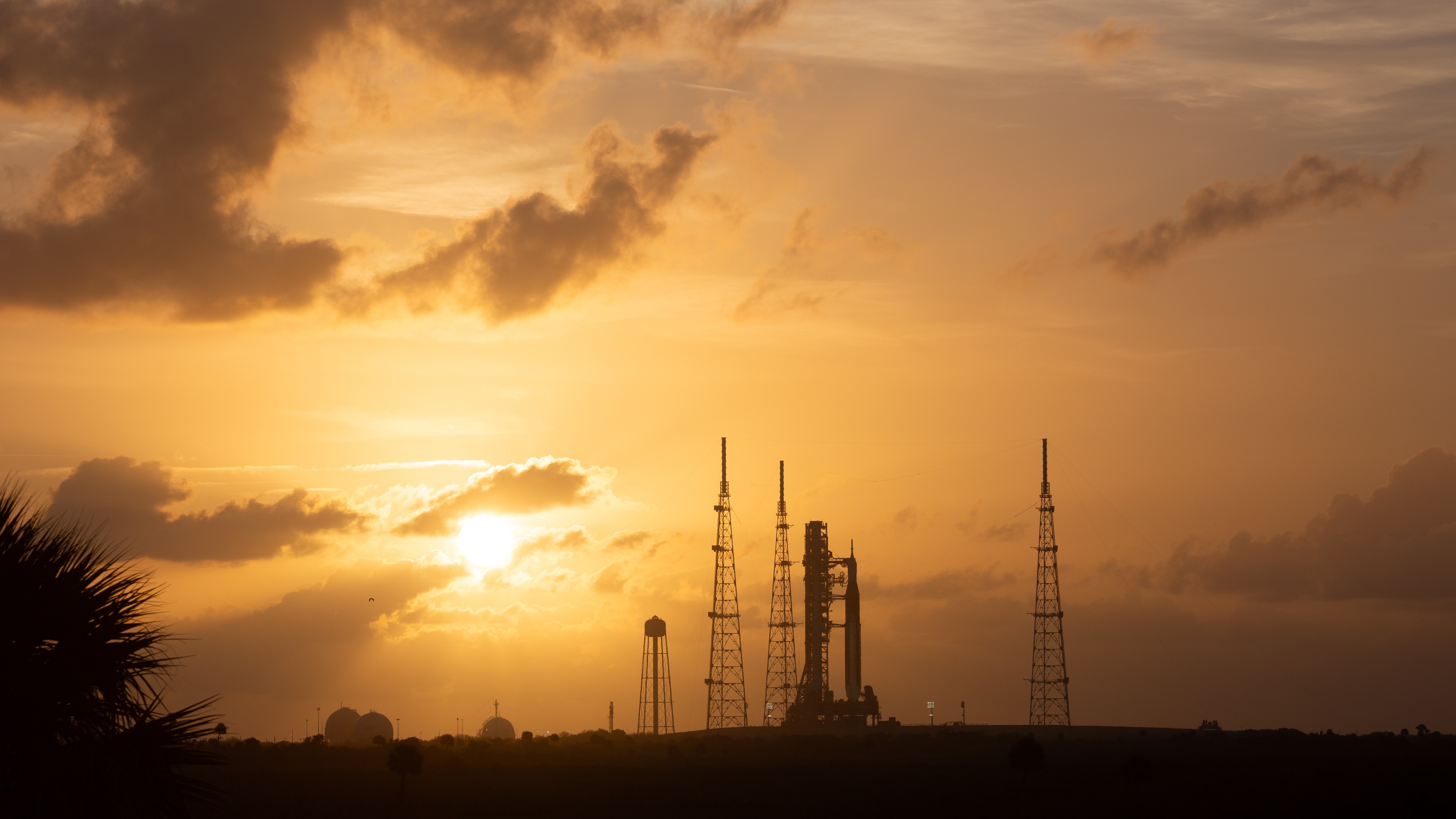
At 322 feet (98 meters) in height, the Artemis II rocket stack is taller than the Statue of Liberty and provides over 8.8 million pounds (4 million kilograms) of thrust to a capsule the size of a camper van.
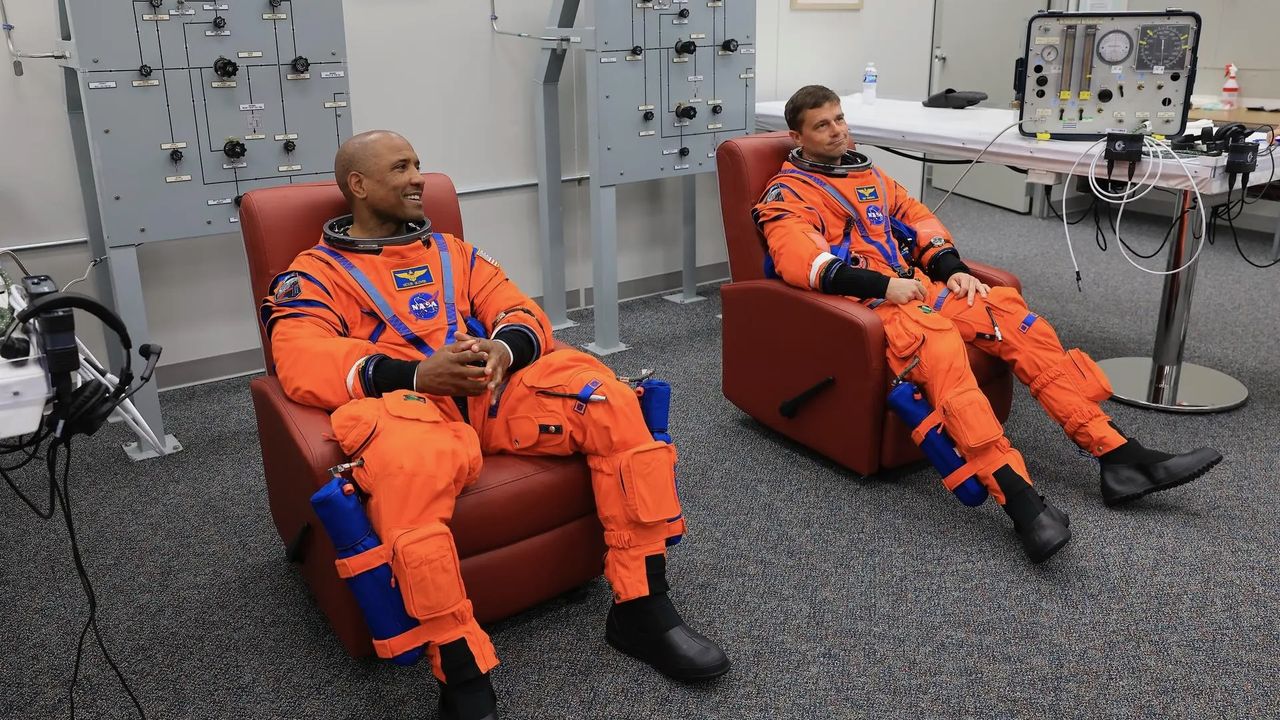
Taking a seat
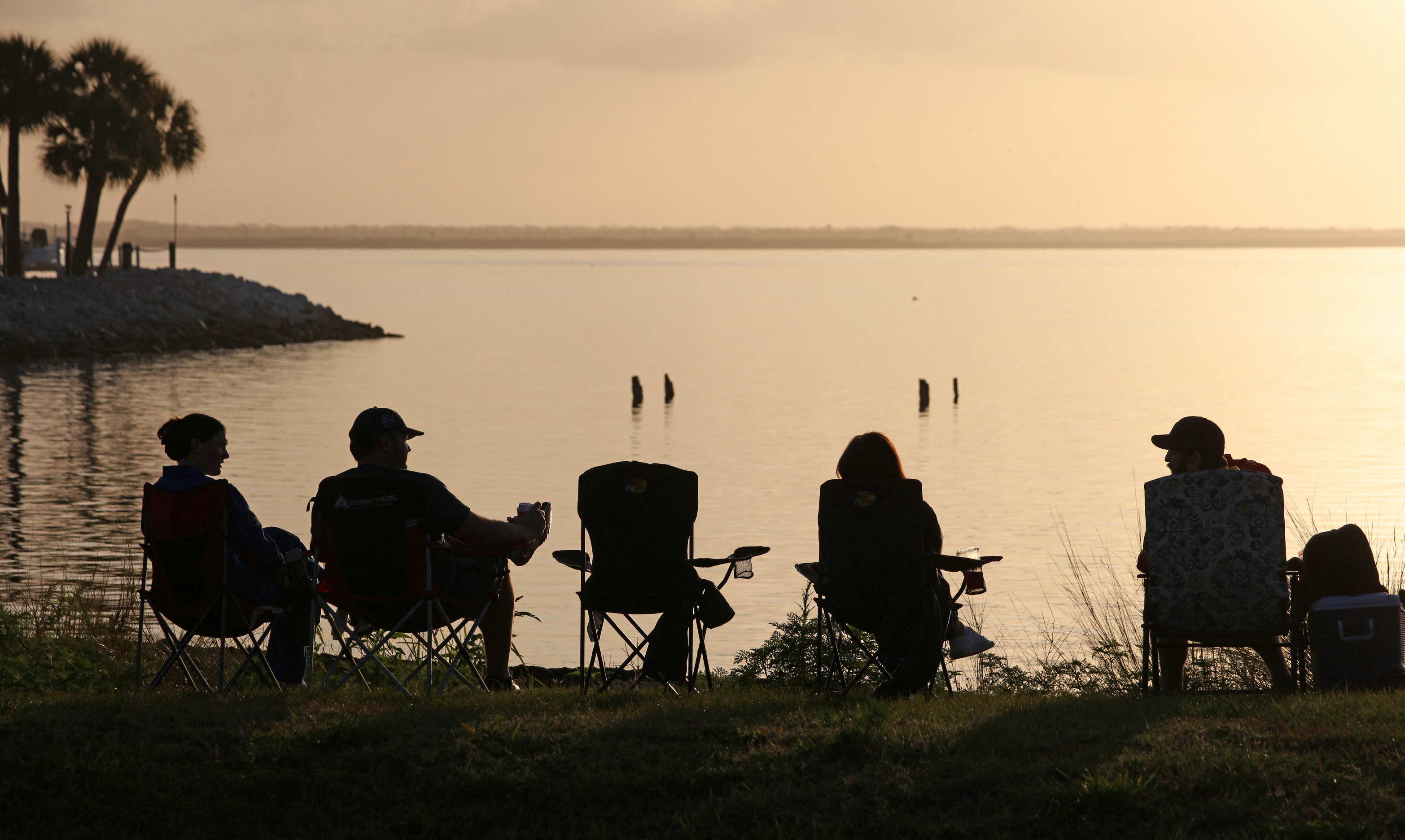
Artemis II's launch has been hotly anticipated, with NASA originally targeting a moon landing by 2024 back in 2019.
Still, given the numerous delays and setbacks suffered by Artemis II and its predecessor mission, setting up this early was an act of faith by many onlookers.
Onto the tarmac
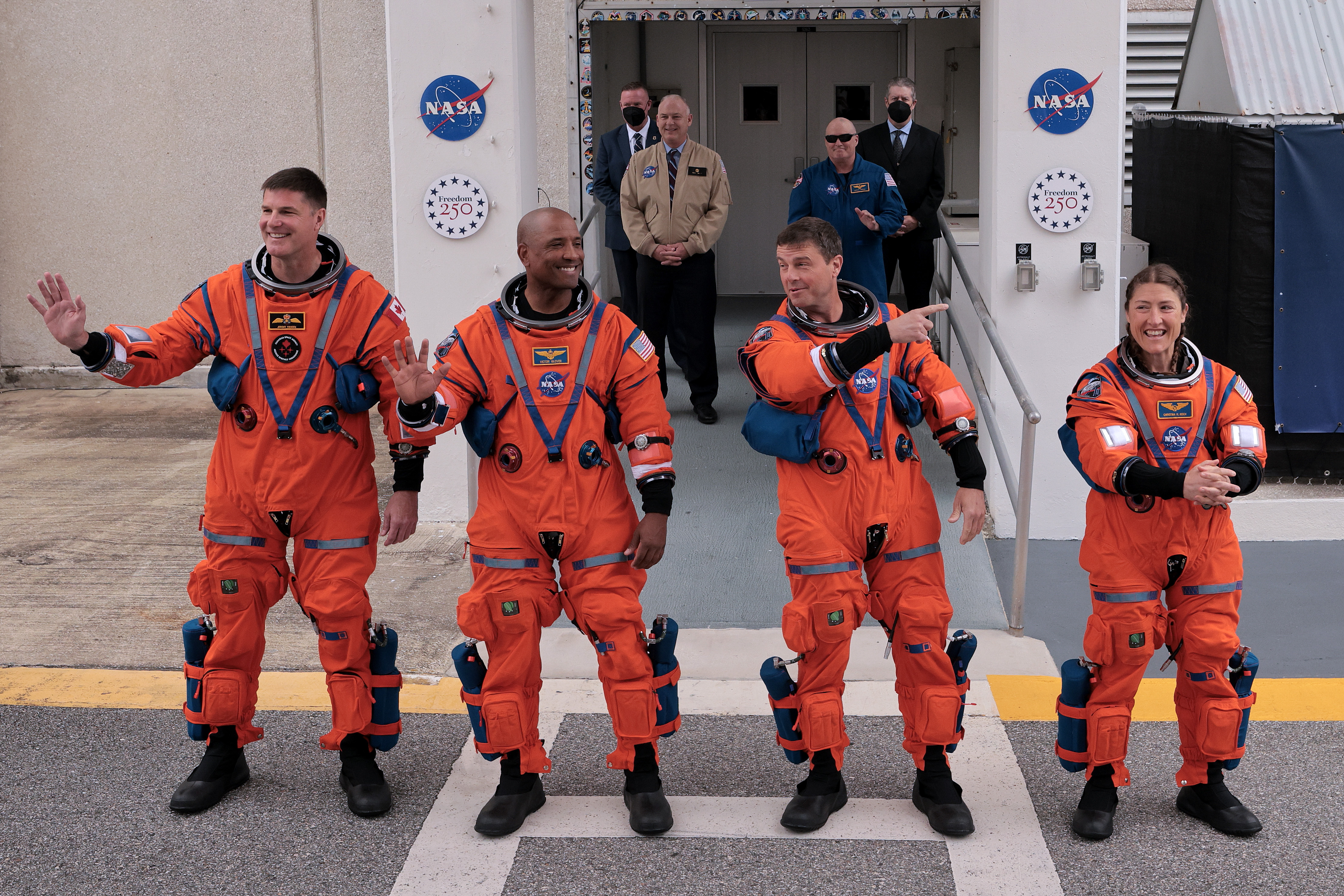
To avoid health issues in space, it's standard protocol for astronauts to quarantine before a launch.
Sign up for the Live Science daily newsletter nowContact me with news and offers from other Future brandsReceive email from us on behalf of our trusted partners or sponsorsThe Artemis II astronauts quarantined with their families and, just before exiting, played a card game — one of many prelaunch rituals intended to "use up" bad luck before heading out to the launchpad.
Locked and loaded
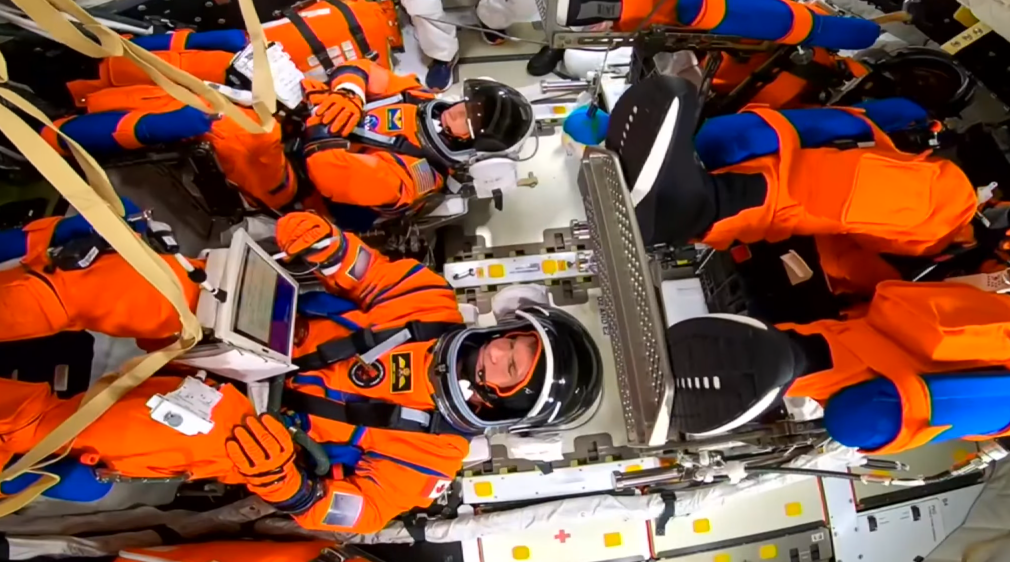
The astronauts experienced up to four times Earth's gravity during their ascent to orbit, accelerating to speeds of up to 10,000 mph (16,000 km/h).
Those speeds pale in comparison to those at reentry, in which the Artemis II astronauts will fall at slightly over 25,000 mph (40,000 km/h), becoming the fastest humans in history.
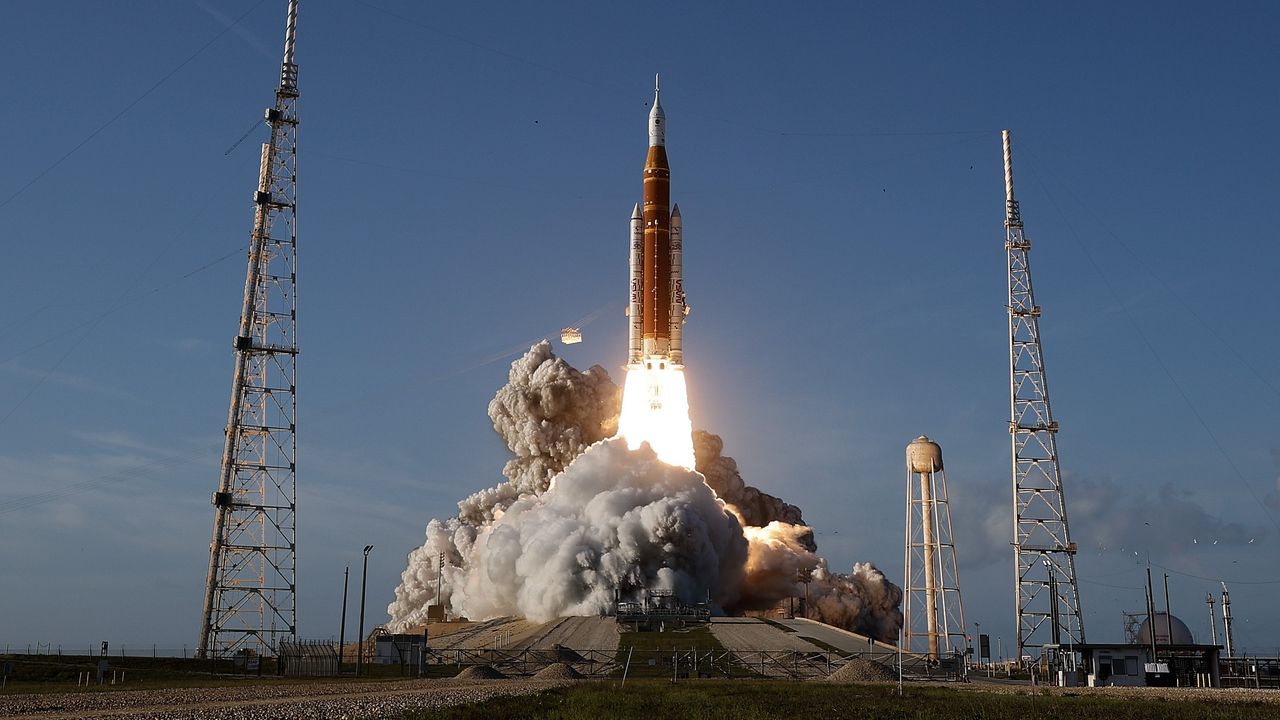
Liftoff
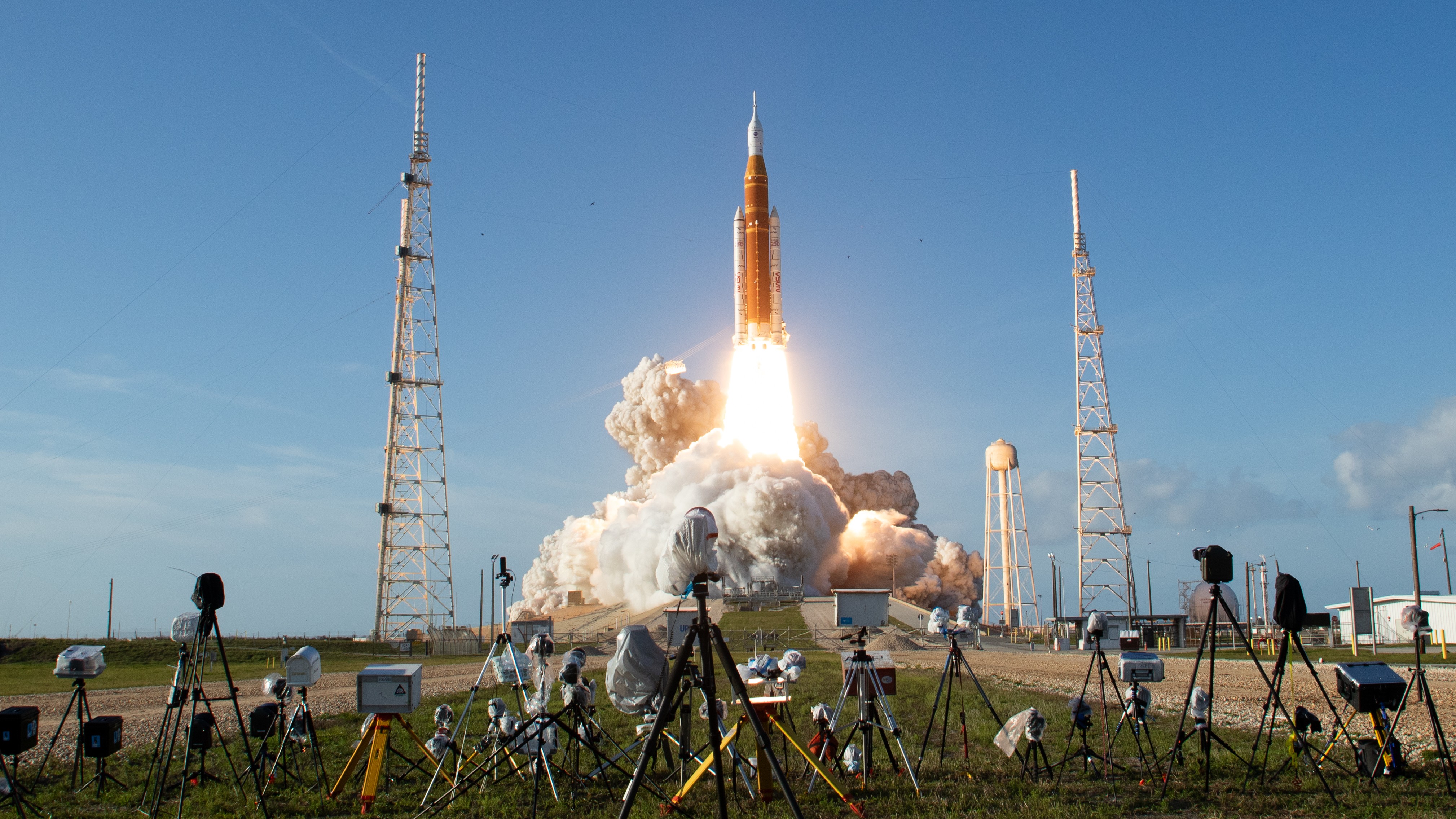
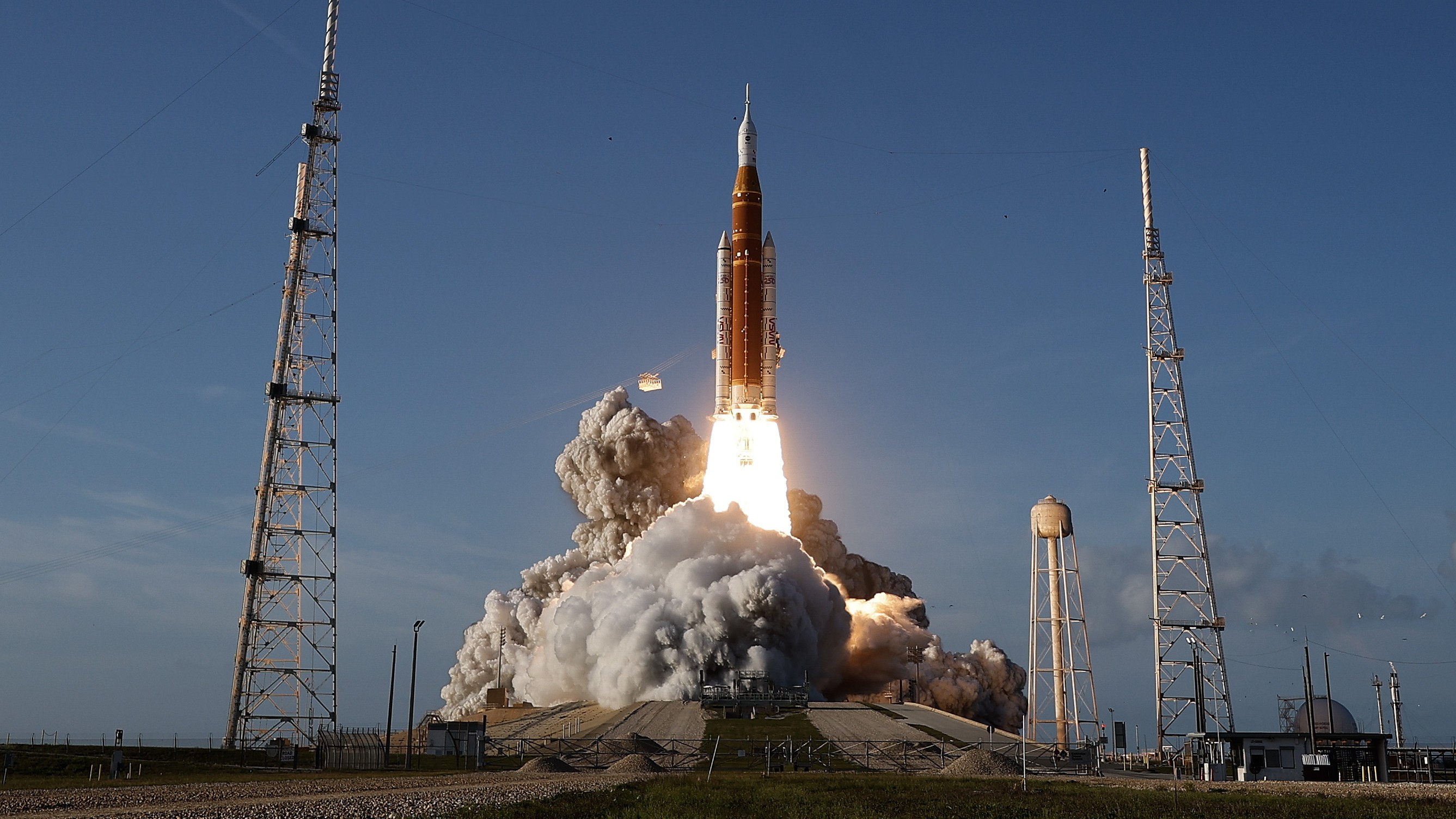
To reach orbit, the SLS rocket burns through more than 730,000 gallons (28,000 liters) of liquid hydrogen and liquid oxygen in its core stage alone.
The core stage's four RS-25 engines consume propellant at a rate of 1,500 gallons (5,700 liters) per second during their eight minutes of operation. That's more than enough to drain an Olympic-size swimming pool in that time.
Live from Cape Canaveral
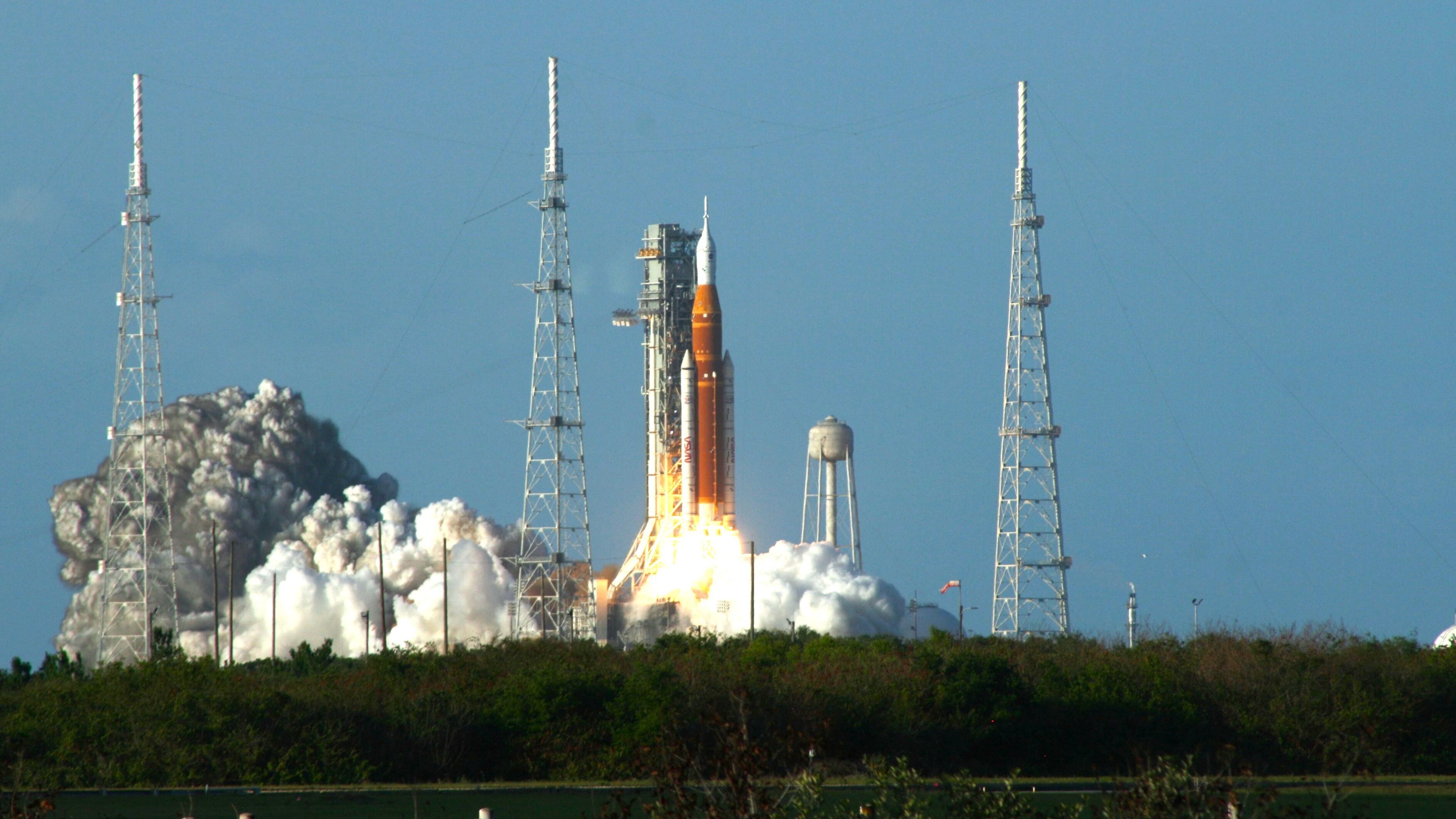
This image of the liftoff was taken by Roger Guillemette, Live Science's Artemis II launch correspondent, for our live Artemis II coverage.
Guillemette has witnessed close to 100 piloted spaceflight launches, from the July 1975 Saturn IB launch of the Apollo-Soyuz Test Project to the final launch of the Shuttle Atlantis on STS-135 in July 2011.
A screaming across the sky
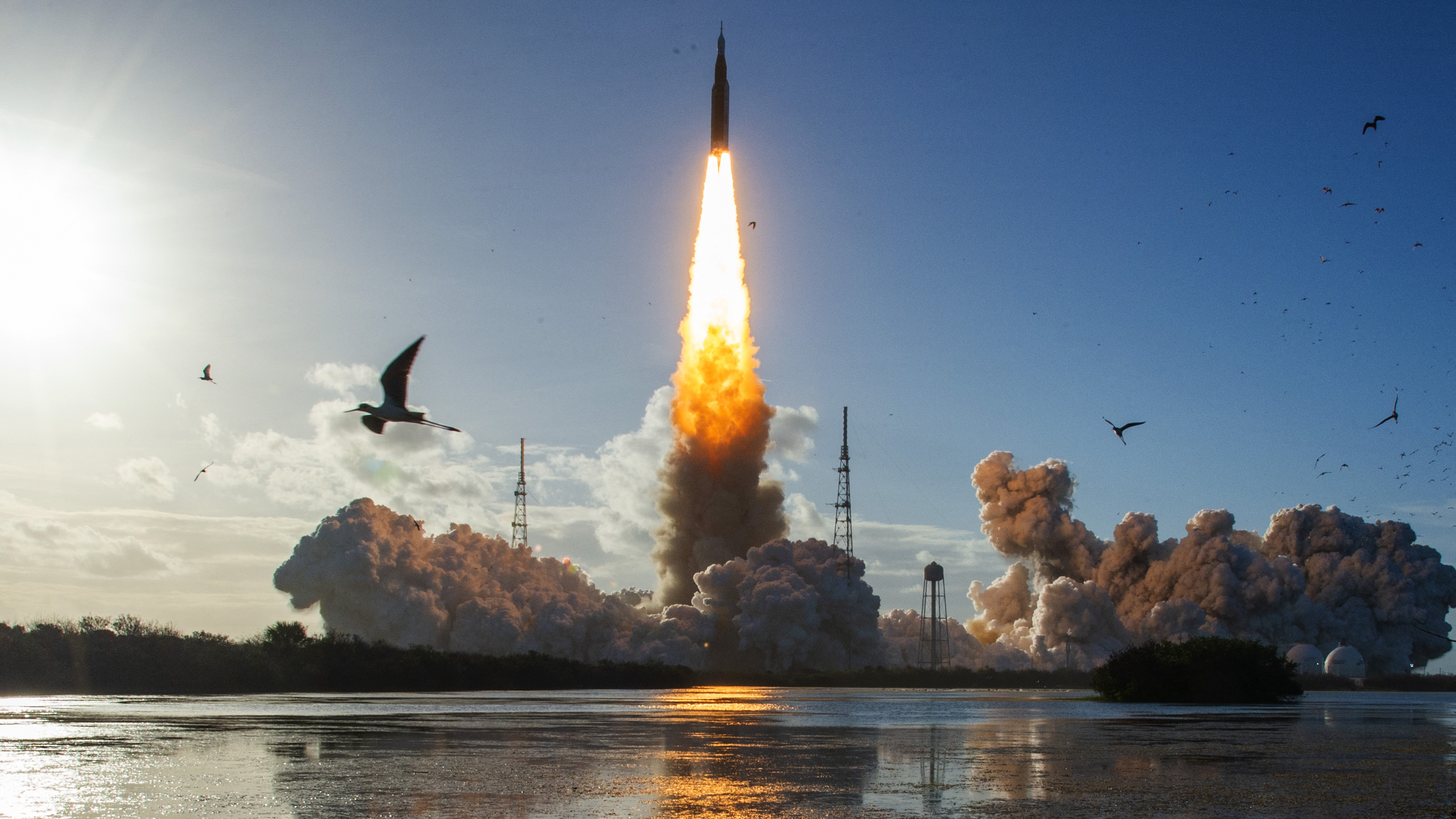
The SLS rocket produced a thunderous noise measuring 176 decibels during liftoff — loud enough to cause serious eardrum damage and to be heard up to 30 miles (50 km) away.
As the world watched
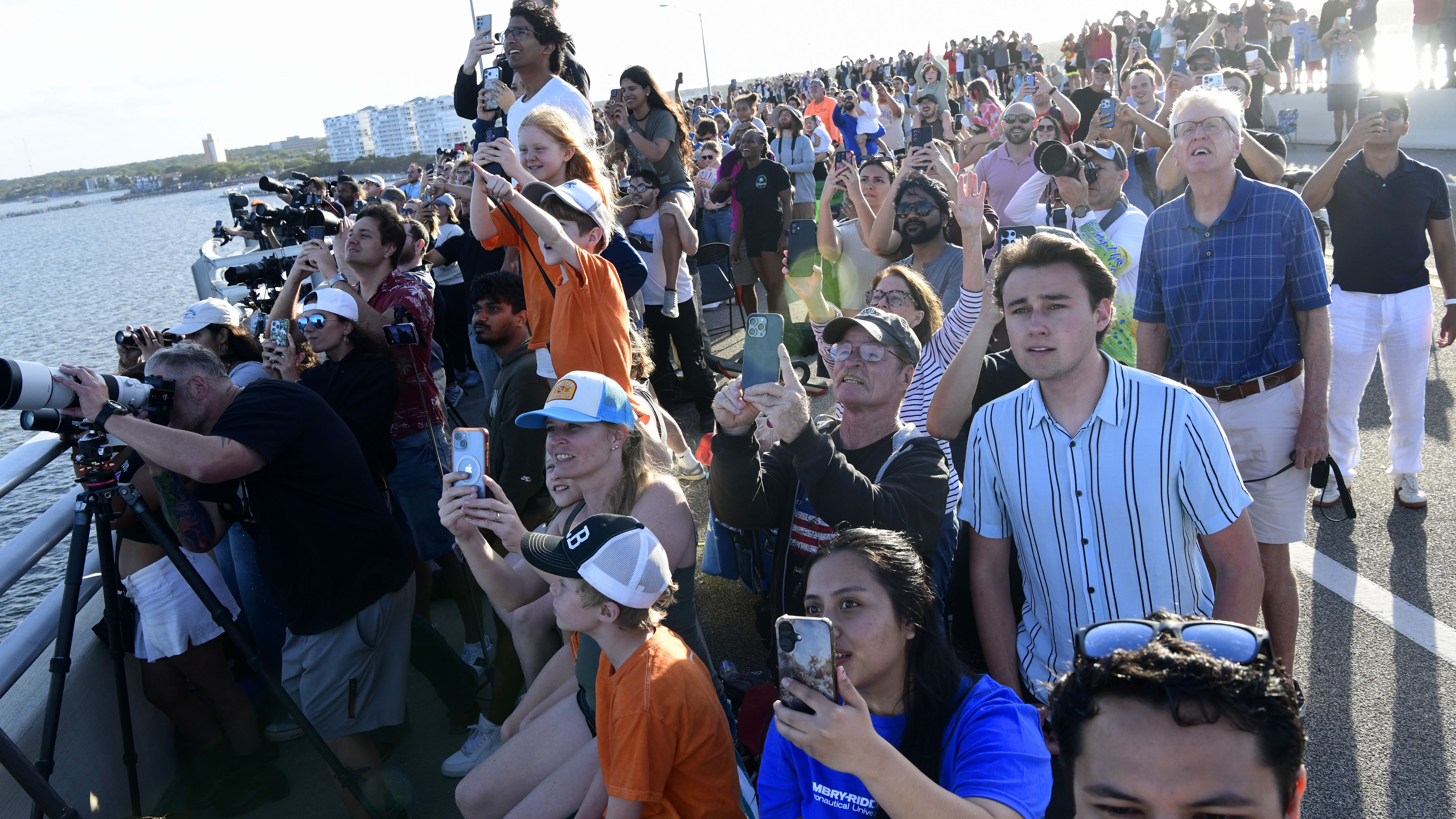
Up to 400,000 people watched the rocket take off from along Florida's Space Coast, with tens of millions simultaneously watching online, according to early viewing estimates.
Rocketing skyward
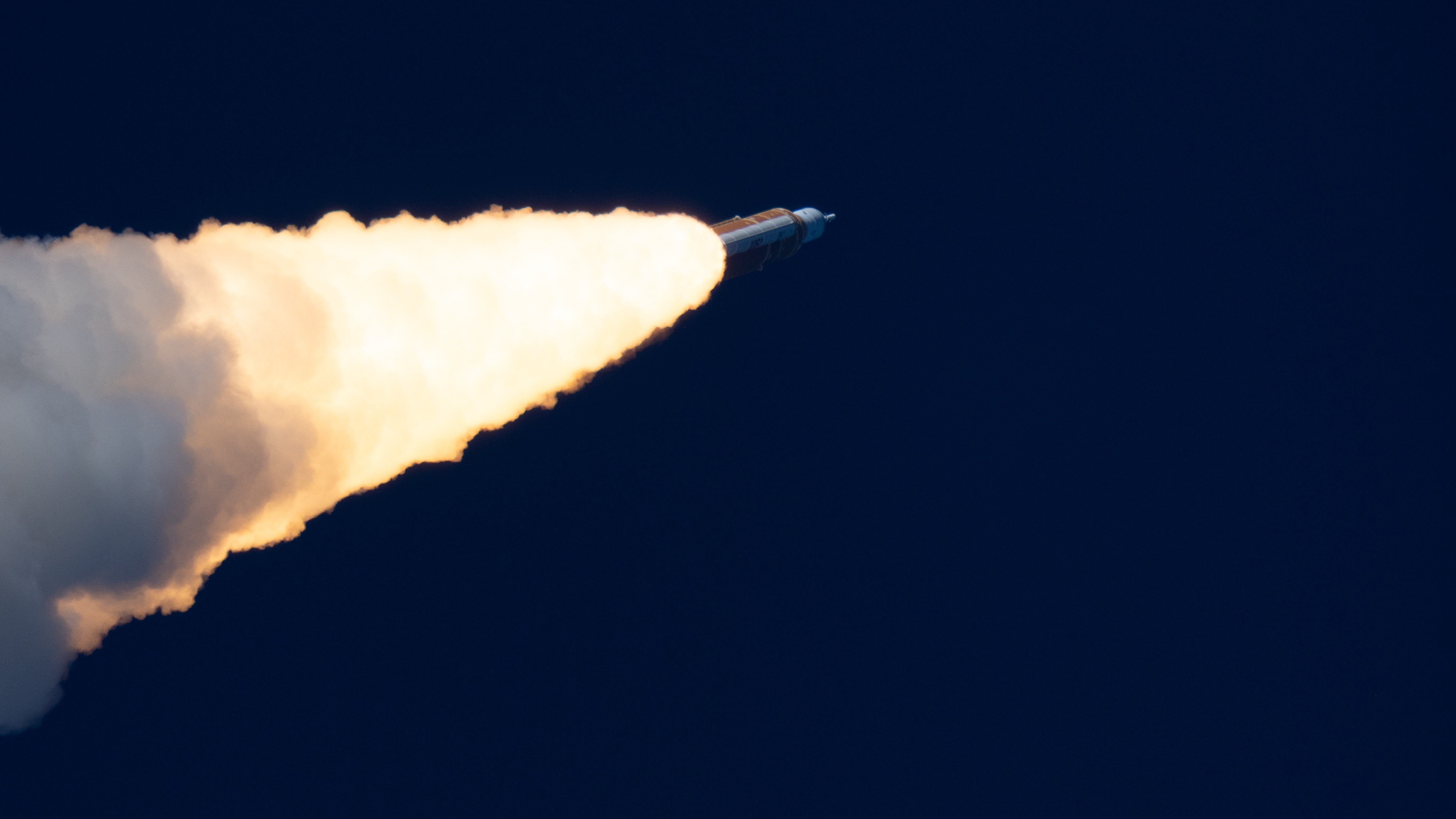
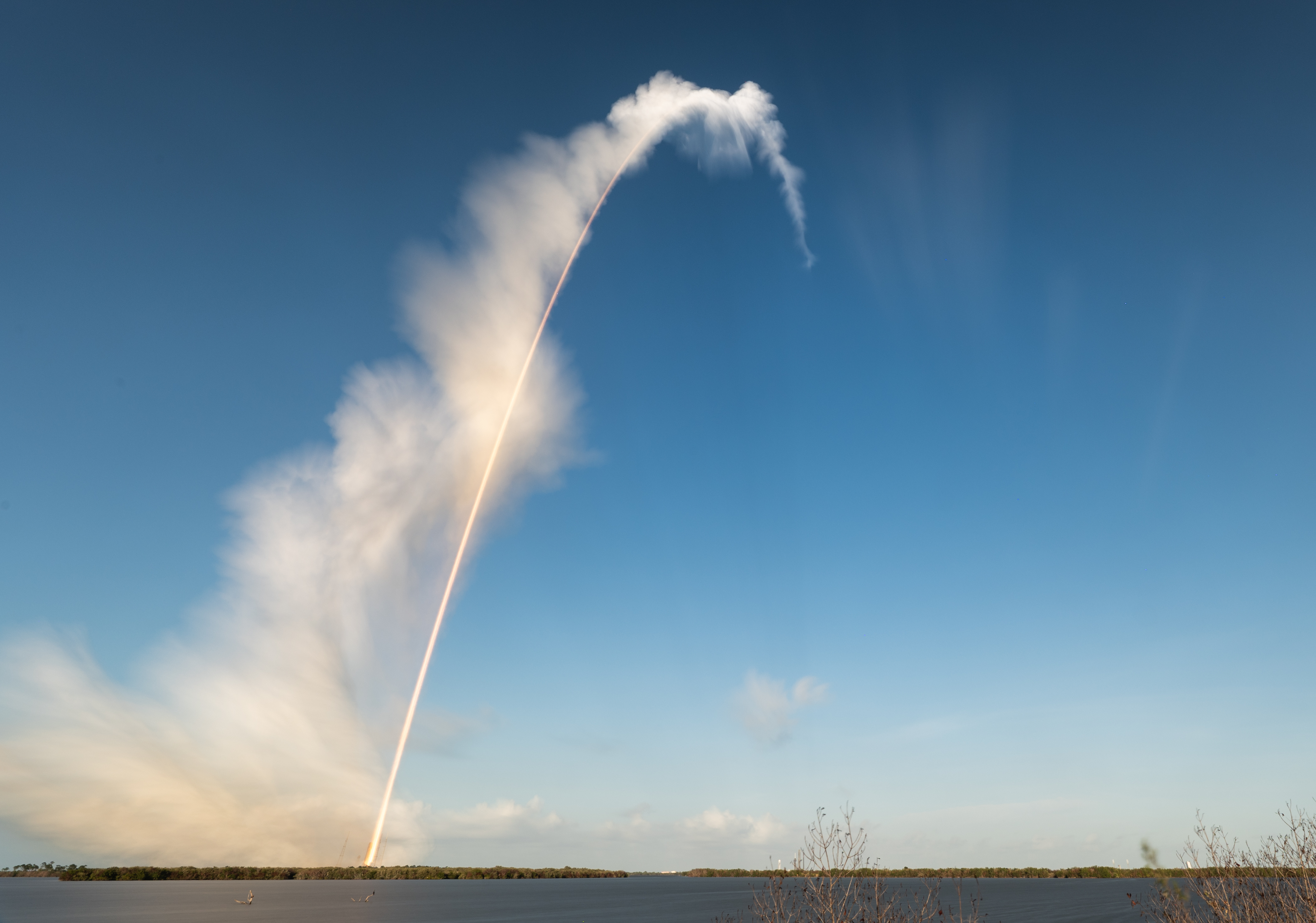
It took around seven seconds for the SLS rocket to clear the launch tower after its two solid-fuel boosters ignited for liftoff. The rocket broke the sound barrier just under a minute into the flight.
Onward to the moon
Upon entering space, the Orion capsule detatched from the rocket's core stage.
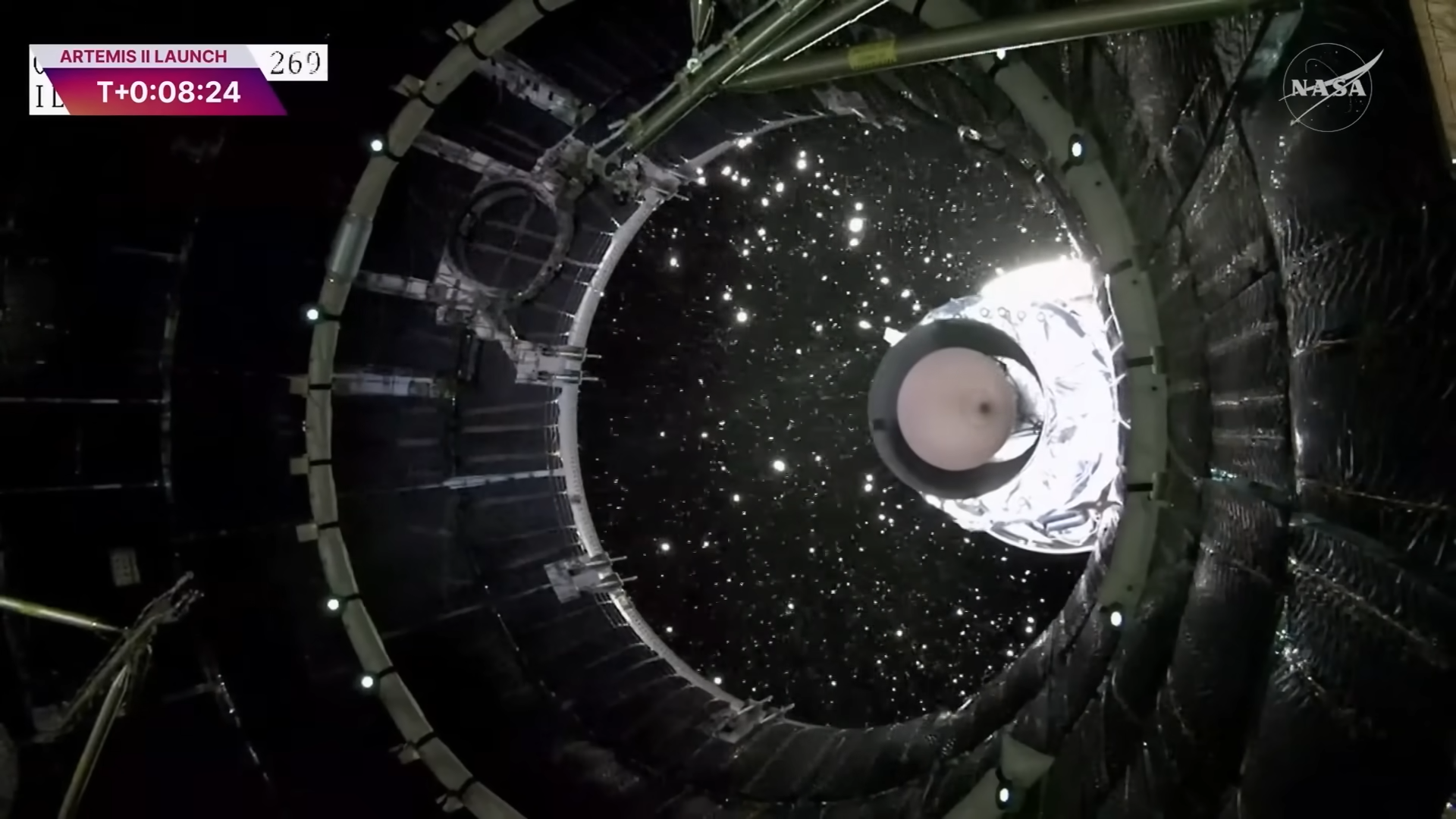
The crew will now swing around Earth, performing a gravitational slingshot maneuver to pick up speed.
This will be followed by a translunar injection burn that puts the crew on their final trajectory toward the moon.
TOPICS Ben TurnerActing Trending News Editor
Ben Turner is a U.K. based writer and editor at Live Science. He covers physics and astronomy, tech and climate change. He graduated from University College London with a degree in particle physics before training as a journalist. When he's not writing, Ben enjoys reading literature, playing the guitar and embarrassing himself with chess.
View MoreYou must confirm your public display name before commenting
Please logout and then login again, you will then be prompted to enter your display name.
Logout LATEST ARTICLES- 1In photos: Artemis II's historic launch for the moon
- 2Ancient children's teeth reveal a syphilis-like disease was spreading in Vietnam 4,000 years ago
- 3Chemists discover groundbreaking reaction that turns breadcrumbs into hydrogen
- 4Earth's energy imbalance is much more extreme than climate models show — but scientists aren't sure why
- 5Chinese satellite with robotic 'octopus arm' passes key refueling test in orbit — making longer-lived space assets more likely