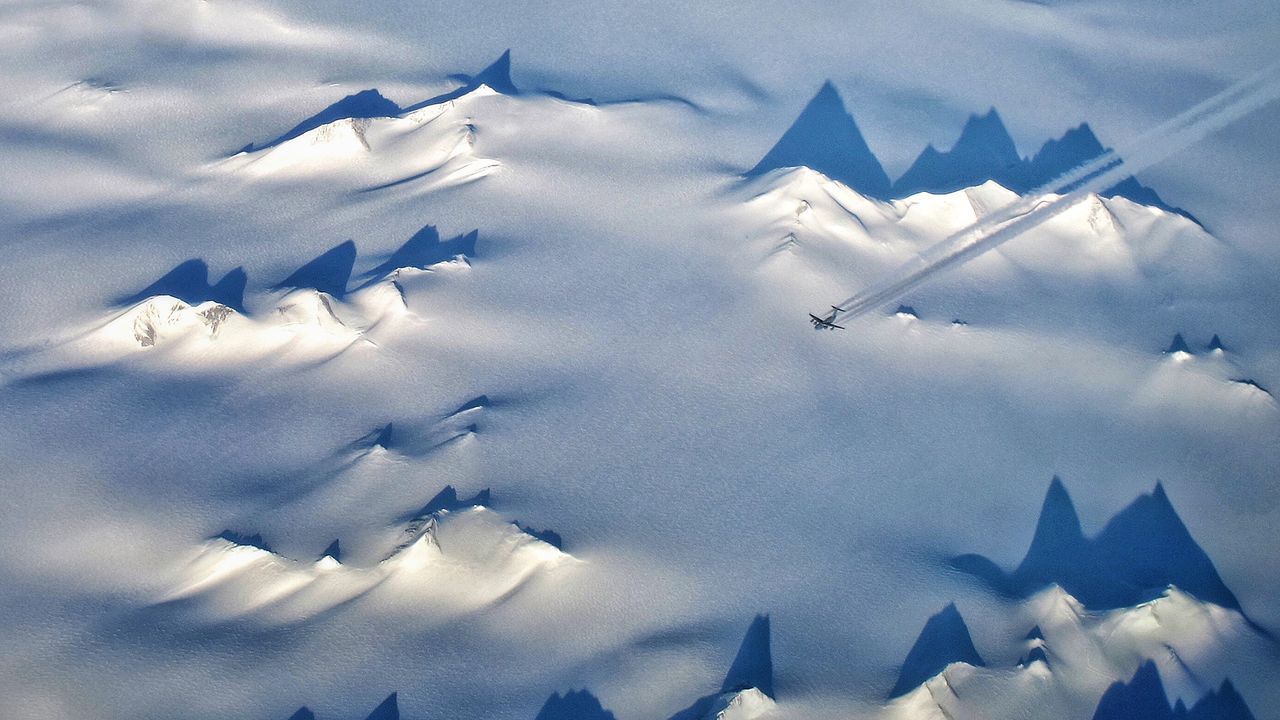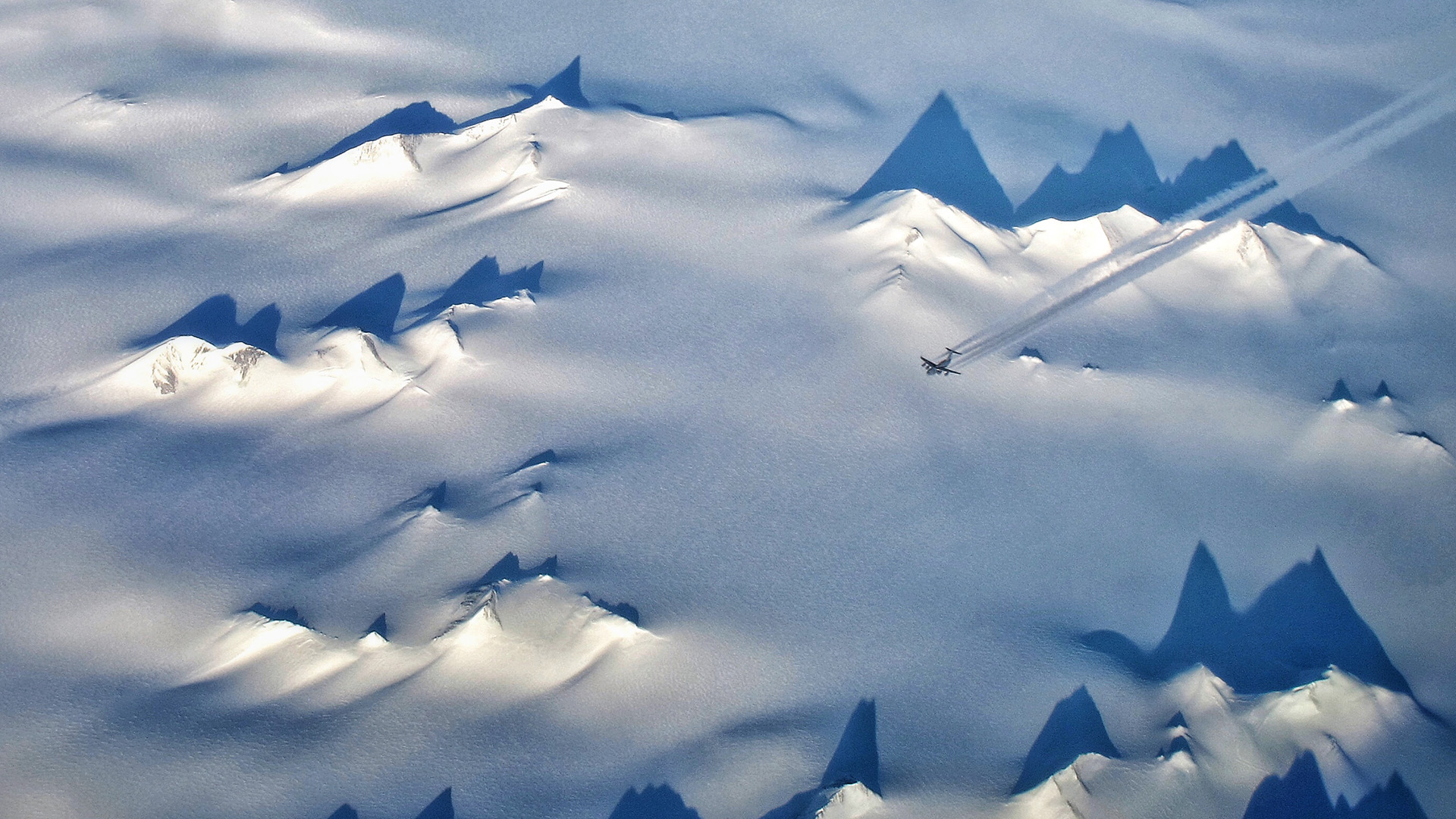
An aerial view of US Air Force C-17 flying over Victoria Land in East Antarctica, a region that is experiencing earthquakes, a new AI study finds. (Image credit: Jeff Miller via Getty Images)
Share this article Join the conversation
Follow us Add us as a preferred source on Google Newsletter Subscribe to our newsletter
Artificial intelligence (AI) has revealed hundreds of previously unknown earthquakes beneath the East Antarctic Ice Sheet, including some in an unexpected place: in the middle of a tectonic plate, far from a plate boundary.
The findings, published May 28 in the journal Science, reveal that Antarctica is more seismically active than previously thought and that new technologies can help to uncover hidden earthquakes in surprising locations.
In the new study, scientists used machine learning, a type of AI, to reanalyze seismic data taken from 49 seismic stations over the past two decades: one dataset from 2001 to 2004, and another from 2012 to 2015. The data revealed over 500 previously unrecognized earthquakes about 60 to 90 miles (100 to 150 kilometers) beneath David Glacier, which stretches nearly 700 miles (1,100 kilometers), bridging East and West Antarctica. This major outlet glacier drains about 4% of the East Antarctic Ice Sheet into the ocean, and its ice has thinned over the past several thousand years.
Earthquakes over 50 miles (80 km) deep are called intermediate-depth earthquakes. This type of earthquake is typically seen only at tectonic plate boundaries — specifically subduction zones, where one tectonic plate dives beneath another.
Yet the study showed that these earthquakes are happening in the middle of the tectonic plate, far from active plate boundaries.
"The earthquakes occur where the cold, rigid crust and upper mantle beneath East Antarctica meets warmer, softer rock beneath West Antarctica, and this contrast creates an abrupt change in tectonic strength," Long Ho, a University of Alabama geologist and first author of the new paper, told Live Science in an email. The detected earthquakes have magnitudes ranging from 1.6 to 3.5. The warm, buoyant material of the upper mantle extends beyond the edges of David Glacier from below, uplifting the edges of the nearby crust and bending them, and this concentrated stress causes the ground to shake, Ho explained.
It was surprising to find so many earthquakes at these depths, far from plate boundaries, Ho said, but similar earthquakes may be occurring in other geographic regions and going unnoticed given their small magnitudes. AI could help to identify those hidden quakes by reanalyzing past seismic data.
Sign up for the Live Science daily newsletter now
Get the world’s most fascinating discoveries delivered straight to your inbox.
Contact me with news and offers from other Future brandsReceive email from us on behalf of our trusted partners or sponsors
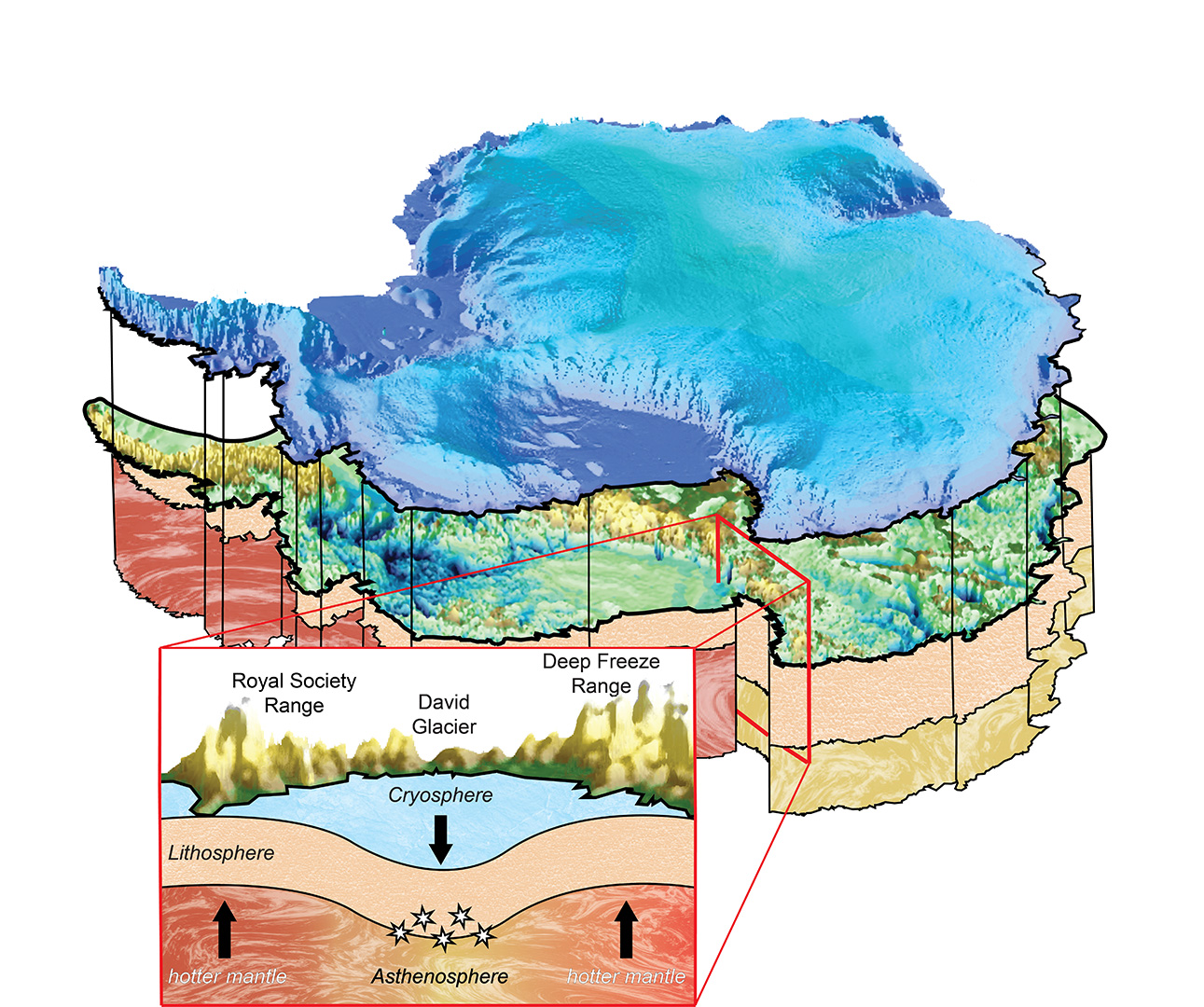
Deep earthquakes result from bending and flexure at the boundary between East and West Antarctica, beneath David Glacier.
(Image credit: Samantha Hansen and Long Ho, The University of Alabama.)
"As machine-learning tools continue to improve, they could reveal that deep, continental-interior earthquakes are more common than currently recognized," Ho said. "If so, the role of such events within the plate tectonics framework may need to be re-evaluated."
The results also show that Antarctica is more dynamic than previously thought. "Antarctica was [long] considered to largely lack earthquakes," Richard Alley, a glaciologist at Penn State who was not involved in the new paper, told Live Science in an email. "Now, we know that the apparent lack of earthquakes was really a lack of [tools] to listen to earthquakes." The data from this paper were collected between 2001 and 2004 and are now yielding new results as modern techniques have been developed to analyze the data, Alley said.
The detected earthquakes are not strong enough to threaten the overlying ice sheets or the Antarctic ecosystem, Ho said, so the research team is not concerned about that.
Related stories
Next, Ho hopes to explore how the enormous weight of the Antarctic Ice Sheet might contribute to the location of earthquakes, and how changes in the ice sheet could affect underlying seismic activity.
It's still puzzling that seismic activity is concentrated at David Glacier rather than spread along the mountains in this region, Alley said, adding that the answer could be linked to the recent history of the ice sheet growing and shrinking, or to a longer history of the ice sheet eroding.
"I worry a lot about the ice sheet," Alley said, "and I hope work like this is continued and expanded, to help us understand the history and improve our understanding of possible futures."
Article Sources
Ho, L. M., Sánchez-Roldán, J. L., Hansen, S. E., & Walter, J. I. (2026). Upper-mantle earthquakes beneath East Antarctica. Science, 392(6801), 942–945. https://doi.org/10.1126/science.aea9895
How much do you know about Earth's frozen continent? Test your smarts with our Antarctica quiz!
 Olivia Ferrari
Live Science Contributor
Olivia Ferrari is a New York City-based freelance journalist with a background in research and science communication. Olivia has lived and worked in the U.K., Costa Rica, Panama and Colombia. Her writing focuses on wildlife, environmental justice, climate change, and social science.
View More
You must confirm your public display name before commenting
Please logout and then login again, you will then be prompted to enter your display name.
Logout