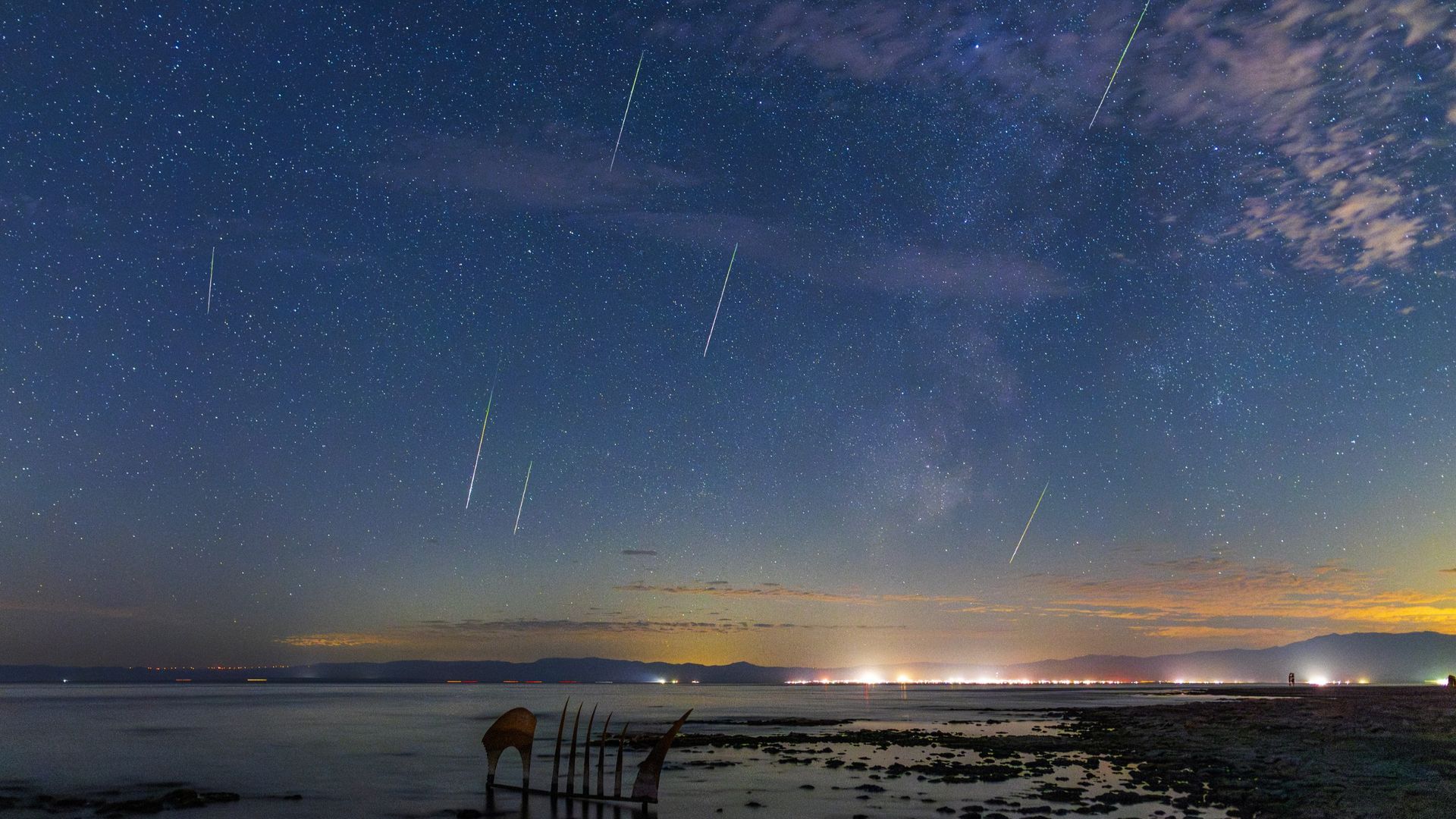
If you love watching meteors, 2026 has given you plenty to enjoy. This summer, the annual Perseid meteor shower peaked on the day of a new moon — and a solar eclipse — so moonlight stayed out of the way. And there's more to look forward to: in December, the Geminids, the year's most prolific shower, will peak after a waxing crescent moon sets early in the evening, opening the door to excellent viewing.
Right between those two headline showers, the dependable Orionids take their turn, reaching peak activity around Oct. 21-22.
So, when and where can you catch the show?
When and where to watch
Make sure you wrap up warm for a night of Orionid hunting. (Image credit: Created in Canva by Daisy Dobrijevic)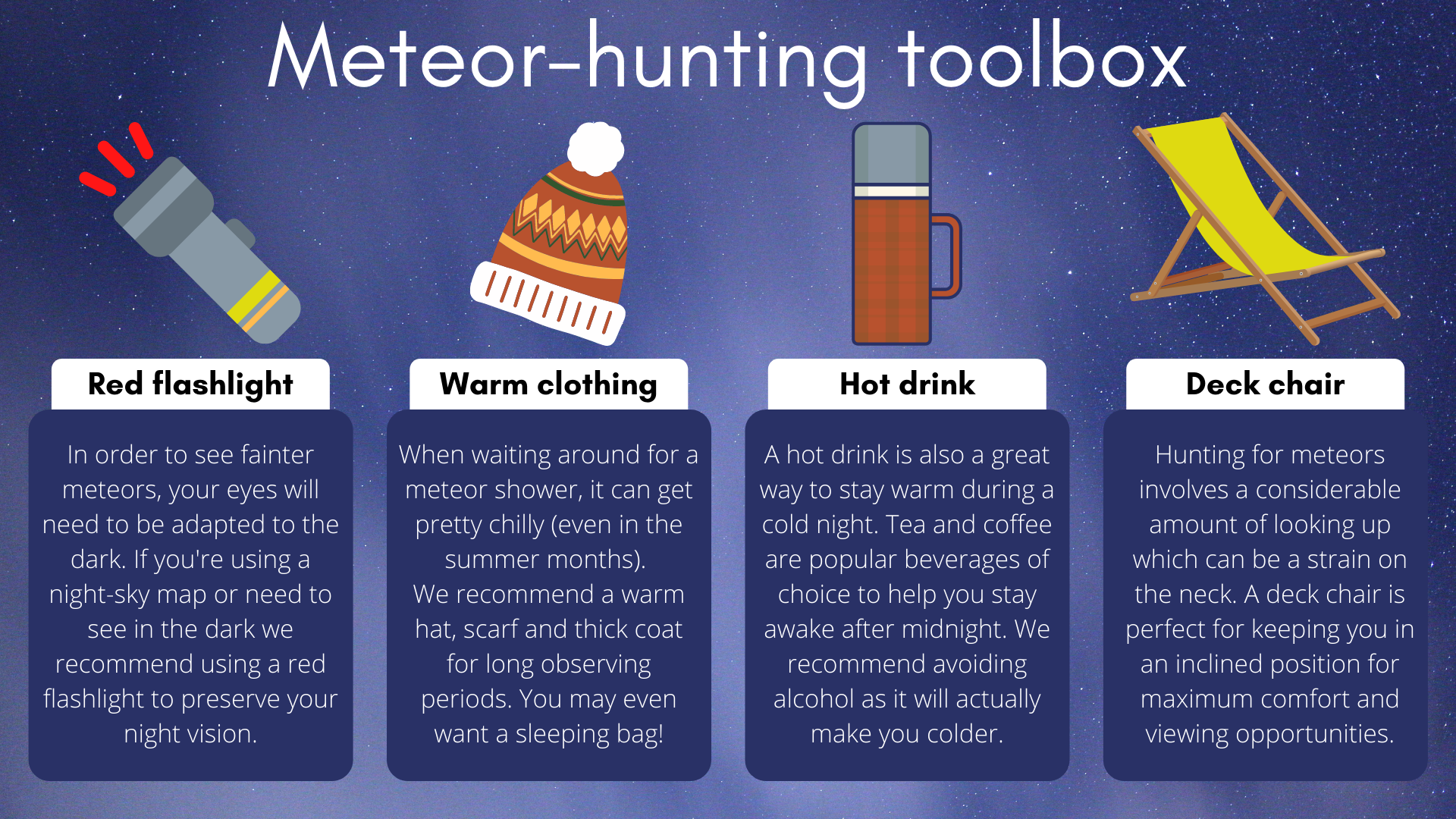
The Orionids take their name from the spot where they seem to fan out: Orion's raised club, just above and to the left of the reddish star Betelgeuse. Orion is usually a winter favorite, so in early autumn the mighty hunter doesn't fully clear the eastern horizon until after 11 p.m. local daylight time. Don't rush outside just yet though. Wait until around 2 a.m., when Orion is well above the horizon. By about 5 a.m., just before dawn, Orion reaches its highest point in the southern sky — and the view should be at its best.
Orionid meteors tend to be faint, so city lights can easily wash them out. If you can, head to a safe, dark rural spot. Get comfortable in a reclining lawn chair or sleeping bag, give your eyes time to adjust, and enjoy the view overhead and toward the southern sky.
Why the moon won't spoil the show
And what about the moon? A full moon arrives October 25-26, but there's still a welcome stretch of dark sky for several mornings before Wednesday.
By Oct. 21-22, the waxing gibbous moon will be resting among the dim stars of Capricornus, reaching its highest point around 8:45 p.m. local daylight time. Here's the good news: it will set shortly after 2 a.m., leaving roughly 3½ hours of dark sky before dawn. In that window, one observer may spot as many as 15 to 20 Orionids per hour. Because those hours line up with the shower's peak, the moon shouldn't steal the show this year.
Halley's Comet: the source of the Orionids
So, where do the Orionids come from? Their story begins with Halley's Comet—the same famous visitor behind May's Eta Aquarids.
Meteoroids are tiny leftovers from a comet's nucleus. As a comet nears the sun, frozen material on its surface turns directly into gas, a process known as sublimation. The comet becomes a kind of cosmic litterbug, sprinkling dust and debris along its orbit. Those pieces are tiny and brittle, with the consistency of cigar ash, and every swing past the sun leaves more behind.
Comets are among the solar system's oldest and most fascinating objects. They formed alongside the sun and planets about 4.6 billion years ago, yet they have changed remarkably little. Think of them as time capsules from the solar system's childhood. Far beyond the outer planets, they spend most of their time in a deep freeze, where temperatures hover just above absolute zero, -459.67°F (-273.15°C). In that extreme cold, chemical reactions largely stop, helping comets preserve material from those earliest days.
Over the past 100,000 years, Halley's Comet has probably circled the sun well over a thousand times, leaving a fresh trail of debris on every visit. Each October and May, Earth brushes close to Halley's orbit. Some of that dust meets our atmosphere at a breathtaking 41 miles (66 km) per second, lighting up as the streaks we call "shooting stars."
The Orionids have another lovely feature: about half of these meteors leave glowing trails that linger longer than those of equally bright meteors. Halley's composition may be the reason. The particles begin burning up about 80 miles (130 km) above Earth, perhaps because they're made of lightweight material from the comet's diffuse surface rather than its core.
Close-up view of Halley's Comet captured by the Giotto spacecraft in 1986. (Image credit: ESA. Courtesy of MPAe, Lindau)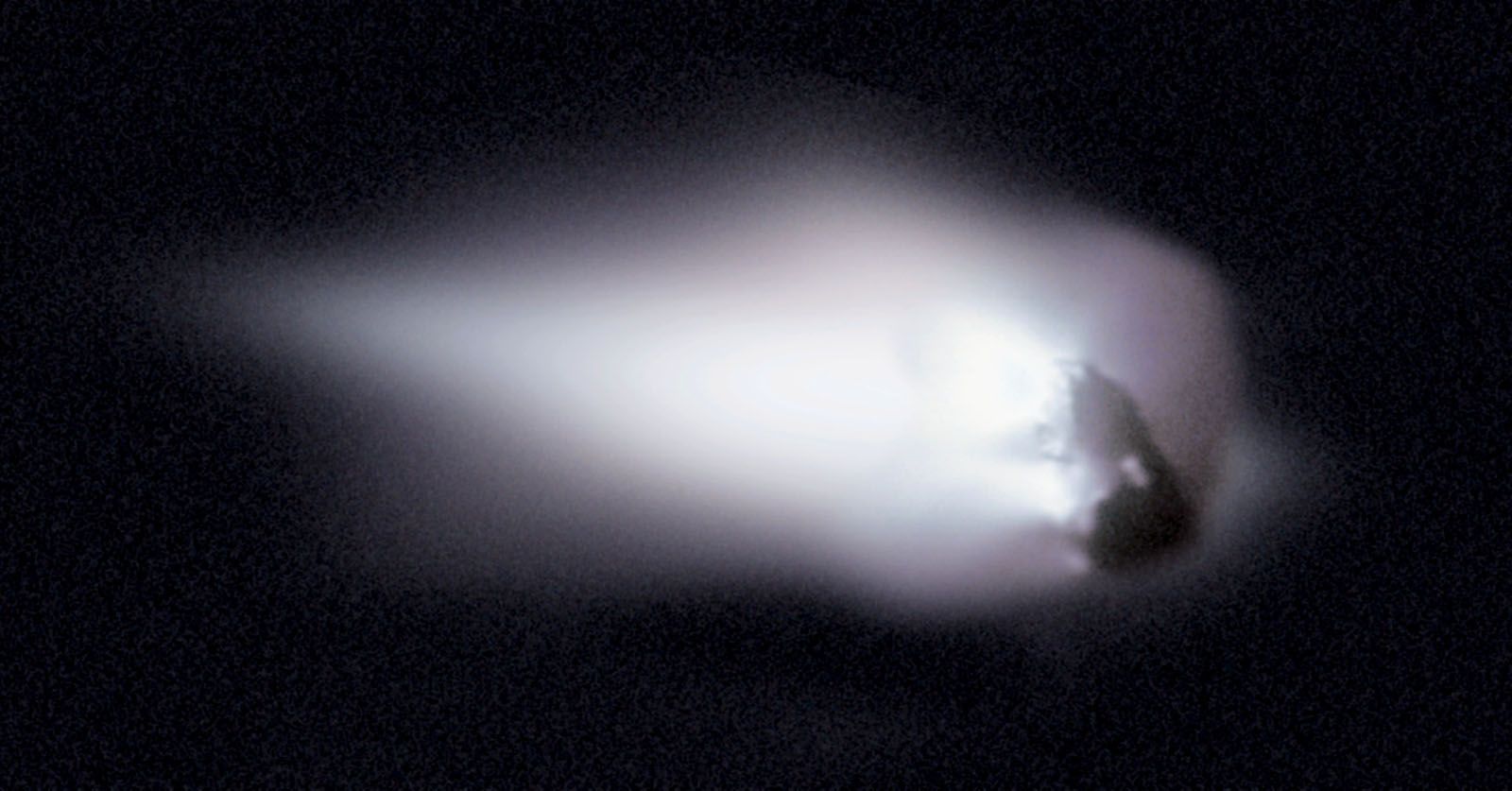
Looking backward . . . and forward
Perhaps you remember seeing Halley's Comet when it last swept through the inner solar system in late winter and early spring of 1986. With an orbital period of 75.4 years, this celebrated visitor is due back in late July or early August 2061.
For a little perspective, average life expectancy is 79.5 years in the United States, 82.2 years in the United Kingdom, and 83.4 years in Canada. So, if you were born after 1980, there's a fair chance you'll be here to welcome the "mother of all Orionids" home in 2061.
As for me, I saw Halley in 1986 at the "advanced age" of 30. The odds of another reunion are pretty long — you can do the math.
Until then, I'll be more than happy to step outside early on Wednesday morning and greet a few of "Halley's children." I hope you'll join me.
Joe Rao serves as an instructor and guest lecturer at New York's Hayden Planetarium. He writes about astronomy for Natural History magazine, Sky and Telescope, The Old Farmer's Almanac and other publications.