
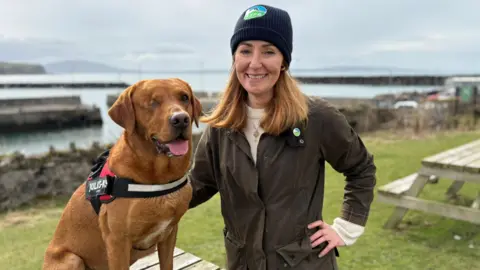
 BBCWoody the biosecurity dog and Claire Barnett from RSPB NI
In a world-first, Rathlin Island, off the coast of County Antrim, has eradicated ferrets.
The non-native predator was introduced to the island in the 1980s and has wreaked havoc on the internationally-significant breeding seabird colony.
More than 400 traps were laid across the island as part of a five-year, £4.5m Life Raft project, which has also targeted rats. But crucial to the fight to save the seabirds was a specially-trained detection dog, called Woody.
The island is now ferret free and there are already encouraging signs in breeding seabird numbers, offering hope to other places round the world grappling with invasive predators.
Signs of recovery
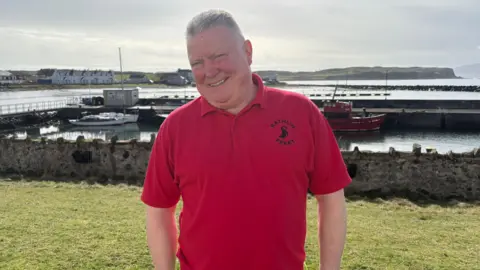 Resident Tom McDonnell, who is also a wildlife photographer, says the project "can only be a win-win" for nature
With no ferrets seen since October 2023, RSPB NI's area manager Claire Barnett is cautiously optimistic for the coming season.
"Seabird colonies can recover very, very quickly, so we're very hopeful, and we've already seen some very promising signs from last year's breeding season, that the numbers here will climb up and really secure themselves."
Removing ferrets also has benefits for the community.
Tom McDonnell, a lifelong resident, said they could keep chickens again and build on their self-sufficiency.
As a wildlife photographer, he says the project "can only be a win-win" for nature.
"It's just beyond my wildest dreams.
"Everybody thinks about the seabirds, of course, but I can't wait to see the growth in some of the animals, especially the hare population, because predation on the leverets, or the young hares, was big.
"Plus a lot of residents can now raise their chickens without any worries, so that's definitely a positive."
How did invasive species get to Rathlin?
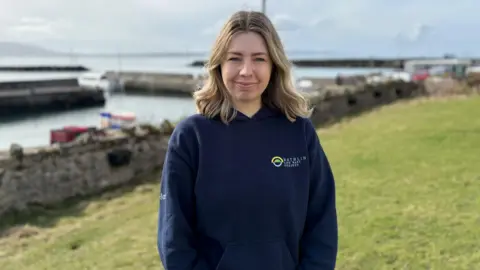 Erin McKeown, from RSPB NI, says a ferret killed 27 puffins in a two-day period in 2017
 Rats are thought to have travelled over on boats in the nineteenth century.
The ferret is thought to have been brought in deliberately in the 1980s to control pests.
But instead of hunting rabbits and rats, it rapidly turned its attention to the easy prey of ground-nesting birds, their eggs and chicks.
Erin McKeown, RSPB NI's Senior Seabird and Marine Policy Officer, said breeding seabirds across the UK and Ireland have declined by 62% over the last two decades.
"Here on Rathlin in 2017, a feral ferret reached one of our puffin colonies and killed 27 puffins in a two-day period," she said.
"So we're hoping alleviating that invasive non-native species pressure will allow our seabirds space to breed, raise their young and flourish once more."
Life Raft was launched in 2021 to rid the island of both ferrets and rats.
More than 400 ferret traps were laid in 2023.
Almost 7,000 handmade rat bait traps were set every 250m across the island in 2024.
Claire Barnett said providing seabirds with safe breeding spaces is crucial as they face massive challenges globally.
"Seabirds are in big trouble - when they're not inland nesting, they're out in the seas, so they're under a huge amount of pressure from climate change, from our warming waters, from overfishing, from plastic pollution.
"All of those things are having serious implications for these birds, but what we can do and do quite quickly is make sure they've got a safe place to nest.
"Because they're seabirds, they have one egg every year, and if they don't get those birds away, the numbers are going to dwindle very, very quickly."
Woody the Wonderdog
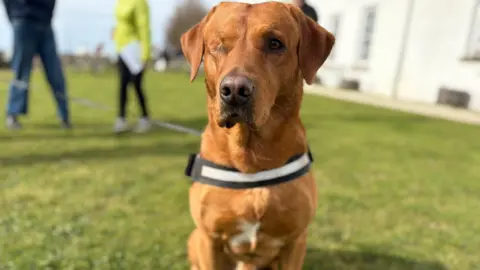 Woody is now the island's biosecurity dog
Key to the success of Life Raft has been Woody, the conservation dog, using his super-smelling powers to ensure there were no remaining ferrets.
While Woody wears goggles when he is working, he also has uniform-free downtime to be the puppy he still is.
But while playing one day, he got a thorn in his eye.
Despite immediate veterinary attention, the eye eventually had to be removed.
Claire Barnett says it was a "freak, unfortunate accident", but his nose was still in "full working order".
With his invasive species detector duties done, it is time for a new role for Woody.
"Now he's our biosecurity dog.
"It's all very well us getting rid of all the ferrets, but we need to make sure they don't come back and we want to make sure rats don't get onto the island.
"So it's his job to help us with that - he's one of the tools that we use to try and keep Rathlin Island ferret-free."
Supplies like hay, farm feed and bags of wood can harbour rodents.
Shipments will be checked by Woody during loading at Ballycastle and arrival at the island to ensure there are no unwelcome stowaways.
What next?
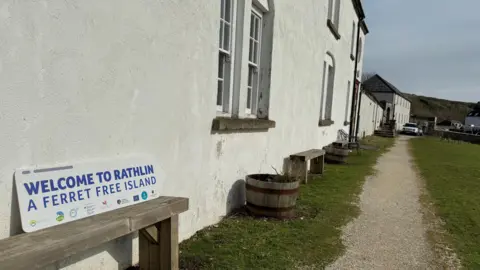 The 110 cameras across Rathlin are monitored to make sure there isn't a single remaining non-native predator
During the first phase of the project, 98 ferrets were caught in winter 2023.
The team then moved on to rats.
With none seen since June 2025, hopes are high for a declaration of rat-free status in 2027.
The 110 cameras across Rathlin are monitored to make sure there isn't a single remaining non-native predator.
Erin McKeown says there has been "unwavering support" from the community.
"We have a biosecurity element to think about, so it's great to get Rathlin ferret-free, but we want to now make sure that we keep it ferret-free too.
"So that work is also ongoing to make sure we've got really robust biosecurity in place."
International significance
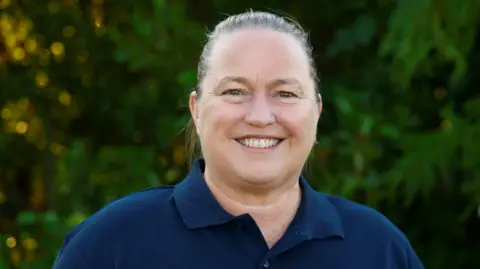 Phelps VisualsExpert Elizabeth (Biz) Bell says getting rid of an "aggressive predator" like a ferret in a "unique" environment like Rathlin showed what could be achieved
At a recent Island Invasives conference in New Zealand, Rathlin's success was causing a buzz.
One of the international experts attending was Elizabeth Bell, known as Biz.
She is the managing director of Wildlife Management International which worked with the Life Raft team.
Bell said getting rid of an "aggressive predator" like a ferret in a "unique" environment like Rathlin showed what could be achieved.
"This is a fantastic example of both agency and community working together to achieve this really important goal.
"It also shows that several of the lessons learned there - how the traps worked, how the communication with the community worked - can be used on other islands around the world.
"This has been amazing."
Invasive speciesConservationNI agricultureRSPBWildlifeNorthern IrelandRatsDogsBirdsPuffins