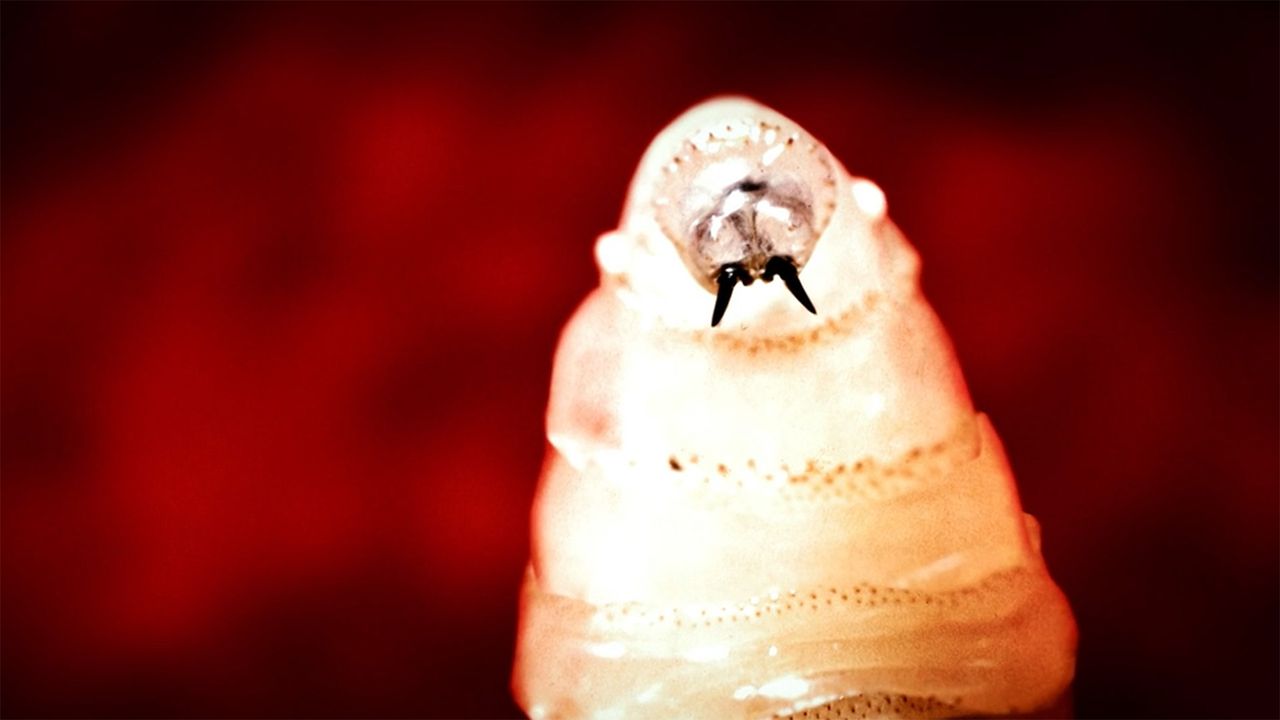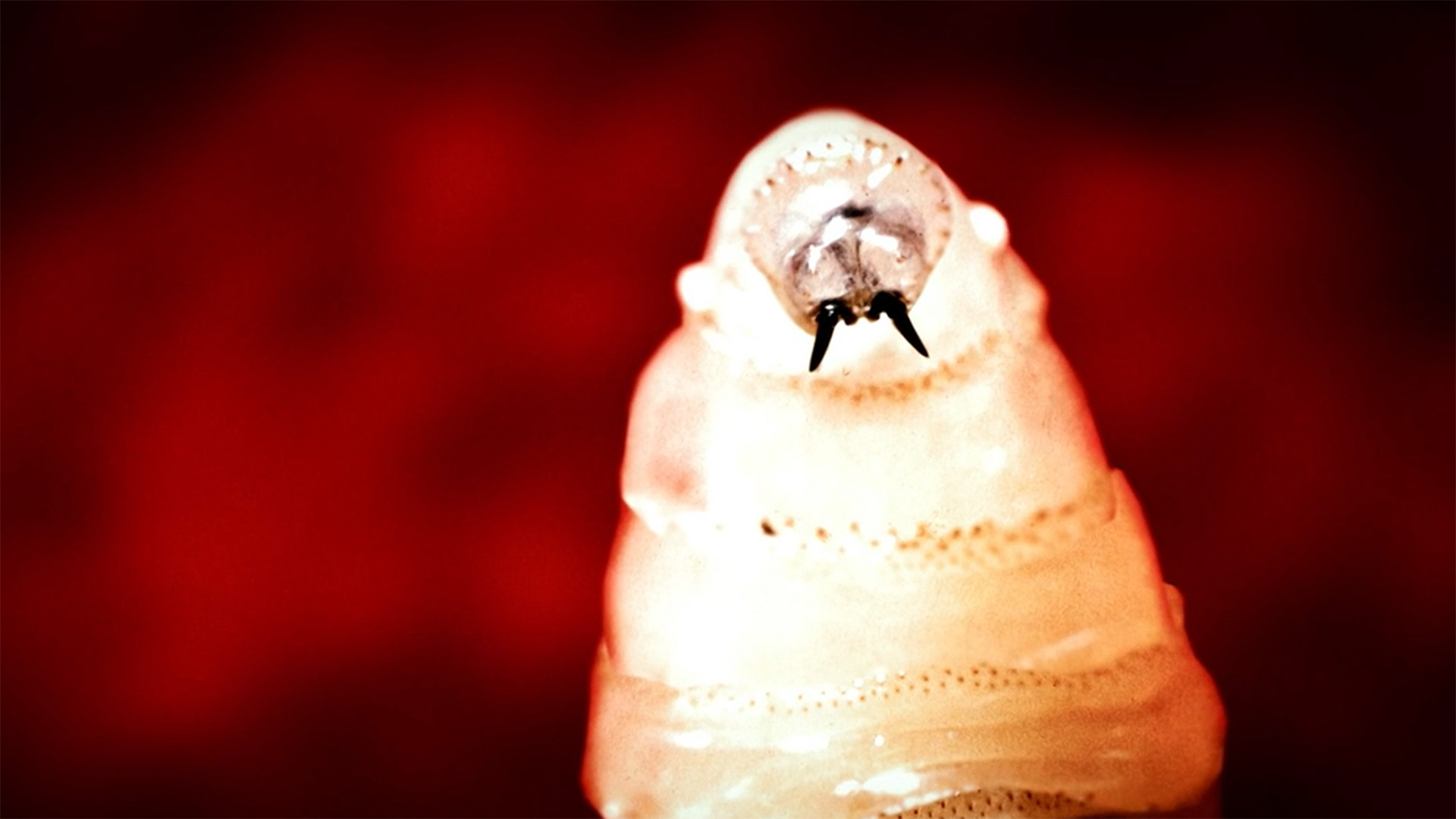
A close up of the New World screwworm, a parasitic pest that threatens livestock. (Image credit: Discovery Access via Getty Images)
Share this article Join the conversation
Follow us Add us as a preferred source on Google Newsletter Subscribe to our newsletter
A fly that deposits its parasitic, flesh-eating offspring inside cows has been detected in Texas for the first time in decades, the U.S. Department of Agriculture (USDA) reported Wednesday (June 3).
Here's what to know about the New World screwworm (Cochliomyia hominivorax), a pest that was eradicated from the U.S. in the 1960s.
What is the New World screwworm?
New World screwworms are parasites that feed exclusively on the living flesh of warm-blooded animals, according to the American Society for Microbiology (ASM). The screwworms are the larvae, or maggots, of adult C. hominivorax flies.
The flies lay their eggs in animals' open wounds or body openings, such as the eyes, ears, nose, mouth or genitals. Once hatched, the maggots burrow into their host's flesh, using a screw-like motion that lends the species its name. The maggots have sharp mouth hooks that can cause extensive damage, deepening the wound and raising the chances of secondary infections. The infestation can be painful, cause swelling and bleeding, and can produce a foul smell.
After about a week of feeding, the maggots enter their next stage of development and exit the animal, burrowing into soil in order to "pupate" and mature into a fly.
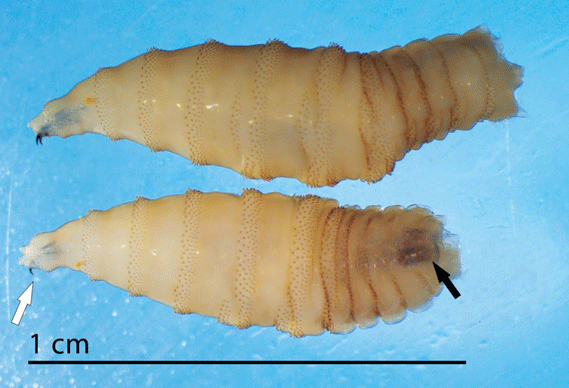
New World screwworms have distinct mouth hooks (white arrow) that they use to tear into their hosts' flesh.
(Image credit: Courtesy of the U.S. Centers for Disease Control and Prevention)
Broadly, maggot infestations are known as myiasis, and myiasis caused by New World screwworms is a big problem for livestock agriculture. Across places where the fly species is endemic, or widespread, annual economic losses caused by the fly can amount to billions of dollars each year. The flies mostly infect large-hooved livestock, such as cows, sheep and horses. Less commonly, they can infect domestic dogs and wild mammals, such as deer, rabbits, opossums and birds.
Can the screwworm infect humans?
Yes, New World screwworms can sometimes infect humans, although it's fairly uncommon. The flies can potentially infect any warm-blooded animal, but livestock are most commonly affected.
Sign up for the Live Science daily newsletter now
Get the world’s most fascinating discoveries delivered straight to your inbox.
Contact me with news and offers from other Future brandsReceive email from us on behalf of our trusted partners or sponsors
People in endemic areas who work with livestock, have weakened immune systems, sleep outdoors, or have open wounds — however small — are most at risk for developing C. hominivorax infestations. As in animals, infestations in humans can be deadly, but they are treatable via physical removal of the maggots from the body.
Symptoms of infestation include feeling or seeing maggots move within a skin wound or sore, or in the ears, nose, eyes, or mouth; developing painful skin wounds or sores that worsen within a few days; bleeding from sores; and a foul-smelling odor at the site of the infestation.
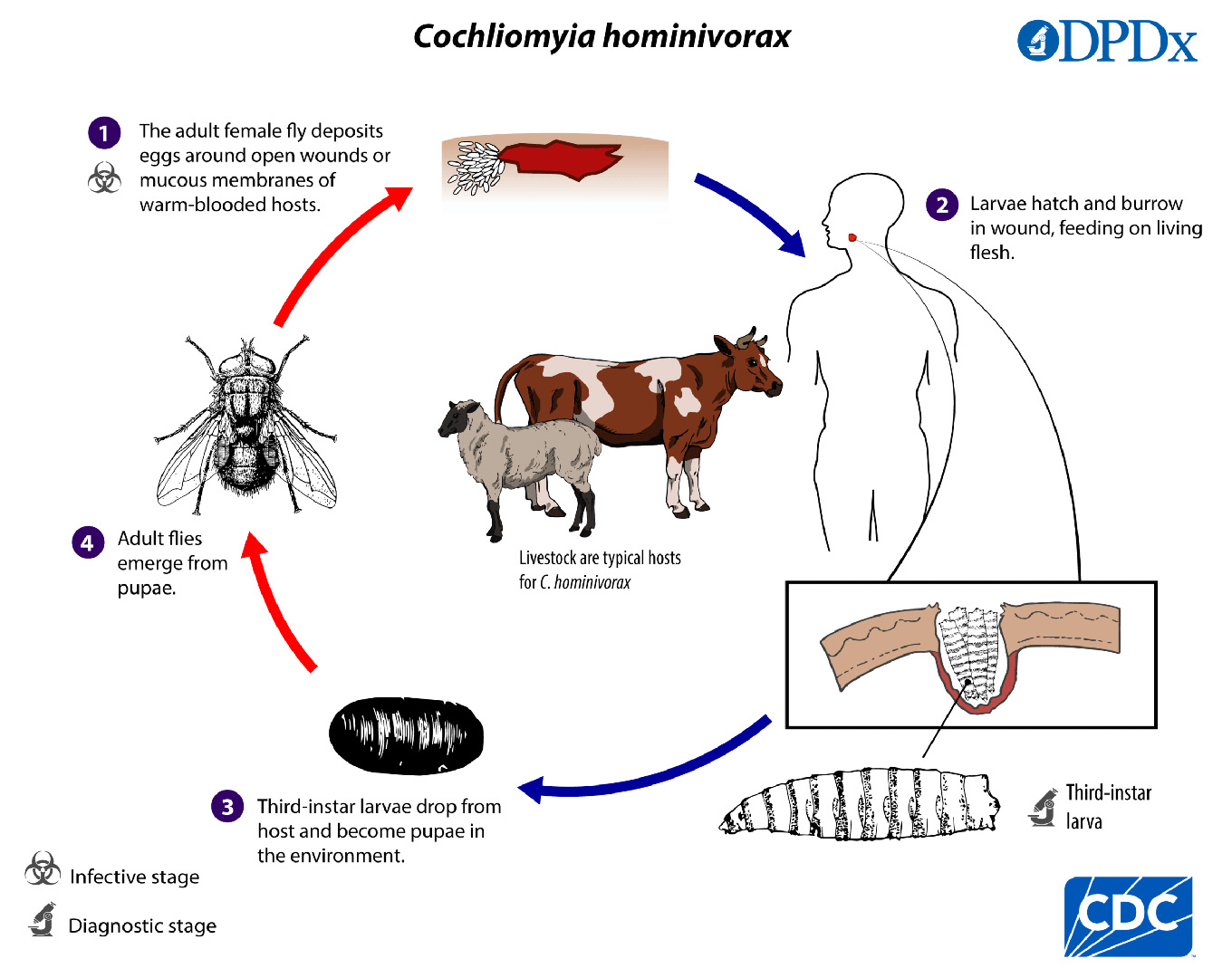
This chart depicts the life cycle of a New World screwworm.
(Image credit: Courtesy of the U.S. Centers for Disease Control and Prevention)
The screwworms do not spread from infected animals to people or from person to person. Infestations start when a female fly lays eggs in a wound or bodily opening, like the eyes.
In 2025, the U.S. reported its first New World screwworm infection in a person in decades. That individual, in Maryland, had just returned to the U.S. after traveling to El Salvador, where the fly is endemic. That person recovered with treatment.
Can infected livestock be treated?
Yes, infected livestock with New World screwworms can be treated with antiparasitic medications. Treatment also involves physical removal of maggots from the flesh and disinfection of the wound sites. Treatment must be timely, as an infestation can kill livestock in 10 days, ASM notes.
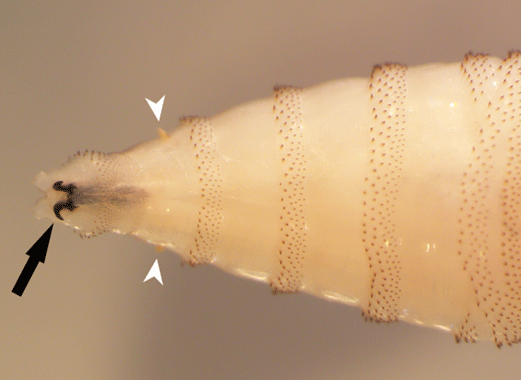
Here, you can see the screwworms' sharp, curved mouth hooks (black arrow) and spiracles (white arrowheads), or openings in their exoskeletons.
(Image credit: Courtesy of the U.S. Centers for Disease Control and Prevention)
Rather than culling whole herds — similar to what's done for commercial flocks infected with bird flu — affected farms are examined for additional cases and not allowed to move animals from the premises during that time, according to USDA. Infected animals are treated and quarantined until their wounds heal and they go a few weeks without any signs of reinfestation. Euthanasia for individual animals can sometimes be necessary if the infestation is too extensive.
If they meet all regulatory requirements, animals that have recovered from screwworm myiasis can enter the food supply, USDA says. Notably, screwworms do not infest dead meat, only healthy, living flesh. The screwworms thus pose a threat to food production but not to food safety.
Is it a big deal that it's been spotted in Texas?
Screwworm outbreaks can be incredibly costly if not snuffed out quickly — there's a reason the U.S. has poured so much effort into eradicating the pest. Experts estimate that, if a large outbreak took hold of the state today, the Texas economy could lose $1.8 billion due to disruptions to the livestock industry. Food prices would be expected to rise, in turn.
New World screwworms were declared eradicated from the continental U.S. in 1966, following an extensive effort that involved releasing sterilized male flies into the wild and breaking the species' reproductive cycle. Despite this local eradication, America still saw some major screwworm outbreaks due to flies and infected animals entering the country from Mexico. A 1972 outbreak was the worst recorded post-eradication, affecting multiple states and causing tens of thousands of cases in Texas alone.
A joint effort between the U.S. and Mexico was then established to prevent a similar outbreak from happening in the future, and the parasite had largely been eradicated in Mexico in the 1980s. But in recent years, there have been signs of a comeback. Cases have been moving northward from Central American countries, like Panama and Costa Rica, since 2023. In response, the U.S. has deployed a strategy, led by USDA, to drive cases back down.
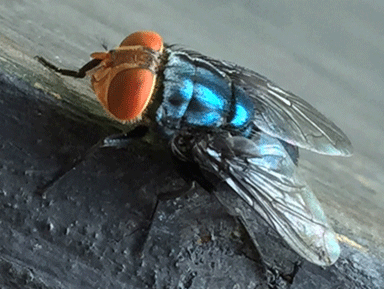
Adult screwworm flies lay eggs in animals' bodies.
(Image credit: Image courtesy of United States Department of Agriculture Animal Plant Health Inspection Service.)
"All models showed New World Screwworm entering the country in 2025," but these efforts likely bought the nation some time, USDA's June 3 statement notes.
So, the detection of C. hominivorax in a 3-week-old calf in Zavala County, Texas, was not necessarily surprising but it does require quick action. The case occurred in Southwest Texas about 50 miles (80 kilometers) from the U.S.-Mexico border. The maggots were seen around the calf's umbilical area. With treatment, the calf should recover, Agriculture Secretary Brooke Rollins told The Associated Press (AP).
Related stories
"USDA urges residents to contact your veterinarian right away if you see any suspicious wounds, maggots, or infestations in your animals or herd," the agency said on X. "If you see signs of maggot infestations in live or very recently dead wild animals, especially in areas near the U.S./Mexico border, please call 866-4USDA-WS (866-487-3297) to report it to your local USDA Wildlife Services office."
The agency is now following strategies and actions outlined in the NWS Response Playbook to snuff out any potential danger in Texas. That includes establishing a quarantine zone around where the case was detected and limiting the movement of animals in that zone.
According to the AP, Rollins said the USDA is confident enough in its preparations that it believes "there is no threat of mass infestation." She added, "There is no reason to believe this incursion will result in establishment of the pest in our country."
Disclaimer
This article is for informational purposes only and is not meant to offer medical advice.
 Nicoletta Lanese
Channel Editor, Health
Nicoletta Lanese is the health channel editor at Live Science and was previously a news editor and staff writer at the site. She is a recipient of the 2026 AHCJ International Health Study Fellowship, with a project focused on antibiotic stewardship practices in Japan and the U.S. They hold a graduate certificate in science communication from UC Santa Cruz and degrees in neuroscience and dance from the University of Florida. Beyond Live Science, Lanese's work has appeared in The Scientist, Science News, the Mercury News, Mongabay and Stanford Medicine Magazine, among other outlets. Based in NYC, she also remains involved in dance and performs in local choreographers' work.
View More
You must confirm your public display name before commenting
Please logout and then login again, you will then be prompted to enter your display name.
Logout