
 BBCFigures show that spring drought events are happening more often while there has been a sharp rise in "fire weather"
Northern Ireland is facing a growing threat from wildfires as conditions are becoming more favourable, according to a new report.
Researchers at Imperial College London say the biggest change is happening in spring - traditionally peak wildfire season - where drought and fire prone weather has become more common.
Figures show that spring drought events are happening more often while there has been a sharp rise in "fire weather" - a mix of warmth, dryness, and wind that allows fires to ignite and spread rapidly.
Experts warn this combination, along with climate change, is creating a longer and more volatile wildfire season.
Spring has always been the season of greatest wildfire risk, when dry vegetation such as grass and heather can easily burn.
According to the report, climate change is now intensifying those conditions.
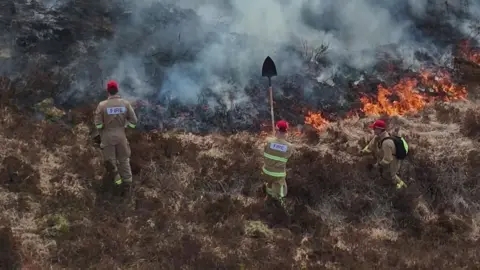
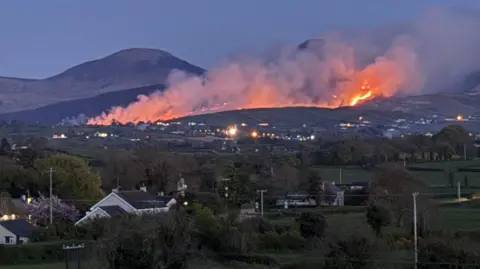 A number of wildfires broke out in late April, including in the Mourne Mountains
"This analysis shows that climate change is having a clear, exacerbating effect on wildfire danger in the UK," Theodore Keeping, research associate in the analysis of extreme weather and wildfires at Imperial College London said.
"We are seeing an increased likelihood of severe spring drought in many parts of the UK due to greater warming.
"Whilst human-cause climate change continues, this shift towards more fire-prone conditions is expected to continue."
Warmer weather is drying out vegetation earlier in the year while the atmosphere is able to draw more moisture from the ground, meaning landscapes can become flammable for longer.
Climate change
The findings follow recent wildfires in parts of Northern Ireland in April which saw hundreds of firefighters deployed to fight the blazes.
Earlier in the month the Department of Agriculture, Environment, and Rural Affairs (Daera) launched an action planned aimed at reducing the threat of wildfires.
While spring remains the main concern, the report also points to a growing wildfire risk in summer months.
Historically, summer fires have been relatively uncommon but data shows an increase in periods of severe fire weather, suggesting Northern Ireland could face a longer fire season in the future.
According to the Met Office, extreme fires seen during the UK's 2022 heatwave were made at least six times more likely by human caused climate change.
That summer saw temperatures exceed 40C for the first time in parts of Britain, stretching fire services to their limits and highlighting how rising heat and dryness can rapidly escalate fire risk.
Researchers say similar processes are now affecting spring conditions, even without record-breaking heat.