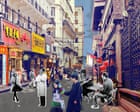
A foreign face is often thought to add prestige to a product or business – what’s behind this unregulated economy?
Piers had been in China for all of two days in 2009 when he was used as a “white monkey” for the first time. He had travelled to a village in Suzhou, Jiangsu province, to attend a friend’s wedding and had stopped in the village to try a special crab dish at a small restaurant. Weeks later, a Chinese guest who had been at the wedding told him the restaurant had had an uptick in business because the locals had heard that a laowai, a foreigner, had been seen dining there, so people had assumed this restaurant must be good. Piers realised the boss had deliberately seated him in a way to attract attention: “I knew we were sitting outside in a premium spot, but I didn’t pick up on what was going on.”
When foreigners in China are used this way, they are called a baihouzi, a white monkey. They’re hired to help Chinese businesses appear more desirable, the foreigner association conveying prestige and a sense that your product is universally regarded. The industry is unregulated in China, operating in a legal grey area. White monkey positions are advertised on job boards and can fall into different categories, from acting and modelling for Chinese films and products to pretending to be the foreign CEO of a Chinese company to lend it credibility. They might be seat warmers or go-go dancers in Chinese nightclubs to draw in customers, or English teachers in language centres to make Chinese parents feel their children are being taught by legitimate native English speakers (even if a Chinese person is actually a better qualified teacher). These businesses believe that having the “foreign look” will give them an edge over other Chinese companies offering the same service. The phenomenon of recruiting foreigners for this performative purpose can be traced to the concept of mianzi, having “face” in Chinese society, which denotes bestowing and receiving respect for each other.
Continue reading...