 Image source, Getty ImagesByPaul GlynnCulture reporter
- Published5 minutes ago
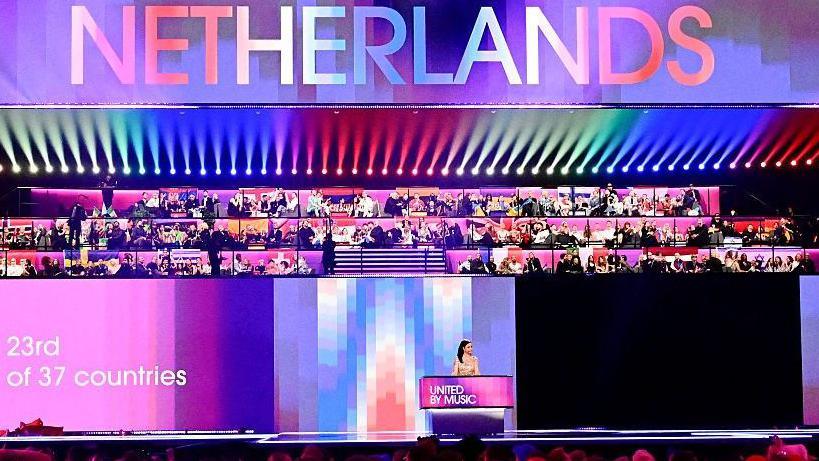
Dutch public broadcaster Avrotros has pulled out of next year's Eurovision Song Contest, saying that the competition can no longer be considered neutral while a participating country remains involved in a large-scale military conflict.
In a statement, external released on Monday, the broadcaster said the decision was due to a lack of clarity from organisers - the Eurovision Broadcasting Union (EBU) - over assessing which countries could compete.
Avrotros added: "The severe humanitarian suffering in Gaza and the ongoing restrictions on press freedom have contributed to increasing divisions surrounding the Eurovision Song Contest in recent years."
Earlier this month, the EBU updated their rules to state that if a country involved in an armed conflict wins the competition, it will be ineligible to host it the following year. But Avrotros said those changes "do not provide sufficient confidence that the independent and neutral character of the Eurovision Song Contest has been restored."
The broadcaster's withdrawal from this year's contest in Burgas, Bulgaria, does not necessarily rule out Dutch participation in Eurovision 2027.
Another broadcaster within the Dutch public broadcasting system could potentially take it on as the country has several public broadcasters, unlike the UK.
But the Netherlands boycotted this year's contest in Vienna, Austria, after Israel were allowed to compete.
Martin Green, director of the contest, said in a statement that the EBU regretted Avrotros's decision but respected its views.
"We will now continue our dialogue with NPO, the umbrella organization for Dutch public service media, regarding the opportunities for another broadcaster to participate. We very much hope that audiences and artists in the Netherlands can continue to be represented in the Eurovision Song Contest."
'Platform for division'
Taco Zimmerman, director general of Avrotos, said the Eurovision Song Contest "was originally created to bring people and countries together" but was now "a platform for division".
He said: "It is undeniable that international conflicts are increasingly affecting the contest, undermining its neutral character.
"The Eurovision Song Contest has therefore become a platform for division. As a public broadcaster, we remain committed to our values."
He added: "They guide us in everything we do, even when that means stepping away from an event that is very close to our hearts. That is painful as we would have very much liked to be part of the contest again next year."
Green, however, stated that the contest "has always been a place to bring people together, celebrate diverse communities, and show that a better world is possible even in the most difficult times."
New rules
The recent amendment to the rules, that mean a country involved in an armed military conflict can't host the next contest if it wins, was approved by the contest's governing body, following feedback from participating broadcasters after Eurovision 2026.
It stated that winning countries will also be disqualified from hosting if a "sensitive geopolitical situation" affects the "security, safety or stability of their state or immediate region".
Last November, following a failed attempt to have Israel suspended, five broadcasters announced they were boycotting the competition - including Eurovision powerhouses Spain, Ireland and the Netherlands.
Despite the protests, Israel's Noam Bettan ultimately took second place with his song Michelle.
It marked the second year in a row that Israel had taken the runners-up position - and some participating broadcasters have privately expressed safety concerns over the contest being staged in Jerusalem or Tel Aviv, should the country win in the future.
Although Israel will undoubtedly be seen as the target of the rule change, it will also affect Ukraine, which has been engaged in a protracted war since it was invaded by Russia in 2022.
Ukrainian group Kalush Orchestra went on to win Eurovision that same year, in a symbolic show of public support.
Related topics
Eurovision Song Contest changes rules for countries at war
- Published12 August
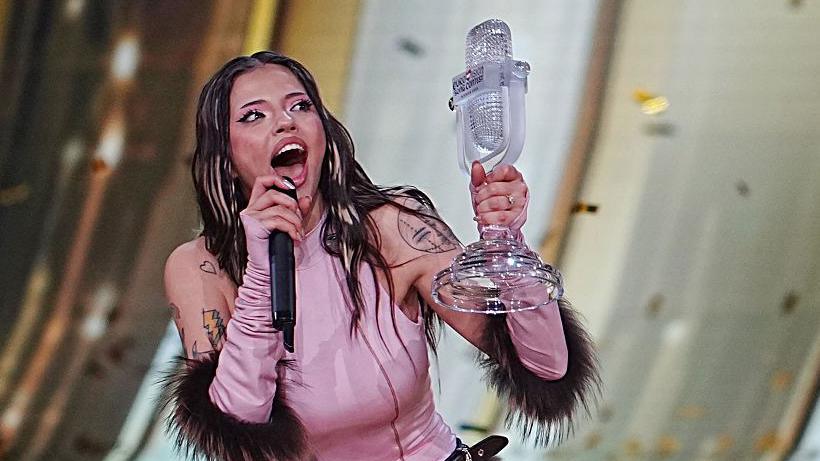
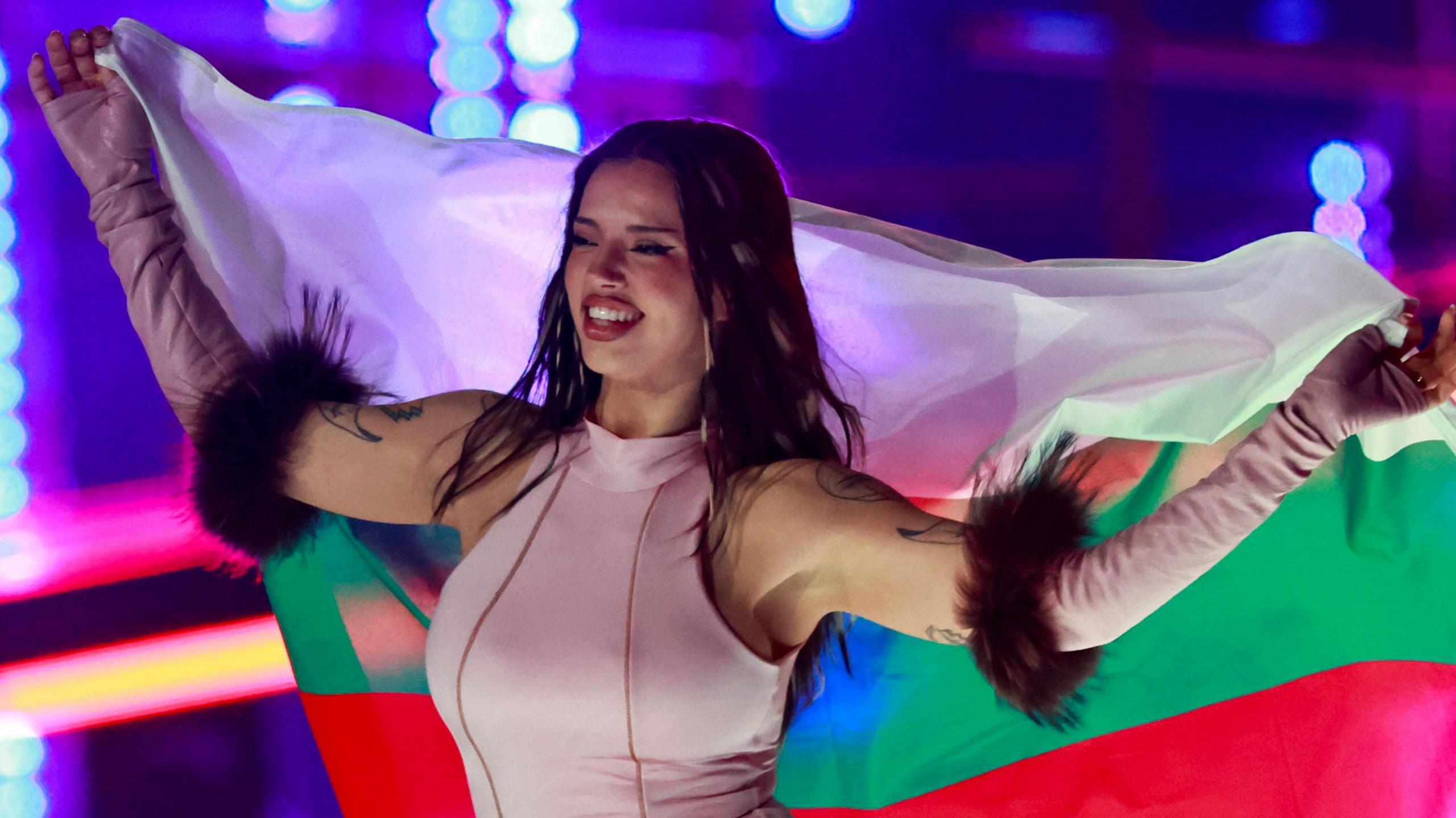
Eurovision Song Contest 2027 to be held in Burgas, Bulgaria
- Published13 August