Image source, Fi HailstoneImage caption,
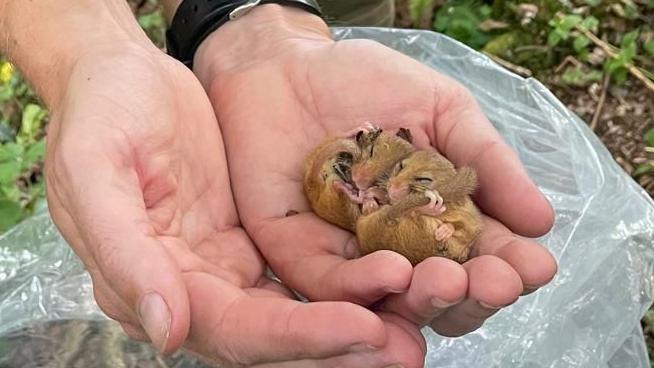
Dormice across the South West will be going into hibernation in the coming weeks
ByBritta ZeltmannDevon- Published38 minutes ago
Habitat work and a monitoring scheme have helped hazel dormice thrive at a National Trust site, despite declines elsewhere, experts have said.
Killerton National Trust has 100 nest boxes across its estate in Devon. Rangers weigh and record details of each mouse between April and October.
The trust said the animals "continue to thrive" in the area - a sign it was "doing something right" by creating a "healthy, diverse and well-connected habitat for wildlife".
The People's Trust for Endangered Species said populations had declined by over two thirds in the UK since 2000. Experts said the decline was largely down to "habitat fragmentation".
 Image source, Fi HailstoneImage caption,
The mice start to hibernate when temperatures drop below about 10C (50F)
The trust hopes the mammals, which typically weigh between 20g and 40g, will have gained enough weight to begin hibernating in the coming weeks and survive the winter ahead.
Fi Hailstone, senior ranger for the National Trust at the Killerton estate, said: "When we have warmer weather, it wakes them up and when we have wet springs, that affects their ability to forage when they do wake up.
"So having a resilient ecosystem with lots of shelter for them, lots of scrub, lots of things for them to eat [is important]."
"They love bramble, and I know that bramble has a bit of a bad reputation with a lot of gardeners," Hailstone said.
"But bramble is the life source, really. It has flowers in the spring, it has berries on it. It's also protective in terms of cover from other predators, so it's a really great place for them to nest."
When they are not hibernating, they are shy and nocturnal.
Hailstone said Devon was "a bit of a stronghold for dormice" because "there is such a strong hedge network".
"We've been monitoring our dormouse population at Killerton since 2018, and during that time, we've noticed that they are fairly stable, which does buck national trends."
Hailstone said: "We are finding them in new areas which indicates them spreading across the estate.
"We think this is because we're planting a lot more hedges, a lot more trees."
 Image source, Emma JonesImage caption,
Population numbers have declined since the turn of the century, but are currently stable in the Killerton estate area in Devon
"We might be planting lots of woodland now, which is great, but we won't see the effects of that for dormice for another 100 or so years," Hailstone added.
"It's really important to manage the woodlands that we already have in a positive way."
Anyone who finds a dormouse in the winter is urged not to pick it up but to alert the RSPCA or local animal shelter.
Follow BBC Devon on X, external, Facebook, external and Instagram, external. Send your story ideas to [email protected], external.
Related topics
Teenagers launch project to support harvest mice
- Published7 October

Packham praises teens for harvest mouse project
- Published23 September 2025

Baby dormice found at reserve for first time
- Published4 August 2024