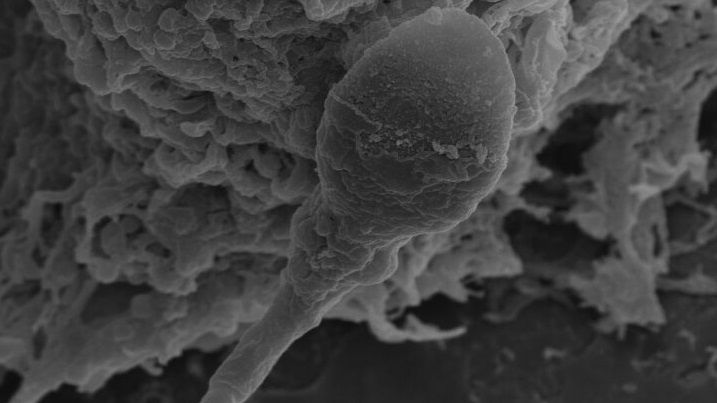
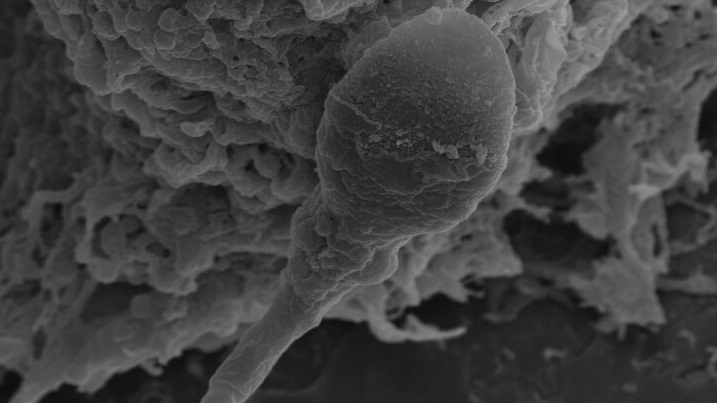
 Embryos formed in microgravity first appear stronger but begin to lag behind those created in gravity after longer exposure. (Image credit: Sperm and Embryo Biology Laboratory, Adelaide University) Share this article 0 Join the conversation Follow us Add us as a preferred source on Google Newsletter Get the Space.com Newsletter
 Breaking space news, the latest updates on rocket launches, skywatching events and more!
Contact me with news and offers from other Future brands Receive email from us on behalf of our trusted partners or sponsors By submitting your information you agree to the Terms & Conditions and Privacy Policy and are aged 16 or over.You are now subscribed
Your newsletter sign-up was successful
Want to add more newsletters?
An account already exists for this email address, please log in. Subscribe to our newsletterHumankind is bound to become a space-faring species, expanding beyond the bounds of Mother Earth, just as it, millions of years ago, spread out of its cradle in Africa.
At least that's what space exploration leaders such as the world's richest man Elon Musk would like you to believe. However, there may be biological hurdles that could forever confine this vision to the realm of science fiction and human civilization to our Earthly soil. A new study found that sperm cells of mammalian species including humans, mice and pigs struggle to find their way through a female reproductive tract in microgravity to reach and fertilize an egg. Even when the sperm makes it to its destination, the study found that embryos formed in these conditions develop poorly compared to those evolving in normal gravity.
Article continues belowThere have been some previous studies with headlines stating mouse babies were born from stem cells subjected to months-long spaceflight, but most earlier research, conducted either in space or in microgravity simulators on Earth, has revealed a plethora of negative effects the space environment has on reproductive cells and embryos.
"When you think about the future of space exploration and space settlements, it's happening. It's happening now," Nicole McPherson, a reproductive biologist at the University of Adelaide, Australia, and lead author of the paper, told Space.com. "I think people forget that for us to maintain these settlements without having to continually colonize them from Earth, we need to be able to reproduce in space."
McPherson, whose previous work covered the effects of obesity and diet on the success of conception, got intrigued by the question of the possibility of in-space reproduction after watching a documentary hosted by British physicist Brian Cox. A discussion with her partner then spawned an idea for a unique research experiment.
A chance encounter with the founder of space medicine company Firefly Biotech a week later allowed her to acquire a 3D clinostat for her lab. This device is a high-tech centrifuge that simulates microgravity by spinning vials with samples around two axes, effectively confusing the cells inside as to their position in space. In her experiment, McPherson and colleagues created a set-up holding human, mice and pig sperm cells in one part of the compartment and egg cells in the other, divided by a thin channel simulating the female reproductive tract. The researchers observed that 30% fewer sperms were able to make it to the egg compared to those in normal gravity.
Get the Space.com NewsletterContact me with news and offers from other Future brandsReceive email from us on behalf of our trusted partners or sponsors 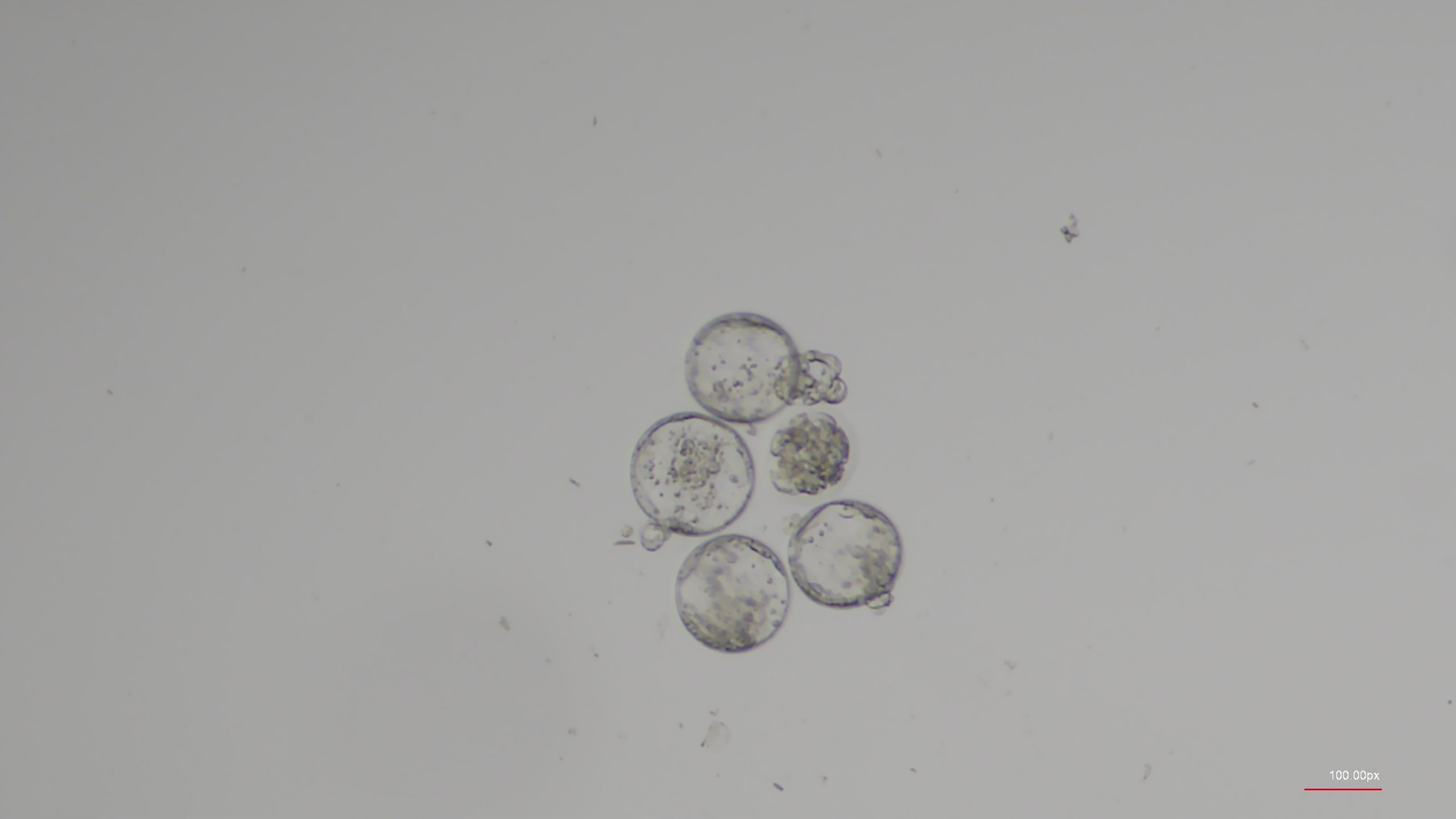
Scientists know sperm relies on a complex set of signals to find its way to an egg. Part of that navigation is driven by chemical cues, such as concentrations of the female hormone progesterone, but gravity seems to play a significant role too, McPherson said.
"We know that sperm responds to chemical cues, but we also know that they like to swim near surfaces," she said. "Obviously, to know where surfaces are, you need to understand your position in time and for that you need gravity."
The struggle of sperm to make it to the egg was only one part of the findings. When sperms managed to reach the eggs, the ensuing early-stage embryos, called blastocysts, initially appeared stronger than their counterparts conceived in gravity. However, when microgravity exposure continued, the superior quality of microgravity-conceived blastocysts deteriorated and the embryos started to lag behind their normal counterparts.
McPherson thinks the initial quality gain observed in embryos formed after only four hours of microgravity exposure was due to the natural selection process that had occurred, allowing only the fittest sperms to reach the eggs. The subsequent deterioration in embryos that had been in microgravity for up to 24 hours was likely due to negative effects the absence of gravity has on the processes taking place in the quickly dividing embryonic cells.
"There are so many changes that happen in those first 24 hours of embryo development," McPherson said. "You have the maternal and the paternal DNA coming together. You have lots of epigenetic remodeling that goes on to drive early foetal development. And that being exposed to zero gravity is actually really detrimental."
McPherson said the researchers would, in the future, want to conduct similar experiments in reduced gravity, such as that of the moon or Mars, to see whether partial gravity might mitigate the problem. She thinks the findings have implications not just for the visions of space settlements, but also for commercial space tourism and babies potentially conceived on lunar and orbital honeymoons. The natural selection leading to the formation of stronger embryos after short microgravity exposures, on the other hand, could lead to advances in human IVF technologies that help treat infertility on Earth.
In the future, the researchers would like to expose the embryos to longer microgravity spells to gain deeper insights into the processes taking place in space-like conditions.
The study was published in the journal Communications Biology on Thursday (March 26).
 Tereza PultarovaContributing Writer
Tereza is a London-based science and technology journalist, aspiring fiction writer and amateur gymnast. She worked as a reporter at the Engineering and Technology magazine, freelanced for a range of publications including Live Science, Space.com, Professional Engineering, Via Satellite and Space News and served as a maternity cover science editor at the European Space Agency.
View MoreYou must confirm your public display name before commenting
Please logout and then login again, you will then be prompted to enter your display name.
Logout MORE FROM SPACE... 1Fireball sightings are surging across the US — here's what's really going on
 - 2Are Saturn's rings made of a lost, shattered moon? New evidence arises for the case
- 3'For All Mankind' season 5: Release date & how to watch Apple TV's alt-history space show
- 4New portrait of the oldest-known supernova | Space photo of the day for March 27, 2026
- 5NASA's ambitious 'decade of Venus' exploration may bank on 1 probe: 'Not everything can move forward'