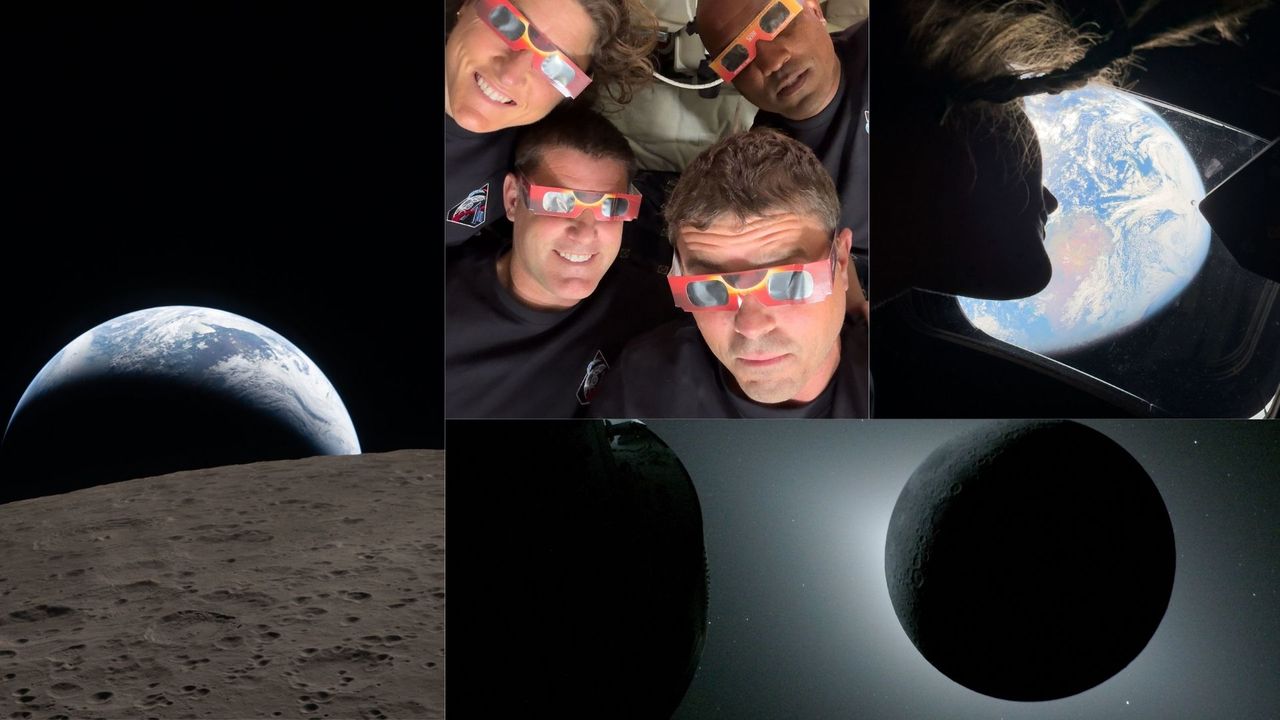
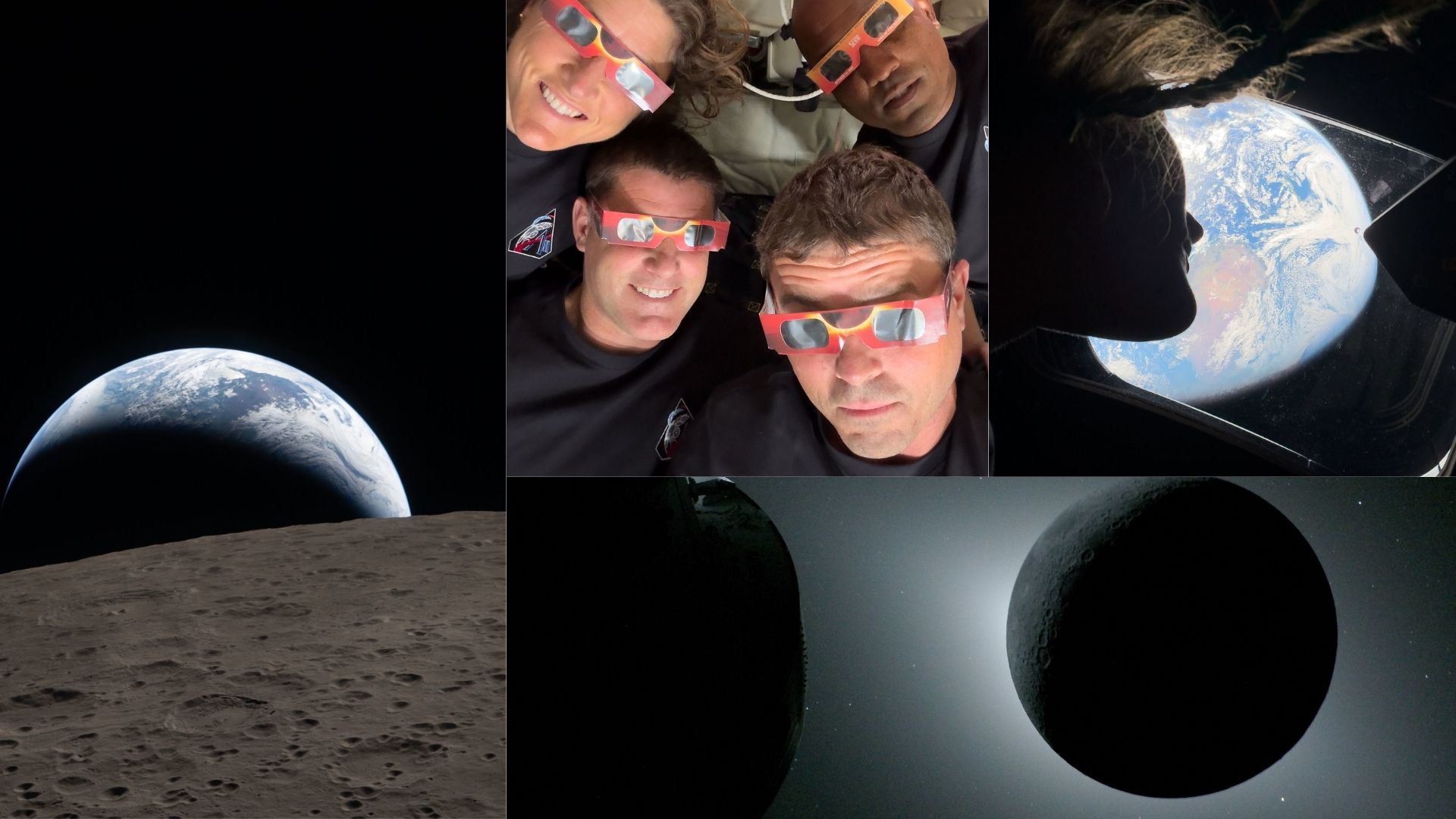
 The Artemis II mission took thousands of photographs of the moon during its flyby. (Image credit: NASA) Share this article 0 Join the conversation Follow us Add us as a preferred source on Google Newsletter Sign up for the Live Science daily newsletter now
 Get the world’s most fascinating discoveries delivered straight to your inbox.
Become a Member in Seconds
Unlock instant access to exclusive member features.
Contact me with news and offers from other Future brands Receive email from us on behalf of our trusted partners or sponsors By submitting your information you agree to the Terms & Conditions and Privacy Policy and are aged 16 or over.You are now subscribed
Your newsletter sign-up was successful
Want to add more newsletters?
Join the club
Get full access to premium articles, exclusive features and a growing list of member rewards.
Explore An account already exists for this email address, please log in. Subscribe to our newsletterNASA's Artemis II mission, which shot humanity back to the moon for the first time in over 50 years, has captivated people around the world. As part of NASA's Artemis program, the 10-day flight tested key systems designed to return astronauts to the lunar surface, where NASA says it will establish a lunar base that will act as a staging post for future missions to Mars.
Data from the mission will be used to advance our understanding of human health in space, including the impacts on sleep and the effects of increased radiation and microgravity on health. The four Artemis II crewmembers were also trained in geology to make observations of the lunar surface, including identifying impact craters and ancient lava flows.
More science quizzes
- Moon quiz: What do you know about our nearest celestial neighbor?
- Moon landing quiz: How quickly can you name all 12 Apollo astronauts that walked on the moon?
- Human spaceflight quiz: How well do you know our journey into space?
 Sophie BerdugoStaff writer
Sophie is a U.K.-based staff writer at Live Science. She covers a wide range of topics, having previously reported on research spanning from bonobo communication to the first water in the universe. Her work has also appeared in outlets including New Scientist, The Observer and BBC Wildlife, and she was shortlisted for the Association of British Science Writers' 2025 "Newcomer of the Year" award for her freelance work at New Scientist. Before becoming a science journalist, she completed a doctorate in evolutionary anthropology from the University of Oxford, where she spent four years looking at why some chimps are better at using tools than others.
View MoreYou must confirm your public display name before commenting
Please logout and then login again, you will then be prompted to enter your display name.
Logout LATEST ARTICLES 1Ancient process that created rare earth elements discovered — and it could help us locate desperately needed deposits
- 2Strange mammal ancestor laid huge, leathery eggs — and it was key to surviving the world's worst mass extinction
- 373 moon landings? NASA's 'Moon Base User's Guide' reveals the agency's 'most ambitious space project' will be fraught with challenges
- 4Diagnostic dilemma: A woman heard voices telling her she had a brain tumor — and scans confirmed she did
- 5Triassic croc relative from Ghost Ranch, New Mexico finally identified after nearly 80 years in museum basement


