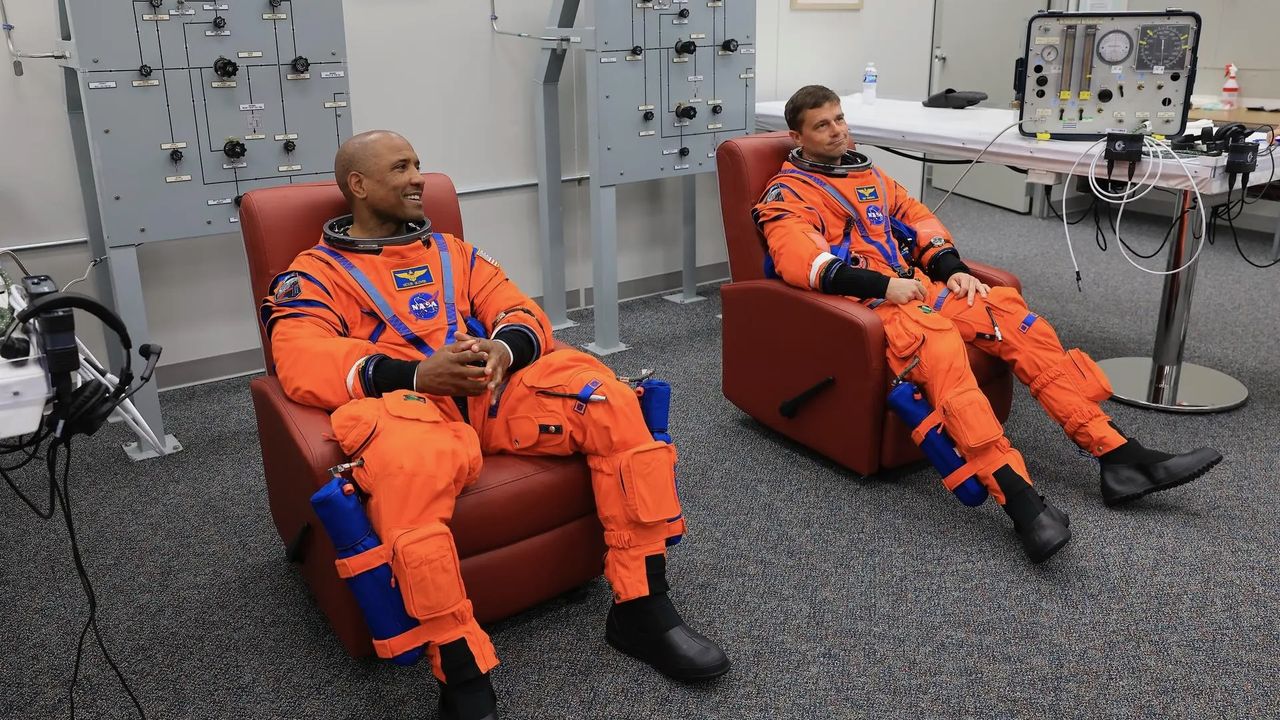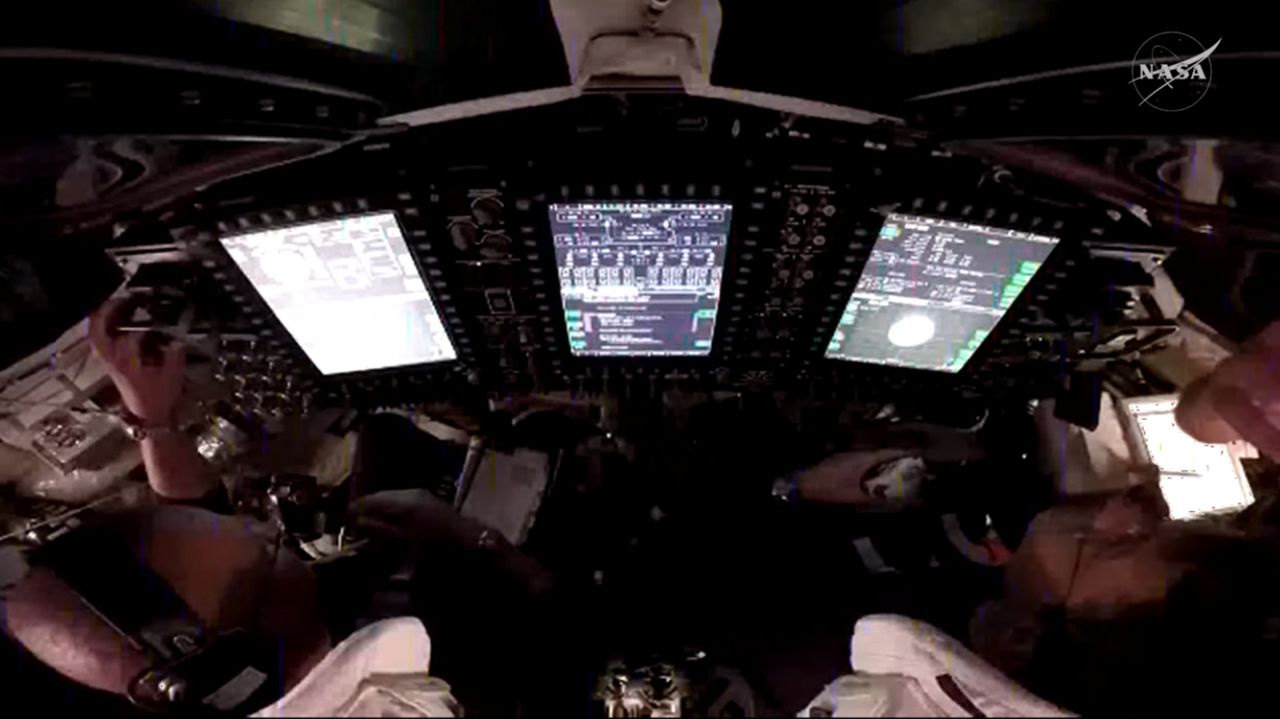
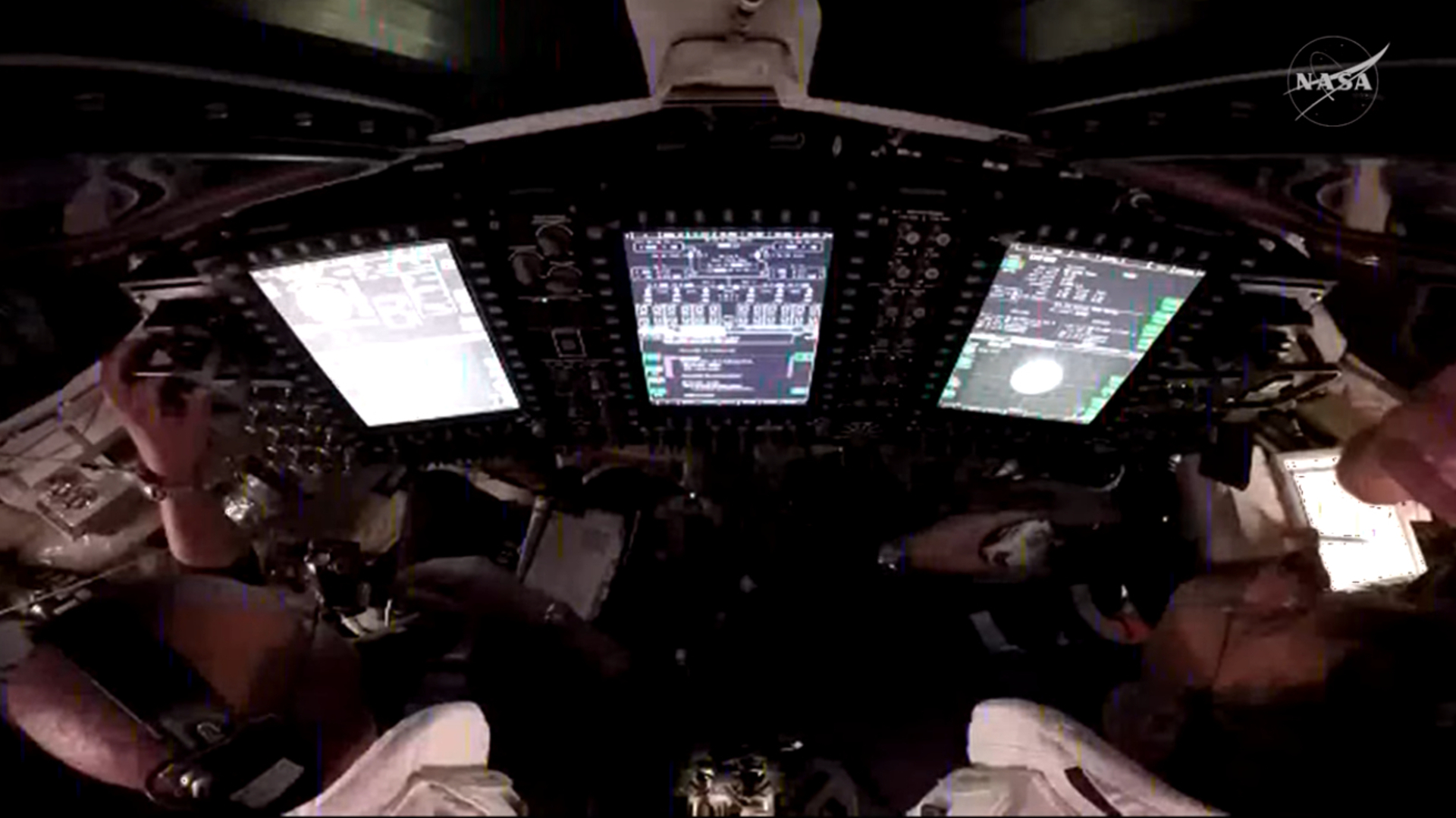
 A view over the shoulders of NASA astronauts Victor Glover (left) and Reid Wiseman (right) in the Orion spacecraft. (Image credit: NASA) Share this article 0 Join the conversation Follow us Add us as a preferred source on Google Newsletter Sign up for the Live Science daily newsletter now
 Get the world’s most fascinating discoveries delivered straight to your inbox.
Become a Member in Seconds
Unlock instant access to exclusive member features.
Contact me with news and offers from other Future brands Receive email from us on behalf of our trusted partners or sponsors By submitting your information you agree to the Terms & Conditions and Privacy Policy and are aged 16 or over.You are now subscribed
Your newsletter sign-up was successful
Want to add more newsletters?
Join the club
Get full access to premium articles, exclusive features and a growing list of member rewards.
Explore An account already exists for this email address, please log in. Subscribe to our newsletterNASA's Artemis II mission successfully lifted off from Florida's Space Coast Wednesday (April 1) around 6:35 p.m. EDT. But today (Thursday) marked the mission's next crucial step: the translunar injection burn, the long push that sends the spacecraft out of Earth's orbit and into deep space, where it will rendezvous with the moon about four days from now.
"[The burn] propels Orion on a path toward the moon and sets it on the free-return trajectory that will ultimately bring [the] crew back to Earth for splashdown," NASA officials wrote in the Artemis II press kit. "Though only two days into the mission, it essentially doubles as Orion's deorbit burn as well."
Thankfully, NASA's mission management team found no issues and gave the green light for the burn. Scheduled for 7:49 p.m. EDT, the burn lasted 5 minutes and 50 seconds. According to NASA, the Orion spacecraft has "6,000 pounds of thrust, enough to accelerate a car from 0 to 60 mph in about 2.7 seconds."
"We personally felt the power of your perseverance through every second of that burn," Canadian Space Agency astronaut Jeremy Hansen said after the completion of the burn.
RELATED STORIES- Astronauts can face 'nearly lethal doses' of solar radiation — so why launch Artemis II during the sun's peak of activity? Space scientist Patricia Reiff explains.
- Artemis II: NASA is preparing for a return to the moon, but why is it going back?
- Artemis II timeline: 12 key steps that will take NASA astronauts to the moon and back
With the burn now complete, Artemis II stopped circling Earth and began the mission it was built for: a 10-day test flight around the moon and back, meant to prove NASA can safely send astronauts into deep space again. The results of the mission will directly influence the planning of future missions in the Artemis campaign, which aims to return humans to the lunar surface no earlier than 2028.
"With this burn to the moon, we do not leave Earth. We choose it," Artemis astronaut Christina Koch said before the burn commenced.
Sign up for the Live Science daily newsletter nowContact me with news and offers from other Future brandsReceive email from us on behalf of our trusted partners or sponsorsThe Artemis II crew is expected to reach the moon Monday, April 6, on the sixth day of the mission, and return to Earth Saturday, April 11, after a 10-day mission.
Test your knowledge of the moon below with our moon quiz!
TOPICS Kenna Hughes-CastleberryContent Manager, Live Science
Kenna Hughes-Castleberry is the Content Manager at Live Science. Formerly, she was the Content Manager at Space.com and before that the Science Communicator at JILA, a physics research institute. Kenna is also a book author, with her upcoming book 'Octopus X' scheduled for release in spring of 2027. Her beats include physics, health, environmental science, technology, AI, animal intelligence, corvids, and cephalopods.
View MoreYou must confirm your public display name before commenting
Please logout and then login again, you will then be prompted to enter your display name.
Logout LATEST ARTICLES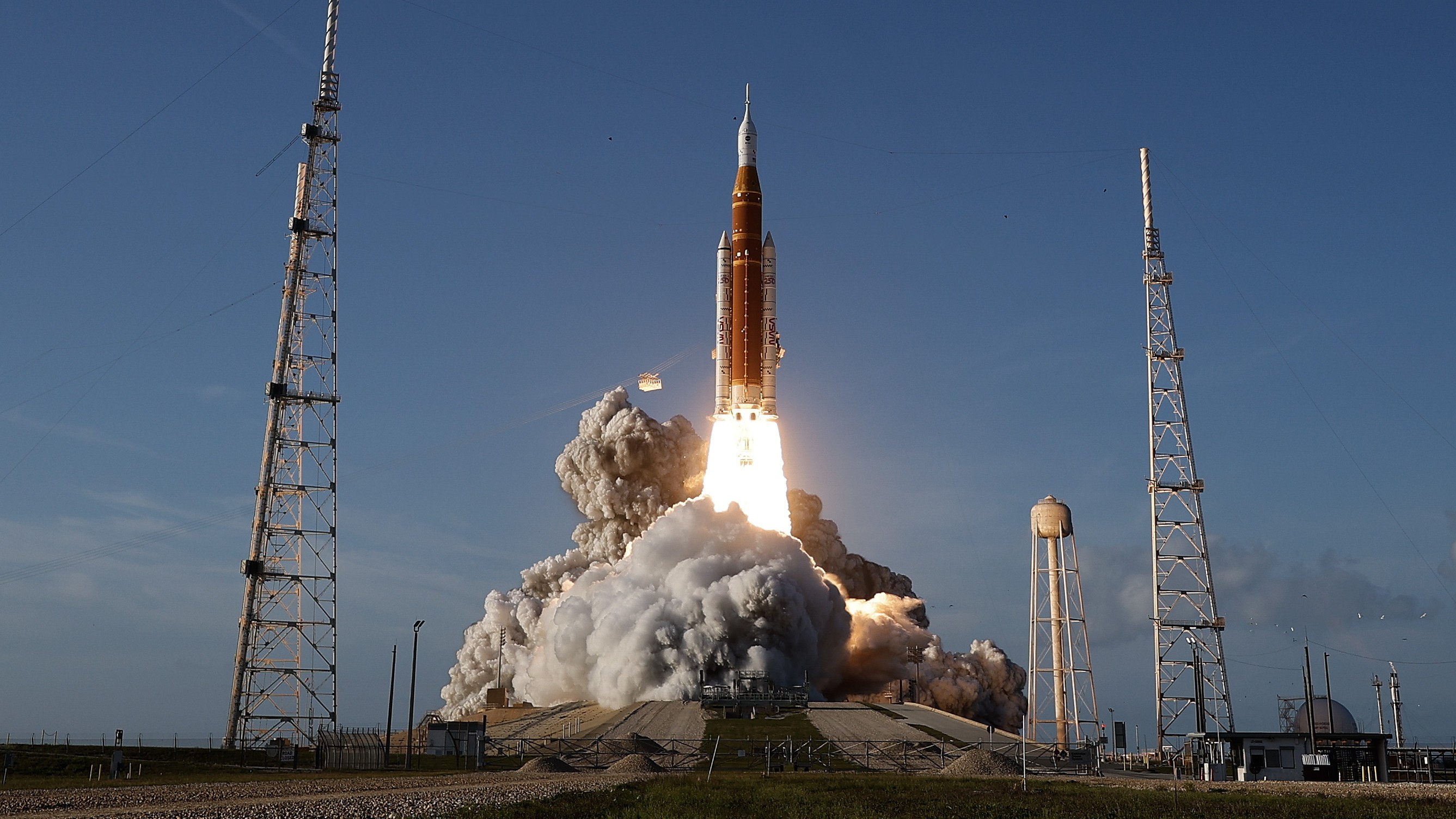 1In photos: Artemis II's historic launch for the moon
- 2Ancient children's teeth reveal a syphilis-like disease was spreading in Vietnam 4,000 years ago
- 3Chemists discover groundbreaking reaction that turns breadcrumbs into hydrogen
- 4Earth's energy imbalance is much more extreme than climate models show — but scientists aren't sure why
- 5Chinese satellite with robotic 'octopus arm' passes key refueling test in orbit — making longer-lived space assets more likely