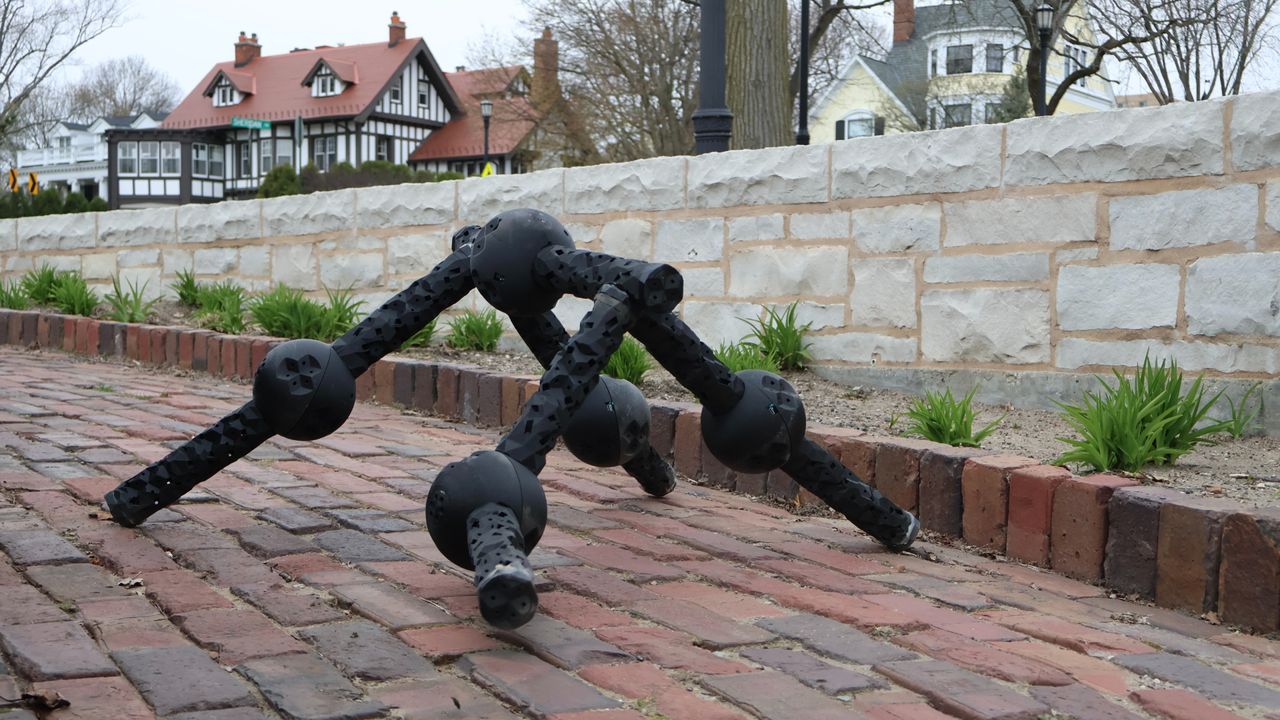
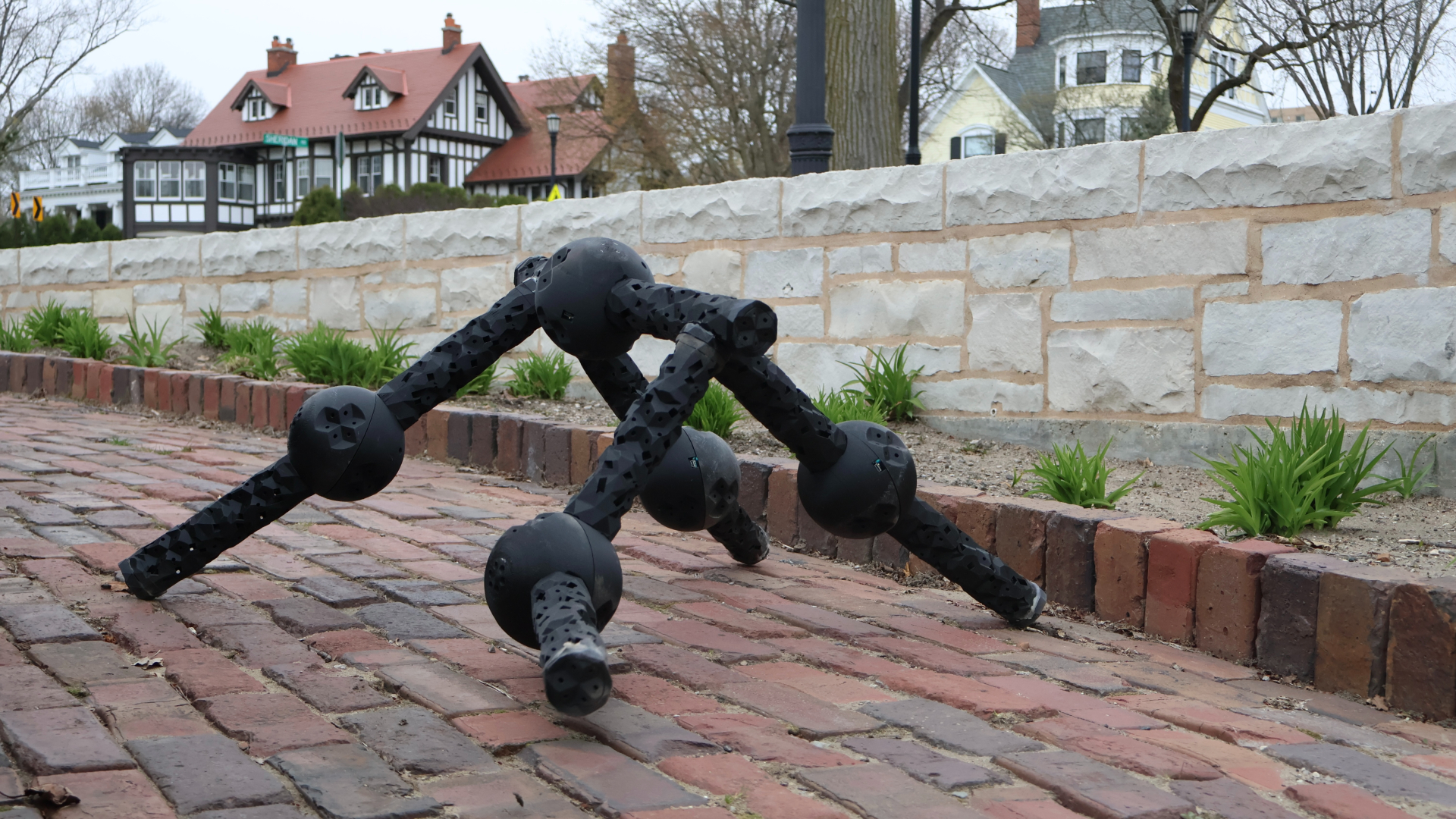
 Researchers at Northwestern University have made a modular, Lego-like robot. (Image credit: Northwestern University) Share this article 0 Join the conversation Follow us Add us as a preferred source on Google Newsletter Sign up for the Live Science daily newsletter now
 Get the world’s most fascinating discoveries delivered straight to your inbox.
Become a Member in Seconds
Unlock instant access to exclusive member features.
Contact me with news and offers from other Future brands Receive email from us on behalf of our trusted partners or sponsors By submitting your information you agree to the Terms & Conditions and Privacy Policy and are aged 16 or over.You are now subscribed
Your newsletter sign-up was successful
Want to add more newsletters?
Join the club
Get full access to premium articles, exclusive features and a growing list of member rewards.
Explore An account already exists for this email address, please log in. Subscribe to our newsletterResearchers have created artificial-intelligence-powered robots that can navigate all kinds of terrain autonomously and continue moving even when they're severely damaged.
Dubbed "legged metamachines," these awkward-looking bots may reveal insight into human and animal evolution and provide a path for future robots to overcome mobility limitations, the machines' creators say.
Article continues below"Inside the sphere, the robot has everything it needs to survive: a 'nervous system,' a 'metabolism' and 'muscle,'" lead study author Sam Kriegman, an assistant professor of computer science and chemical, mechanical and biological engineering at Northwestern, said in the statement. "By that, I mean a circuit board, a battery, and a motor. The modules are mechanically simple. They can only rotate around a single axis, but they are surprisingly athletic and smart."
Robotic building blocks
The bots' modular nature allows multiple pieces or "limbs" to be attached to an individual robot, thus altering its shape and movement without inhibiting its ability to march forward through unstructured terrain.
Unlike most other mobile robots, which have rigidly defined structures and tend to adhere to familiar two- and four-legged designs, these metamachines allow for a much broader number of configurations.
Evolved robots are born to run, refuse to die - YouTube Watch On
 This approach may enable researchers to create and study different mobile forms and examine our notions about the evolution of locomotion, according to the study. In experiments, the metamachines already demonstrated modes of locomotion similar to bounding kangaroos or undulating seals.
Sign up for the Live Science daily newsletter nowContact me with news and offers from other Future brandsReceive email from us on behalf of our trusted partners or sponsorsAlthough the combination of limbs may look awkward, the robots exhibit an impressive ability to right themselves when they encounter difficulty, even if they're completely flipped over. They can leap over obstacles and even perform acrobatics in midair.
Simulating evolution
These robots' impressive capabilities are possible due to the team's powerful AI, which simulates an evolutionary algorithm that drives natural selection.
At first, the simulation was purely software-based and confined to operations within a computer program. The AI was tasked with creating novel body configurations from the robot's modular pieces, with the goal of creating the most effective combinations for traversing different terrain.
Northwestern University's modular robot moves across a sandy beach. (Image credit: Northwestern University)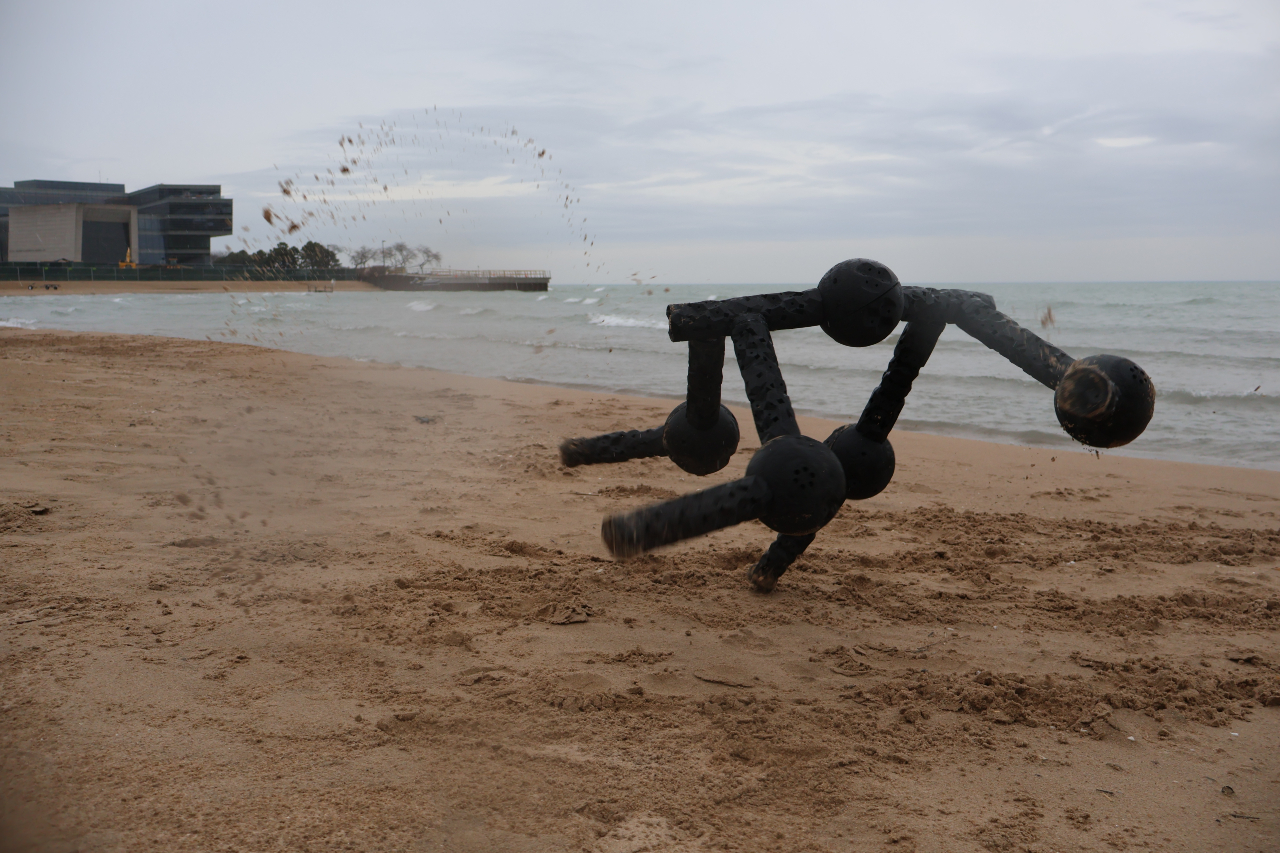
After the AI had tested designs in a virtual environment, discarding those it found unsuitable, the team assembled the best three-, four- and five-legged designs the model had evolved. The machines could cross terrain broken by gravel, grass, tree roots, leaves, sand, mud and uneven bricks, without interruption or human intervention.
RELATED STORIES—MIT's new AI can teach itself to control robots by watching the world through the robot's eyes
—Watch humanoid robots waltzing seamlessly with humans thanks to AI motion tracking
—New 'Transformer' humanoid robot can launch a shapeshifting drone off its back, watch it in action
The most impressive piece of the metamachine puzzle was the robots' ability to adapt when damaged. The team ran simulations where various configurations suffered breaks or lost whole limbs, but the modules adapted to keep moving.
By compressing billions of years of evolution into a few seconds, Kriegman said, robotic design can quickly progress beyond traditional configurations.
"Evolution can reveal new designs that are different from or even beyond what humans were previously capable of imagining," Kriegman said. "So, we really wanted to study how and why it works. The best way — or at least the most fun way — is to evolve structures in realistic conditions."
Article SourcesC. Yu,D. Matthews,J. Wang,J. Gu,D. Blackiston,M. Rubenstein, & S. Kriegman, Agile legged locomotion in reconfigurable modular robots, Proc. Natl. Acad. Sci. U.S.A. 123 (10) e2519129123, https://doi.org/10.1073/pnas.2519129123 (2026).
 Alan BradleyFreelance contributor
Alan is a freelance tech and entertainment journalist who specializes in computers, laptops, and video games. He's previously written for sites like PC Gamer, GamesRadar, and Rolling Stone. If you need advice on tech, or help finding the best tech deals, Alan is your man.
View MoreYou must confirm your public display name before commenting
Please logout and then login again, you will then be prompted to enter your display name.
Logout LATEST ARTICLES 1Colorado River negotiations have stalled among 7 states and water is scarce. What happens next?
- 2Live Science Today: Jensen Huang AGI claim and major leap to reanimation after death
- 3Extreme blast of Arctic air from polar vortex paints a picturesque plume off Florida coast
- 4Chemistry student develops clear polish that turns your fingernail into a touch-screen stylus
- 5Artemis II: NASA's first crewed mission to the moon since 1972